They replaced their front yards with gardens. The demand followed

The Black Radish in south Minneapolis has a constant waitlist. To grow, they’re trying to buy a quarter-acre of land.

The Minnesota Star Tribune
August 12, 2025 at 2:00PM
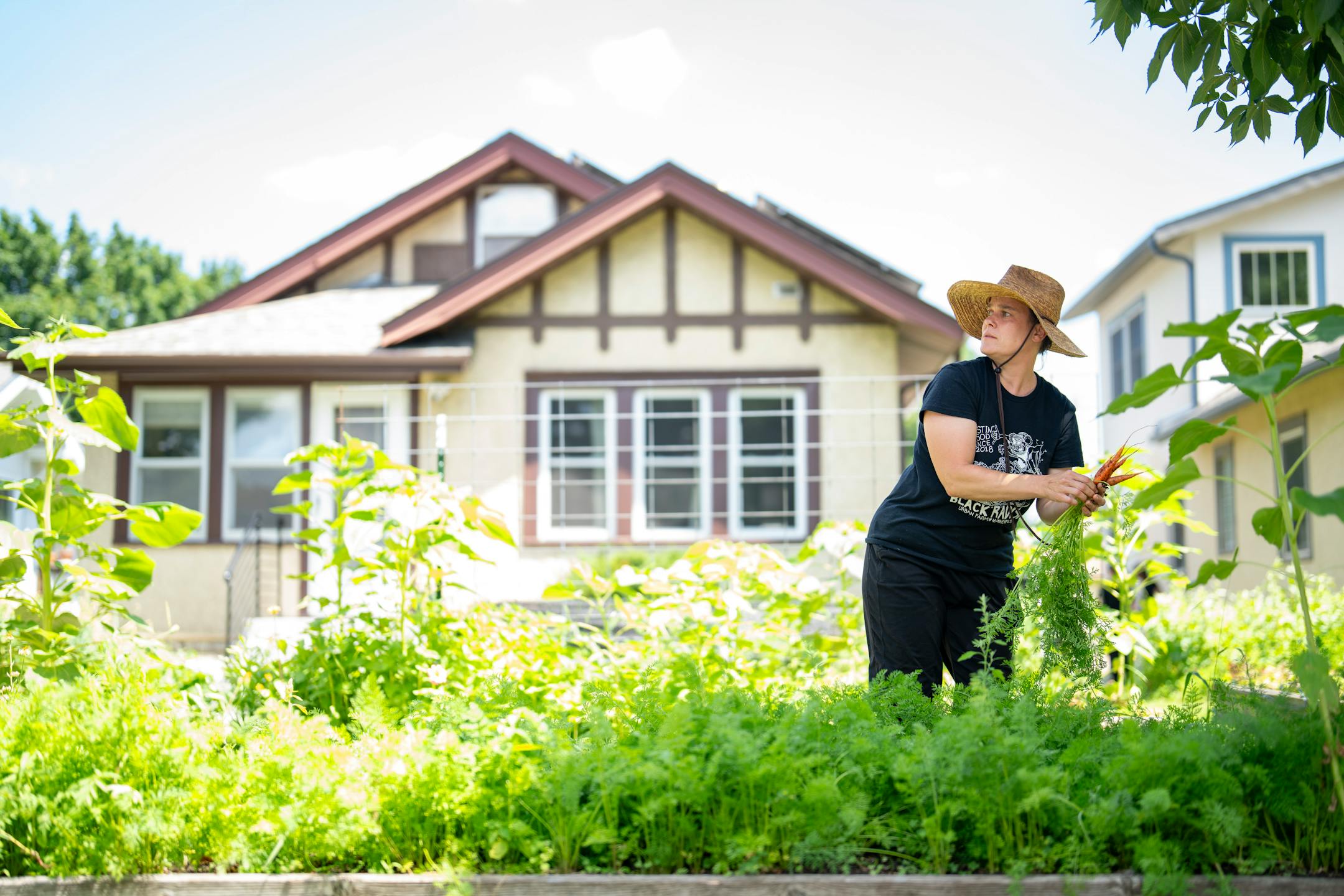
Carrie Thompson picks carrots for the Black Radsh CSA in the garden in front of her home in South Minneapolis. (Alex Kormann/The Minnesota Star Tribune)

A staple of the American dream — the perfectly cut, Kentucky bluegrass front lawn — is missing from 15 south Minneapolis yards. In its place: big, rectangular boxes of dirt.

One of them is made from an old bed frame. Others were built with 2x4’s. They hold an array of vegetables, leafy greens and herbs. Two artists built and manage them. And when the crops are ready, they’re shared with those who support the operation; the rest is then donated to feed many more.

Every Wednesday from June through early October, in a shed behind the home of Carrie Thompson and her husband, Jade Townsend, dozens of members of the Black Radish pick up their produce for the week. Some lend their yards, while others pay yearly for the goods. Odds are, whatever they walk away with was pulled out of the ground or picked off a plant hours — or even minutes — earlier.
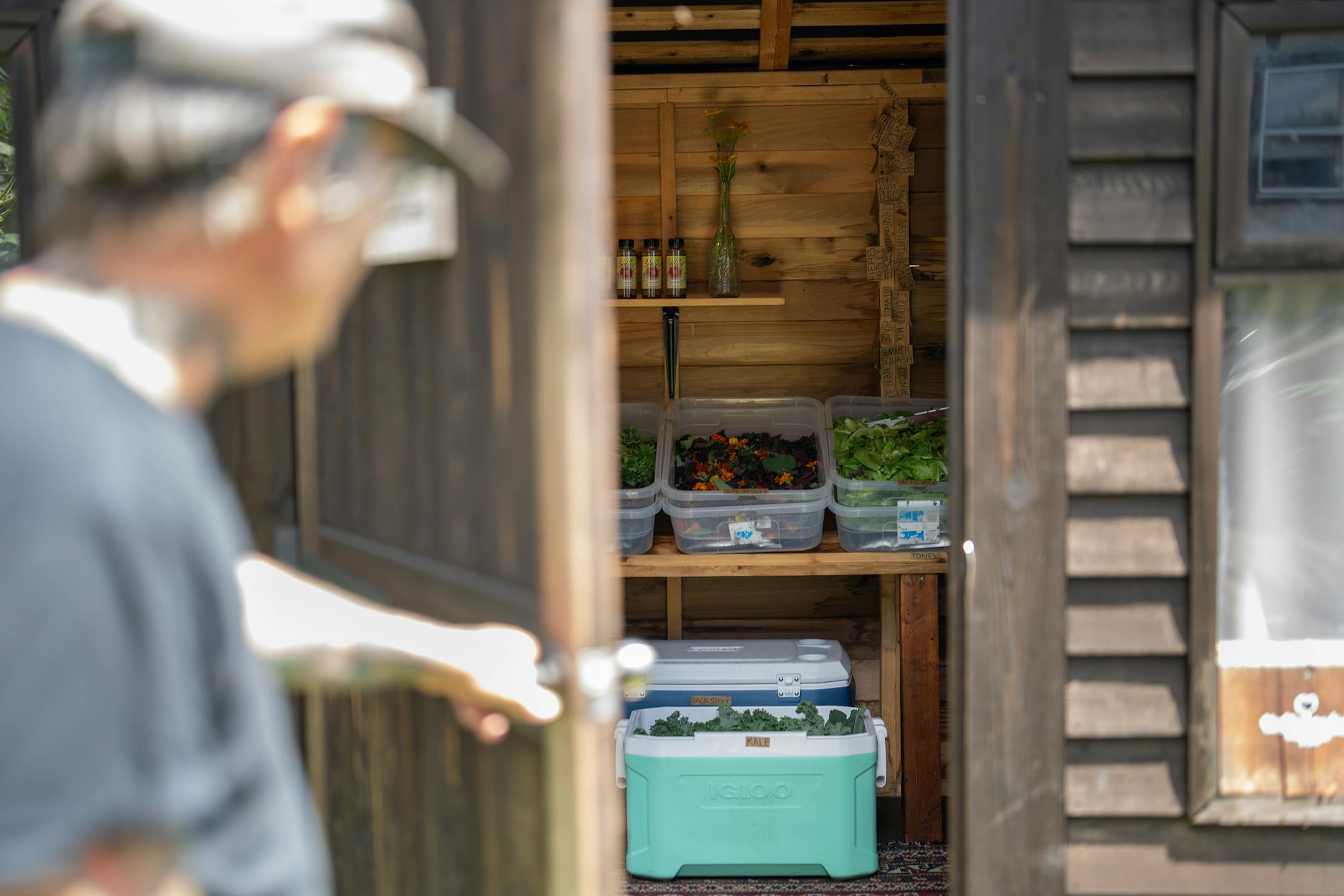
Jade Townsend opens the door to the shed holding all the harvested produce behind his home in south Minneapolis. (Alex Kormann/The Minnesota Star Tribune)

Melissa Onyango-Robshaw’s home is one of the original three yards. When she stops by, she takes only what she thinks she’ll use till next week, which all members are asked to do.

“Sometimes it’s just a little bit because I’ll still have some lettuce left over from last week and I need to finish it. But other times, I’m like, ‘I’m planning this dish that uses chard, and I need this much of it,’” she said. “It’s like having the farmers market, but like, four houses down.”

Thompson and Townsend started the Black Radish, an urban market garden and community-supported agriculture group, in 2018 in their front yard.

“We had decided to convert our front lawn to garden beds and then, as a joke almost, we were like ‘What if we did like, a little mini CSA?’ and then we did one,” said Townsend.

It’s not mini anymore. In 2019, after growing to three yards, the couple started working on the Black Radish full-time. They frequently get requests to join the CSA, but they’re at capacity, with a consistent waitlist.

To meet demand, they want to increase their footprint. But they also have to turn away people volunteering to give up their grass. They don’t have the time to build and maintain more yards spread out across the neighborhood.

Instead, they have their eyes set on a quarter-acre of land two blocks from their house in the Standish neighborhood. Their vision is to turn it into a central hub for the Black Radish, and a place that empowers those around it.

The issue: Land in south Minneapolis is expensive, and urban gardening, especially, when you give the extra crops to a nonprofit, is not very lucrative.

Putting vacant land to good use

Townsend and Thompson started the Black Radish, knowing they would be scraping by even if it was a success. For Townsend, every day consists of long hours of manual labor. All year long he makes his rounds to every yard and, depending on the season, waters, plants, harvests, re-soils or winterizes.

“It is definitely not your normal 9 to 5, which is something that is also very important to us,” Townsend said.

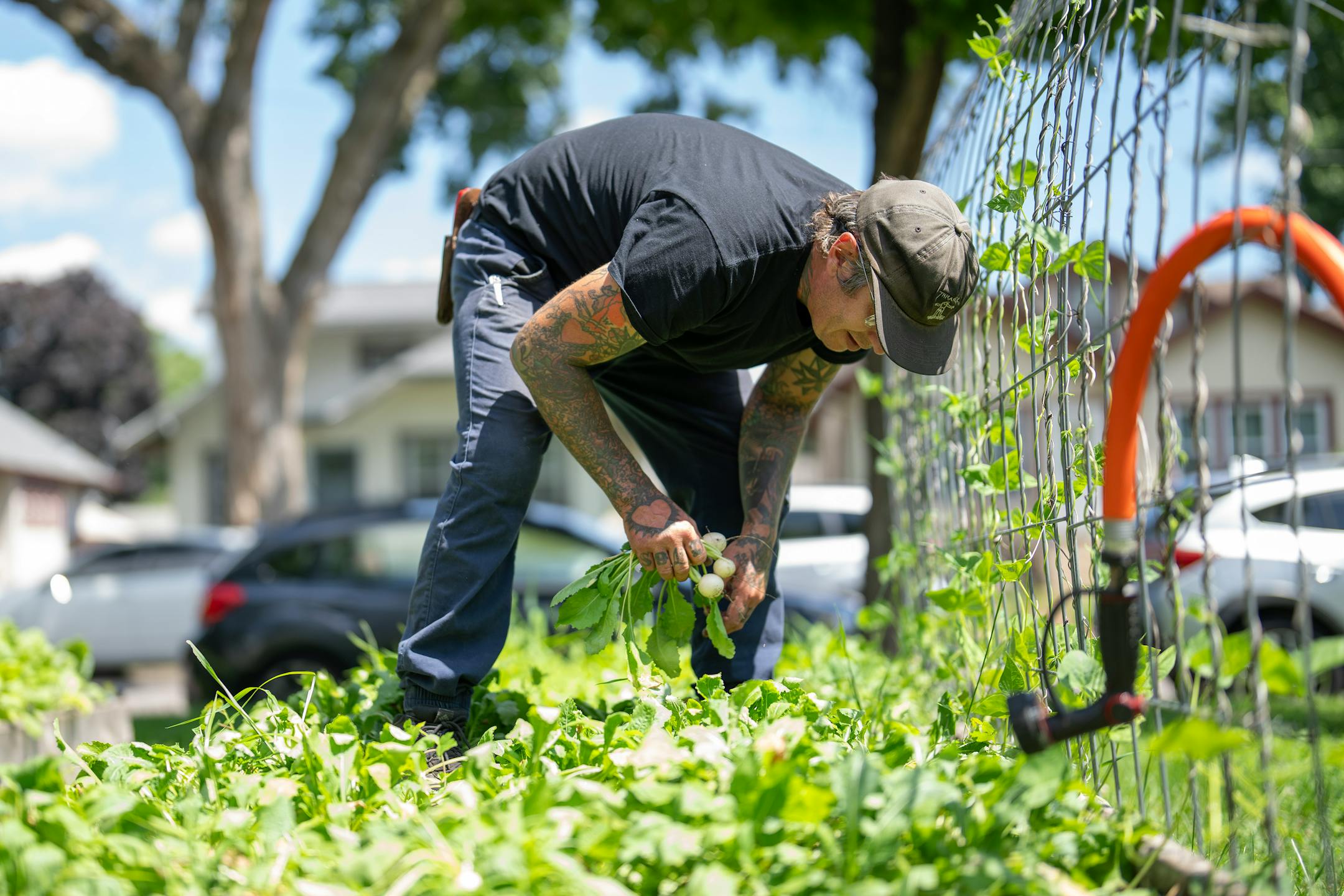
Jade Townsend harvests small turnips in front of a Black Radish member’s home in south Minneapolis. (Alex Kormann/The Minnesota Star Tribune)

The job allows him to work with his wife, and be around their child, who was born in 2020, one year into the Black Radish. It has also connected the couple with the community.

All the yards, and most of the CSA members, are in their neighborhood. Dozens of conversations pop up on the sidewalk outside their house on Wednesdays, with passersby and members coming and going.

Local restaurants like the North Star Deli and the Standish Cafe source ingredients when there are enough supplies to go around. And a grant from the Sanneh Foundation lets them provide food to distribute, with a chef who makes culturally relevant meals for those using the program, who are largely Hispanic.

The plot of land they want is off 39th Street and Standish Avenue. It’s a vacant lot next to an apartment complex. If they get the land, the converted yards would stay, and the Black Radish’ footprint would double. By farming the land instead of using raised boxes spread out across blocks, their output would triple.

They want the land to anchor the community. The vision also includes partnering with Sanneh on another front, bringing in a job training program to work with Townsend in the garden.

While the CSA works to raise the money, Thompson and Townsend note that the expansion wouldn’t be making dividends. They didn’t get into urban gardening to turn a profit. The driving factor for this latest endeavor: If they can grow in acreage, they can reduce their waitlist, and help more people get access to fresh, locally grown vegetables.

“What do you really want to be doing with this short amount of time that you have on this Earth?” Townsend asked. “It’s important that you’re not stuck doing something miserable, and we would rather try to make a difference in the world and be happy than make a killing.”

about the writer

about the writer

Lincoln Roch

Intern

Lincoln Roch is an intern for the Minnesota Star Tribune.

See Moreicon

More from Home & Garden

See More
A barred owl on a tree branch in daylight.
Bob Hilbert

Plus homely cardinals, missing goldfinches and a life-and-death battle between a hawk and a snake.

Plants in the home of Brendan and Alexi Coffey in Redding, Conn., on Dec. 7, 2020.
Kelley Proxmire had carpet cut specifically to fit the space in her own dining room, making it look larger. Proxmire uses lots of green plants in her work, and is adamant that they look healthy. Illustrates DESIGN-STAGE (category l), by Jura Koncius, (c) 2014, The Washington Post. Moved Thursday, August 28, 2014. (MUST CREDIT: Kevin Allen.)