

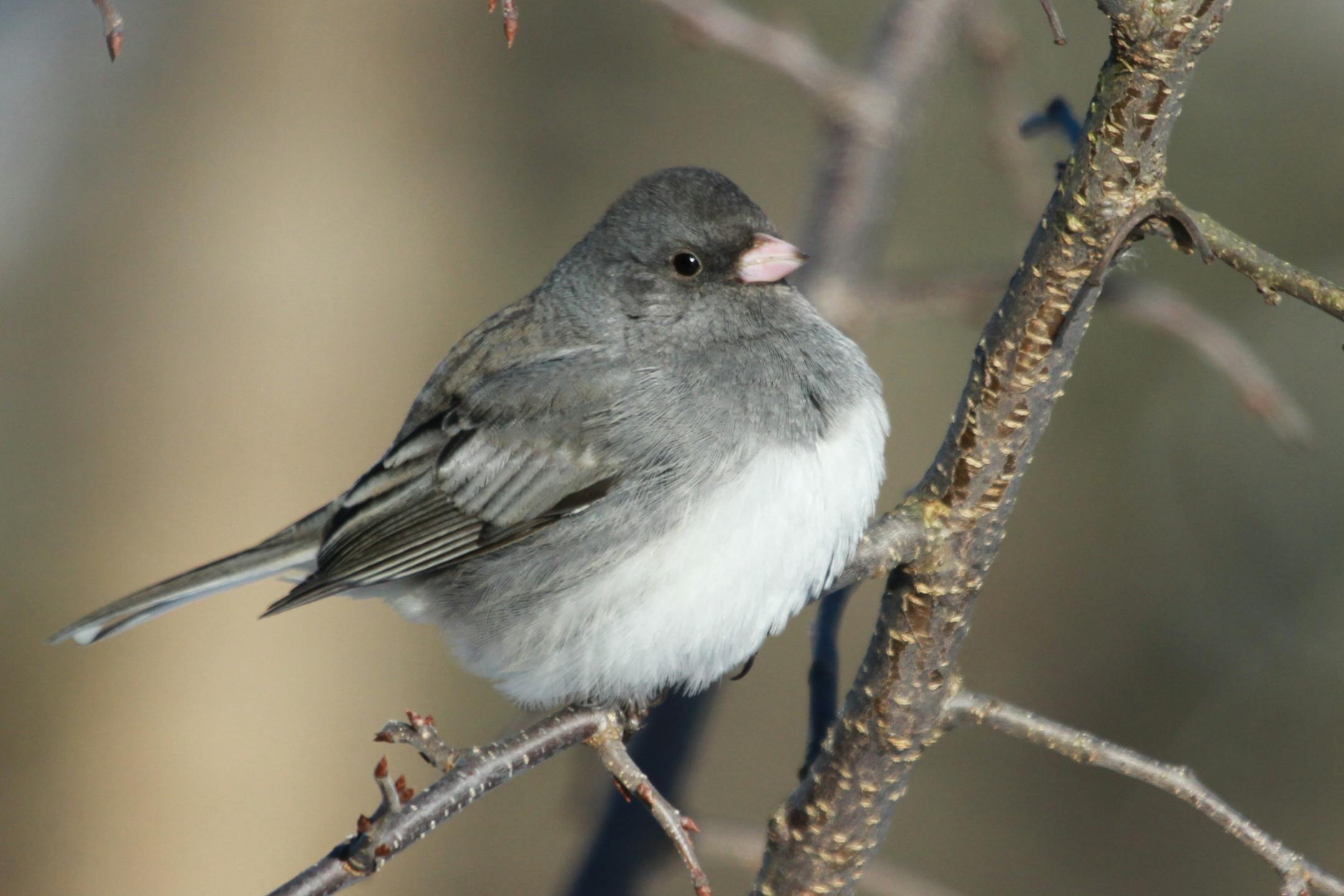
It was the third week in January, with the temperature gauge registering minus 17 degrees at 6 a.m. The sun wasn’t even up yet, but dozens of small birds were hopping on the snow beneath a backyard spruce, snapping up the millet and cracked corn I’d tossed there, seeming oblivious to the brutal cold.
What kind of bird would be out foraging before dawn in such conditions? If you guessed dark-eyed juncos, you’re familiar with the sheer toughness of these small members of the sparrow family.
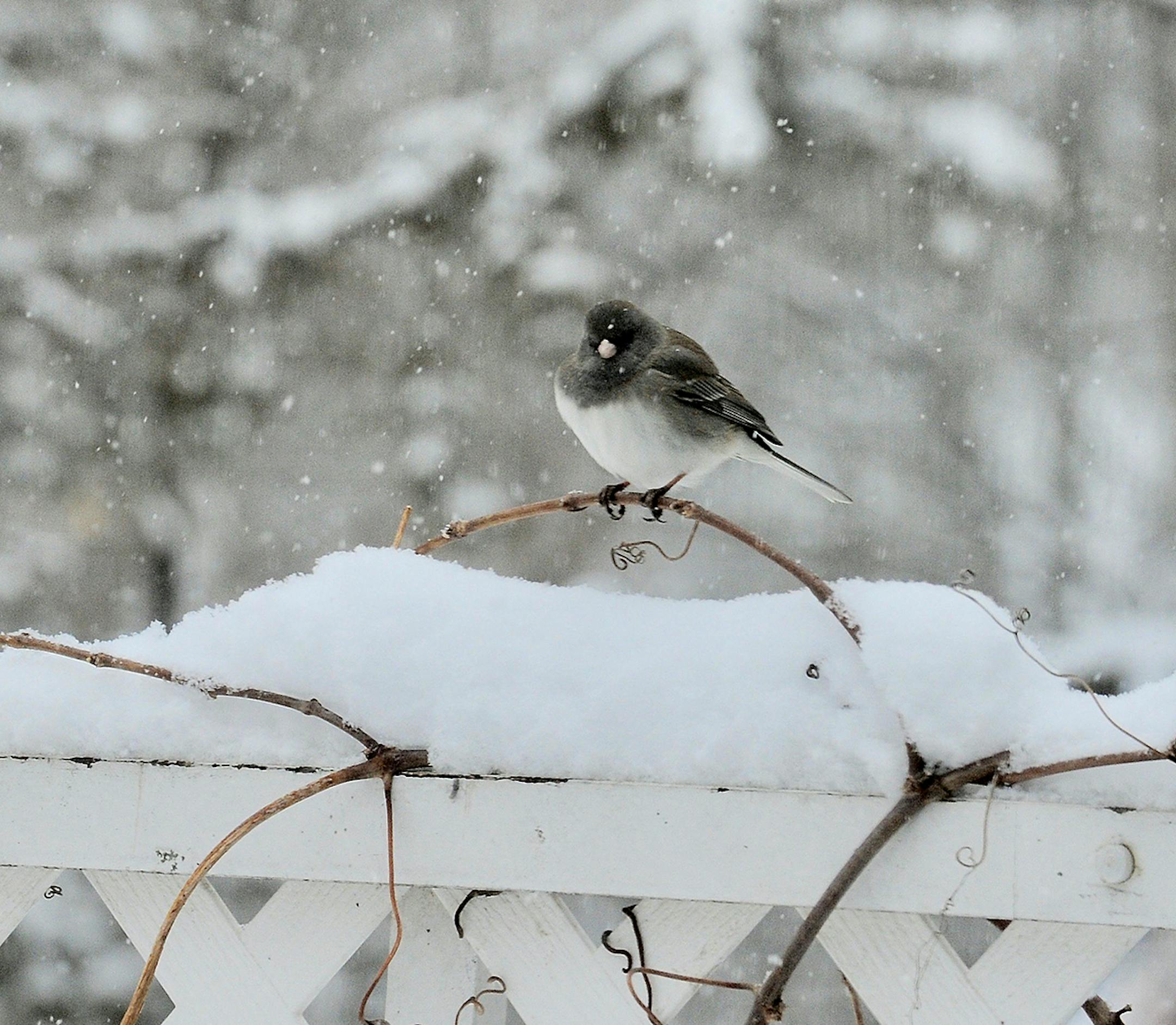
Aside from a few northern cardinals, another winter-tolerant species, most of the other regular backyard birds were still sleeping in their night roosts. But not these juncos, birds that migrate from the far north to spend the coldest months in our area. They’re often called “snow birds” because winter is not far behind as they begin to appear in late September and October each year. They’re out there all winter, foraging on the ground in parks, roadsides, backyards and grasslands no matter the weather.
In the bird world equivalent of long underwear, juncos add 30% more feathers (by weight) before the onset of winter. They also seek out foods high in fat, like those millet seeds, to sustain their body heat. They stay with their own kind, foraging in small flocks of eight to 30 birds. This flocking behavior gives them an edge in spotting predators — more eyes on the skies — but it favors the larger males over females and young birds: Juncos maintain social hierarchies with older males claiming the inner part of a foraging circle, while females and younger birds are consigned to the outer edges.
Easy to identify
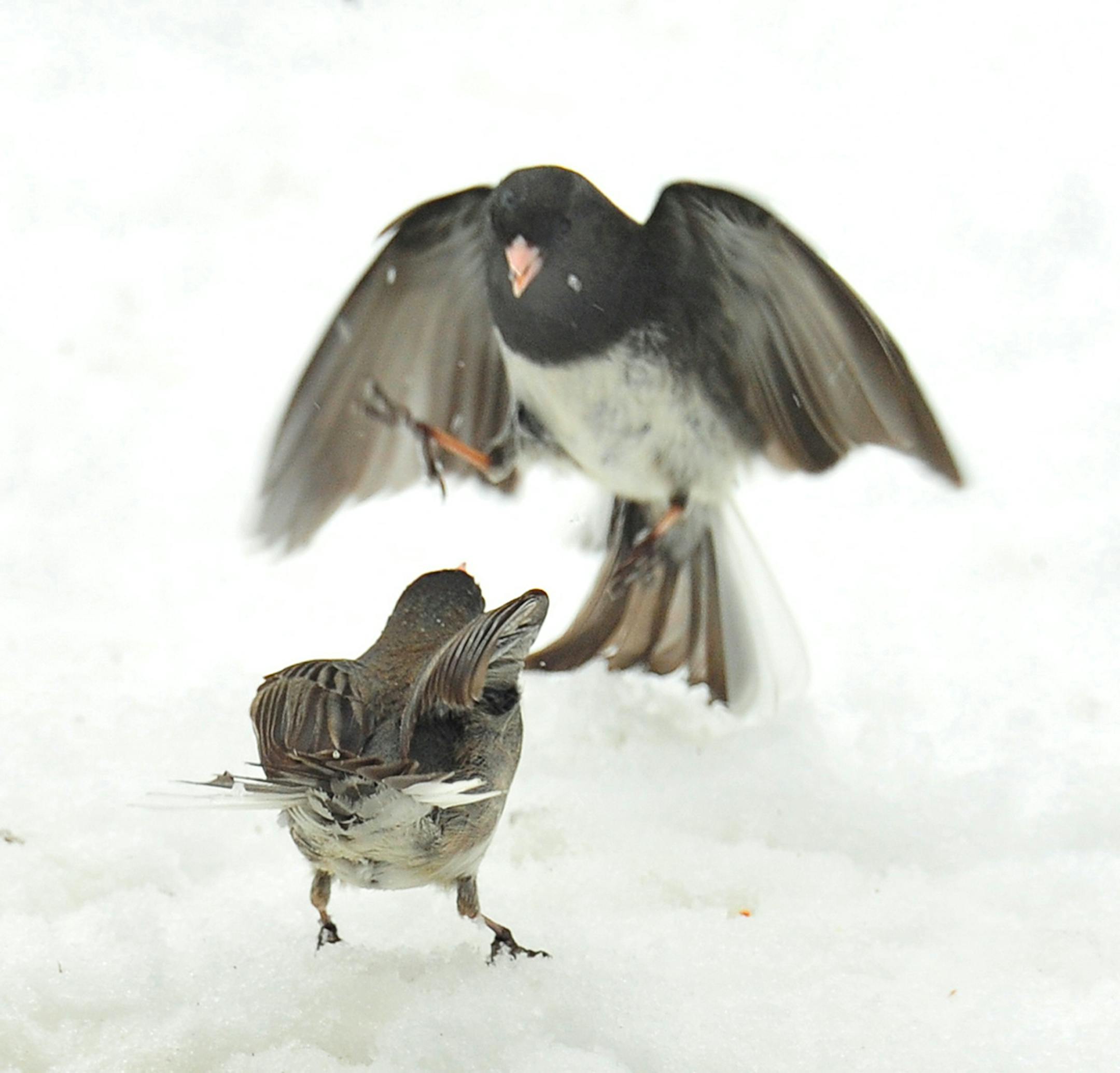
Juncos are highly recognizable and are often described as “dapper.” They’re slate colored across the back, wings and head, and their bellies are white. Members of a flock might seem indistinguishable, although a closer look turns up a number of color variations. I admire their tiny, conical beaks, appearing white or even light pink. The feature that really says “junco” is their white-edged tail feathers that flare as they leap into the air, especially if danger has been spotted.
You will notice this flash of white if you disturb a flock feeding on a nature trail. If you are walking with friends, you may spot a number of small, dark birds up ahead, feeding in the low grasses on the edge of the path. They inevitably flush as you draw closer, leading some members of the group to wonder what kind of birds those were. “Dark-eyed juncos,” you can say sagely.
Not afraid
When a hawk streaks overhead, all the birds dash for hiding places in hopes of avoiding capture. Juncos are the first birds to fly back in after the predator leaves, to continue the important job of feeding on seeds (and arthropods). I’ve observed occasions when a few juncos don’t even bother to depart, taking a chance on escaping a hawk’s notice.
We often think of them as silent little birds, but juncos do sing. They have a short, musical trill similar to the songs of chipping sparrows and pine warblers, and this is often quite loud. They have a softer song made up of trills and warbles, resembling the song of goldfinches. As they prepare to depart in April or May, they seem to trill almost nonstop.


