
What is ‘skimo’ and can you try it in Minnesota?

It is possible to try the new Olympic sport in Minnesota, but it’s not true ski mountaineering.

The Minnesota Star Tribune
February 18, 2026 at 12:00PM
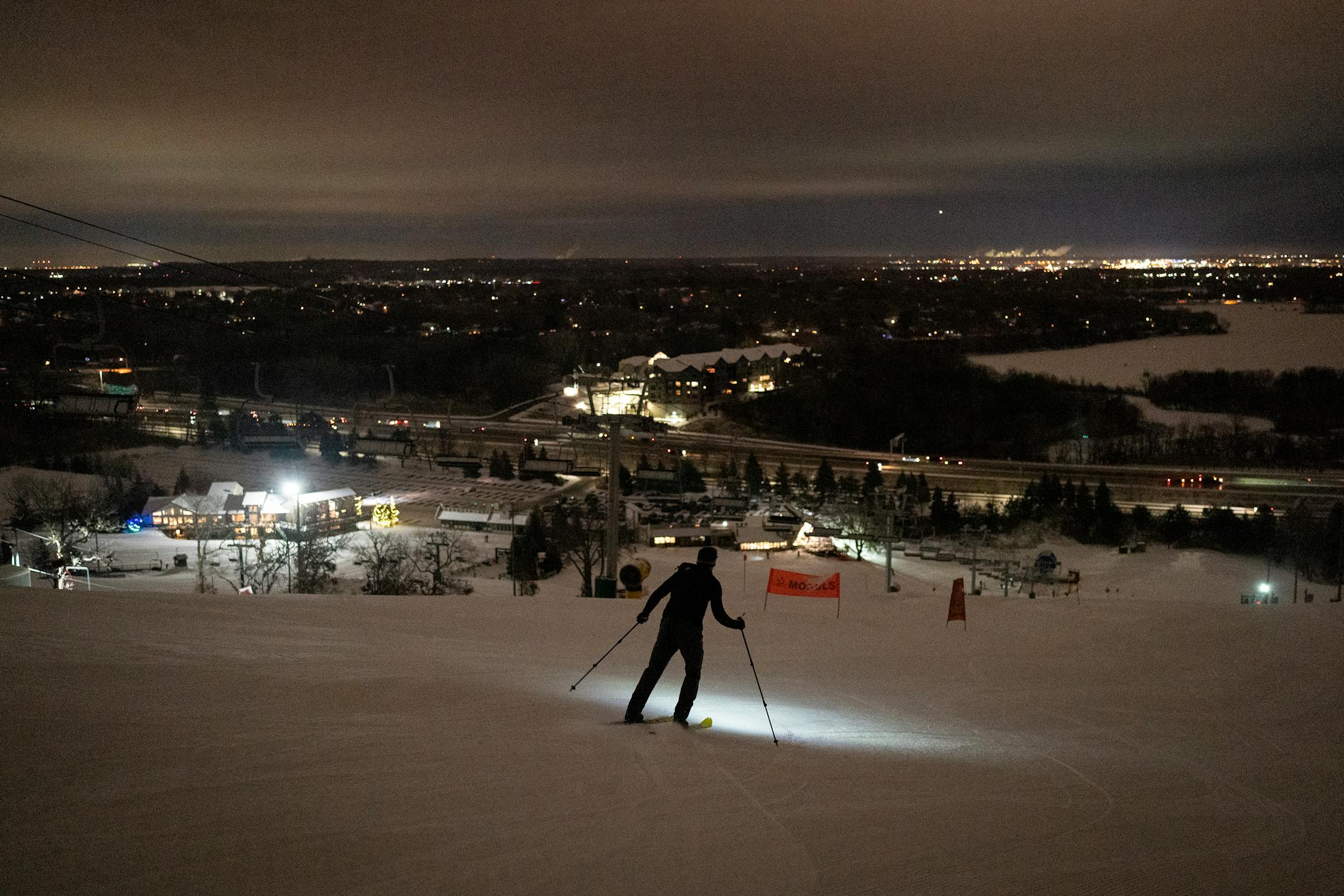
A skier goes down the hill during uphill access in the early morning at Buck Hill ski area in Burnsville. (Leila Navidi/The Minnesota Star Tribune)

The new sport at this year’s Winter Olympics has some skiers scratching their heads.

Ski mountaineering, or skimo for short, is debuting in Italy on Thursday. It will feature competitors traversing a snowy course that features a 230-foot elevation change. A run during the competition takes approximately two to five minutes to complete. Much shorter than traditional European ski mountaineering.

That’s part of the confusion for skiers. Though the sport is called “ski mountaineering” in the Olympics, it is far from the type of ski mountaineering that adventurers like Kelly Draehn are training for.

Draehn, who is a Minneapolis resident and has taken avalanche safety courses for her hobby, said the type of mountaineering she does is more about being in the outdoors than racing.

“It’s like the difference between hiking and trail running,” she said. “Ski mountaineering is more on how to survive in the wilderness than completing a race.”

There are some ski mountaineering competitions, but they are more akin to marathons than sprints.

The Mezzalama Trophy in the Italian Alps, for instance, spans nearly 28 miles with an elevation change of around 20,000 feet. Started in 1933 and named for ski mountaineering pioneer Ottorino Mezzalama, the race takes ski mountaineers hours to complete, according to the competition’s website.

The Olympics version does share some of the technical elements with traditional ski mountaineering.

On the course in Bormio, north of Milan, skiers must first hike up a portion of the mountain run with “skins” — a fabric that attaches to the bottom of the skis and prevents the athlete from sliding backward. At the steepest part of the ascent, skiers then take off their skis and hike up in their boots, according to the Olympics website. Then for the last leg of the trek, they ski down, sans skins.

Among the rules: Skimo athletes must wear a backpack that carries items like a first aid kit and a shovel.

There are two individual events, the men’s sprint and women’s sprint. A third, the mixed relay, is a team event. In that competition, one woman and one man ski the course twice and it takes about 30 minutes.

Kilian Jornet, a well-known Spanish ski mountaineer, said in a blog post that while he’s excited that the sport is at the Olympics, it lacks some of the fundamental values of long-distance ski mountaineering.

The new competition is shorter in time and length to ensure it would be accessible to spectators, he pointed out, but along with that “the disciplines got slowly transformed from an activity where lecture of the terrain, creativity and range in skillset were key into an activity where precision, repetition and speed are the dominants.”

Nationally, alpine touring has boomed in recent years, especially since the COVID-19 pandemic spurred many to find new hobbies. Ski mountaineering is a subgroup of alpine touring. During the 2021-22 ski season alone, the U.S. saw a 96% increase in ski touring and a 50% increase in snowboard touring, according to a report from Snowsports Industries America, a trade group.

Skiers won’t find traditional ski mountaineering in Minnesota, or the Midwest for that matter. Those looking to try the Olympics version of skimo, though, have a few options.

Where can you try it?

There are two ski areas in Minnesota that allow skiers to hike uphill during non-chairlift operating hours with terrain similar to the skimo events at the Olympics.

At Buck Hill in Burnsville, uphill access is open to skiers most Friday mornings before the ski area opens. It is first-timer friendly and typically draws a few dozen people who hike up the 309-foot hill, said Matt Gustafson, director of marketing at Buck Hill. Once the skiers reach the top of the hill, they have first dibs on the freshly groomed downhill runs.

The price of admission is $10 and uphill access is open from 6-8:30 a.m. through March. For more information visit Buck Hill’s website.

Another place to try it out is Spirit Mountain, which stands at 700 feet and offers uphill access with views of Lake Superior in Duluth. Skiers must have a valid alpine (daily tickets are $81 for riders over 13 years old) or Nordic ski pass ($12 for those over 13 years old) and must be off the trails by 9:30 a.m.

For more information visit Spirit Mountain’s website.

What do you need?

At Buck Hill, there are two ways to hike up a hill. The first is by carrying your skis on your back and trekking up in ski boots through the snow, Rau said.

The second is to attach ski skins to the bottom of the skis, he said. Skins are available at most outdoor retailers and range from $90 to several hundred dollars. One side is sticky and adheres to the bottom of the skis. The other side has mohair that lays flat when the athlete moves forward and sticks up with any backward motion which prevents the skier from sliding down the hill, Rau said.

It’s important to make sure the skins are as wide as the skis, he added.

“Otherwise, that’s all you need,” he said. “If you have skis, the bindings, the boots and a pair of poles, you’re good to go.”

about the writer

about the writer

Alex Chhith

Reporter

Alex Chhith is a general assignment reporter for the Minnesota Star Tribune.

See Moreicon

More from Outdoors

See More
card image
Don Severson

Juncos are hardy little souls, often over-looked “snow birds.”

card image
card image