THC drink makers fear new Minnesota rules could tank market

Hemp beverage businesses tell the Office of Cannabis Management that new testing and labeling requirements could harm THC drink makers and the stores and breweries that sell them.

The Minnesota Star Tribune
October 2, 2025 at 4:28PM
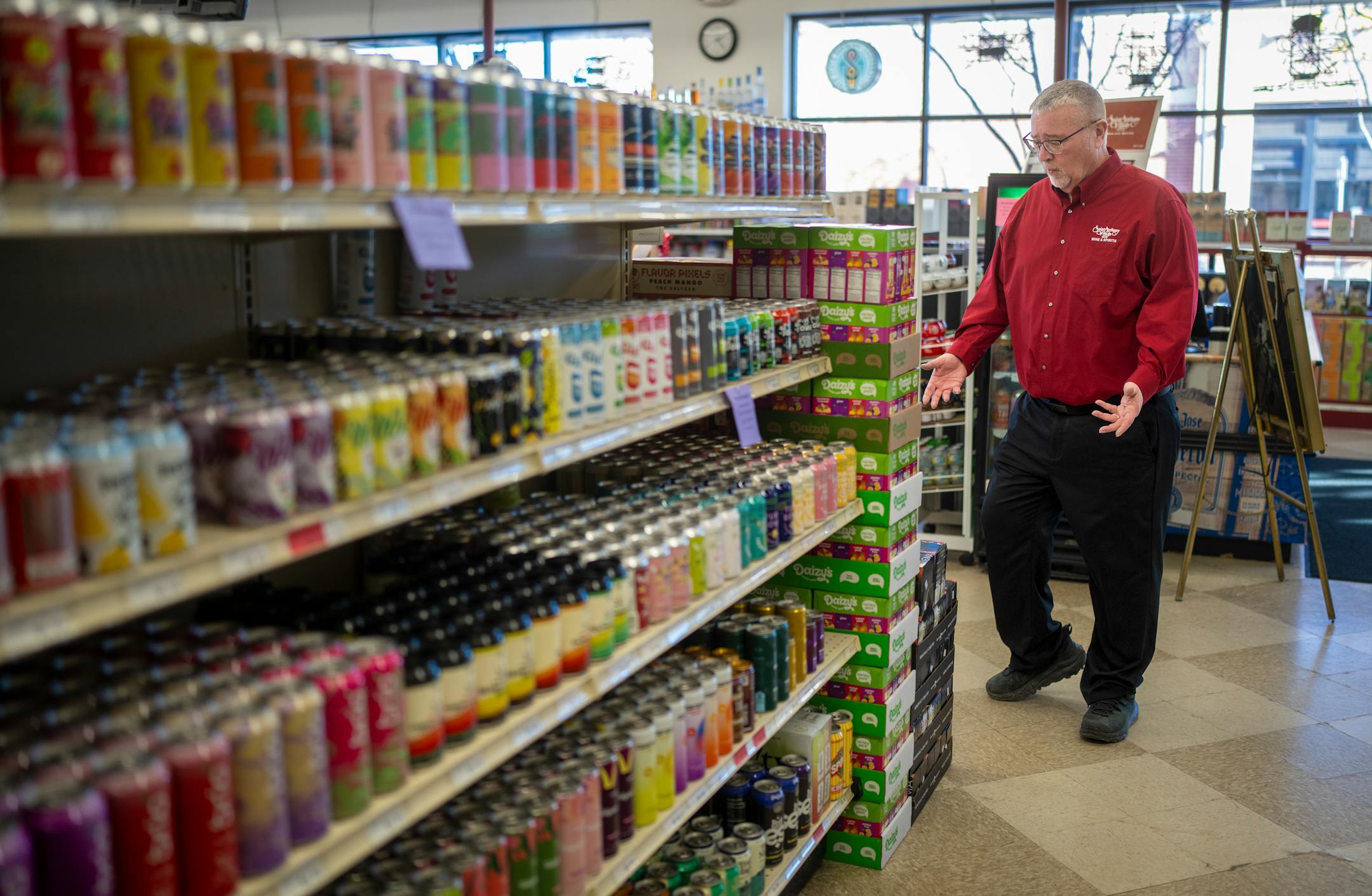
Mike Larson runs the municipal liquor store in St. Anthony. He has seen an increase in THC beverage sales and a decrease in alcohol sales. (Renée Jones Schneider/The Minnesota Star Tribune)

Minnesota hemp and cannabis businesses are warning state regulators that new rules set to take effect next year could devastate local companies, shutter breweries and pull popular THC-infused products off shelves.

About 60 industry representatives gathered on Wednesday to meet with Office of Cannabis Management officials and press for changes, following a Sept. 23 letter in which a coalition of manufacturers, distributors and retailers urged OCM Director Eric Taubel to delay enforcement of the new law for six months.

The THC beverage market that defined Minnesota’s early-stage cannabis industry and paved the way for recreational legalization is now one of the most competitive in the nation. It could face serious contraction when the new labeling and testing laws go into effect Jan. 1.

“This could be an existential risk to many Minnesota businesses, including craft breweries and retailers that rely on these products,” said Glenn McElfresh, co-founder of the Plift hemp-infused beverage brand. “We’ve really got to find a solution in the coming weeks.”

At the center of their concerns is a requirement that all low-potency hemp edibles be tested at Minnesota-licensed labs. The requirement is part of a state law created to ensure consistent product safety and consumer awareness across hemp and cannabis products.

Currently, two labs are licensed, which is not enough to handle testing demand, industry leaders say.

(Sign up for Nuggets, our free weekly email newsletter about legal cannabis in Minnesota.)

Drink makers also say they are alarmed by labeling requirements that would force products to list the manufacturer’s, cultivator’s and processor’s names and license numbers, arguing the rules will delay production, drive up costs and be difficult to implement.
McElfresh, whose company is based in Chicago, drove to Minneapolis for the meeting and left somewhat reassured.

“I’d be lying if I said I wasn’t scared,” McElfresh said. “Fear is one emotion that I am definitely feeling. I saw that in other business owners, but the OCM saw that, too. So, I’m hopeful and cautiously optimistic that we’re going to get something done here in the next few weeks before we start to see more negative effects in the market.”

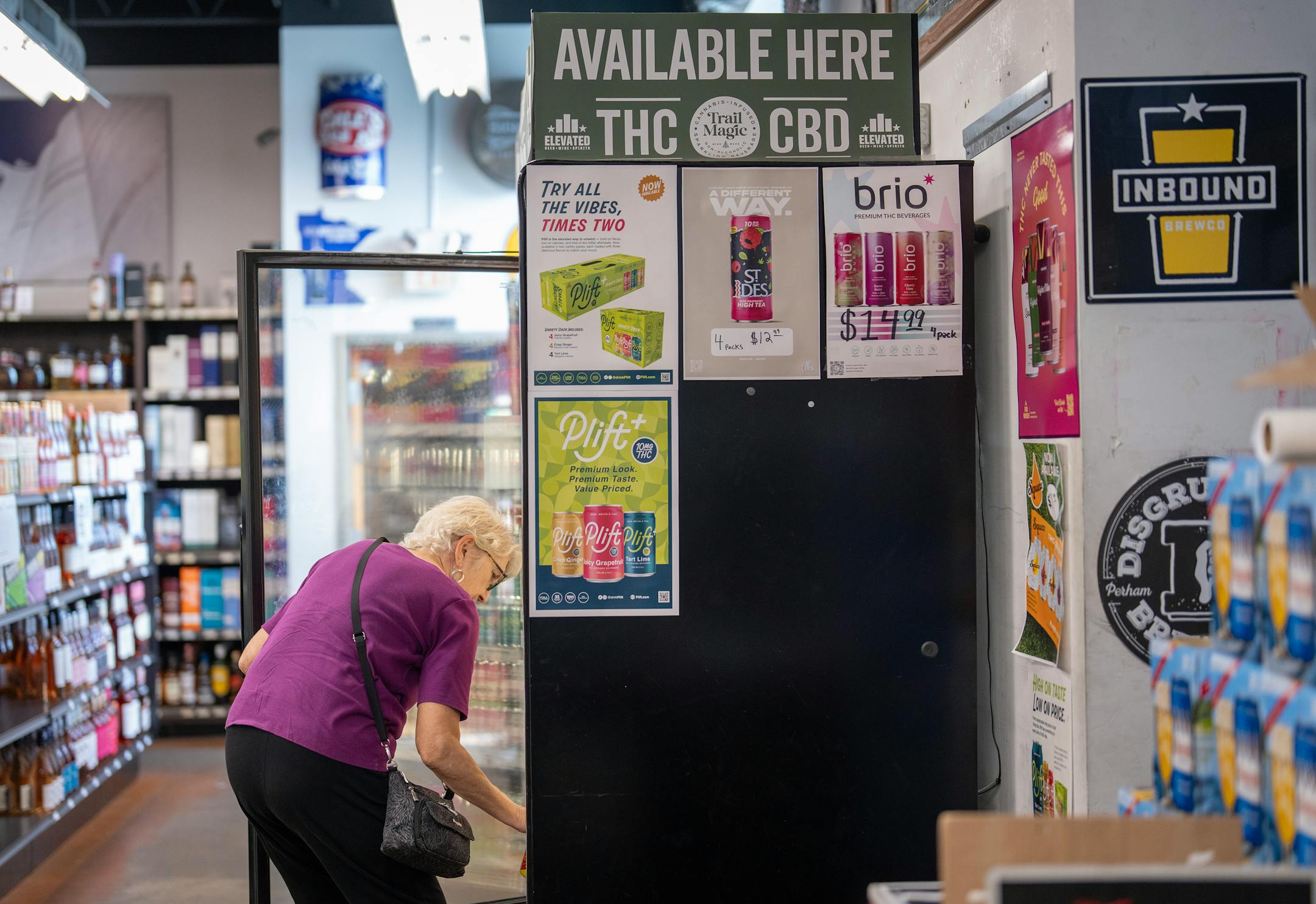
Bernadette Anton grabs THC infused beverages for her husband at Elevated Beer Wine & Spirits in Minneapolis on Wednesday. (Alex Kormann/The Minnesota Star Tribune)

A thriving industry

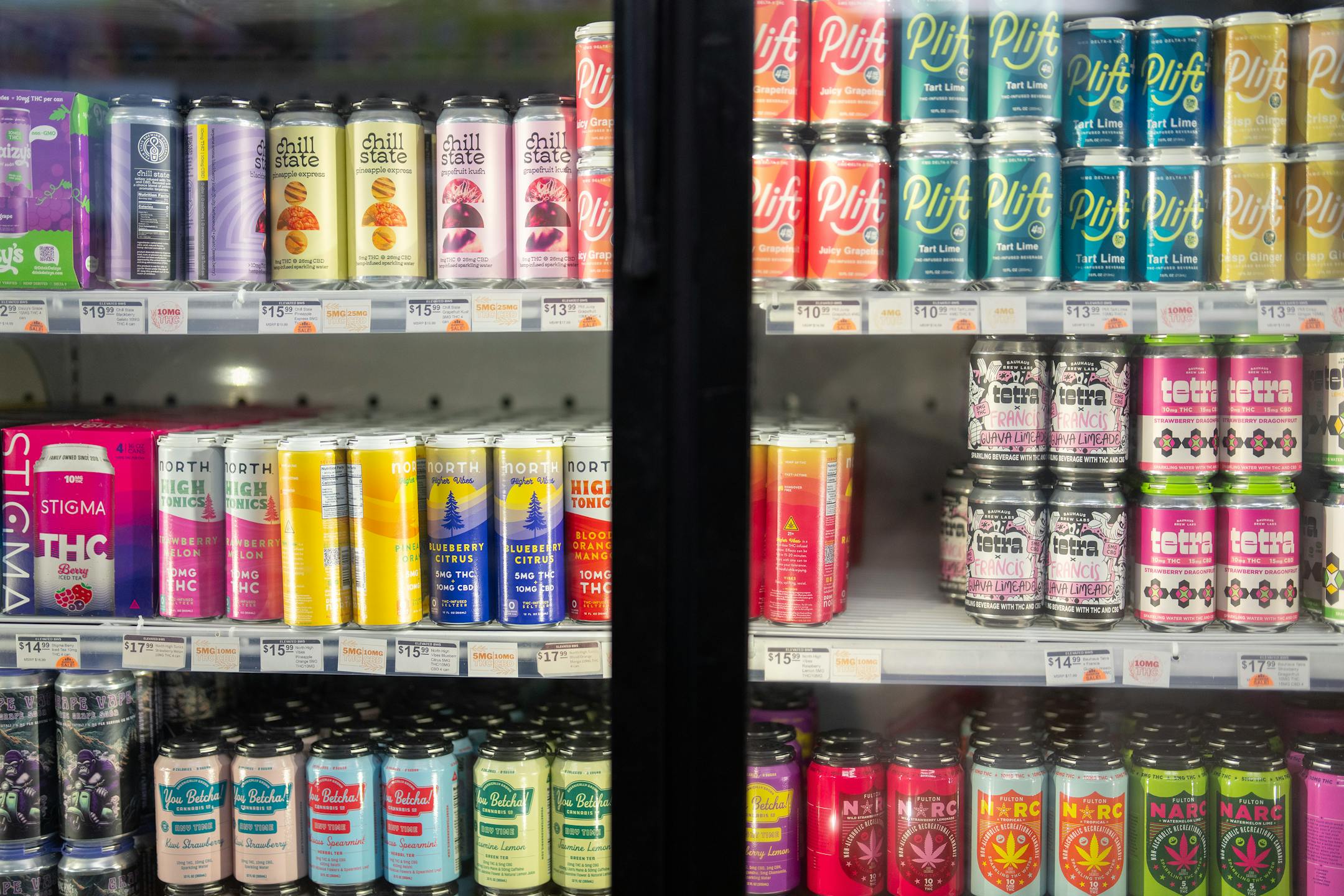
THC-infused drinks have exploded in popularity in Minnesota since 2022, when the Legislature passed a law allowing the sale of products containing THC, with cans popping up on shelves in restaurants and grocery stores, and breweries embracing the beverages.

“Minnesota is the single most competitive hemp beverage market in the country,” McElfresh said. “And if you can make it here, you can make it anywhere.”

THC drinks started appearing in liquor stores like Total Wine & More and Top Ten Liquors once recreational cannabis was legalized in 2023.

Jon Halper, Top Ten Liquors owner and CEO, who signed the letter sent to the OCM, said selling hemp beverages has prevented some liquor stores in the state from going out of business. In two years, THC drinks have grown to make up almost 15% of his sales.

Now, under Minnesota Statute Chapter 342, all businesses that hope to continue to sell THC drinks have until Oct. 31 to apply for lower-potency hemp edible licenses.

That’s a big change from having no license requirement, though Halper said all Top Ten Liquor locations will complete the licensing process this month.

For the licenses, manufacturers must pay $1,250 up front and $1,000 to renew; retailers $500 per location up front and $250 annually.

“It has been the Wild West for the last two years, but that is changing,” said Jason Tarasek, a Minnesota attorney who represents cannabis businesses who attended the meeting. “I don’t know if everyone who’s been selling these products is going to pay for a license.”

Testing delays and labeling problems

The THC drink retailers and businesses argue in the letter that without clarifications and adjustments to Minnesota law, the industry faces testing bottlenecks, labeling challenges and major economic fallout.

McElfresh, who previously worked as a chief compliance officer at a cannabis company in Massachusetts during its transition from medical-only to recreational sales, said “the testing times went from a week to 12 weeks.”

“That contributes to price increases and it hurts businesses,” he said.

With so many players in Minnesota, only having two labs could cause big bottlenecks.

THC-infused beverages are on display in a cooler at Elevated Beer Wine & Spirits in Minneapolis. (Alex Kormann/The Minnesota Star Tribune)

The strict labeling law could cause brands to stop selling in Minnesota. Plus, it causes immediate problems since the labels can’t be printed until license numbers are issued, the beverage makers said. That could give big players with more resources an advantage.

Halper said some hemp beverage brands outside Minnesota are unwilling to ship to his stores because they “don’t know what’s going on in Minnesota.”

The letter said three out-of-state beverage companies plan to stop selling in the state later this year.

It also said half of the state’s 240 craft breweries could be at risk, as well as stores that rely on THC beverage sales.

In a presentation during the Wednesday meeting viewed by the Minnesota Star Tribune, the state cannabis office provided the companies some clarification.

Until the end of 2025, businesses with low-potency hemp edible licenses can sell products under either the old rules or the new rules. Starting in 2026, all new products must follow the new rules, but older products tested before 2026 can still be sold until they expire or sell out.

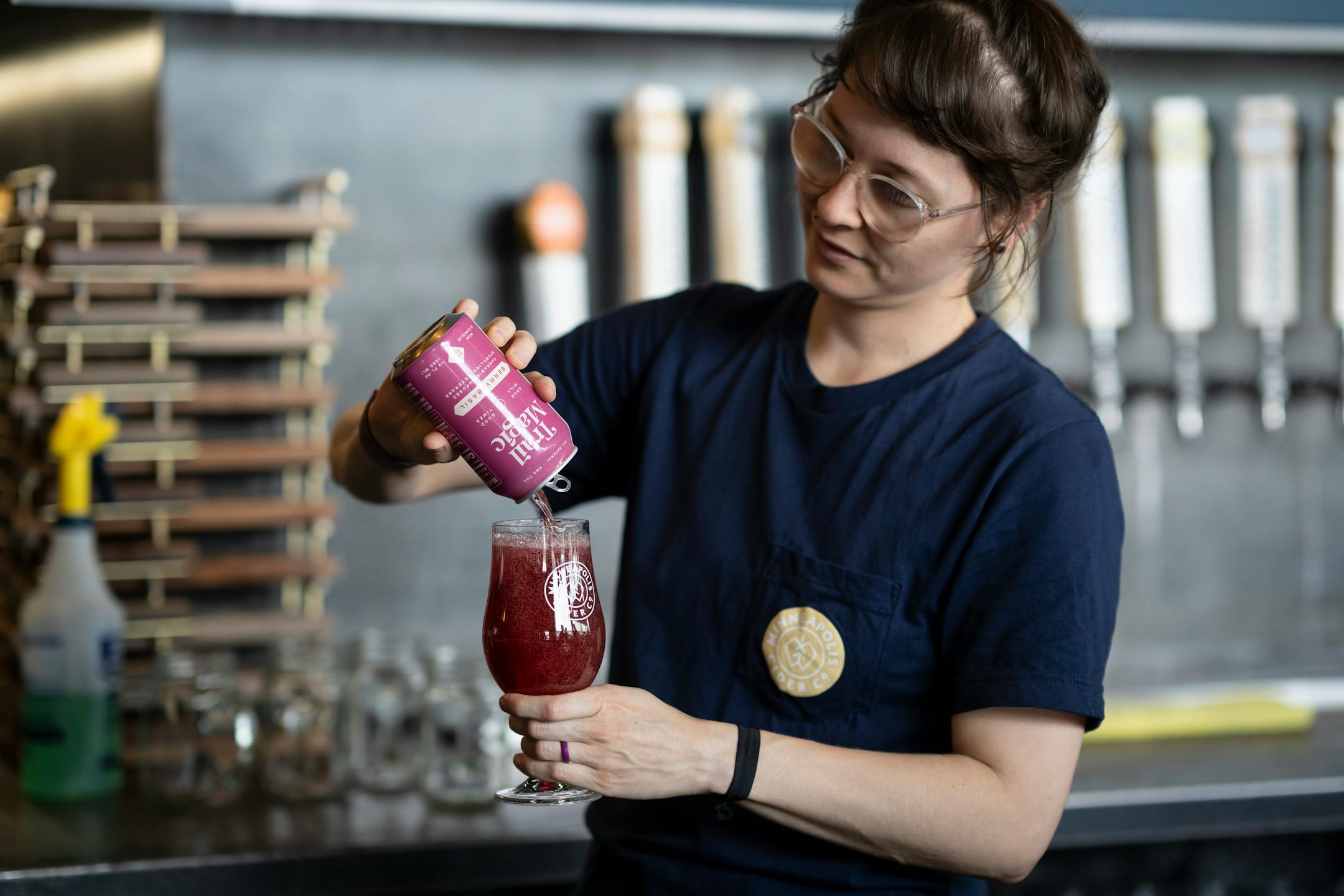
Ariel Bernades pours a Trail Magic THC drink for a customer at Minneapolis Cider Co. in Minneapolis. (Renée Jones Schneider/The Minnesota Star Tribune)

Next steps

Several business leaders, including representatives from Surly Brewing Co., Total Wine & More and Crooked Beverage Co., signed the letter to the state cannabis office. Copies were also sent to Gov. Tim Walz and legislative leaders from both political parties.

The coalition said a six-month extension of the compliance deadline to July 1 would provide critical planning time. Despite their concerns, the businesses stressed their willingness to collaborate with the OCM, lawmakers and other stakeholders.

“We know that they’re restricted in their abilities because they’re regulatory, not legislative,” said Halper of Top Ten Liquors. “We just want them to delay the date so that we can go back with the legislators and fix it, but not create mass chaos.”

The OCM said it will continue discussions with businesses to create proposals that “may ease” the transition without sacrificing “our duty to promote and protect public health and safety,” said spokesman Josh Collins.

But Tarasek, the attorney, said some owners fear their businesses won’t survive the changes.

“OCM is essentially throwing up its hands and saying, ‘Sorry, this is what the Legislature passed,’” he said.

McElfresh said he hopes the OCM will help companies form “some sort of bridge” to the beginning of the 2026 state legislative session, which does not begin until February.

“But that said, the risks are still there,” he said.

about the writer

about the writer

Emmy Martin

Business Intern

Emmy Martin is a business intern at the Minnesota Star Tribune.

See Moreicon

More from Business

See More
card image
Hormel headquarters in Austin, MN. ] GLEN STUBBE * gstubbe@startribune.com Friday September 11, 2015 Despite woes throughout the food industry, partly due to consumers turning away some from processed foods, Hormel has managed to continue prospering -- even though a good part of its business -- Spam, chili -- is about as processed as you can get. But the company's turkey and pork offerings are riding a hot protein trend. And over the past two years, it's made some of the biggest acquisitions in