

Editor's Pick

Editor's Pick

Ramstad: All this fraud talk has turned me into a Scrooge at Christmas

The holidays aren’t the time to question Minnesotans’ generosity. Neither is an election year.

Columnist Icon
The Minnesota Star Tribune
December 24, 2025 at 12:00PM
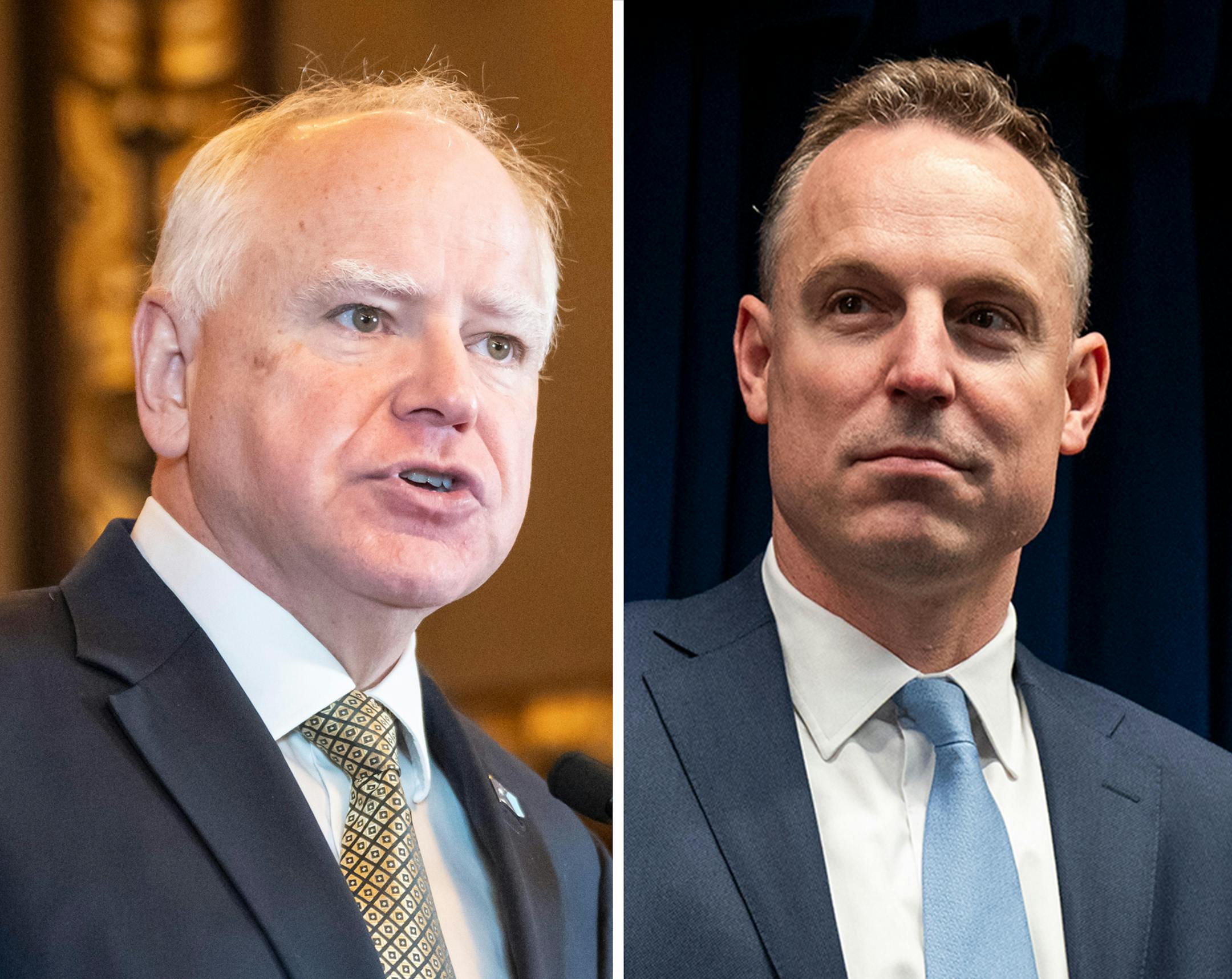
Gov. Tim Walz, left, and First Assistant U.S. Attorney Joe Thompson, the two key figures in Minnesota's unfolding drama over fraud against state-run human service and education programs. (Renée Jones Schneider/The Minnesota Star Tribune, Leila Navidi/The Minnesota Star Tribune)

If you watch the full video of First Assistant U.S. Attorney Joe Thompson’s Dec. 18 news conference, you’ll notice reporters asked several times before he gave the headline-making estimate that fraudulent activities around Minnesota’s Medicaid program may amount to more than $9 billion since 2018.

That statement became the new marker on human services fraud in the state as well as rocket fuel to the political battles shaped by the controversy. But I was just as struck by his answer, a few minutes later, to a question about responsibility for the fraud.

“There’s lots of levels of responsibility. There’s criminal culpability obviously, and then there’s other accountability,” Thompson said.

“I think all of us as a state have to grapple with that, and that’s not just prosecutors and law enforcement agents, but regulators and politicians and news media and community leaders. That conversation is starting to happen, and I hope it continues to.”

I’ve written quite a lot about the state budget and state government’s role in the Minnesota economy, but I’ve written hardly anything about human services fraud. So let me share my grappling since Thompson raised the ante on the fraud discussion.

My concern about the growth of Minnesota’s state government in recent years has been rooted in basic economics. Government output is less productive to an economy than private sector output. And government activity in an economy tends to crowd out private sector activity, on which the government depends for revenue.

Minnesota’s overall economic growth has trailed the nation’s since the early 2000s, creating two big questions for state leaders and policymakers.

Has Minnesota’s longtime structure of high taxes, big government and high level of services crimped the ability of the state economy to grow? And could slowing growth spiral to the point the Minnesota model falls apart entirely?

That’s the default conclusion for many businesspeople and right-wing political figures and thinkers. In a column titled “The Lesson of Minnesota’s Fraud” earlier this month, Wall Street Journal columnist Kimberley Strassel described Minnesota as a “state that preened as a model of social welfare, its own lavish benefits drawing many immigrants, and invited a plundering.”

Minnesota needs to draw immigrants, though. Like other states in the northern U.S., Minnesota’s population growth is basically flat because of weather and historically less diverse racial composition. These states have been vulnerable since their white populations peaked in the late 2000s or early 2010s.

Even so, I was alarmed in 2023 when the then-DFL-controlled Legislature and Gov. Tim Walz, armed with a surplus of unspent money from previous budget periods, jacked up state spending to a new level. While they called it a second Minnesota Miracle — grabbing the moniker given to an expansion of state government in the 1970s — they did not have the same benefit of a fast-rising population and fast-growing economy as their 1970s counterparts.

Even before the big jump in 2023, health and human services spending was outpacing the growth of the overall state budget. And within that health and human service spending, Medicaid spending is the biggest subset and grew even faster in most years of the last decade.

So, fraud is bad and the numbers alarming. If you take Thompson’s estimate at face value (and Walz didn’t), he’ll need an army of prosecutors and considerable time to prove it.

But fraud doesn’t begin to explain the massive growth in annual Medicaid services — essentially doubling from around $10 billion in 2018 to $20 billion this year counting both state and federal funds.

Clearly, Minnesota has not become a poorer state. Our poverty rate remains one of the lowest in the country at just below 10%, as it has been for years. We contend with New Hampshire and Utah for the lowest poverty rate in the country.

What has changed is that a huge number of baby boomers have aged into the time of their life where they need elderly care or some disability assistance, and they qualify for portions of it under Medicaid.

And what has also changed is legislators’ expansion of the types of services and loosening of qualifications for receiving them. Minnesota in 2024 ranked 16th in the country in overall Medicaid expenditures, though the state is No. 22 by population.

About 1.2 million Minnesotans, or 1 out of 5, benefit from some sort of Medicaid service. That’s more than the 975,000 or so Minnesota kids in pre-K to high school in the state.

And while there has been a lot of criticism about the state’s handling of fraud, data from the U.S. Department of Health and Human Services shows that Minnesota’s Medicaid Fraud Control Unit, based in the state Attorney General’s Office, ranked sixth in investigations per total Medicaid expenditures, fifth in fraud indictments and eighth in fraud convictions in 2024.

As for the U.S. Attorney’s Office here, Thompson described his anti-fraud team as “the best in the business.”

All of which leads me to a very un-Christmasy conclusion: Dealing with fraud alone is not enough to get Minnesota’s Medicaid, human services and the entire state budget under control. And without limiting all of that, there is no reckoning with the effect big government has on Minnesota’s economic growth.

Instead, Minnesotans and their politicians will have to recognize the state has become too generous and then decide to actually cut services.

Do you see that happening in an election year?

about the writer

about the writer

Evan Ramstad

Columnist

Evan Ramstad is a Star Tribune business columnist.

See Moreicon

More from Business

See More
card image
Renée Jones Schneider/The Minnesota Star Tribune, Leila Navidi/The Minnesota Star Tribune

The holidays aren’t the time to question Minnesotans’ generosity. Neither is an election year.

card image
card image