Cannabis business owners fume as medical dispensaries jump first into recreational market

Agreements with the state authorized two medical dispensaries to sell some of their existing medical marijuana to recreational customers while other retailers struggle to secure supply.

The Minnesota Star Tribune
September 30, 2025 at 10:16PM
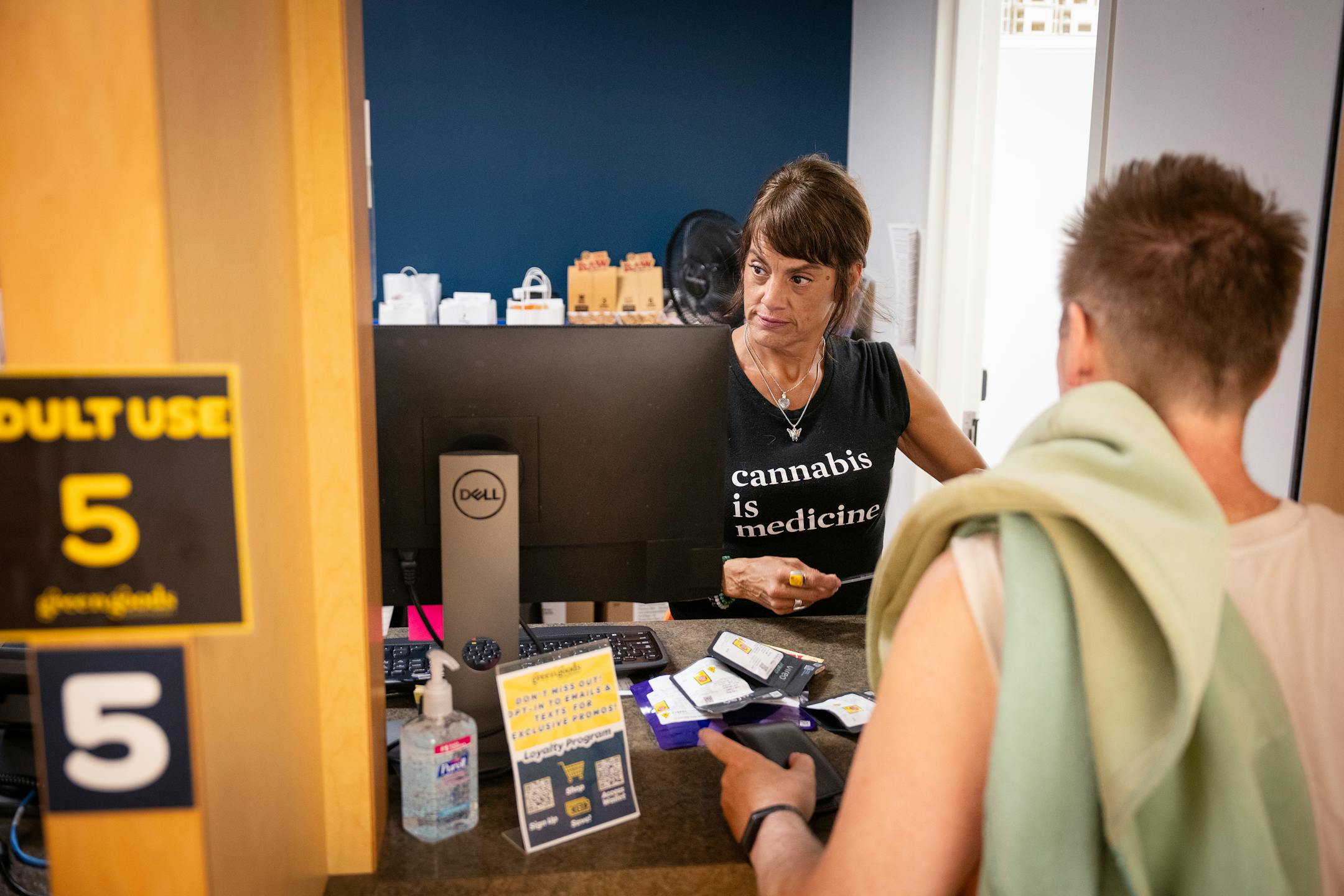
Adult recreational customer Peter Miller, right, who is visiting Minneapolis from New York, purchased cannabis products from “budtender” Pamela Stenberg at a Green Goods dispensary in Minneapolis on Sept. 16. (Leila Navidi/The Minnesota Star Tribune)

Minnesota cannabis entrepreneurs say they are confused and angry after the two companies that serve patients in the state’s medical marijuana program were allowed to immediately start selling recreational pot earlier this month.

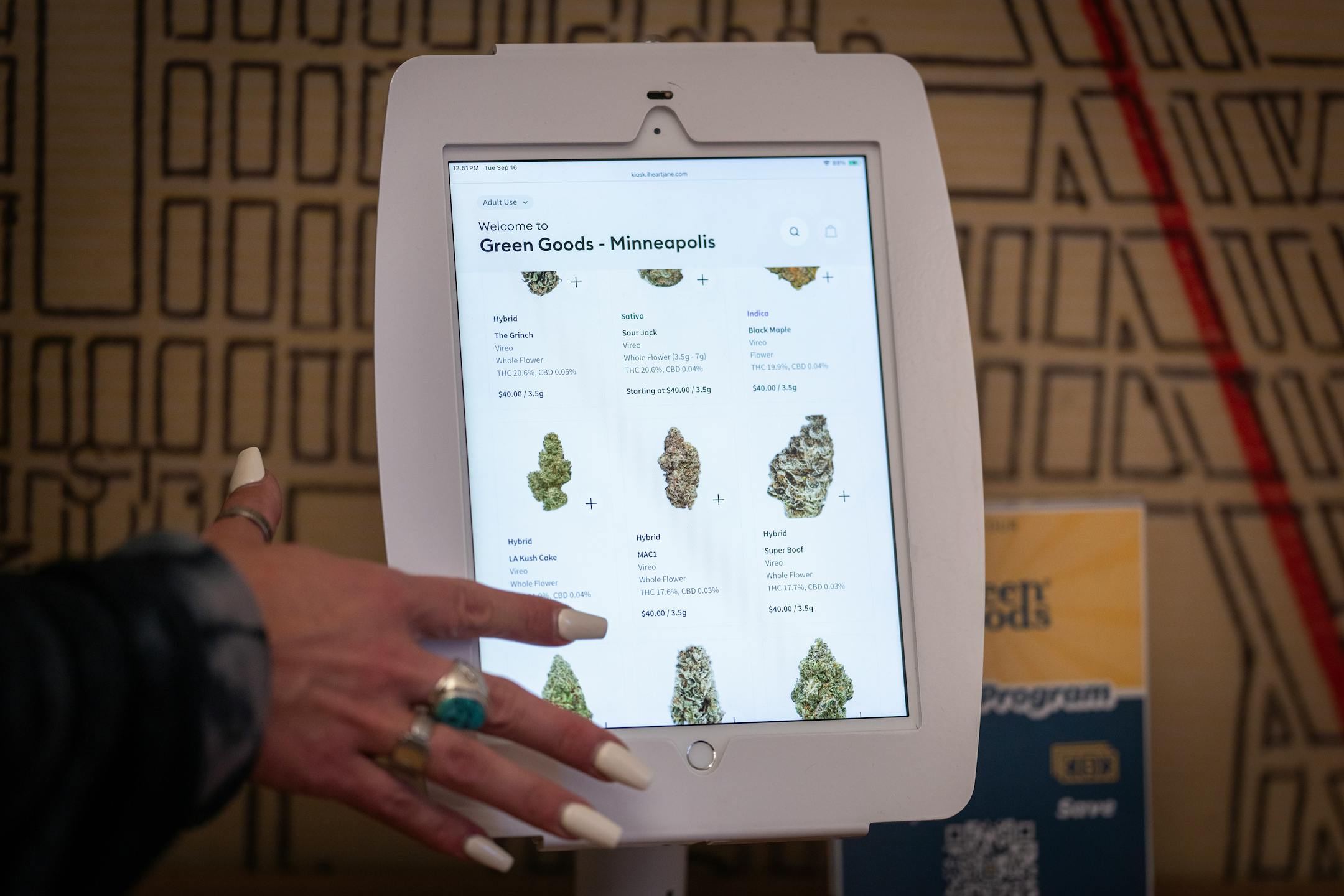
Many cannabis businesses licensed by the state are still unable to buy recreational marijuana to sell. But medical cannabis providers Green Goods and Rise, which between them operate 16 dispensaries, have established supply lines that have handed them an early corner on the Twin Cities recreation market. That’s thanks to little-publicized agreements with the state’s Office of Cannabis Management (OCM).

Mark Eide, owner of In-Dispensary in downtown Minneapolis, said he is struggling to keep his doors open with no product to sell more than six weeks after receiving a microbusiness license. Eide said he would have made different choices if he had understood that he would immediately have to compete with a Green Goods store just blocks away.

“I can’t believe this is happening,” Eide said. “I feel like the state of Minnesota and those in charge of the cannabis program lied to us.”

(Sign up for Nuggets, our free weekly email newsletter about legal cannabis in Minnesota.)

More than two years after Minnesota legalized marijuana for recreational use, the state’s journey toward a retail market has been anything but smooth. After lawsuits delayed the licensing process late last year, state officials have faced mounting pressure to launch retail sales as soon as possible. But entrepreneurs and advocates say it has been challenging to get clear information from the OCM.

“This issue is less about what benefits are being conferred to the medical cannabis companies than what disadvantage is being conferred to the social equity and regular applicants,” said Leili Fatehi, a lobbyist and hemp business owner who led the campaign to legalize recreational marijuana in Minnesota. “Both the tribes and the medical companies were extended the opportunity to negotiate with OCM much clearer and easier pathways to getting up and running.”

The social equity provisions included in the 2023 law that legalized recreational marijuana were intended to help veterans, residents of high-poverty areas and those with marijuana offenses on their records enter the cannabis industry.
Eide and other retailers like him are still waiting for the first state-licensed cannabis cultivators to harvest and process their crops.

Green Goods gets its cannabis from parent company Vireo Health, which cultivates cannabis plants and manufactures products that it sells in its dispensaries. Green Thumb Industries, which operates Rise, has 20 manufacturing facilities and more than 100 retail stores across the country.

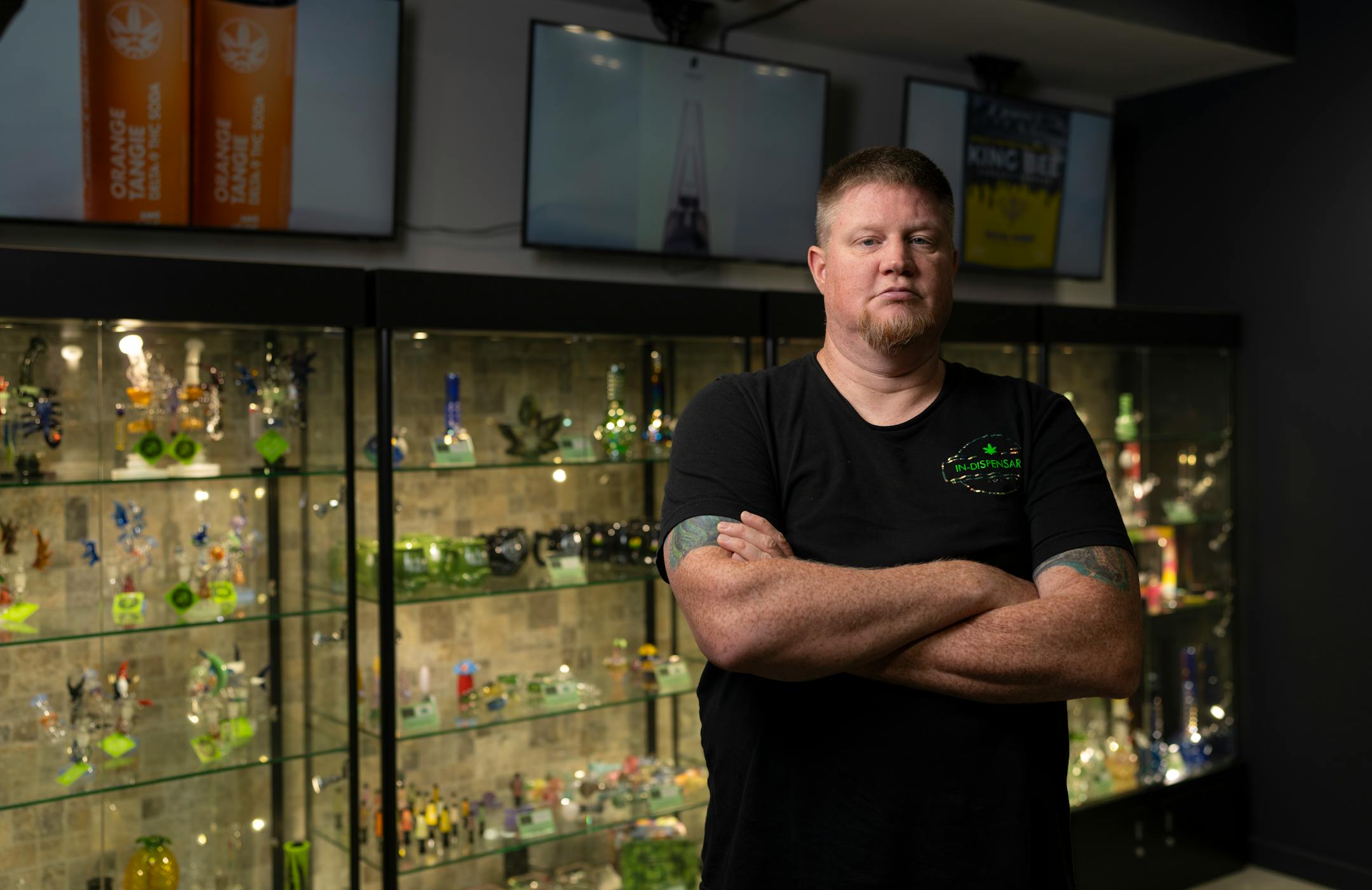
Mark Eide, who owns In-Dispensary in Minneapolis, is frustrated with the rollout of recreational marijuana in Minnesota. (Renée Jones Schneider/The Minnesota Star Tribune)

What the law says

Minnesota law states that once a medical cannabis combination business – the license type that Rise and Green Goods received – is licensed by the OCM, it can begin cultivating recreational marijuana in up to half the space used to cultivate medical cannabis products in the last year.

The law doesn’t explicitly say anything about converting existing medical cannabis into recreational marijuana, though it does permit these license holders to “perform other actions approved by the office.”

New agreements with medical providers

OCM spokesman Josh Collins told the Minnesota Star Tribune that the agreements allowing Green Thumb Industries (GTI) and Vireo Health to exclusively serve the medical cannabis program were set to expire this past March.

“If the medical companies chose not to sign extensions, Minnesota patients participating in the program would lose access to medical cannabis,” he said.

Extension contracts were signed and took effect March 1, allowing for continuity in the medical cannabis market. But they included provisions authorizing GTI and Vireo Health to designate and repackage up to one-third of the state’s existing medical cannabis inventory for sale as adult-use marijuana.

The companies were also allowed to designate one-third of plants currently being cultivated at the time of licensing for adult-use.

Patient care coordinator Cassy Taylor takes an adult recreational customer through options of cannabis products to purchase at a Green Goods dispensary in Minneapolis on Sept. 16. (Leila Navidi/The Minnesota Star Tribune)

Were these changes disclosed to the public?

Not much detail was provided to the public about the agreements. After cannabis rules were approved in April, OCM director Eric Taubel told the Star Tribune in an interview that, once licensed, Rise and Green Goods would be allowed to sell a portion of their existing medical cannabis supply to recreational customers.

In early July, the OCM referenced an authorization that “applies to limited product designated for sale to adult-use consumers subject to registration agreements,” in guidance for medical cannabis businesses preparing for the transition to the recreational market.

What do lawmakers think?

Several lawmakers who played key roles in legalizing marijuana in Minnesota defended the OCM’s agreements with GTI and Vireo Health.

Sen. Lindsey Port, DFL-Burnsville, who co-authored the bill that legalized recreational marijuana in Minnesota in 2023, said these agreements allow the medical cannabis companies “to jump-start Minnesota’s market.”

“We wrote the law knowing that the success of this new industry requires supporting a diverse array of Minnesota cannabis cultivators and retailers, from our social equity applicants to tribal businesses to companies expanding from medical sales to recreational,” Port said.

In a statement, Rep. Jess Hanson, DFL-Burnsville, disputed the idea that the agreements will give Rise and Green Goods a long-term advantage in the market and said support at the Capitol for “social equity owned and craft-style cannabis businesses remains intact as promised.”

Rep. Nolan West, R-Blaine, who has been a frequent critic of the rollout of recreational cannabis in the state, said he was unsurprised Rise and Green Goods were allowed to start selling recreational marijuana immediately, but he has sympathy for social equity applicants.

“Nobody gets hosed in this rollout more than the social equity applicants,” West said. “Now [they’re] exclusively disadvantaged because they’re paying leases on properties and waiting for inspections and they’re in a worse situation because they were trying to make them first.”

Did GTI or Vireo Health threaten to leave the Minnesota market?

Vireo CEO Amber Shimpa and Dominic O’Brien, GTI’s chief commercial officer, both said their companies never suggested they would not renew agreements with the state and exit the medical program.

In conversations with state officials, the companies pointed to the experiences of other states in which the medical cannabis market shrank dramatically after legalizing marijuana for recreational use, according to a lawmaker who asked not to be named. They suggested that without access to the recreational market, legalization would drive them out of business in Minnesota, the lawmaker said.

Competing with the ‘Walmart of Weed’

In New Brighton, Sarabear Kelly-Modlin and her husband, Philly, operate the Lucky Strains dispensary, which in August received a license from the OCM to sell recreational marijuana at one retail store. She said she was under the impression there would be a lag between when the medical cannabis companies were licensed and when they began selling recreational marijuana.

“We were caught very off guard by the fact that they were able to go live [this month] with recreational cannabis,” Kelly-Modlin said. “We had no idea.”

Since receiving a license, Kelly-Modlin and her husband have been unable to purchase any cannabis to sell. She said she worries that she is now competing against the “Walmart of Weed.”

“We were supposed to be the first ones allowed to sell flower,” Kelly-Modlin said. “Never happened. Not only did the reservations get to go first, but now multimillion-dollar companies are able to go first before social equity people. It is a slap in the face.”

Eide, the owner of In-Dispensary in Minneapolis, said his shop typically received 10 to 15 customers per day before Green Goods began selling recreational cannabis. Since then, the number has dwindled to one or two per day.

“Now when a person comes in asking for [recreational cannabis products], I have to turn them right back over to my competitors, because I can’t give them what they want,” Eide said. “I’ll never get that customer back.”

about the writer

about the writer

Matt DeLong

Audience editor

Matt DeLong is an editor on the Minnesota Star Tribune's audience team. He writes Nuggets, a free, weekly email newsletter about legal cannabis in Minnesota. He also oversees the Minnesota Poll. He can be reached on the encrypted messaging app Signal at mattdelong.01.

See Moreicon

More from Cannabis

See More
card image
Alex Kormann/The Minnesota Star Tribune

Don’t panic, THC makers and sellers say, as federal prohibition of the popular hemp drinks is still a year off and will be fought.

card image
card image