Advertisement

St. Paul’s Cathedral Hill remains shaken by ICE crash, even as surge winds down

The crash in the stately St. Paul neighborhood will leave its mark on residents, as the crackdown changed life for people across Minnesota.

The Minnesota Star Tribune
February 18, 2026 at 5:00PM
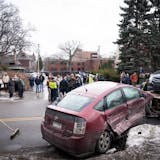
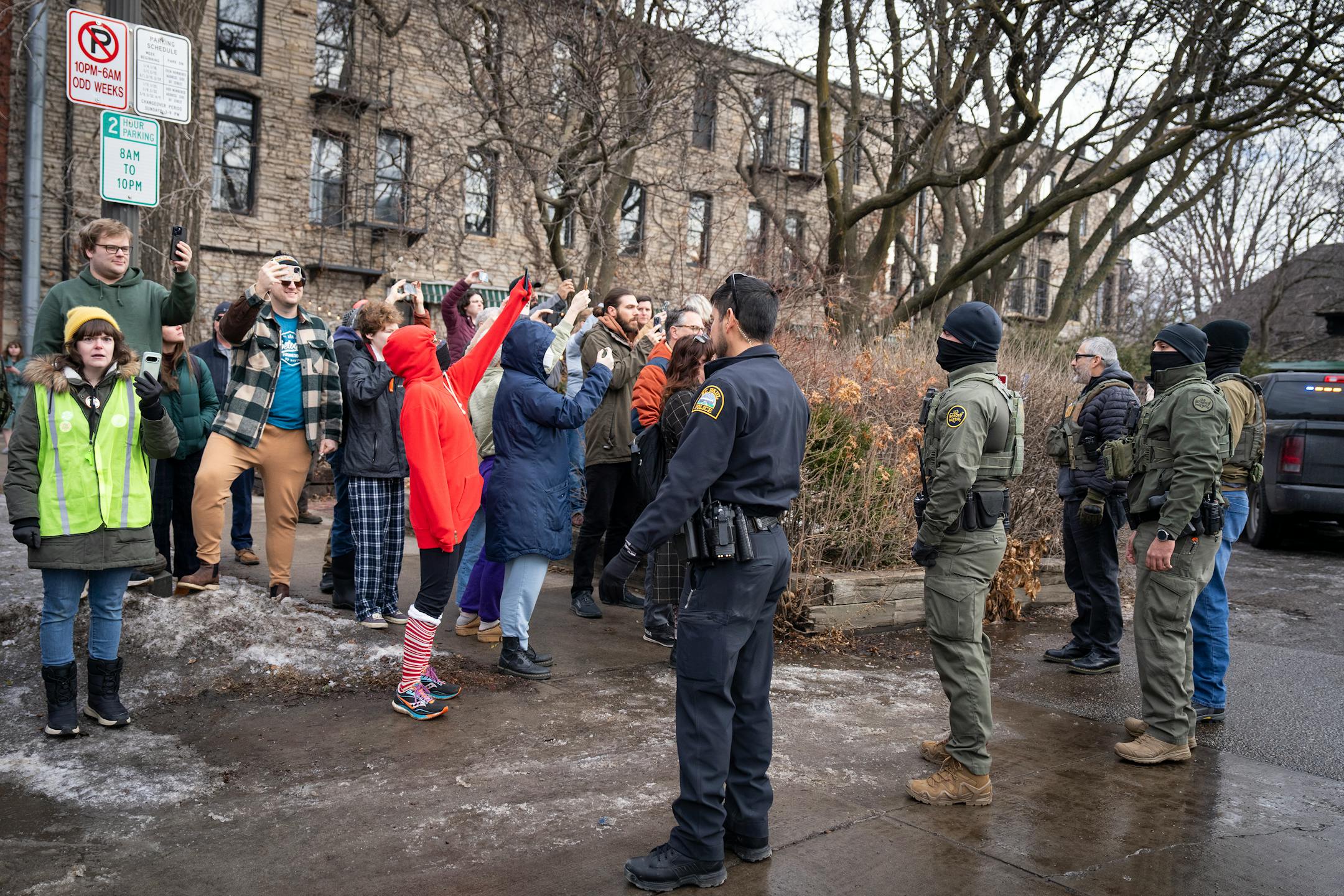
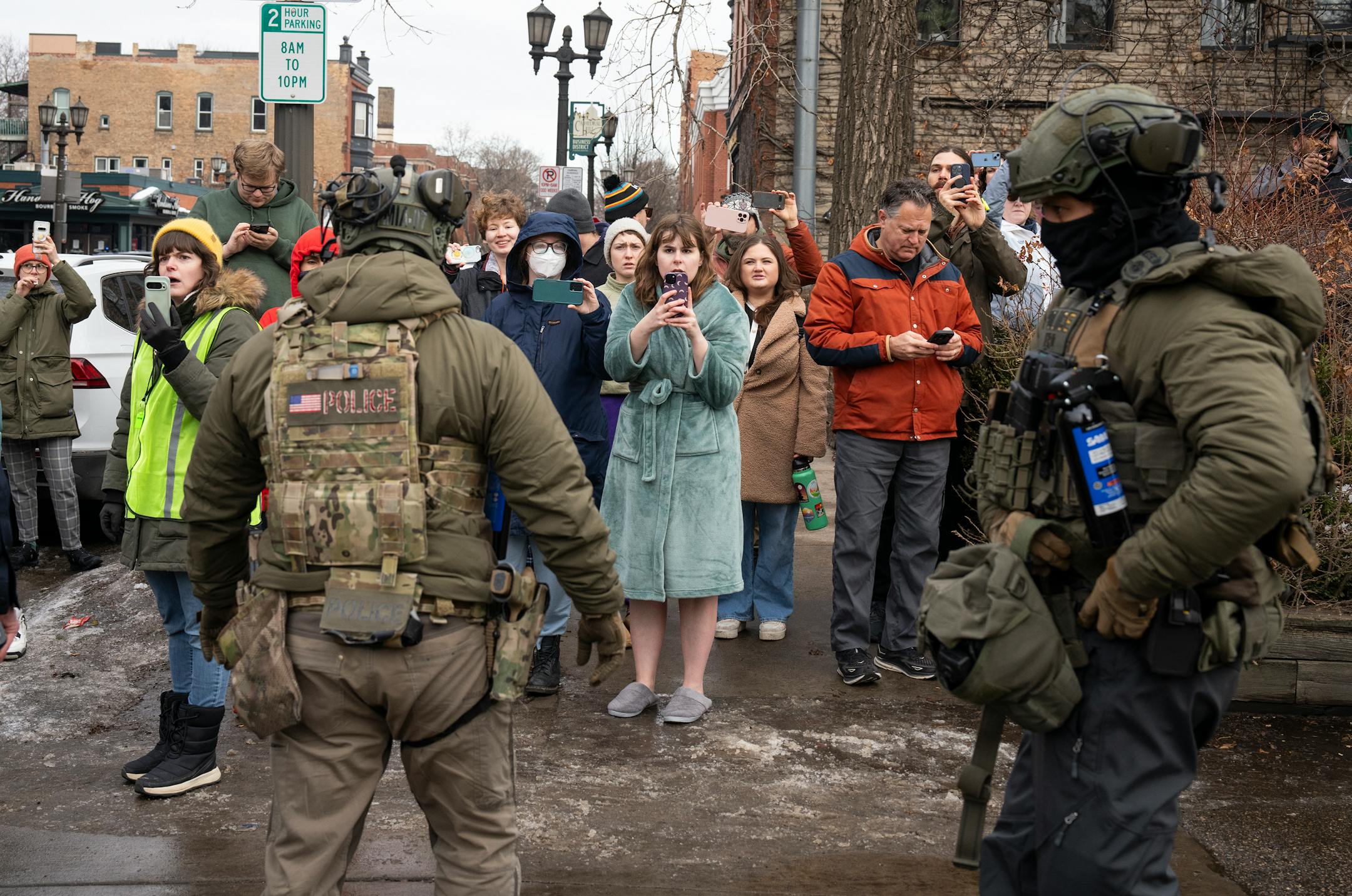
Federal agents and St. Paul police officers stand at the scene after a crash near the corner of Selby and Western avenues in St. Paul involving a pursuit by federal officers on Feb. 11. (Leila Navidi/The Minnesota Star Tribune)
Advertisement

A high-speed chase barreled into a genteel corner of St. Paul last week, with sirens and a crash shattering the quiet of Cathedral Hill and bringing residents face to face with the federal government’s immigration enforcement surge.

Even after the announcement that the ICE action in the Twin Cities would wind down, the neighborhood remained tense in the days after the crash. The collision, protesters’ whistles, and the sight of masked federal agents handcuffing someone were sharp reminders of the present in a place that usually feels suspended in another time.

The upscale enclave around the Cathedral of St. Paul, with its quiet tree-lined streets and stately brick buildings overlooking downtown, had seen almost nothing of the federal immigration enforcement — until the morning the high-speed chase brought neighbors to the streets.

“Just when you thought things were calming down,” said resident Alisha Nehring on a sunny weekend morning, shaking her head at where the crash had been. The day before the crash, Gov. Tim Walz had said he expected a federal withdrawal, and White House border official Tom Homan announced a drawdown the day after.

Nehring said she is still worried about federal agents in less affluent neighborhoods like Frogtown, just across Interstate 94 but worlds away from Cathedral Hill.

“We’re a pretty insulated neighborhood,” Nehring said. But the crash drove home the feeling that Operation Metro Surge did not leave any corner of the Twin Cities unscathed or unchanged.

The sirens and whistles on the morning of the crash drew a crowd from apartments and Victorian houses, with the immigration enforcement of 2026 playing out against a backdrop that F. Scott Fitzgerald would have recognized.

An ICE officer was chasing a driver south on Western Avenue at high speed on Feb. 11. Around 9:30 a.m., the fleeing driver crashed into other cars at Selby and Western before running away.
Advertisement

Federal agents detained the man a few minutes later in the parking lot of W.A. Frost, a longstanding St. Paul restaurant in the turreted Dacotah Building, with another driver taken away in an ambulance.

A crowd gathered at the scene of the crash involving a chase by federal agents. (Leila Navidi/The Minnesota Star Tribune)

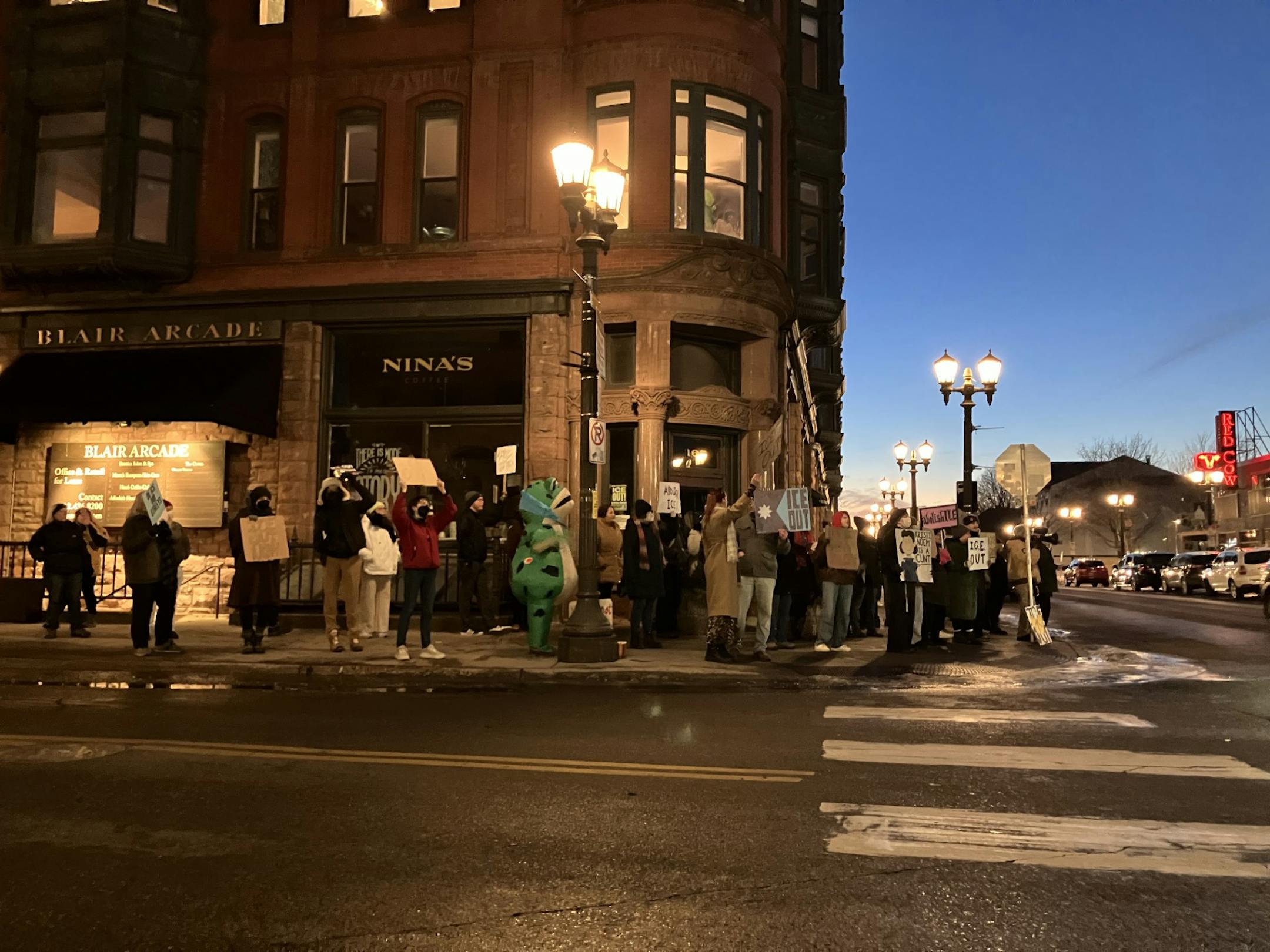
That evening, about 30 protesters gathered at the corner with signs condemning Immigration and Customs Enforcement. A person in an inflatable frog costume bounced outside the bay windows of the Blair Arcade and Nina’s Cafe.

Several people hold signs with slogans such as "ICE out" in front of an ornate brick building, and ne person wears an inflatable green frog costume. Street lamps glow and the sun has just set.
A demonstration on Feb. 11 at Selby and Western avenues in St. Paul, hours after federal agents were involved in a crash there and detained one person. (Josie Albertson-Grove/The Minnesota Star Tribune)

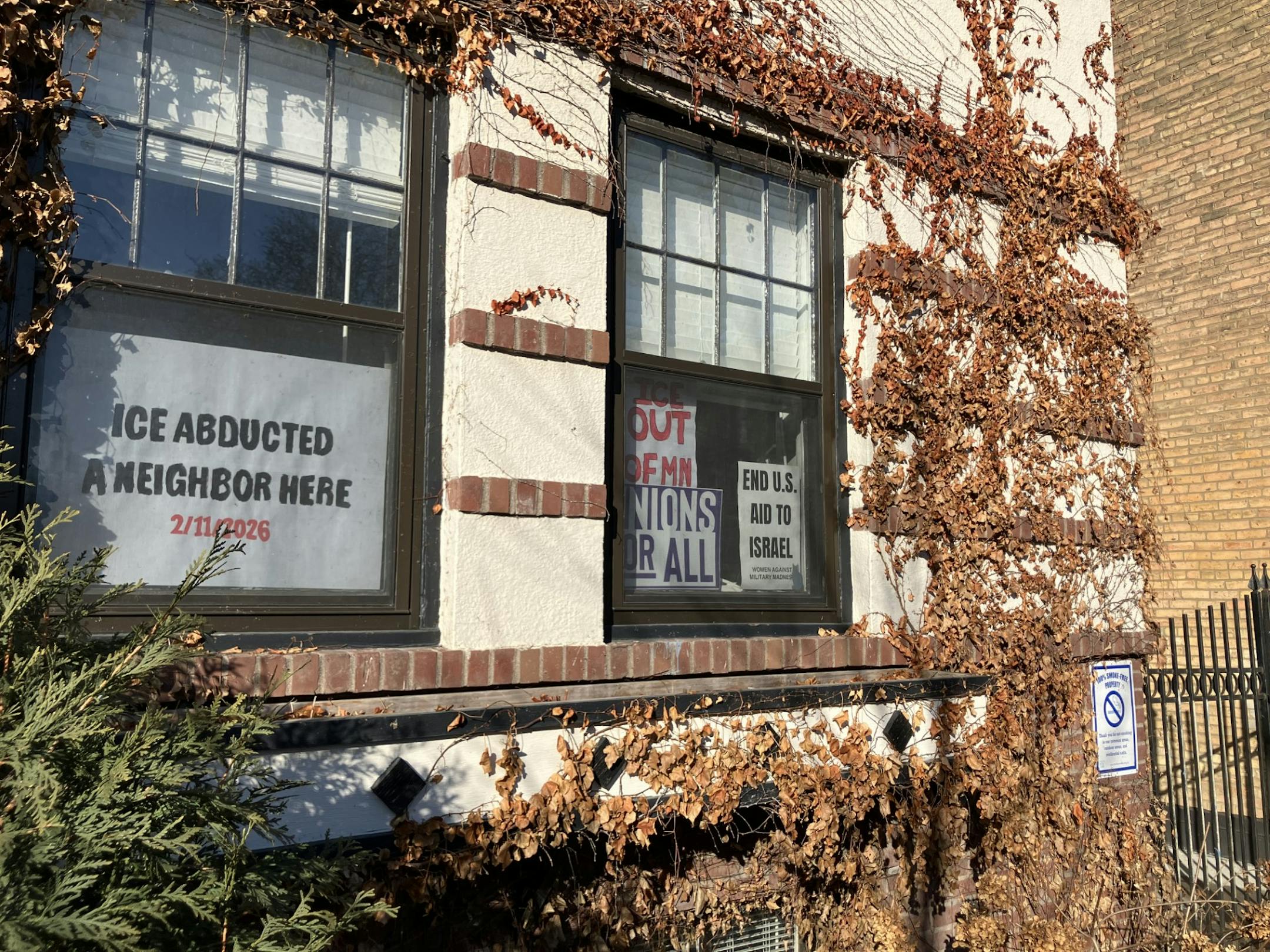
In the window of an ivy-covered building, a resident posted a sign reading “ICE abducted a neighbor here.” Signs with the same words are posted across south Minneapolis neighborhoods that saw some of the heaviest federal presence. But until the crash, ICE had not been a presence in this corner of St. Paul.

A sign reading "ICE abducted a neighbor here 2/11/2026" in the window of a cream-colored stucco building with brick trim and brownish-yellow ivy.
A sign marks the corner in St. Paul where federal agents detained a person after a crash. (Josie Albertson-Grove/The Minnesota Star Tribune)

Though the incident brought the federal surge to her doorstep, Nehring and other neighbors said they were still thinking more of other parts of the Twin Cities, where immigrant-owned businesses are struggling.

“We are trying to extra-support our University [Avenue] neighbors and immigrant businesses,” Nehring said.

One neighbor, who did not wish to be identified because she feared retribution from federal agents, said the memory of the noise of the crash, the sight of someone on a stretcher and another person in handcuffs, will linger long after the end of the surge.

Advertisement

On Saturday morning, with the sun melting away the snow and the streets full of people strolling, another neighbor who declined to give her name, also out of fear of retribution, was still troubled by what she saw and heard there.

“It was really disturbing,” she said.

about the writer

about the writer

Josie Albertson-Grove

Reporter

Josie Albertson-Grove covers politics and government for the Star Tribune.

See Moreicon

More from St. Paul

See More
card image
Leila Navidi/The Minnesota Star Tribune

The crash in the stately St. Paul neighborhood will leave its mark on residents, as the crackdown changed life for people across Minnesota.

card image
card image
Advertisement