St. Paul’s Midway neighborhood still struggles amid signs of promise

Development has been sporadic for the neighborhood along the Green Line, and residents are pushing city hall to fix longstanding problems.

The Minnesota Star Tribune
September 11, 2025 at 6:27PM
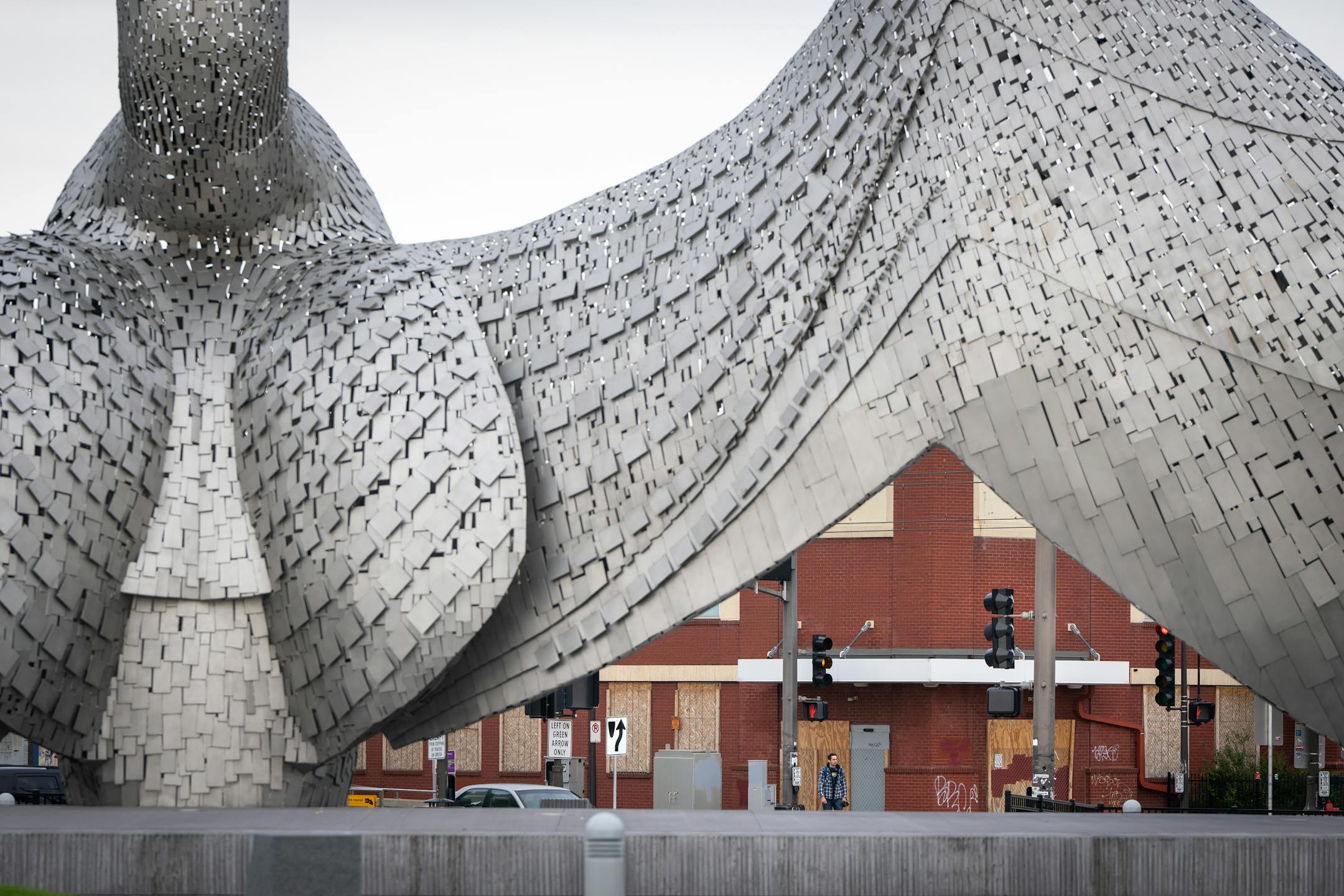
The boarded up former CVS is seen through the wings of the new Loon statue at the corner of Snelling and University Avenues in the Midway neighborhood of St. Paul. (Leila Navidi/The Minnesota Star Tribune)

A silvery, three-story sculpture of a loon taking flight towers over the corner of University and Snelling avenues of St. Paul’s Hamline-Midway neighborhood. Installed last fall, it’s one of the most hopeful symbols of development yet to come.

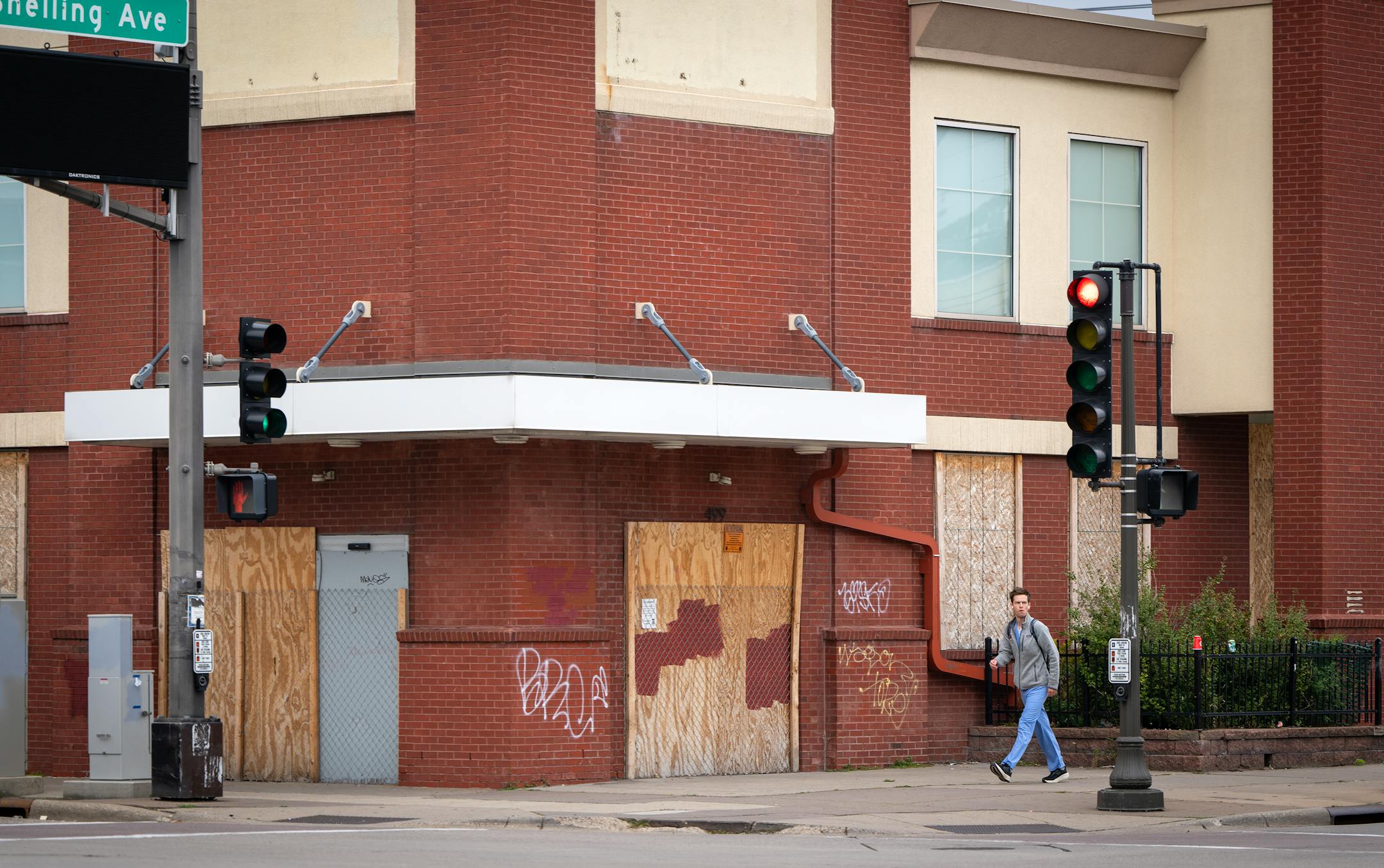
Directly across the intersection, a vacant former CVS sits boarded up and fenced off after becoming a magnet for loitering, trash and drug use.

“It’s like a tale of the neighborhood, the past and present, our future,” said Chad Kulas, the executive director of the Midway Chamber of Commerce. “You have both sides right there in a standoff, almost.”

The shiny loon statue on the Midway’s marquee corner may be taking off, but the neighborhood is still waiting for its renaissance.

What to do about Midway — and who should do it — has bedeviled St. Paul for decades. The issues it faces are complex, and residents and neighborhood organizations say the area sometimes feels neglected because it’s not downtown and falls between the cracks of political boundaries: split between City Council wards, county commissioner districts and state Senate district – with a light rail line run by the Met Council rolling through the middle of it.

“It’s just the edge of everyone’s territory, so no one really owns it,” said Lisa Nelson, the interim executive director of the Hamline Midway Coalition, the neighborhood district council.

Residents are hoping that may be changing. Mayor Melvin Carter and his main challenger in this fall’s mayoral race, Rep. Kaohly Her, have made the future of the neighborhood part of their pitch to voters.

Reinventing the neighborhood

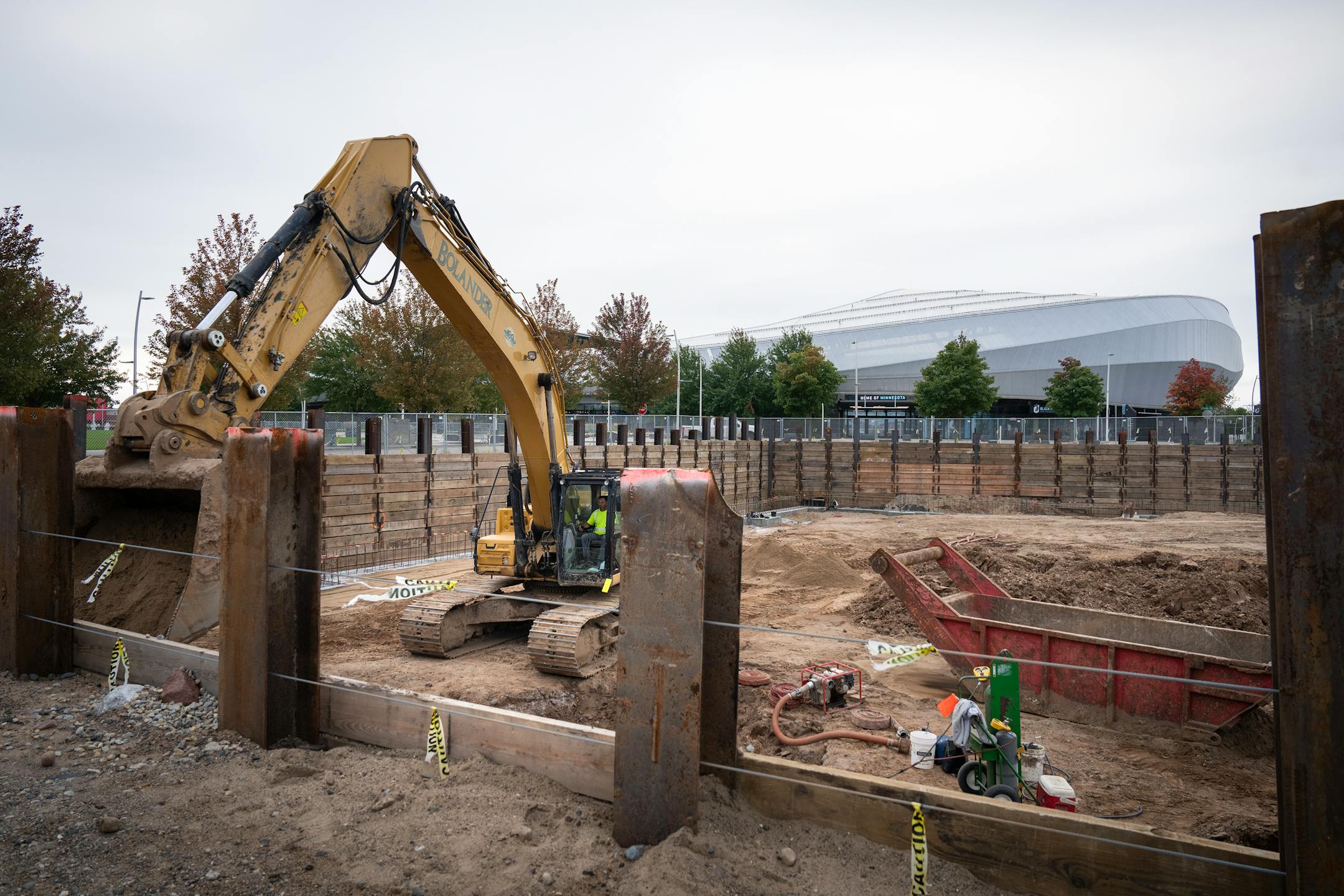
The loon sculpture, along with a playground, are among the first visible signs of progress at United Village, a development first pitched a decade ago surrounding Allianz Field. Recently, the developer broke ground on two restaurant pavilions and an office building, which will include a ground-floor patisserie. Construction is also expected to begin soon on a hotel fronting University Avenue.
There are other positive signs: new businesses popping up along commercial strips and an expansion of the local YMCA’s daycare among them.

Construction north of Allianz Field at the corner of Snelling and University Avenues in the Midway neighborhood of St. Paul. (Leila Navidi/The Minnesota Star Tribune)

Midway residents love their neighborhood, halfway between downtown Minneapolis and St. Paul, for its tight-knit community, Nelson said.

But they are also well aware of its challenges. The construction of Interstate 94 drained cars and foot traffic from its small-business district by the 1960s, and the neighborhood has tried but struggled to find its footing since.

Over the years, redevelopment efforts have promised to kick-start economic growth in the area, from the green-tiled Spruce Tree Centre to the Green Line light-rail to Allianz Field.

Spruce Tree Centre, opened in 1988, didn’t live up to its developer’s dream of an urban mall with retail and restaurants and is now mostly offices. Much of the big-box space at Midway Marketplace, built in the mid-1990s, is vacant after retail departures, most recently Cub Foods.

The Green Line, which opened in 2014, connected Midway to the two downtowns and brought development, including housing. It also brought people struggling with addiction and homelessness to the neighborhood.

Metro Transit is now partnering with the city and county to address these challenges, with an initiative to be more present along University Avenue. Recently, the Met Council approved additional security and presence at some light-rail stations, including at Snelling.

Yingling Fan, a professor of urban and regional planning at the University of Minnesota’s Humphrey School of Public Affairs, said Midway’s orientation around cars, despite good transit connections, is holding it back.

More than half of the land surrounding the Green Line is often-unused surface parking, and large retailers that lease spaces nearby are more difficult to engage to solve community problems, she said.

“So despite having such wonderful transit infrastructure in the neighborhood, it’s hard to reverse what’s already in the neighborhood,” she said.

Nelson, of the neighborhood council, said 2020 felt like a tipping point.

Transit ridership plummeted and hasn’t come back. Many businesses damaged in the unrest after George Floyd’s murder didn’t recover. The opioid crisis worsened. Commercial vacancies increased.

People are “feeling like it’s been kind of neglected and then it continues to not be anyone’s main priority,” she said.

Every Friday, Seneca Krueger, who does homeless outreach through her job at Community Medical Services, hands out snacks, hygiene kits, Narcan and other items to people on the street in the Midway. She and her colleagues also make referrals to services.

Krueger, who also lives in the neighborhood, said she understands neighbors’ frustrations, but urges people to see the humanity and wants people to advocate for solutions to get people into permanent housing so they can then address addiction.

“I understand that people don’t want syringes in the park where their kids play,” she said. “I understand that it’s really scary to see somebody experiencing psychosis in the street.”

But many times, she said, attempts to solve problems just move people around. On this particular day, she and her colleagues ran out of supplies faster than usual because, they said, the closure of encampments elsewhere in St. Paul was bringing traffic to Midway.

‘They need a plan’

Ward 1 Council Member Anika Bowie said she’d like to see the city help the Midway meet its residents’ needs and help the neighborhood attract businesses.

“Obviously, on Midway, we don’t own any of that property, but we could play the role of facilitating, attracting businesses,” she said.

Melanie McMahon, deputy director of St. Paul’s Planning and Economic Development department, said new housing, including affordable housing and apartments, has sprung in the Midway area since 2020. The city has provided $3.5 million in capital improvement grants to neighborhood businesses since then.

She said there’s been a marked increase in coordination among Midway’s stakeholders in recent years.

Newly elected Ward 4 Council Member Molly Coleman pointed to two efforts that could give the city tools to pressure landlords to care for buildings: This year, the city increased annual fees levied on registered vacant buildings by 10%. And in November, St. Paul voters will decide on a ballot question that, if approved, would allow the City Council to impose fees, via administrative citations, for breaking city ordinances.

As for the CVS site, the city declared the building a nuisance in August, citing “chronic neglect.” The property’s owners missed the Aug. 23 deadline to fix the problems, which means the building could be demolished.

A pedestrian walks toward the light-rail train stop past the boarded-up CVS at the corner of Snelling and University Avenues in the Midway neighborhood of St. Paul. (Leila Navidi/The Minnesota Star Tribune)

“It’s so incredibly frustrating and I do think it has come to stand as kind of a symbol for the neighborhood — of what it looks like when people aren’t committed to building our neighborhood,” Coleman said.

Justin Lewandowski, organizing director for the Hamline-Midway Coalition, said good things are happening, but he still feels a disproportionate amount of work to propel change falls to people in the neighborhood.

Lewandowski said he has found the City Council offices responsive, but with an election coming up in November, he challenged the St. Paul mayoral candidates to spend more time campaigning on the Midway.

“We’re doing our part as neighborhood-based grassroots organizations with neighbors and businesses and faith communities and all those stakeholders, but by God, they need a plan for the Midway and we can’t do it alone,” Lewandowski said.

about the writer

about the writer

Greta Kaul

Reporter

Greta Kaul is the Star Tribune’s built environment reporter.

See Moreicon

More from St. Paul

See More
card image
Elizabeth Flores/The Minnesota Star Tribune

Matt Privratsky said his home caught fire when a Rad Power e-bike battery overheated.

card image
card image