
Morris: As a wave of shootings roils Minneapolis, leave the National Guard at home

When fear replaces facts, soldiers patrol the streets.

Columnist Icon
The Minnesota Star Tribune
August 28, 2025 at 2:41PM
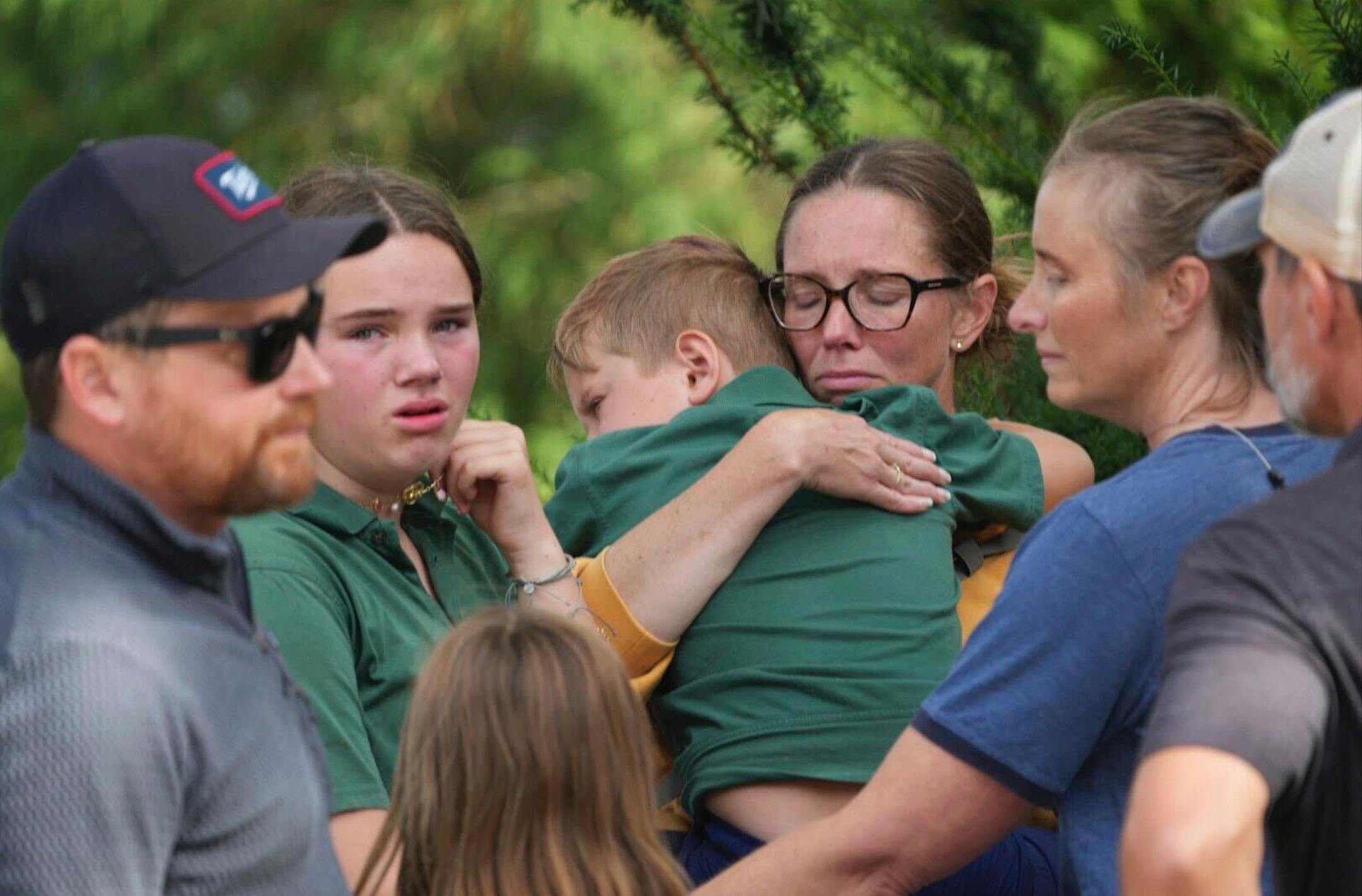
Parents comfort their children after a shooting at Annunciation Church on Aug. 27 in Minneapolis. (Alex Kormann/The Associated Press)

Opinion editor’s note: Strib Voices publishes a mix of commentary online and in print each day. To contribute, click here.

•••

Minneapolis descended into a version of hell Wednesday morning, when authorities say a shooter opened fire at Annunciation Church in south Minneapolis where schoolchildren had gathered for Mass. As of this writing, two children, ages 8 and 10, are dead from the attack, and at least 17 others were injured. The shooter died of a self-inflicted gunshot wound at the scene, police said.

A Minnesota Star Tribune reporter overheard a little boy walking away from the church in tears, telling his father, “I don’t feel safe.”

Far too many of us don’t.

Start by offering a prayer for Minneapolis. On Tuesday night and into early Wednesday morning, hours before the attack at Annunciation, three people were killed in separate shootings across the city, including one near a high school where six others were injured.

It is sudden, explosive violence, often carried out with military-grade weaponry, that fuels the perception that American cities are under relentless siege. It helps explain why so many Americans look favorably on President Donald Trump’s push to send National Guard troops into cities like Chicago, Los Angeles and Washington, where catastrophic bloodshed occasionally emerges without warning. It also foreshadows why Minneapolis may very well be next in queue in the president’s push to militarize American cities.

The instinct is understandable: We all want to feel safe, or the social fabric frays. But even as we mourn the unthinkable, we must step back, take in the broader landscape and question what truly advances safety while preserving America’s freedoms.

This violence come as a new AP-NORC Center poll finds 81% of Americans view crime in large cities as a “major problem.” Despite some dissatisfaction with Trump’s handling of the economy and immigration, his tough-on-crime message resonates powerfully. Americans crave security, but they also remain uneasy about seeing soldiers play the role of police, the survey found. That tension lies at the heart of this debate.

“Tough on crime” has been a reliable plank for both political parties. Nixon invoked it in 1968, Reagan in the 1980s, Clinton in 1992. Clinton in particular used it to fuel his rise, declaring, “We cannot take our country back until we take our neighborhoods back.”

But the truth is that America is far safer now than in those decades. By 2016, the national crime rate had fallen to about half of its 1991 peak. There was a pandemic spike in 2020 and 2021, but the most recent FBI data show crime again on the decline. Chicago, Washington and Los Angeles, the very cities Trump is currently spotlighting, have all seen decreases in violent crime in the past year.

Perception, though, often outweighs statistics. And the perception today is one of instability.

This is why Trump’s call to deploy the Guard carries such weight — and such risk. History shows the dangers. In 1970 at Kent State University, outside of Cleveland, Guard troops opened fire on student protesters, killing four and wounding nine. Even when bloodshed is avoided, the presence of soldiers on city streets sends the wrong message: not partnership, but occupation.

Illinois Gov. JB Pritzker put it bluntly: “Members of the National Guard are not trained to serve as law enforcement. They are trained for the battlefield, and they’re good at it. ... They did not sign up for the National Guard to fight crime.”

At best, the Guard’s presence in cities will amount to symbolic reassurance — a visible show of force that makes some residents feel safer for a time.

At worst, it will lead to confrontation, tragedy and permanent distrust between communities and government. The precedent of military involvement in civilian life is not one a democracy should take lightly.

Bill Clinton’s 1994 crime bill expanded prisons and police budgets in ways that proved deeply damaging. Yet Clinton worked within the framework of policing institutions. Trump’s approach is different. He bypasses mayors and governors, asserting federal muscle in local matters.

The symbolism matters. Clinton’s aim, however flawed, was framed around restoring neighborhoods. Trump’s imagery leans toward control — armored vehicles on boulevards, fatigues on sidewalks.

Still, it is well worth acknowledging why Trump’s move resonates with so many. In the wake of tragedies like these that have struck Minneapolis, the yearning for safety is natural and urgent. For parents walking their children past police tape at schools and churches, the distinction between statistics and lived experience feels hollow.

The question is not whether Americans are right to feel unsafe. The question is whether militarizing city streets makes us safer or simply shifts the danger. The Guard is not trained for this role. And once we normalize troops patrolling our neighborhoods, it becomes easier for future leaders to use them for political rather than public purposes.

No, Minneapolis has not fallen. Yes, we are deeply shaken by a week of deadly violence, unimaginable savagery that comes a little over two months after the political assassination of Melissa Hortman, former speaker of the Minnesota House, and her husband in their Brooklyn Park home. Such violent confluence may well capture Trump’s attention in regard to federal troops. That possibility should give us pause. Soldiers may reassure some in the short term, but the long-term risks to trust, freedom and democratic norms remain profound.

We all deserve to feel safe. But we also deserve and have the rights to a country where safety and freedom reinforce each other, not compete. That balance is fragile. Preserving it requires more than troops on corners. It requires leaders who resist the easy politics of fear — even in the darkest of hours.

about the writer

about the writer

Phil Morris

Opinion Editor

Phil Morris is Opinion Editor of the Star Tribune.

See Moreicon