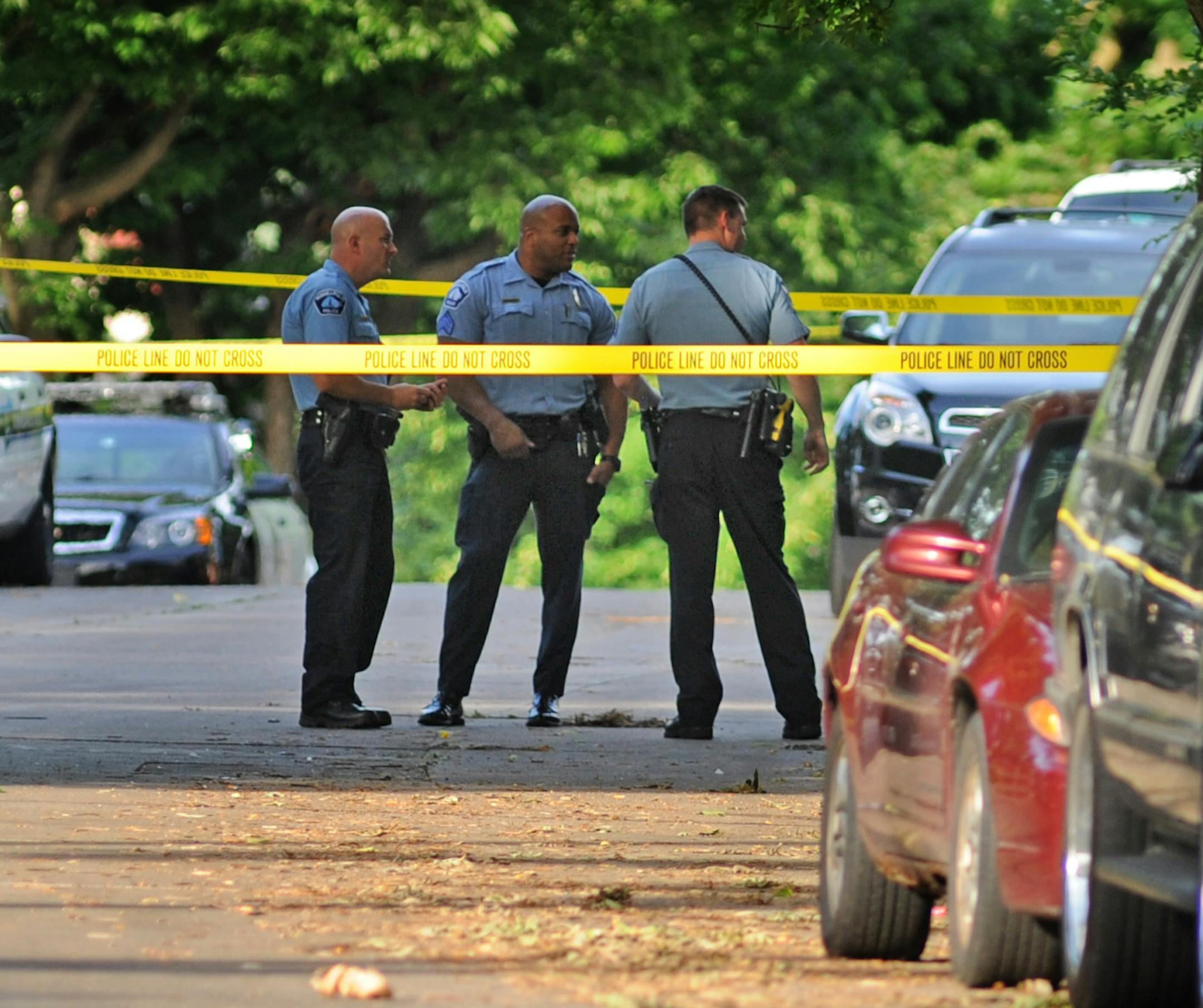
Koerth: Crime is down. Why do so many people think it’s going up?

I’ve come to realize it’s not just about actual incidents, but also about feelings and beliefs.

Columnist Icon
The Minnesota Star Tribune
August 26, 2025 at 8:30PM
"Americans have been convinced crime is on the rise almost as long as it’s been going down. National crime rates began cratering around 1993 and, at first, according to Gallup polls, Americans believed it. But that changed somewhere around 2002," Maggie Koerth writes. (Richard Sennott/The Minnesota Star Tribune)

Opinion editor’s note: Strib Voices publishes a mix of material from 11 contributing columnists, along with other commentary online and in print each day. To contribute, click here.

•••

Crime is down.

Let’s get that part out of the way. It’s down in Minneapolis. It’s down in Washington, D.C. It’s down nationwide. In fact, if you zoom out to the big picture, rather than focusing on the last few years when there was a relatively small increase, crime has been on the decline for three decades.

So why do so many people — from the commenters on Crime Watch posts to the president of the United States — keep insisting that we live in a Mad Max hellscape, dodging gun-toting barbarians on the way to the grocery store?

I’m a resident of Near North in Minneapolis. I see the online comments people make about my little neighborhood, including the way many are almost gleeful at the prospect of the North Side losing a business or suffering a shortage of resources. As a reporter, I covered the science of gun violence and crime for seven years at FiveThirtyEight. This issue haunts me both personally and professionally. And I’ve come to realize that this is actually a bigger problem than I first thought.

Americans have been convinced crime is on the rise almost as long as it’s been going down. National crime rates began cratering around 1993 and, at first, according to Gallup Polls, Americans believed it. But that changed somewhere around 2002. After that point, while both violent crime and property crime continued to fall (or fluctuate up and down around the new, low baseline as happened between 2020 and 2024), the percentage of Americans who believed crime was getting worse went up.

Experts have pointed me toward multiple factors that feed into this. Racism is a part of it. Studies have shown that Americans perceive a neighborhood as more dangerous, regardless of actual crime rates, if more young Black men live there.

The media is also a factor. Crime, and particularly murder, get disproportionate airtime (and page space), compared to how common those incidents actually are — a problem that has only gotten worse as local media now includes news about horrific events states away and as true-crime podcasts fill up our phones. This coverage affects the way people understand their own risk close to home. For example, one study in California found that watching local TV news and consuming crime-related reality shows significantly increased viewers’ fear and belief that they, themselves, were in danger.

But my key takeaway from all of the research is that the fear of crime is only kinda-sorta about crime. Instead, if you want to understand why people think crime is rising when it isn’t, you have to pay attention to feelings and beliefs as well as incidents and arrests.

I realized this while reading the work of Wesley Skogan, a professor emeritus of political science at Northwestern University. Back in the 1990s (when crime rates were actually high), Skogan went to a bunch of neighborhood meetings about crime in Chicago and kept records of the problems residents wanted police to fix. He quickly found the things that made neighborhoods feel unsafe went far beyond crime. In his surveys, gunfire was mentioned as a problem at 13.7% of meetings. Litter, garbage and illegal dumping were mentioned at 17.1%. Concern about gang-related problems came up almost as often as frustrations about abandoned cars. Skogan called it “disorder” — worries about social behavior and physical space that set the tone for how people think about danger.

Racism, trash in the streets, the popular podcast “My Favorite Murder” — they all cling like barnacles to our understanding of crime, adding weight and heft, making the problem seem larger than it is. Factors like these make crime a thing the public anticipates, not a thing it counts. It’s hard to counteract it with statistics because the size of the perceived problem makes the size of the real problem feel implicitly incorrect. Like it defies common sense. And when people believe rates of crime are always horrific and getting worse, they become willing to justify responses proportionate to that imagined danger. The door is opened to our cities actually becoming more violent because of actions taken by the state.

Worse, there’s evidence that the perception of crime has gotten tangled up in partisan political identity. While concern about crime grew among all Americans between 2021 and 2024, it grew more among Republicans than Democrats, and started out at higher levels to begin with. Believing crime is on the rise and cities are unsafe has become a matter of belief, a way of saying who you are and rallying the people who are like yourself — and a shibboleth to spot the outsiders. That’s what I see when people online talk about my neighborhood and my city as a whole. Crime can’t be going down in Minneapolis because, for a certain segment of Minnesotans, crime is a punishment we deserve for not being part of their cultural in-group.

It was already challenging to talk about crime as a fact rather than crime as a feeling. Frankly, talking about crime at all is hard. It affects people in disproportionate ways and experts don’t perfectly know why crime rates go up and down when they do. But a belief in high crime becoming a part of partisan identity is a huge problem. When that happens, research shows, the only way to counteract it is for high-status people who are part of the in-group to speak up. It takes media personalities and politicians being willing to say crime is falling, despite the fact that the story of high crime bolsters their business and political power. There’s an opportunity here. But they have to be brave enough to take it.

about the writer

about the writer

Maggie Koerth

Contributing Columnist

Maggie Koerth is a contributing columnist for the Minnesota Star Tribune focusing on nature in Minnesota's urban areas. She is an award-winning science writer who has written for FiveThirtyEight.com, the New York Times Magazine, and Undark magazine. She also appears regularly on NPR's "Science Friday."

See Moreicon

More from Contributing Columnists

See More
card image
Jeff Wheeler/The Minnesota Star Tribune

The loss of more than a billion dollars that’s occurred on the governor’s watch makes him unfit for further service to the state.

card image