Editor's Pick

Editor's Pick

She built a life in Minnesota. Now she carries her passport everywhere.

Saciido Shaie thought she had achieved the American Dream in Minnesota. Now the Somali American plans every move around the possibility of being stopped.

The Minnesota Star Tribune
January 3, 2026 at 1:00PM
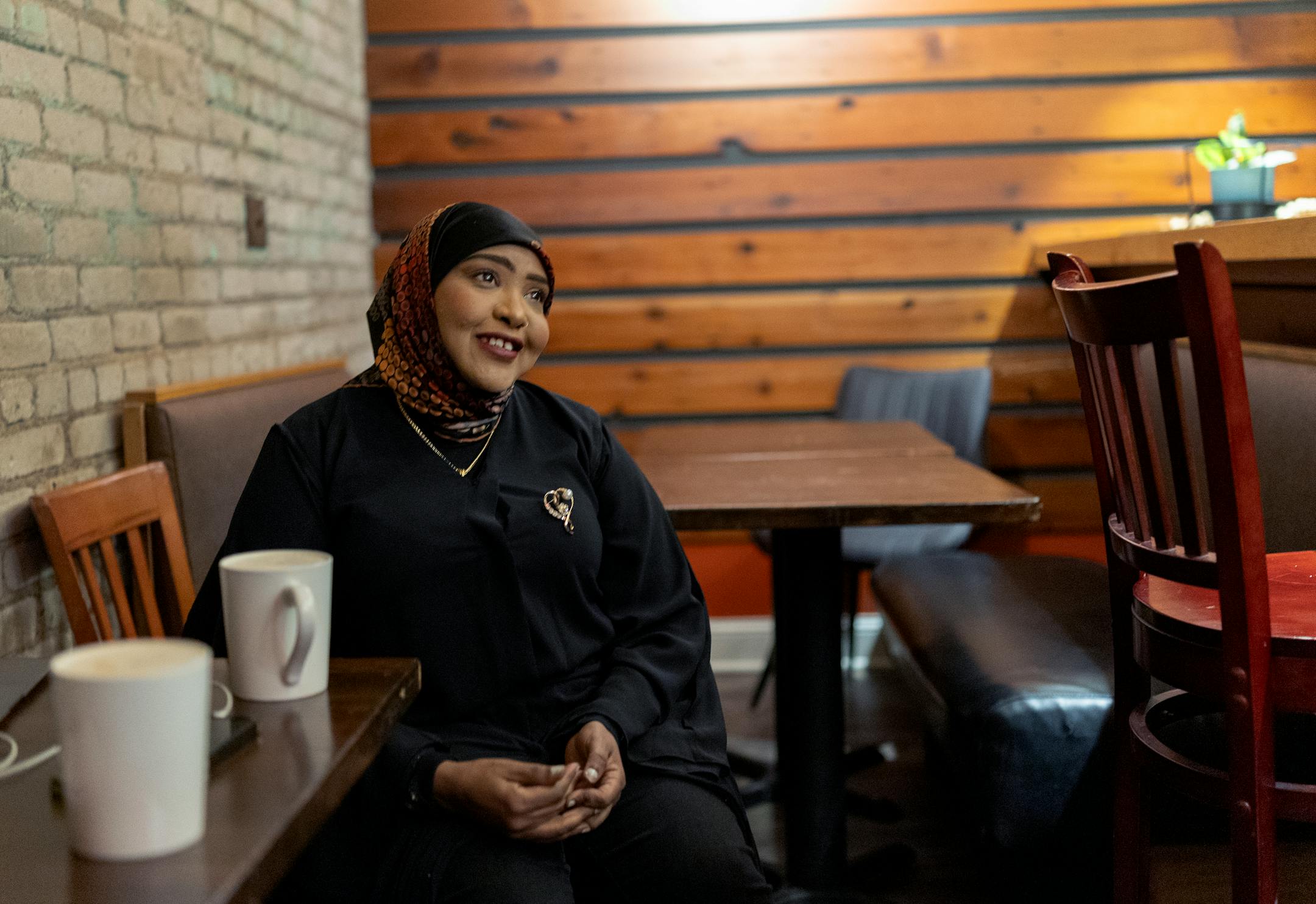
Saciido Shaie talks with a reporter at the Franklin Cafe in Minneapolis on Dec. 22. (Carlos Gonzalez/The Minnesota Star Tribune)

Saciido Shaie moves quickly through her apartment in Circle Pines each morning, gathering her things in a practiced order. Keys. Phone. Wallet. Then something she never used to think about: her passport. It goes into her bag before she steps outside to start her day driving a school bus in Anoka County.

She has lived in Minnesota for most of her life. Until recently, she never carried the document proving her citizenship.

“I never looked over my shoulder before,” Shaie said. “Not here. Not in America.”

She paused.

“Now I do.”

Across Minnesota, Somali Americans, nearly all citizens or legal residents, say heightened immigration enforcement and political rhetoric have reshaped daily life, hollowing out public spaces and forcing families to calculate risks they never had to consider before.

Shaie fled Somalia’s civil war as a child after years of displacement, moving through cities where safety never lasted. Her family arrived in Minnesota in the 1990s, when the Somali community here was still small and finding its footing.

Today, Minnesota is home to about 108,000 Somali residents, according to the American Community Survey in 2024. More than half live in the Twin Cities metro, primarily in Hennepin and Ramsey counties.

Shaie’s mother cleaned office buildings downtown. She went to public school. She earned college degrees. She knocked on doors for political candidates, served on city and state commissions, ran for state and local office herself. She raised three children as a single mother. She founded the Ummah Project, a nonprofit for Muslim youth. She wrote a book in the margins of her life.

Minnesota is the only home her children know. And yet, in recent months, something fundamental has shifted.

The language came first. President Donald Trump has repeatedly described Somali immigrants as dangerous and undeserving, words that have settled into daily life alongside renewed promises of aggressive immigration enforcement, with Minnesota often singled out.

The Department of Homeland Security said that immigration enforcement targets people in the country illegally, not “their skin color, race or ethnicity,” according to DHS spokeswoman Tricia McLaughlin. “Those who are not here illegally and are not breaking other laws have nothing to fear.”

But Shaie no longer assumes she will be left alone.

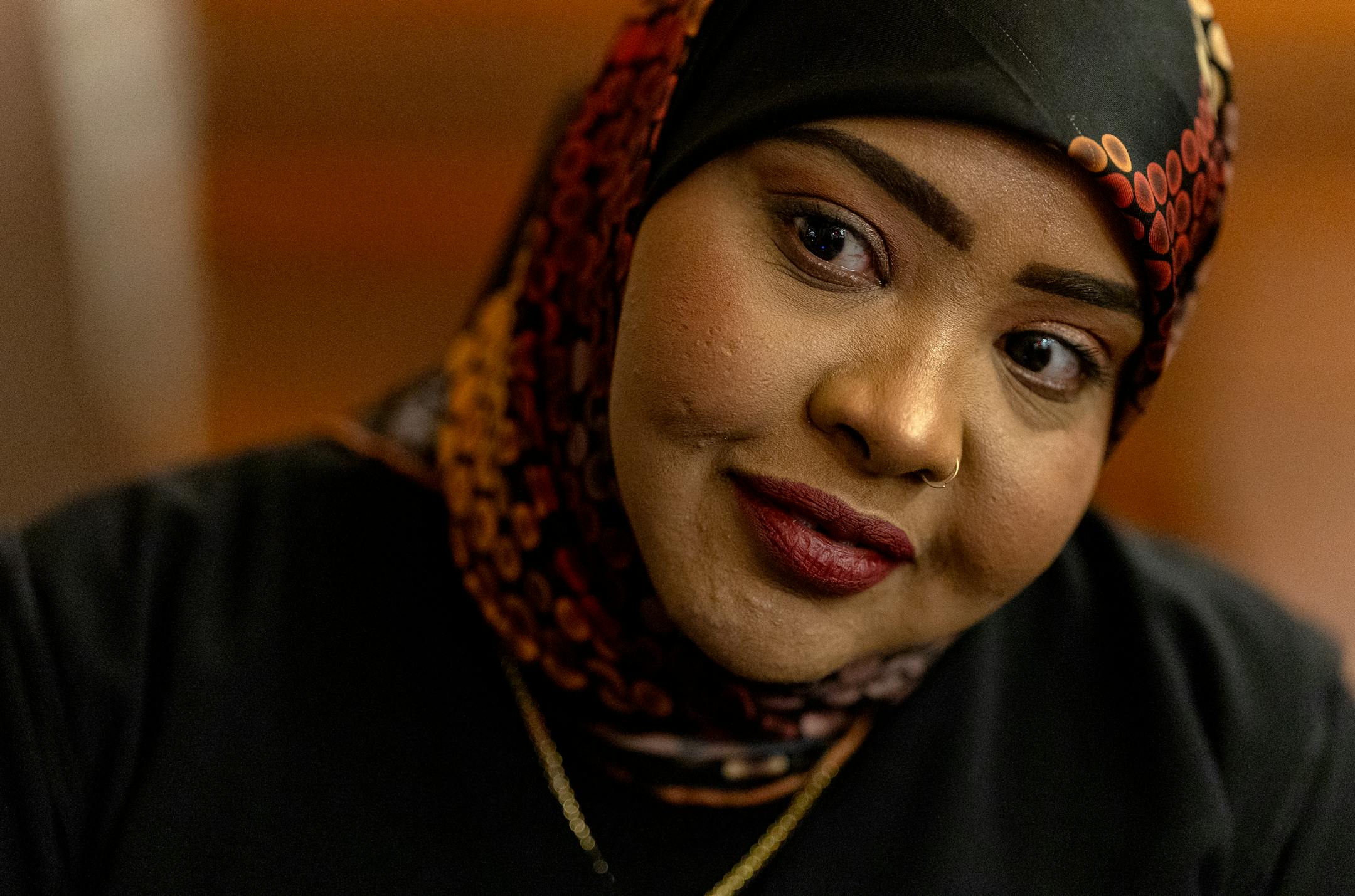
“Somalis are not going anywhere,” Saciido Shaie said. “This is our home.” (Carlos Gonzalez/The Minnesota Star Tribune)

The change does not announce itself all at once. It moves quietly, through rumor and absence. A familiar face at the mosque doesn’t return. A neighbor stops answering calls. Someone leaves for work and doesn’t come home that night. Information travels fast but incomplete. Whispers of an ICE stop. A detention center hours away. No clear answers.

“You hear someone is gone,” she said. “And you don’t know where they are. You don’t know what happened.”

Somali malls that once pulsed with teenagers doing homework and elders lingering over tea have emptied. Businesses struggle as customers stay home, wary that a routine errand could turn into something else.

“People are scared,” Shaie said. “They’re shrinking themselves.”

Community leaders warn the fear is not just about deportation, but about trust: in institutions, in neighbors, in the promise that belonging once seemed to offer.

Shaie feels that shift in her body.

She thinks twice now about where she meets people. About how long she stays. About which routes she takes. About visibility. Being seen. Being mistaken. Being caught in something she did not do.

“This feels coordinated,” she said. “Like a campaign against us.”

In the evenings, Shaie goes where she has always gone: Somali tea shops, places once loud with conversation and argument, now guarded. The door is now always locked when she arrives. She knocks. Someone inside looks out, studying her face. When they recognize her as Somali, the lock clicks open.

Many people in the community are still working, still keeping up their routines. Nearly three-quarters of Somali Minnesotans are in the labor force, compared with 68% statewide, according to the American Community Survey.

What has narrowed is not work, but public life.

The fear follows her inside the tea shop. Parents debate whether to send their children to school. Elders put off medical appointments. Young people sit and listen, learning how to measure every step, every word, every risk.

Shaie is quick to say she believes in accountability.

“If someone breaks the law, they should be held accountable,” she said. “America has laws.”

She recognizes that high-profile cases like the Feeding Our Future pandemic relief fraud prosecutions, which resulted in dozens of convictions including many Somali Americans, have hardened public suspicion. What she rejects is the idea that those cases make an entire community suspect, or erase a lifetime of citizenship and contribution.

“I work,” she said. “I pay taxes. I raise my kids. I do everything right. And still, I’m carrying my passport.”

The fear does not stop at the door.

She worries most about her children.

Her daughter, a high school senior, is deciding between universities after receiving multiple scholarship offers. Recently, she took her first trip out of state, to New York. She called her mom, buzzing with ambition.

“She said, ‘That’s where all the successful people are,’” Shaie recalled, smiling briefly. “‘That’s where I’ll go.’”

Then her face tightened.

“I worry what kind of country she’s walking into.”

Shaie knows what it means to be forced from a place. In Somalia, her family lost their home, their businesses, members of their family. They fled from city to city, believing safety had finally arrived, only to be driven out again. Each move stripped away something familiar. Each time, she thought: This is where we will stay.

America was supposed to be different.

“That’s why this hurts,” she said. “Because this was the place we chose. The place we built.”

Still, she refuses to disappear.

“Somalis are not going anywhere,” she said. “This is our home. Like it or not.”

Tomorrow morning, she will wake before dawn. She will move quickly through her apartment. She will gather her things. She will drive her route.

And before she steps outside, she will make the same calculation she makes every day now, slipping her passport into her bag, hoping she will never have to prove that the life she built here is real.

MaryJo Webster of the Minnesota Star Tribune contributed to this story.

about the writer

about the writer

Sofia Barnett

Intern

Sofia Barnett is a reporter for the Minnesota Star Tribune.

See Moreicon

More from News & Politics

See More
card image
David Joles/The Minnesota Star Tribune

Alternate-side parking starts Jan. 4 in neighborhoods near Snelling and University avenues and Dale Street and Selby Avenue.