
Readers Write: Energy cuts, mining, elder care, liberal arts, smells

Minnesota gets hurt, and our GOP reps clam up.

The Minnesota Star Tribune
October 7, 2025 at 12:00AM
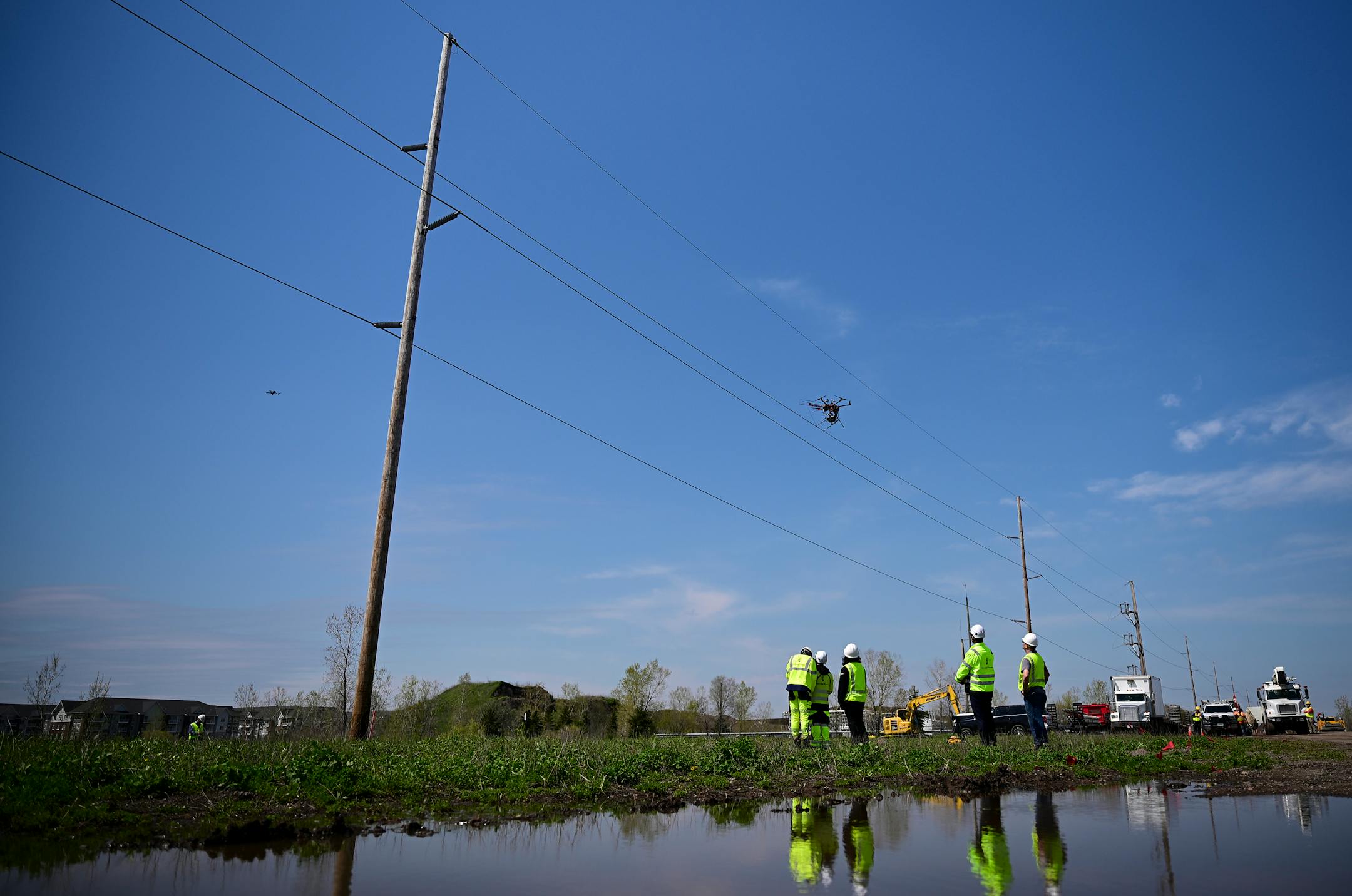
A crew launches a drone to work on a power line in 2024 in Maple Grove. (Aaron Lavinsky/The Minnesota Star Tribune)

Opinion editor’s note: Strib Voices publishes letters from readers online and in print each day. To contribute, click here.

•••

Minnesota Republican congressional representatives and Trump lap dogs are mum as President Donald Trump orchestrates Department of Energy cuts to Minnesota. Trump is proposing a $464 million cut for transmission lines and a $50 million cut to Minnesota Power to modernize power line transmission (“DOE cancels $464M grant to Minn. for power lines,” Oct. 3).

Last time I checked, their constituents also live in Minnesota and will be impacted the same as the rest of us. No, Mr. Trump, there is no such thing as blue electricity and red electricity. When, if ever, will this pathetic demonstration of how not to govern awaken our sleeping representatives?

Mike Menzel, Edina

•••

The list is long of products invented in the U.S. but then later manufactured and commercialized elsewhere. But one invention in particular stands out.

American researchers at Bell Labs developed the first practical silicon solar cell in 1954, by significantly increasing the efficiency of sunlight-to-electricity conversion. It then took almost 70 years for the world to install its first terawatt (1 trillion watts) of solar power in 2022. The second terawatt came just two years later in 2024. And the third, probably by the end of this year.

Solar energy is exploding, becoming the fastest-growing form of energy generation worldwide because of its ability to generate the cheapest electricity in history, and solar costs are projected to continue declining. Yet the Trump administration is actively working to thwart the adoption of solar energy both domestically and abroad, delusional in imagining that the future lies in fossil fuels.

Energy is fundamental to all human societies. It makes everything possible. As the Trump administration forces a U.S. retreat on green energy, China is racing ahead. Seventy-four percent of all global solar and wind projects are now being constructed in China or by Chinese companies. China is now the global clean energy hegemon, whose ability to confer cheap clean energy to countries around the world is a source of enormous soft power.

Trump during his first term in office and now his second has consistently identified China as the United States’ most significant competitor. How stunningly counterproductive to yield to our greatest international competitor such an enormous geopolitical advantage.

Patrick Hamilton, St. Paul

MINING NEAR THE BWCA

These mines literally always leak

Copper sulfide mines have a 100% incident rate in the United States. You read that right: There has never been a mine of this type in this country that is free from leaks and spills. And yet, Twin Metals claims that they are trustworthy enough to open a mine right on the edge of our Boundary Waters Canoe Area Wilderness. Twin Metals may still get a lifeline (“The push for mining is relentless,” Strib Voices, Oct. 2). The lake next door is already polluted. MiningMinnesota believes that regulators “took all those lessons they learned ... to say, ‘How do we do it better than other states?’” Essentially, they claim that mining practices have improved to the point that this mine would not pose a risk. However, it is important to understand that these mines always pollute. By allowing the construction of this mine, we do not simply risk damaging the Boundary Waters; we guarantee their destruction.

I ask that readers call their state legislators and urge them to support the Boundary Waters Permanent Protection Bill.

Wyatt Peick, Eagan

ELDER CARE

Sometimes, plans have to change

The Sept. 28 feature “When a care facility isn’t a good fit” made a profound impression on me. I read it first online and then in the print edition.

My heart goes out to the Winegar family, which is coping with an aged relative’s housing needs amid declining health. Like many others as well, I experienced the same thing with my mother.

She began declining in her late 70s, and my father struggled to care for her at home. They finally chose assisted living for her, since long-term care facilities in general are barren and hopeless institutional settings. The staff tried to accommodate her physical needs (incontinence and limited mobility requiring a mechanical lift) as well as her memory issues. After a short time, it was determined that she would be best served in the adjoining long-term care building. My father was heartbroken to see her there but knew it was the safest place for her.

It is essential for the family to do what is in the best interest of the dementia sufferer. This sometimes means making difficult decisions and forgoing the pleasures of social living (friends, apartment floor plans, activities) that assisted living offers. Prevention of falls, proper medication dispensation and 24-hour on-call medical staff offer some reassurance that the loved one is being well-tended. Our elders deserve to live their final months as painlessly as possible.

Lori Wagner Hollenkamp, Mendota Heights

LIBERAL ARTS

Companies skimp, blame college instead

The article on the decline of liberal arts degrees today shows exactly why the liberal arts are important for society: Things change (“With degree seekers in decline, liberal arts must prove value,” Oct. 3). Technology and necessary skills change every few years. Today job ads are for AI prompt engineers. Looking back over the past 10 years it was data scientists, blockchain developers and before that mobile app programmers. But the problem doesn’t lie with liberal arts degrees, it is due to the shortsighted practices of corporations and their hiring managers.

Corporations used to invest in developing talent, but now most want plug-and-play employees with hyperspecific skills. This makes the “liberal arts aren’t practical” criticism ring hollow, since the real issue is companies abandoning their role in workforce development.

Consider Accenture’s recent announcement that it plans to lay off 11,000 employees it claims it can’t retrain for artificial intelligence. This is a consulting firm that advises others on workforce transformation — yet it’s decided it’s easier to discard experienced employees than invest in retraining them. Now corporations expect every new hire to arrive fully skilled in whatever technology is trending this year, then discard workers when the next trend arrives. If skills become obsolete every few years anyway, why should students bear the financial and career risk of choosing the “right” specialization?

I’ve seen firsthand how liberal arts skills provide real value in technical fields. For several years I was a smart grid senior project manager (with a master’s in geography) at an international consulting firm. At a project with a large East Coast electric utility, my team of engineers and MBAs included one member with a degree in art history. She couldn’t determine switchgear settings or develop financial projections, but she provided valuable insights and alternatives for solving difficult problems the team faced on a daily basis. Her contributions were key to the project’s success.

Most of the liberal arts colleges mentioned have existed for over 125 years. They’ve survived technological change because their faculty and staff use critical thinking skills to identify and address problems head on. As mentioned in the article, solutions such as adapting curricula with interdisciplinary degrees and emphasizing transferable skills will benefit the students, their employers and society.

Roy Forsstrom, Edina

SMELLS AND MEMORY

Jasmine, eucalyptus and Malt-O-Meal

Maggie Koerth’s clever Sept. 30 column on how smells shape our memories hit me hard for several reasons (“The scent of memories,” Strib Voices). First was my 40 years’ enjoyment of the “homey funk” from Northfield’s Malt-O-Meal (now Post) cereal plant, about half a mile as the scent flies from my house. Second were the memories of professor Venkatesh Murthy, quoted in Koerth’s piece as an expert, with whom I share olfactory memories from India. Like Murthy, I grew up in India and remember clearly the smell of jasmine, certainly among the world’s best.

An even sharper memory for me is the heady aroma of eucalyptus, then pervasive (and, alas, invasive) in the blessed hills of South India’s Western Ghats, where I lucked into spending many years at 7,000-feet altitude. More than 50 years later, that smell brings me close to tears.

Paul Zorn, Northfield

about the writer

about the writer