


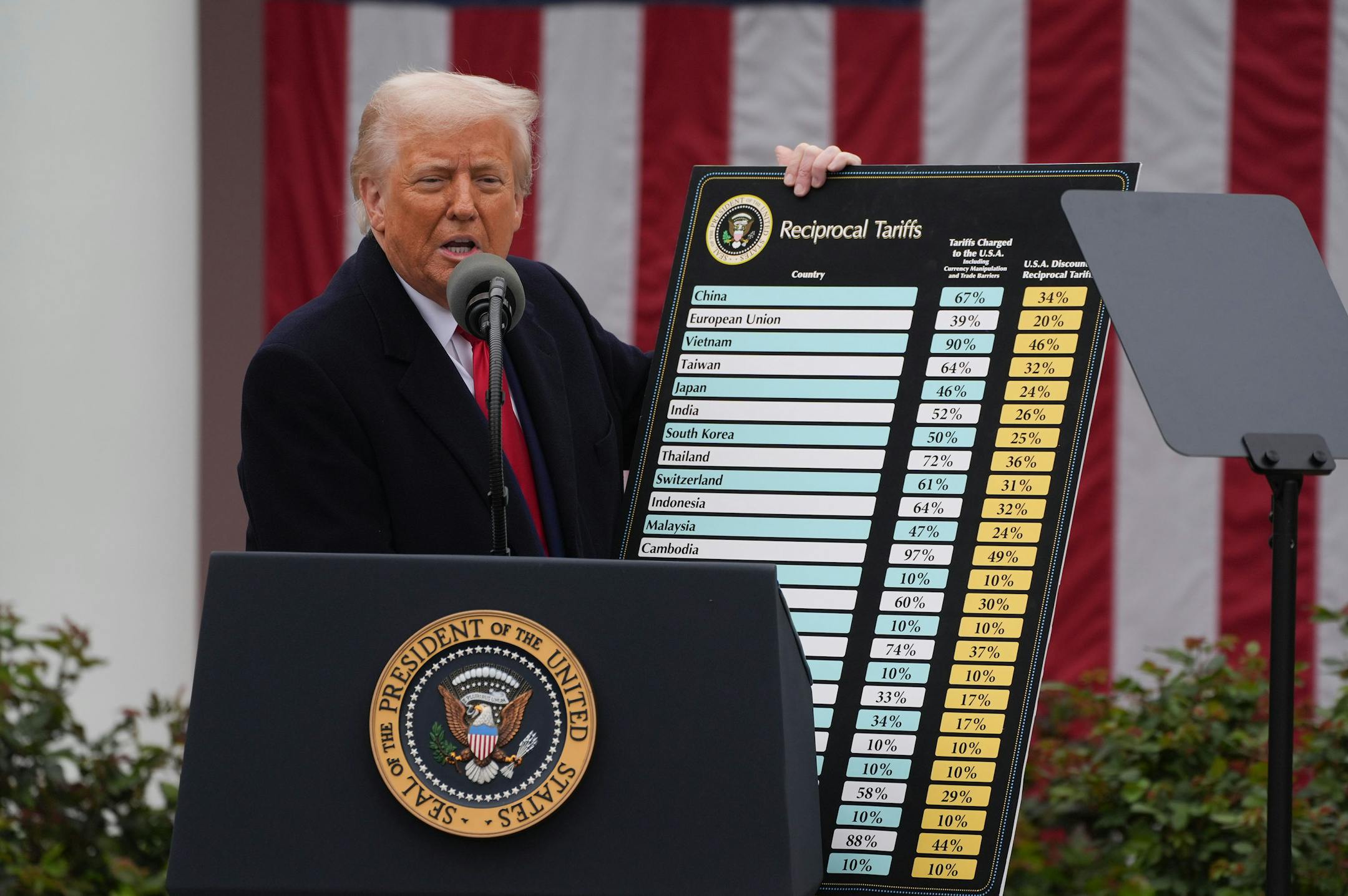
While President Donald Trump isn’t known to be a patient person, he was tired of waiting for the Supreme Court to rule on the legality of his use of an emergency-powers act to impose tariffs on U.S. imports.
“I’ve been waiting forever. Forever,” Trump told an audience in Georgia last Thursday, Feb. 19.
The next day, the court ruled 6-3 it wasn’t legal for Trump to unilaterally invoke a 1977 emergency-powers law in pursuit of tariffs. Trump called the justices who ruled against him “fools and lap dogs” and said they were “swayed by foreign interests.”
Trump’s tariffs lost in the court of public opinion long before they did in the Supreme Court.
A survey by Pew Research this month found 60% of Americans disapprove of the substantial increases in tariffs, including 39% who strongly disapprove. One poll by ABC News, the Washington Post and Ipsos late last week found a 64% disapproval rate.
One of the great contradictions about Trump is that he plainly cares a lot about public opinion, but he won’t bend on his two main economic policies — sharply reducing immigration and raising tariffs — despite their unpopular and harmful effects on the economy.
After the Supreme Court ruling went against him, Trump said he would impose a 10% tariff on all U.S. imports under a different law that gives him 150 days until Congress must decide on whether to extend the tariff. He lifted the rate to 15% on Saturday.
The nation’s businesses have now entered a new period of uncertainty over tariffs, however. If Congress fails to extend the global 15% tariff before its expiration in roughly five months, could the president just impose a new one at 14% or 16%? Could he keep doing that for the nearly three years he’s still got in office?


