

Ramstad: Rekindling economic growth in Minnesota won’t be easy. Here are four suggestions

There’s no magic bullet, no single industry, no single leader who can make it happen. All Minnesotans need to pitch in.

Columnist Icon
The Minnesota Star Tribune
August 23, 2025 at 3:04PM
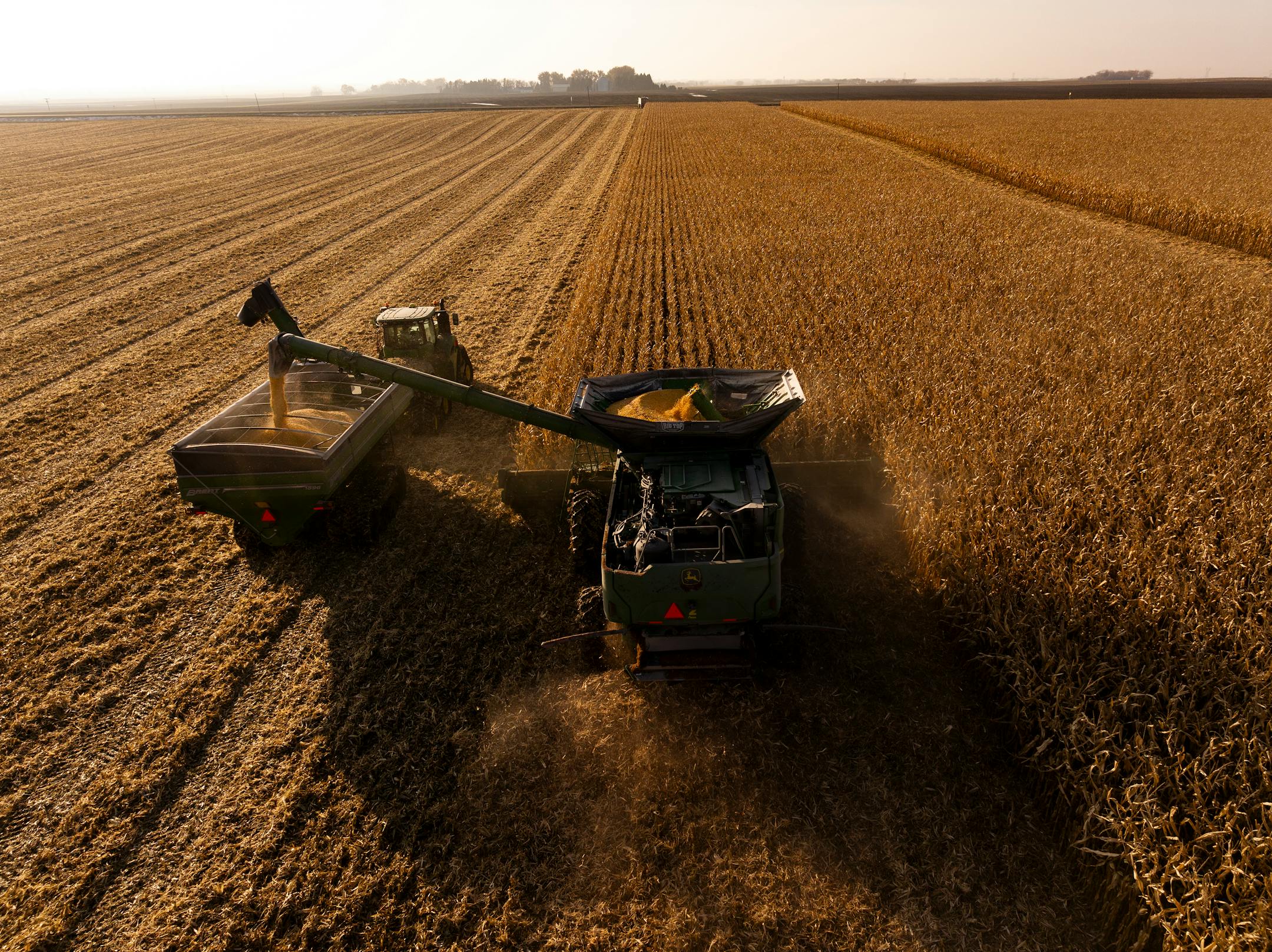
Minnesota needs to jump-start economic growth. Farming technology, including using biomass in aviation fuel, is one element in the solution. (TIM GRUBER/The New York Times)

The president is not going to make Minnesota’s economy great again.

Minnesotans need to do it by confronting the truth of what’s happening in the state and by becoming more ambitious for themselves.

I often write about the challenge Minnesota faces maintaining economic growth when its population is increasing more slowly than ever. When I do, I’ll usually hear from a reader or two wishing that I put forward more ideas for making growth happen.

One answer for that came during the meeting on Aug. 13 that drew more than 300 Twin Cities business leaders and elected officials to discuss new comparisons of the region’s vitality to other American cities. It concluded with the leader of Greater MSP, Peter Frosch, listing the group’s agenda for promoting economic development over the next few years.

Greater MSP is heavily concentrating on attracting companies and investments in medtech, retail technology, semiconductor design, manufacturing and agriculture, particularly with an initiative to promote sustainable aviation fuel production in Minnesota.

I left that meeting encouraged by the thinking and decisions at Greater MSP, but I also worried the participants in that meeting came away thinking Greater MSP has it all under control.

There is no magic bullet — no single industry, leader, policy change or tax break that will alone revive Minnesota’s vitality.

This is a problem of maintaining economic growth when one of the main ways an economy grows — by having more people — is constrained. As a reminder, the state’s cumulative population growth from the 2020 census through last year was 2.4%, well under half the growth rate Minnesota experienced in the 2010s.

Our economic growth for much of the 21st century has trailed the national economy and continues to do so in the limited data we have for 2025.

Here are four things I think all Minnesotans need to do to confront the growth challenge.

Can’t blame this on Trump

President Donald Trump’s policies on immigration and his taxes on imports have slowed the national economy and appear likely to throw costs from the federal government onto state and local governments, including school districts. The U.S. economy grew at an annualized rate of 1.2% in the first half of the year, half the rate it did in 2024.

I have criticized Trump’s actions repeatedly and remain angry about their effects. And yet, tempting as it will be in the coming years to blame Trump for Minnesota’s economic challenges, he did not cause the acute problems from long-term population slowdown.

There are things Minnesota businesses and governments can be doing to attract more people to the state, even as Trump hits the brakes on the national economy and remains blind to the challenges slow-growth states face.

Let go of the old stories

The legend of Minnesota’s growth during the era from the 1970s through the 1990s is so strong that it’s difficult for many people in the state to recognize or accept what’s happening today.

I mentioned this in my first column in January 2023, when I quoted State Demographer Susan Brower observing that middle managers inside Minnesota companies could see the tight labor market, but top executives couldn’t.

That has now changed, and there’s no better evidence than the Aug. 13 meeting, which was hosted not just by Greater MSP, but by the chambers of commerce from both Minneapolis and St. Paul.

Still, participants at that meeting reacted to the data in text messages that were projected on the big screen, and I was struck by their evident surprise that the Twin Cities ranked so low in job growth and economic development compared to 11 other U.S. metro regions.

Raise expectations

While there are people who wrongly think Minnesota’s economy today is as vibrant as it was 30 years ago, there’s another side to the coin: people who don’t want to push too hard, either out of a sense of modesty or, worse, a sense that growth doesn’t matter much.

It reminds me of the jokes that went around in the past two weeks, amid the question of whether the Pohlads would sell the Minnesota Twins, that all Minnesotans really want from the team is to be competitive in September. In other words, there’s no pressure on the Pohlads and Twins to win another World Series.

In a front-page article last Sunday about an exodus of retailers in St. Paul’s Midway neighborhood, a local real estate adviser said the area will recover, but slowly. “Other cities tend to be a little bit more of a catalyst to make things happen,” the adviser said.

I don’t know whether fear or shame will make Minnesotans regain their ambition “to make things happen.” Garrison Keillor’s old characterization of a place “where all the women are strong, all the men are good-looking and all the children are above average” no longer suits us.

Don’t shy from race

All discussion about economic growth in Minnesota involves race because, since 2011, the state’s white population has declined and growth has come from people of color.

One of the most positive developments in the economic data at the Aug. 13 meeting was that Minnesotans of color have closed gaps with white Minnesotans on income and opportunity. The Twin Cities was in the middle of the 12 metro areas that were compared, which shows there is still progress to be made.

I want the state’s conversation on race to evolve. I wish white Minnesotans who criticize economic assistance to the state’s people of color would recognize how they themselves benefit when that assistance pays off. And I wish the state’s people of color would recognize how greatly white Minnesotans are counting on them to keep Minnesota prosperous.

about the writer

about the writer

Evan Ramstad

Columnist

Evan Ramstad is a Star Tribune business columnist.

See Moreicon

More from Business

See More
card image
Moses Yuhanna

Billy Turner, a Mounds View grad, bought and renovated the 1922-built St. Paul firehouse to be his Minnesota home base during his NFL career.

card image
card image