

Ramstad: At UnitedHealth HQ, it was humble pie for breakfast

Returned CEO Stephen Hemsley says nation’s largest health care company needs a “real cultural shift.”

Columnist Icon
The Minnesota Star Tribune
July 29, 2025 at 4:30PM
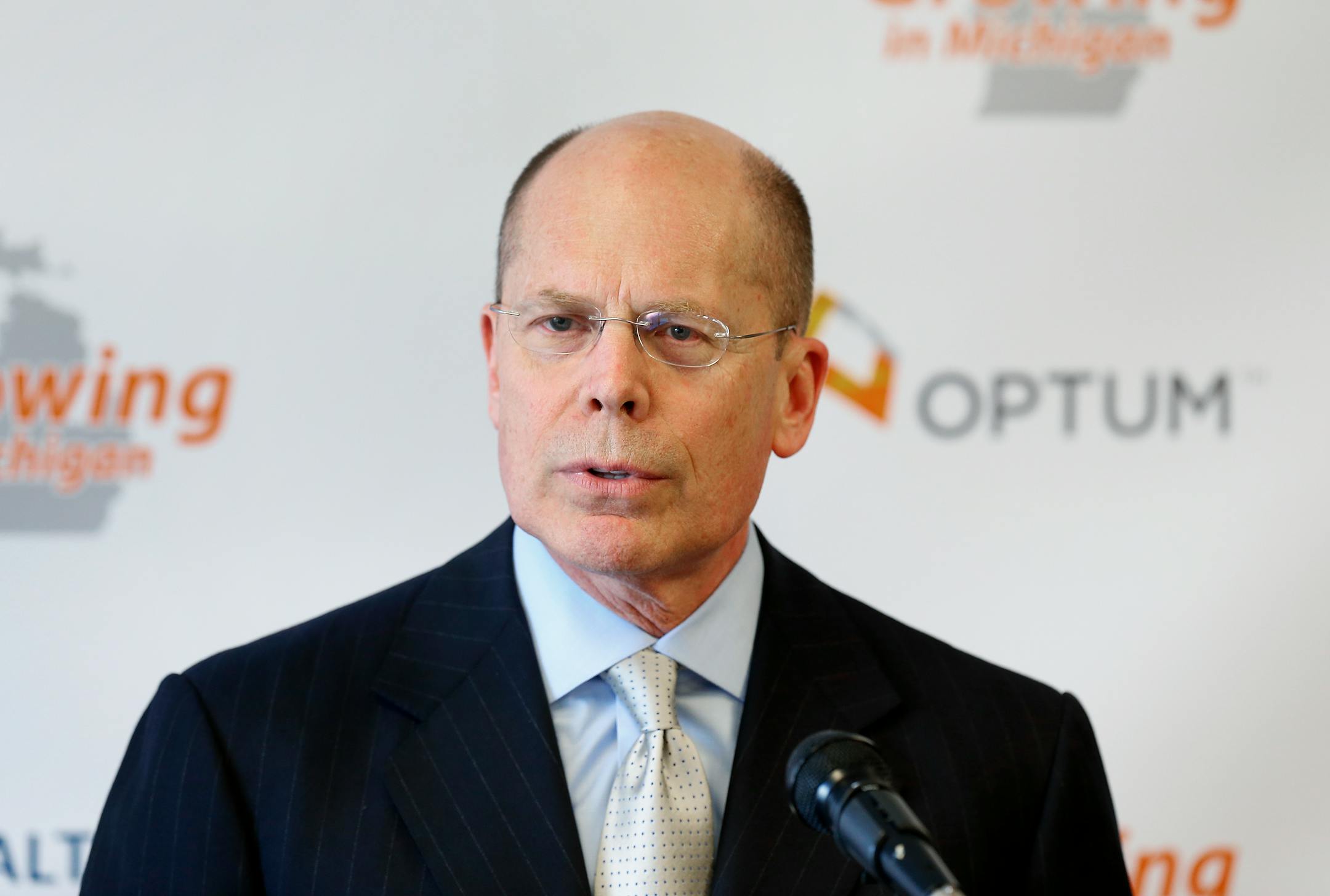
Stephen Hemsley, the CEO of UnitedHealth Group, speaks at a news conference in 2014. Hemsley on Tuesday sought to convey the company's commitment to values of service, responsibility, integrity and humility. (The Associated Press)

Chastened. Chastised. Humbled.

UnitedHealth Group executives started their quarterly results call with analysts 45 minutes early Tuesday morning. They had a lot to say and knew there would be a lot of questions after mistakes led investors to shred half the company’s value in the past three months.

First, CEO Stephen Hemsley thanked the company’s employees for serving patients and customers “during a prolonged, challenging period for our business.”

Then, he said UnitedHealth would do better than it has, not just financially, but as a part of American society.

“At this moment, I believe it’s also important to convey the tone we’re setting at this enterprise,” said Hemsley, the 73-year-old who led UnitedHealth from 2006 to 2017, and then returned to the company’s top job two months ago as the depth of its crisis became clear.

“More than anything, it is a tone of change and reform, born out of recommitment to our mission to help people live healthier lives and help make the health system work better for everyone. It’s a mission that requires a commitment to a culture of values of service, responsibility, integrity and humility,” he said.

Humility is not a trait associated with UnitedHealth Group. Arrogance disappears, however, when fortunes do.

With $400 billion in annual revenue, UnitedHealth is the largest company in American health care, surpassing Apple last year to become the nation’s third-largest company after Walmart and Amazon.

Eden Prairie-based UnitedHealth possesses enormous skills and vast reach. For instance, when the Obama administration ran into difficulties with the public exchange website, it turned to UnitedHealth’s Optum unit for help.

The company is also notoriously tight-lipped and hard-nosed. Executives rarely appear in media or at image-buffing public events, a predisposition that became more acute after a top executive was shot to death in New York last year. And it has aggressively pursued critics with threats of litigation, as the New York Times recently chronicled.

In Minnesota’s business history, there’s never been a company like it. UnitedHealth started as a fairly straightforward insurance company in the late 1970s at the dawn of the HMO era, and in the last 25 years became a juggernaut capturing enormous value in nearly every segment of the health industry.

Some people came to view UnitedHealth as a symbol of unfairness in access to health care in the U.S. Others view it as one of the legends of this business era. Millions of people apply to work at UnitedHealth each year and its stock is one of the most widely held in the country.

When a hacking episode last year shined light on the outsize role a UnitedHealth subsidiary played in the billing systems of so many of the nation’s small clinics, I wrote that the firm had “become too big to fail, or more precisely too big for America to accept failure from it.”

Hemsley said something similar on Tuesday morning.

“We are acutely aware we have an enormous responsibility for providing care for millions of people and for protecting the government and private programs we partner in,” he said. “As such, we have embarked upon a real cultural shift in our relationship with regulators and all external stakeholders.”

When it was his turn, the CEO of UnitedHealth’s insurance company, Tim Noel, said, “I’ll start by emphasizing that we are approaching our business with greater humility, greater transparency and a renewed determination to meet your expectations and our standards.”

Patrick Conway, the medical doctor who leads UnitedHealth’s Optum unit, began his presentation saying, “We’re approaching this with humility and the need for deep analysis of key issues.”

Hemsley said a re-evaluation of the portfolio of businesses across the entire UnitedHealth enterprise had been put on hold. That led to some small sales of businesses and assets that may have provided a short-term boost to overall results.

“We stopped that entire activity, and some of that was considered in the outlook of the current year and that has been withdrawn,” he said. “We are focused on the performance of the businesses that we have.”

UnitedHealth’s overall per-share profit this year, adjusted for one-time events, will be around $16, which was far below the $18 to $20 or so that analysts expected before Tuesday’s announcement. The year began with UnitedHealth executives forecasting 2025 profit of around $30 a share.

At the heart of the difficulty is that medical costs, along with usage of hospitals and clinics, are higher than UnitedHealth leaders thought they would be. That hurt both the UnitedHealthcare insurance business and the part of Optum that provides care.

For investors, there’s an added downside. UnitedHealth Group’s cash flow from operations has been cut in half, to an expected $16 billion this year, reducing its ability to provide returns to investors through dividends and stock repurchases.

The company hasn’t lowered its dividend, but it spent less on stock repurchases in the second quarter than in the first.

Hemsley said he expects “moderate” profit growth next year followed by “strengthening quickly” in 2027. For investors, that means the company’s stock is not likely to return to its pre-collapse price for several years.

The immediate challenge for UnitedHealth is to get people to believe in it again. That’s humbling, indeed, for a company with its record of staggering, swaggering growth.

“The health system expects us to function at our full potential,” Hemsley said, adding, “We’re rebuilding trust through both change and through increased transparency. That includes work to ensure a wide range of stakeholders have confidence in the integrity of our company.”

about the writer

about the writer

Evan Ramstad

Columnist

Evan Ramstad is a Star Tribune business columnist.

See Moreicon

More from Business

See More
card image
Hormel headquarters in Austin, MN. ] GLEN STUBBE * gstubbe@startribune.com Friday September 11, 2015 Despite woes throughout the food industry, partly due to consumers turning away some from processed foods, Hormel has managed to continue prospering -- even though a good part of its business -- Spam, chili -- is about as processed as you can get. But the company's turkey and pork offerings are riding a hot protein trend. And over the past two years, it's made some of the biggest acquisitions in