Ramstad: My columns catch moments in the life of a business, but their stories keep changing

Some things didn’t play out as I expected.

Columnist Icon
The Minnesota Star Tribune
December 30, 2025 at 1:03PM
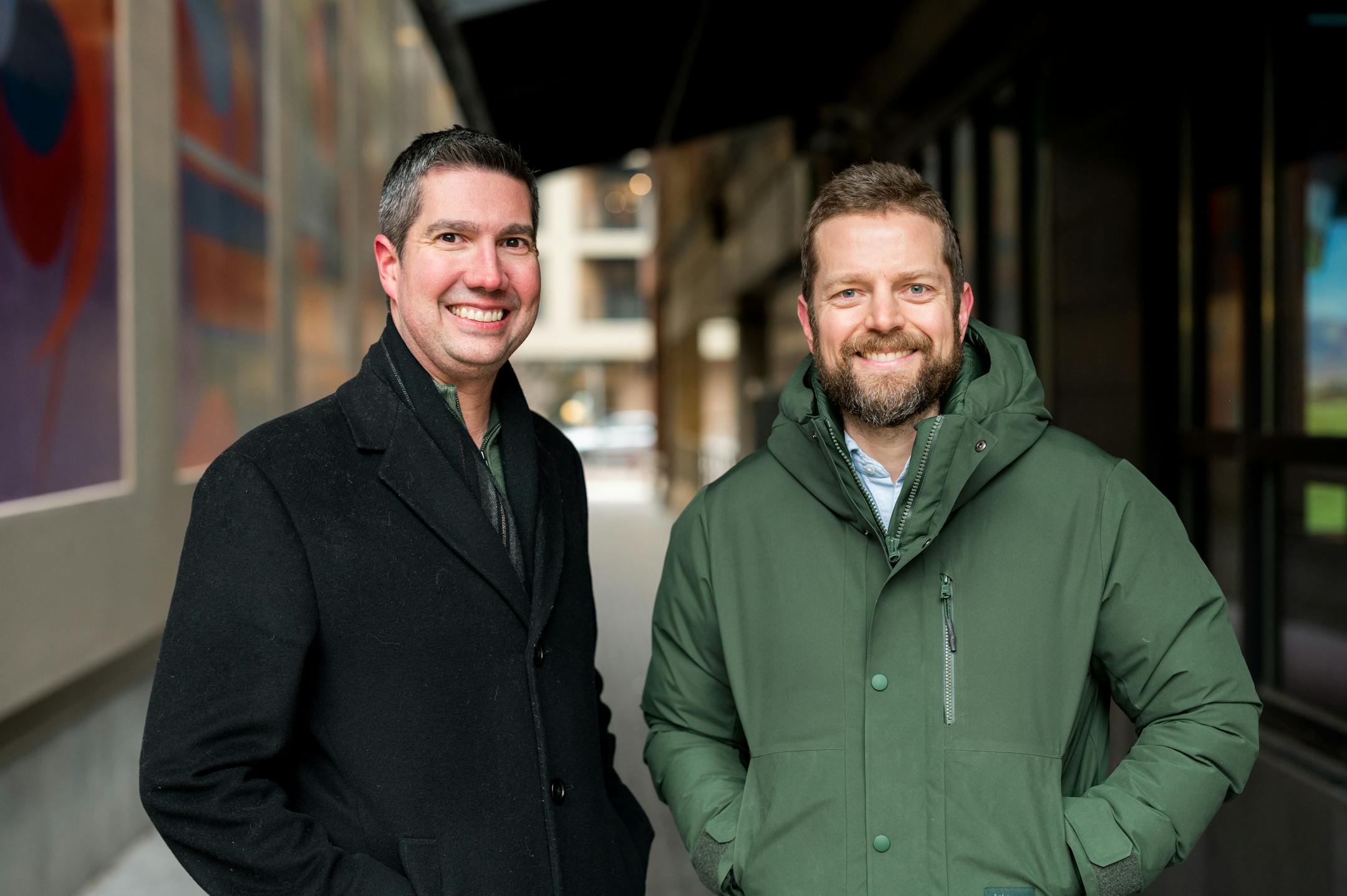
Cold Climate founders Eric Dayton and Dan Lindquist. (© Liz Banfield)

A year ago, I wrote about the new direction Eric Dayton’s company, Cold Climate, was going in 2025. It didn’t go as expected.

News stories and columns like mine capture moments, but life and business march on and not always in the direction we think or hope.

Cold, a software-as-a-service platform, was designed to help businesses, chiefly retailers, comply with sustainability requirements of their suppliers, partners and regulators.

Dayton is a member of the family that started the Dayton’s/Target empire and a well-known figure in the Twin Cities business community. He understands retail not only because of family legacy but his experience running the Minneapolis-based Askov Finlayson store and clothing brand with his brother Andrew in the 2010s.

For months, everything was going as planned at his new venture.

Yet what neither he nor many people in retail saw coming was the scale of President Donald Trump’s tariffs on imports. On the pivotal day of April 2, Trump announced staggering tariff rates, throwing businesses and investment markets into chaos.

“With businesses across the country paralyzed by uncertainty and suddenly just trying to figure out how to survive, budgets were frozen and our momentum hit a brick wall,” Dayton wrote in a LinkedIn essay in November about the closing of Cold.

In the midst of raising capital, the firm’s growth story suddenly looked less clear. “You’ve got wind in your sails and then this macro change happened beyond our control,” Dayton told me over a coffee in December.

Before going further, let me just say that politics didn’t come up in our conversation. Dayton is the son of a former Democratic governor and senator, and Trump is a Republican. And I’ve heard from plenty of Republicans defending Trump’s tariffs over the last year. As I’ve written several times, I think they’re terrible policy. I also don’t think many of those Republicans would have supported such tariffs before Trump, but we are where we are.

Eric Dayton (© Liz Banfield)

And while it’s now clear that Trump’s tariffs wound up to be smaller and less impactful on imports than he said on April 2, they represent the largest tax increase on Americans in many years. And Dayton’s business is just one of millions where 2025’s plans and strategies were scrambled.

Dayton said he wrote his LinkedIn essay in part because he’d shaken a fear of failure that for a time shaped his career, a notion that also struck a nerve with me.

“It wasn’t like it was a secret. People would ask me how things were going and I’d share with them” that Cold had closed, Dayton said. “But I certainly wasn’t sharing it like the wins. And I just realized I should rethink that and I should walk the talk. A lot of people have mentioned that post, so it was interesting to see it resonated.”

Dayton went to business school in Silicon Valley, spending just enough time there to absorb the mindset of failing fast and moving on. He continues to work with other startups in the Twin Cities and the philanthropic consulting firm led by his brother.

There were other moments that seemed pivotal for Minnesotans in business this year but didn’t turn out as expected.

In February, I wrote about plans by Dan and Hope Wixon to close Wixon Jewelers, their shop of custom and luxury goods in Bloomington. They did close in May, but they kept taking appointments from shoppers right up to the holiday season as they sold down their inventory.

Hope and Dan Wixon, at Wixon Jewelers in February 2025. They closed the store in May but continued to take appointments as they sold down inventory. (Leila Navidi/The Minnesota Star Tribune)

In the summer, I went to the closing celebration of a cherished soda and ice cream fountain at St. Paul Corner Drug. Owner John Hoeschen planned to remove the fountain and remodel the store by the fall when people come in for flu shots. A short time later, his father became ill and Hoeschen put the remodeling plan on hold.

“By the time that chapter was finished, summer was over,” he told me in December. “Working on it during vaccination season is impossible, so it remains as it was. We will likely get going on it in the spring.”

Real estate developer Steve Furlong, who I watched put up advertising signs for his townhome project in June after years of getting plans through multiple regulatory steps, is hoping to break ground in spring 2026. He’s looking for potential buyers of the townhomes and for other investors.

“Another investor or two would be greatly beneficial,” Furlong said in December. “I have the contractors, engineers, architects and the city all available to work together to get the project underway and completed.”

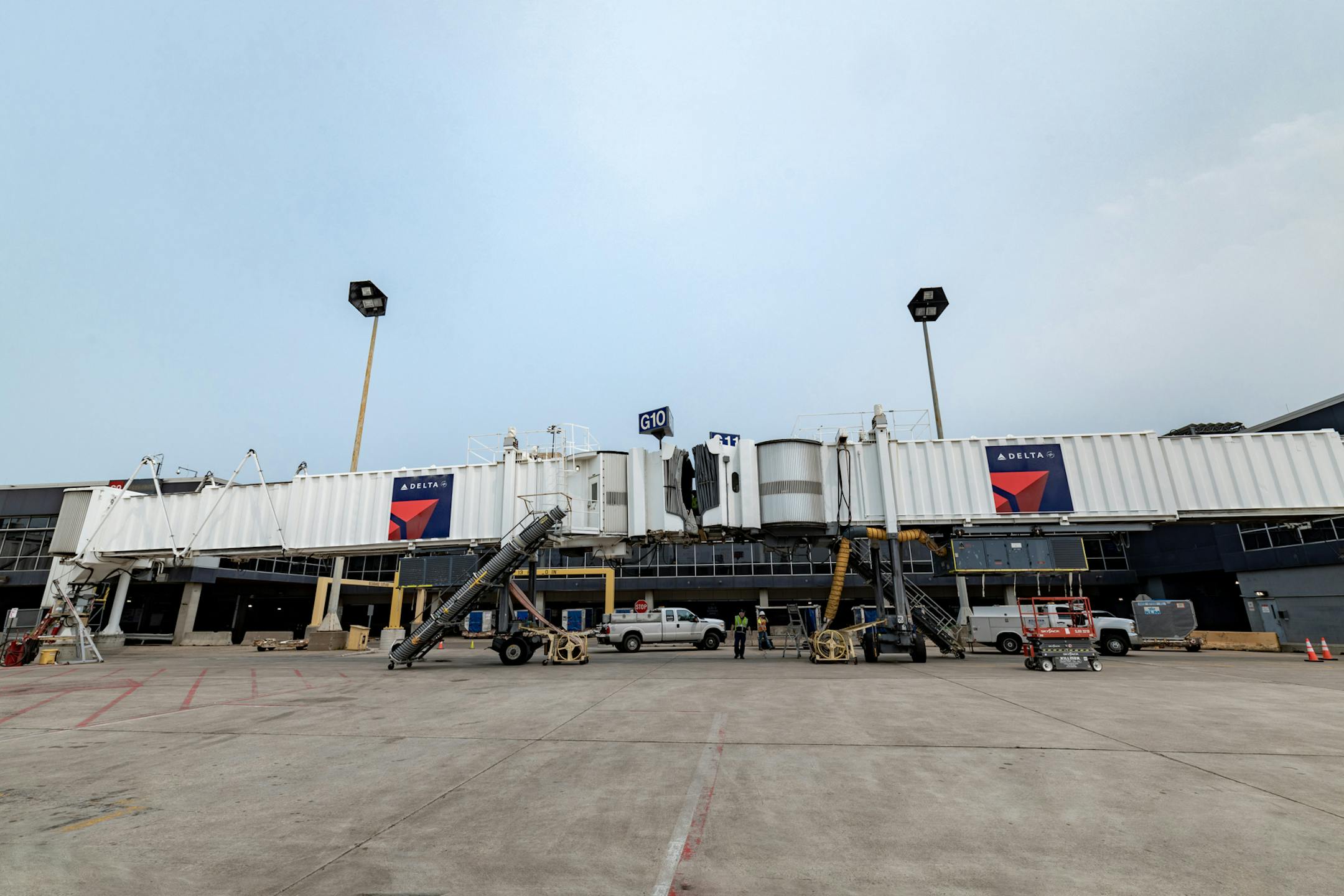
And remember the holidays in 2023 when I marveled at the engineers at Minneapolis-St. Paul International Airport who put together two jetbridges to form a hallway and shortcut to the border and customs area on Concourse G during some construction?

Well, they were used for much longer than planned. They were just taken apart about three weeks ago, and construction is ready to start for an expansion of several G Concourse gates.

about the writer

about the writer

Evan Ramstad

Columnist

Evan Ramstad is a Star Tribune business columnist.

See Moreicon

More from Business

See More
card image
Ten skids of loose peanut butter crackers wait to go to the land fill Saturday Feb. 7, 2009 as Gleaners Food Bank destroys products containing peanut butter as part of the nation wide recall of foods containing Salmonella tainted products from Peanut Corp. of America . (AP Photo/The Indianapolis Star,Michelle Pemberton)