Ramstad: Andrew Dayton’s foundation hits the gas at a moment of high tension for charities

Since 2018, Constellation Fund has evaluated hundreds of local nonprofits, found most doing meaningful work and some doing extraordinary work.

Columnist Icon
The Minnesota Star Tribune
October 13, 2025 at 8:04PM
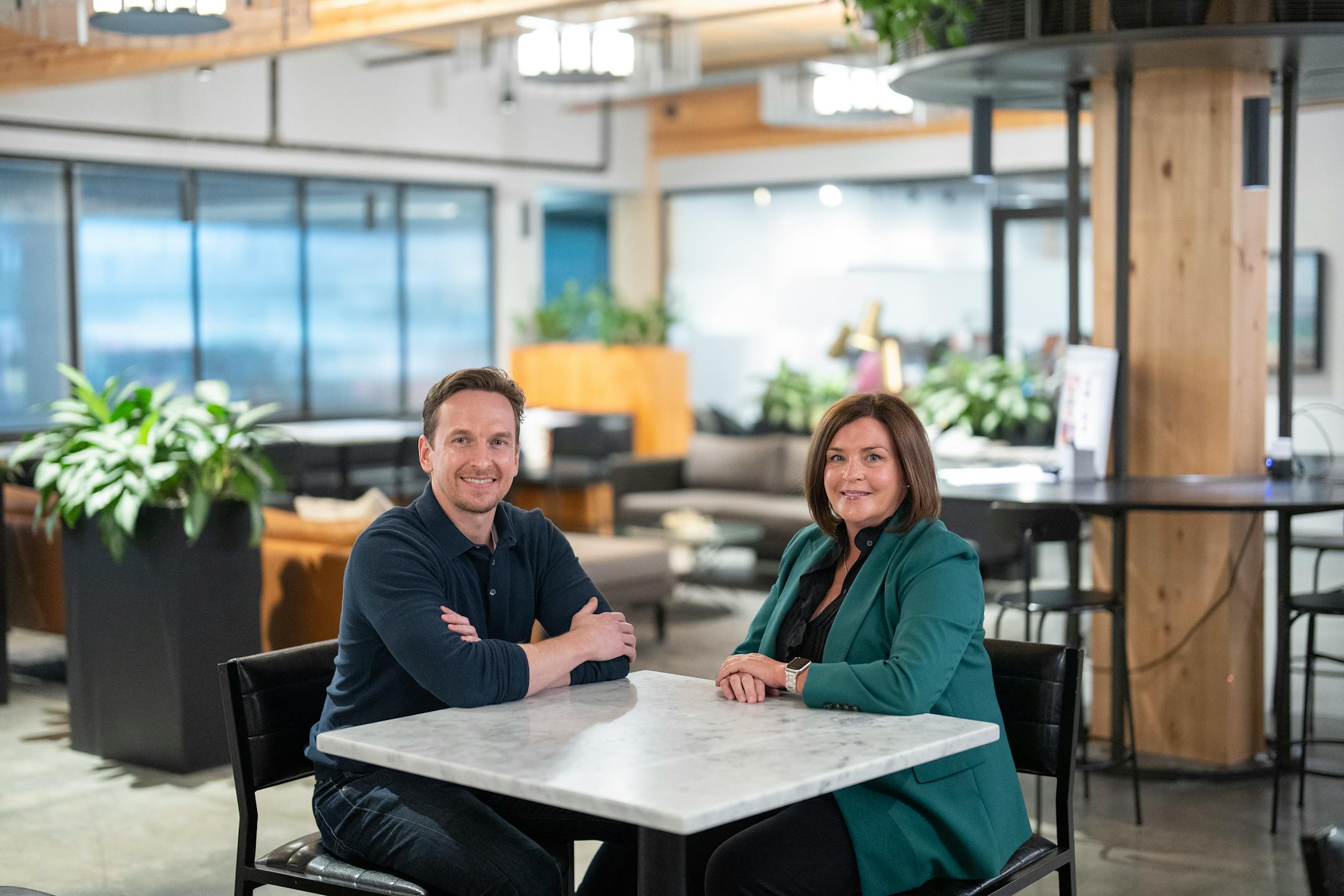
Andrew Dayton, CEO of Constellation Fund, and Allison O'Toole, its newly appointed chief growth officer, at Industrious, a co-working space in Minneapolis. (Alex Kormann/The Minnesota Star Tribune)

New charities formed with laudable purposes, generous donors and motivated organizers often suffer from the same early funding problem as many great startups.

They call it the “stagnation chasm.” It happens when charities find early success but get stuck in a middle ground without the funds or time to achieve ongoing momentum for their charitable aim.

Andrew Dayton, son of a former governor and a descendant of the Dayton and Rockefeller business fortunes, started a foundation seven years ago that aims to help donors find effective charities in Minnesota to donate to, including those that may be facing this kind of chasm.

“There are a lot of good ideas out there. We’ve done hundreds of evaluations,” Dayton said. “I can say with a ton of confidence that most nonprofits, the vast majority, are doing really meaningful work. Some are doing extraordinary work. And it’s really hard to tell the difference unless you dive into the numbers, unless you follow the outcomes.”

In 2018, Dayton started Constellation Fund with a kind of built-in think tank that evaluates nonprofits with the rigor of an econometrics consultant or a forensic accountant.
A neon Constellation Fund sign is displayed at the organization's office space at Industrious, a co-working space. (Alex Kormann/The Minnesota Star Tribune)

Now, at a moment when Minnesota’s nonprofit organizations are under immense pressure after some high-profile frauds and a pullback of federal government funds, Dayton is seeking to expand Constellation Fund’s reach and influence.

He’s just brought in some high-profile help: Allison O’Toole, who steadied the MNsure health exchange as its CEO from 2015 to 2018, when Dayton’s father, Mark Dayton, was governor.

A former lawyer and aide to Sen. Amy Klobuchar, O’Toole then became CEO of Second Harvest Heartland, the state’s largest food distribution charity. She led it through the pandemic and another period of expanded need as inflation hit in 2022 and 2023.

O’Toole stepped down from Second Harvest Heartland this summer not long after her salary and those of its other leaders came under criticism from legislators reviewing state funding for it and other nonprofit organizations.

“We made it through the pandemic, and I reset the vision there on this moonshot goal of making hunger history in Minnesota,” O’Toole said. “They’re off and running like crazy. It is complex territory, and time for a change for me, personally, for a lot of reasons.”

She added, “I love this community, and this community is of our making, and I see the persistent gaps. I want to continue to try and make it better, and this is a great opportunity to do that.”

Constellation Fund raised $15 million in its last fiscal year, more than ever, but that’s tiny relative to the hundreds of millions, if not billions, of dollars in assets at McKnight, Bremer, Cargill, Blandin and other foundations in the state.

Constellation’s board, however, is filled with leaders of some of those large foundations and wealthy donors in the state — names like Cargill, Pohlad, Carlson and Redleaf. His brother Eric Dayton, whose software business grew from lessons he and Andrew gained as co-owners of an apparel company, is also on its board.

All are eager to understand how their money can deliver the best outcomes, especially in alleviating hunger and poverty.

“My experience as someone growing up in this town with a ton of privilege,” Andrew Dayton said, “is that philanthropic decisions have largely been driven by perspectives of people like me. In other words, I have resources to give, therefore I get to decide which program gets funded. I came to realize those decisions were often based on who did I know that invited me to an event and I was moved and I gave. That generated a whole lot of generosity, but it hasn’t produced the outcomes that we might expect.”

He learned about research and pilot efforts in San Francisco and New York to make nonprofits more effective. That work is different, however, from what’s become known as “effective altruism,” ideas popularized in Silicon Valley that use a narrow set of criteria to decide how people should engage in philanthropy.

“The power of Constellation’s core model is dovetailing off the power of modern information tools, which is, ‘How do you build into an evaluation, not my preferences as a donor who has never experienced poverty, but the best available data, knowledge and community insights?’” he said.

Industrious, the co-working space used by Constellation Fund. (Alex Kormann/The Minnesota Star Tribune)

It’s hard for anyone to determine what organizations most need, or are most deserving of, financial donations. Researchers associated with Stanford University around 2018 identified the missing middle ground in financing among nonprofits, which resembled some of the capital-raising difficulties identified with technology startups in the late 1980s and early 1990s.

“There’s often excitement in new ideas, right? People get excited about the shiny, new project. And then there’s comfort in the established agencies that have been around for a long time and have name recognition and a lot of momentum,” Dayton said. “And then there’s what the research calls the ‘stagnation chasm’ in the middle of philanthropy, which is essentially where good ideas get stuck.”

O’Toole’s title at Constellation Fund will be chief growth officer, but Dayton said she is not there to expand the fund’s assets. Instead, she will focus on building its role as provider of data and funnel of money to Minnesota’s nonprofits.

“The goal here is not to make Constellation bigger. It’s to make the problem smaller,” Dayton said. “The growth that we’re looking for is centered on how to help these proven ideas bridge that stagnation chasm and get to their full potential.”

about the writer

about the writer

Evan Ramstad

Columnist

Evan Ramstad is a Star Tribune business columnist.

See Moreicon

More from Business

See More
card image
Provided by Exact Sciences

The late Dr. David Ahlquist co-invented ColoGuard, which is helping drive Abbott Laboratories’ acquisition of Exact Sciences. After an ALS diagnosis in 2019, Ahlquist wasn’t done inventing.

card image
card image