
Minneapolis mayoral candidate Omar Fateh is a democratic socialist. Here’s what that means.

Three democratic socialists sit on the Minneapolis City Council, where they’ve pushed for things like city-owned grocery stores, city sidewalk shoveling and higher taxes on the rich.

The Minnesota Star Tribune
August 6, 2025 at 11:00AM
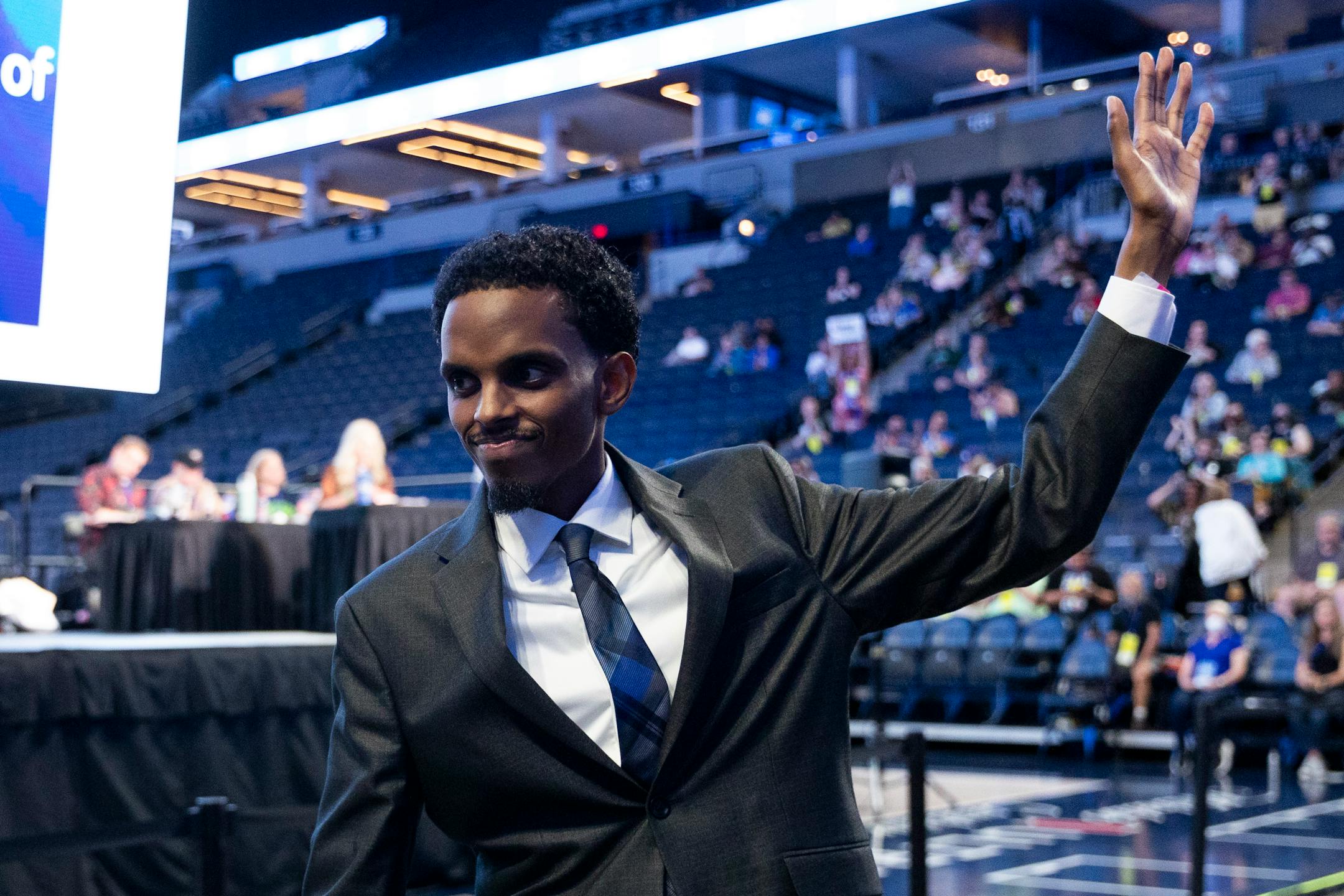
Minneapolis mayoral candidate and state Sen. Omar Fateh waves to the crowd during the Minneapolis DFL convention at Target Center on July 19. Fateh, a democratic socialist, won the endorsement of the city's DFL Party. (Rebecca Villagracia/The Minnesota Star Tribune)

State Sen. Omar Fateh’s Minneapolis DFL Party endorsement over two-term incumbent Mayor Jacob Frey has been heralded as another example of the growing influence of democratic socialists in the Democratic Party.

The endorsement raised Fateh’s profile as national media drew comparisons with New York lawmaker and fellow democratic socialist Zohran Mamdani, who won the mayoral primary in New York City.

There are now three democratic socialists on the Minneapolis City Council — as well as a fourth who was elected as a democratic socialist but no longer identifies as one. They’ve pushed for things like city-owned grocery stores, city sidewalk shoveling, rental eviction prevention, barring discrimination based on body weight, legalization of street vendors and new taxes on the wealthy.

Here are some frequently asked questions about what democratic socialism is and what it could mean for the future of Minneapolis city government.

What is democratic socialism?

Democratic socialism espouses progressive and populist ideas further left than those held by traditional Democrats, and it’s been on the rise in Minneapolis and other liberal cities for several years. In America, democratic socialists generally support universal health care, free college tuition and higher taxes on the rich.

Some Democrats say the answer to their low polling and other problems is not to swing further left, and risk alienating middle America and winning back seats in the midterms.

Minneapolis City Council Member Jason Chavez is a democratic socialist, and said the movement believes in redistributing wealth equitably.

“Ultimately, I think it’s just about making sure that our government actually works for the people that it’s supposed to serve, and putting people over the corporations that have the wealth in the city,” Chavez said.

Former presidential candidate and U.S. Sen. Bernie Sanders of Vermont is the nation’s most prominent democratic socialist, followed by U.S. Rep. Alexandria Ocasio-Cortez of New York. The duo recently went on a “Fighting Oligarchy” tour into ruby-red America, vowing to take on corporate America and the widening gap between rich and poor.

Nationally, the Democratic Socialists of America says it’s the largest socialist organization in the nation, with over 80,000 members and chapters in all 50 states. The DSA says it’s a political and activist organization, not a party.

Some members work within the Democratic Party, while others eschew the party. Sanders, for example, is an independent but is a member of the Senate Democratic caucus. Although, he has run under the Democrat banner when it’s beneficial to do so.

How has the group fared in Minnesota?

Sanders handily beat Hillary Clinton in the 2016 presidential caucus in Minnesota, but no democratic socialist candidate has won statewide office. A handful serve in the Legislature, and there are some pockets of success, mostly in Minneapolis-St. Paul.

Along with the three members on Minneapolis City Council, two DSA members are on the St. Paul council, according to Twin Cities Democratic Socialists of America. Fifteen DSA members have been elected statewide, the group said, including two on the Duluth City Council.

The Twin Cities Democratic Socialists of America, which formed in the 1980s, has over 1,600 members. Co-Chair Brooke Bartholomew said the chapter has been growing, particularly since President Donald Trump’s re-election, and after Mamdani’s primary win. They added 89 new members in the past month, and 300 new members this year.

What do Minneapolis democratic socialists stand for?

The Twin Cities DSA’s City Council candidate questionnaire — which helped determine endorsements — probed issues ranging from political donations to transportation priorities. Candidates were asked whether they would:

  • Refuse contributions from developers, big landlords or corporate lobbyists.
    • Support ripping out Interstate 94 between Minneapolis and St. Paul and replacing it with “rail.”
      • Support a $20 minimum wage.
        • Expand the city’s authority to tax the wealthy and large corporations.
          • Support a rent-control policy with a 3% cap on rent increases.
            • Fight for free universal public child care.
              • Push to expand bus and light-rail service to 24 hours, with no fares.

                Council candidates were asked whether they would oppose increasing the police budget and refuse the support of police labor groups. The City Council strongly supports alternatives to police, but last year voted 12-1 to pass a city budget that increased the police budget by $12 million over the prior year. All the DSA members voted for the budget.

                Candidates were also asked whether they’d support an immediate halt to homeless encampment sweeps.

                Does Omar Fateh agree with those goals?

                In his mayoral campaign, Fateh has pushed for a higher minimum wage, rent control, preventing evictions without “just cause” and a ban on police interacting with U.S. Immigration and Customs Enforcement.

                Fateh has softened his 2020 state Senate campaign calls to defund and dismantle the Minneapolis Police Department, and now emphasizes investment in policing alternatives and promises “bold and transformative approaches to public safety.”

                After being elected to the Senate in 2020, Fateh shepherded legislation to provide tuition-free college for lower-income students and pay higher wages to rideshare drivers. He supported a $15 statewide minimum wage, free public transportation and universal, government-run health care.

                Fateh said in a prepared statement to the Minnesota Star Tribune that “the political establishment has too often missed the needs of working people, and that’s why you’re seeing authentic, progressive candidates succeed.”

                Fateh has demonstrated he’s willing to play hardball: In the final days of the 2024 session, while fighting for higher pay and insurance protection for rideshare drivers, Fateh leveraged the DFL’s one-seat margin by not showing up at one point and effectively shutting down the Senate.

                How much influence has DSA had in running Minneapolis?

                Three democratic socialists sit on the Minneapolis City Council — Robin Wonsley, Chavez and Aisha Chughtai— and are all running for re-election in November.

                This year the Twin Cities DSA endorsed all three of them, along with Soren Stevenson, another DSA member who’s running for incumbent Andrea Jenkins’ seat in Ward 8.

                Although they’re only three out of 13 council members, several other council members often vote with the DSA members, and the majority of the council is more progressive than the mayor.

                Council Member Aurin Chowdhury identified as a DSA member when she ran for her seat two years ago, but this year did not seek its endorsement, saying she “wanted to be more independent in my governing, but there is no animosity there.”

                The DSA asked City Council candidates whether they support expanding city functions, such as by creating publicly owned high-speed internet service, banks or grocery stores. DSA members of the council, led by Wonsley, have been exploring the idea of city-owned grocery stores.

                The City Council is also looking at building stand-alone public restrooms, an idea Chavez got after seeing them in Washington, D.C.

                Pat Garofalo, former state representative and president of the Minnesota Grocers Association, said the idea of city-run grocery stores is “abundantly stupid.”

                “We learned this lesson when the Soviet Union collapsed,” he said. “It is obviously stupid — painfully, obviously, stupid. And the DSA keeps pushing these ideas that don’t work.”

                The DSA questionnaire also gauged candidates’ support for expanding a city sidewalk-shoveling pilot program. Wonsley pushed for a pilot program that this winter led to shoveling of 17 miles of sidewalks for over 900 addresses, at a cost of over $230,000. Taking that citywide would be pricey: A 2023 report estimated it would cost about $40 million per year to shovel public residential and business sidewalks.

                Where does Mayor Frey stand with the DSA?

                Frey’s campaign manager, Sam Schulenberg, said almost everyone in Minneapolis believes government should do more to help people, but policies like defunding the police, strict rent control and unchecked homeless encampments don’t solve problems.

                He said Frey believes in investing in affordable housing for public school families and hiring more police officers to reduce violent crime.

                “There’s broad agreement across the city on what our goals are, but there’s disagreement on how to get there,” he said.

                What’s the democratic socialists’ relationship with the DFL?

                It’s tense.

                In recent years in Minneapolis, the DSA has gone from a fringe group to a major insurgent wing of the party — and more traditional DFLers have pushed back.

                The local DSA chapter declared in a June email it was effectively divorcing itself from the Democratic Party because Democrats “failed to beat Trump twice” and are “contributing to economic inequality, wars, deportations, the climate crisis, etc.”

                Leading up to the Minneapolis DFL convention, moderate Democrats tried to make it impossible for DSA-endorsed candidates to get DFL nods — a move some DSA members saw as an attempted purge. The moderates backed off, saying the idea had become too divisive.

                Former Minneapolis Mayor R.T. Rybak said progressive and moderate Democrats are splitting nationwide, but downplayed the importance of Fateh’s endorsement by the DFL.

                “The DFL conventions have long since stopped representing a broad swath of the city,” he said. “I won big victories without the DFL endorsement. Many others have as well. ... Years ago it stopped being representative, if it ever was.”

                about the writer

                about the writer

                Deena Winter

                Reporter

                Deena Winter is Minneapolis City Hall reporter for the Star Tribune.

                See Moreicon

                More from Minneapolis

                See More
                card image
                The Minnesota Star Tribune

                Scott W. Carlson, 67, was charged with third-degree assault Monday in connection with a July attack against the same woman that left her hospitalized with facial, eye fractures.