
Minnesota lawmakers reach impasse in gun control negotiations, jeopardizing special session

Republicans have not signed on to a proposal from Democrats that calls for an assault weapons ban and other gun control policies, along with mental health funding.

The Minnesota Star Tribune
September 30, 2025 at 7:13PM
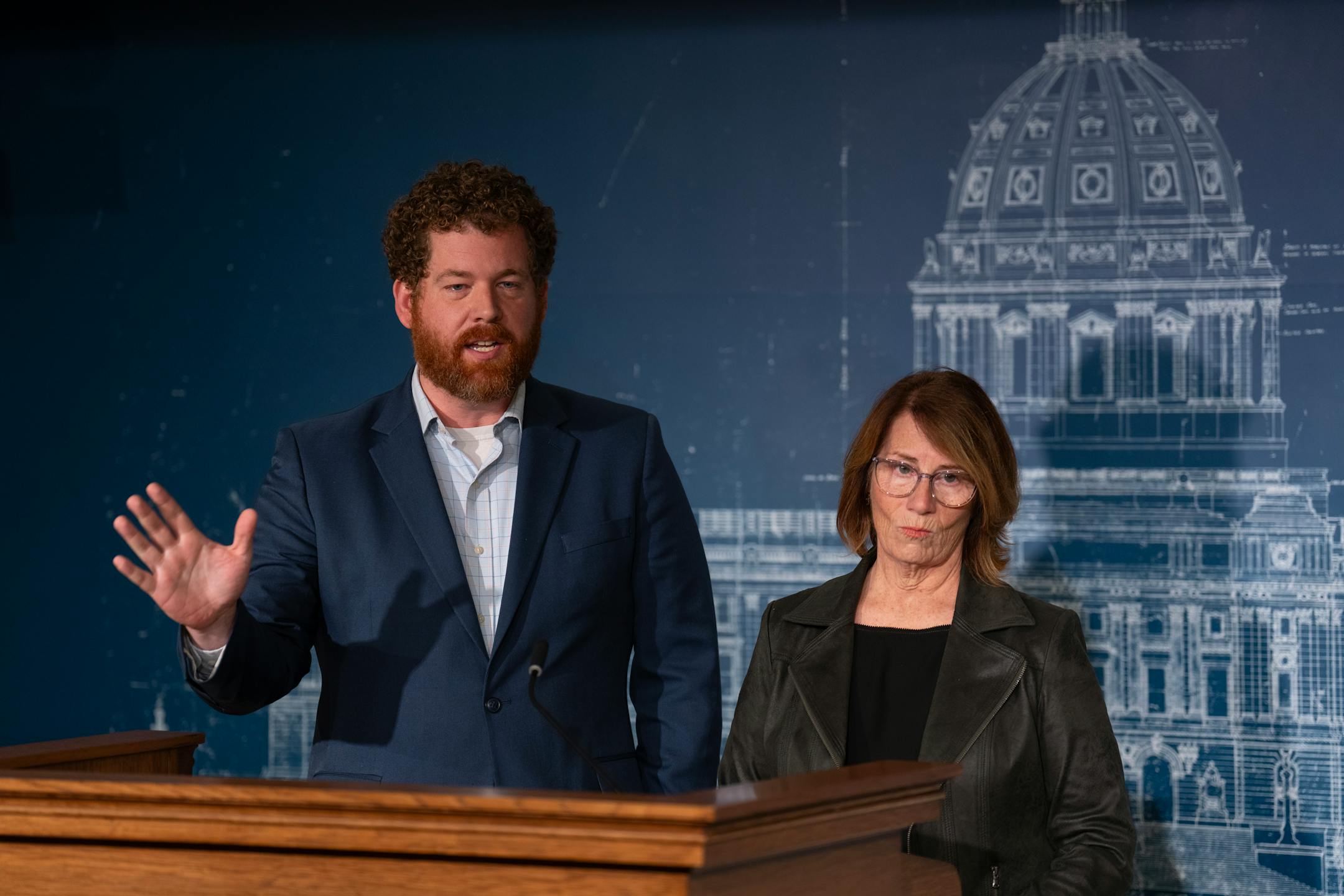
Rep. Zack Stephenson and Sen. Erin Murphy speak at a news conference at the State Capitol in St. Paul Tuesday. The two leaders of the DFL caucus held a news conference to talk about an impasse with Republican lawmakers in negotiations over legislation to ban assault weapons. (Jeff Wheeler/The Minnesota Star Tribune)

Negotiations between top Minnesota lawmakers and Gov. Tim Walz over possible gun violence solutions broke down Tuesday as Republicans refused to sign on to a broad package of proposals that included an assault-style weapons ban.

Walz and Democratic leaders proposed a suite of policies and investments that would’ve put parameters on a special session, which the governor has pushed for since a shooter killed two children and injured nearly two dozen more at Annunciation Catholic Church and School in Minneapolis last month.

“This proposal meets the expectations that Minnesotans have for their elected leaders – that we respond to threats to public safety and take direct action on guns,” Walz said in a statement. “We will not let this issue simply go away.”

The Democrats’ proposal called for the special session to begin Monday.

Republicans rejected the proposal that included a slate of GOP priorities, including funding for mental health services and school security. It also would’ve required passage of a ban on assault weapons and high-capacity magazines, which Republicans have opposed.

“It’s become clear, I think, to everyone what should have been obvious from the start — that the governor’s talk of a special session has been a partisan political stunt from the beginning,” House GOP Floor Leader Harry Niska, R-Ramsey, said at a Capitol news conference.

Since the Annunciation shooting, Walz and Republican and Democratic leaders in the Legislature have held a series of discussions to prepare for a possible special session. Democrats, including Walz, have pushed for a ban on assault weapons – or simply a vote on the measure. Niska said no House Republicans are willing to vote for such a ban.

Only Walz can call lawmakers back into special session, but the governor and legislative leaders have typically reached an agreement on the contours beforehand to keep it from straying into unrelated topics or dragging on.

Because of the close partisan divide in the Minnesota Senate and the tie in the Minnesota House, any legislation requires bipartisan buy-in to reach a floor debate, let alone final passage.

“We got the clarity that we’re looking for – that Republicans aren’t willing to vote for meaningful measures to reduce gun violence in our state,” House DFL Leader Zack Stephenson, of Coon Rapids, said at a news conference.

The Democrats’ proposal also included an expansion of Minnesota’s red flag law, the re-passage of a recently invalidated law banning so-called ghost guns, and increased penalties for impersonating a police officer.

Stephenson and Senate Majority Leader Erin Murphy, DFL-St. Paul, called the offer a good-faith attempt at a compromise as it included both Democratic gun control priorities and Republican proposals on mental health and school safety.

“It is time, I think, for Minnesotans to understand that there are people serving in the Legislature that want to protect our communities from weapons of war,” Murphy said, “and we’re willing to do it by making compromise with our Republican colleagues. They are not. We are at an impasse.”

Republicans said the proposal amounted to Democrats trying to “fast track” controversial policies before formally introducing and vetting them through the typical committee process.

“Normal special sessions are either things that have broad bipartisan support or things where there’s been a legislative process that almost got done before there was a need for a special session,” Niska said. “This isn’t anything like that.”

The Senate Republican caucus described negotiations as having broken down after 10 minutes Tuesday morning when “Democrats abruptly ended the meeting and indicated they would no longer work with Republicans to find agreement for a special session.”

“If Governor Walz wants a special session, which only he can do, Senate Republicans will be there to do the important work to keep our kids and communities safe,” Senate Minority Leader Mark Johnson, R-East Grand Forks, said in a statement.

GOP Speaker Lisa Demuth, however, said she expects talks to continue and said House Republicans would come back to the Capitol if Walz calls a special session.

“We will not deny quorum in the House,” she said.

Democrats also said they would return to the negotiating table if there is a path forward on gun control. Stephenson accused Republicans of hiding behind a procedural argument.

“Minnesotans are tired of excuses,” Stephenson said. “They want action.”

Sen. Ron Latz, DFL-St. Louis Park, convened a working group earlier this month to discuss gun violence prevention measures. Lawmakers on the panel heard impassioned testimony from parents of children who survived the mass shooting at Annunciation, but they still couldn’t agree on how to move forward.

In an interview last week, Latz said he believes Walz should call a special session even without a bipartisan deal.

“I think at some point our constituents deserve to know where we are on these things,” Latz said. “There’s a moment in time right now with an urgency. I think it needs to be addressed.”

Minnesota Star Tribune reporter Ryan Faircloth contributed to this story.

about the writers

about the writers

Allison Kite

Reporter

Allison Kite is a reporter for the Minnesota Star Tribune.

See Moreicon

Nathaniel Minor

Reporter

Nathaniel Minor is a reporter for the Minnesota Star Tribune.

See Moreicon

More from Politics

See More
card image
Mark Schiefelbein/The Associated Press

A Navy admiral commanding the U.S. military strikes on an alleged drug boat in the Caribbean told lawmakers Thursday that there was no ''kill them all'' order from Defense Secretary Pete Hegseth, but a stark video of the attack left grave questions as Congress scrutinizes the campaign that killed two survivors.

card image