
Annunciation parents call on state lawmakers to ban assault weapons

Republicans are pushing to increase funding for mental health treatment beds and school security measures, while Gov. Tim Walz pushes for limits on assault weapons. At a statehouse meeting, parents of three children injured at Annunciation backed that.

The Minnesota Star Tribune
September 15, 2025 at 7:49PM
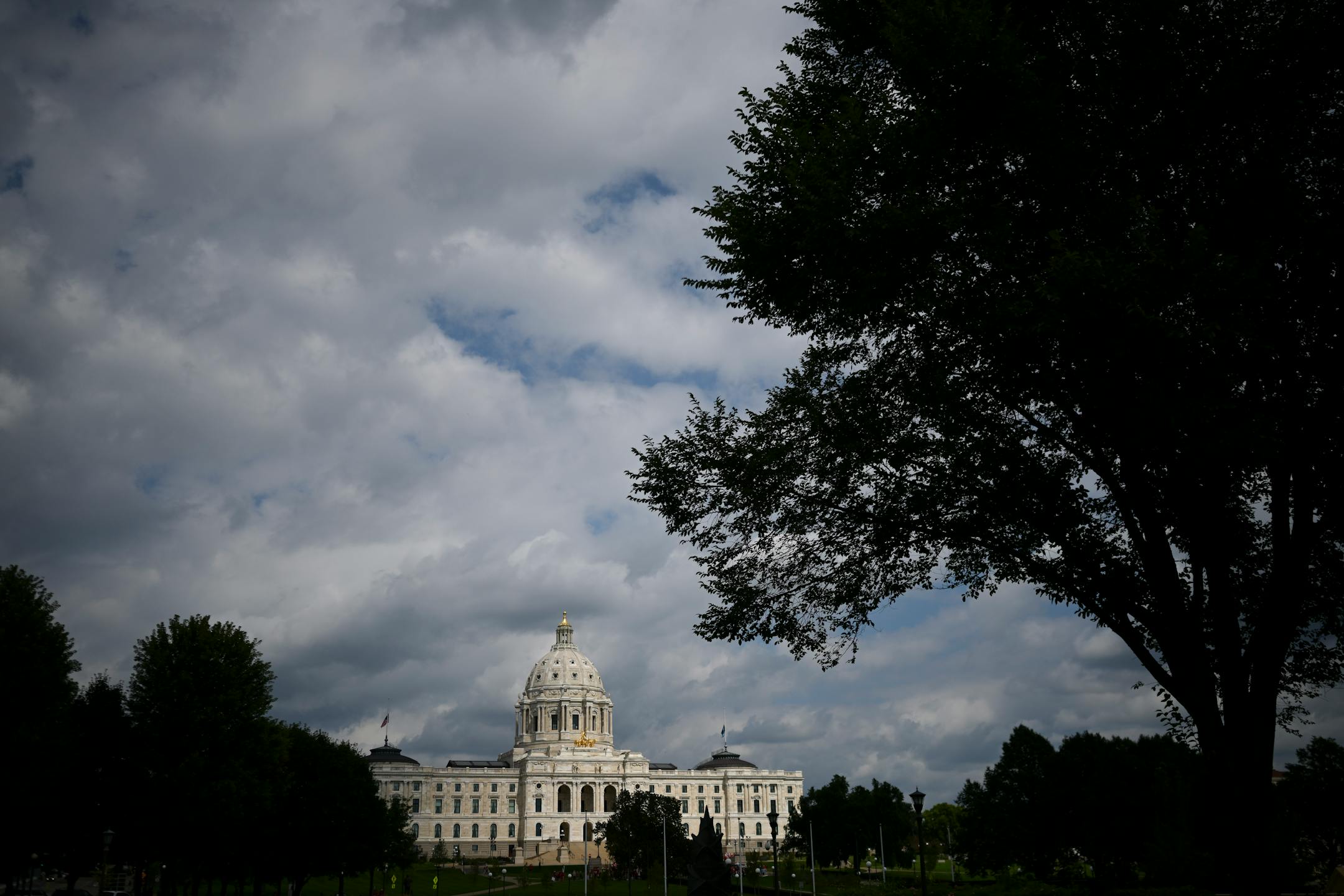
The Minnesota Capitol during a rally to demand action on gun-violence prevention to honor the victims of the mass shooting at Annunciation Catholic Church on Sept. 1 in St. Paul. (Aaron Lavinsky/The Minnesota Star Tribune)

Malia Kimbrell is still changing the dressings daily on her daughter’s bullet wounds. Carla Maldonado’s children flinch at loud noises. Brock Safe’s daughter was grazed by bullets that flew past her forehead and neck.

All three parents’ children survived the mass shooting at Annunciation Catholic Church and School last month. Now, the parents are imploring legislators to ban the types of guns the assailant used in the attack.

“My children were among the lucky ones,” Maldonado told a Minnesota Senate working group Monday. “We got to hug them after school that day, but they are not the same kids that I dropped off that morning.”

Parents, health care providers and faith leaders urged Minnesota senators during an informational hearing Monday to ban assault-style rifles, such as AR-15s, and high-capacity magazines. Lawmakers are not in session, but they heard several pieces of legislation ahead of a potential special session on gun violence that Gov. Tim Walz, a Democrat, has vowed to call. The governor is negotiating with legislative leaders on policy proposals.

Those who may think gun violence won’t hit their community, Kimbrell said, should think again.

“Can you even imagine cleansing bullet wounds on your 9-year-old that they suffered while sitting in church?” she said.

Kimbrell begged lawmakers to “take responsibility and don’t let this opportunity pass you by.”

Police say the shooter opened fire from outside Annunciation during a schoolwide mass last month, firing more than 100 bullets through the church’s windows. The shooting killed Harper Moyski, 10, and Fletcher Merkel, 8, and wounded another 21 children and adults. Sophia Forchas, 12, spent 15 days in critical condition from a gunshot wound to the head and has been moved to “serious” condition.

The shooting, on the heels of the June assassination of House DFL Leader Melissa Hortman, has reignited a long-running debate on gun control.

Rob Doar, senior vice president of the Minnesota Gun Owners Caucus, testified in front of the working group that he did not believe an assault-weapons ban or other gun-control measures would curb mass shootings. He urged spending on mental health resources and crisis intervention.

“There’s no background check that can detect someone’s internal crisis,” Doar said, adding he wanted to find solutions that would identify individuals struggling with mental health issues and divert them from violence.

Minnesota House Republicans have also proposed a package of legislation that includes more funding for mental health treatment beds, extending state school safety funding to nonpublic schools, an increase in school resource officers and mandatory minimum prison sentences for repeat gun offenders. It doesn’t include new gun restrictions.

Health care providers who testified Monday said the power and size of ammunition used in assault-style rifles severely intensifies injuries.

Tim Kummer, the first physician on the scene, said he treated one child with what looked like a graze wound to the head. While the bullet never entered the child’s brain, the force from the rifle caused severe brain bleeding, requiring the removal of part of the child’s skull.

“From a handgun, that wound would likely have only been a graze wound, but from a high-powered rifle, it became a life-threatening brain injury,” Kummer said. “Assault rifles turn survivable injuries into fatal ones. They turn small tragedies into mass tragedies.”

While researchers say no single policy can prevent all acts of gun violence, they point to research that shows limited evidence an assault-weapons bans could be effective. Jillian Peterson, a professor at Hamline University, built a comprehensive database on school shootings and said use of assault-style weapons in mass shootings has exploded in recent years.

“I think we have this image of mass shooters as these super sophisticated people who are going to find one no matter what, and ... they’re really not,” Peterson said. “The ease of access does actually really matter.”

The U.S. banned assault weapons from 1994 to 2004, and deaths from those weapons dropped during that period. But crime generally fell during that period, making it difficult to assess the effectiveness of the ban on its own. Peterson said the 1994 ban was also poorly designed.

Rosanna Smart, a researcher at the nonpartisan organization RAND who reviewed an array of studies on assault-weapons bans, said the complex factors that go into gun violence make it difficult to gauge the impact of any one policy. The federal government has also not invested significant resources into gun-violence research.

Smart found limited evidence that state-level assault-weapons bans decrease school shooting injuries, but noted “inconclusive evidence doesn’t mean that policies are ineffective.”

Nathaniel Minor of the Minnesota Star Tribune contributed to this story.

about the writer

about the writer

Allison Kite

Reporter

Allison Kite is a reporter for the Minnesota Star Tribune.

See Moreicon