Dog rescues are booming, but few focus on ‘elder pups.’ Here are two leading the way in Minnesota.

Grey Face Rescue and Retirement in St. Cloud and Top Dog Foundation in New Germany aim to give senior dogs the “most amazing second act.”

The Minnesota Star Tribune
December 21, 2025 at 12:00PM
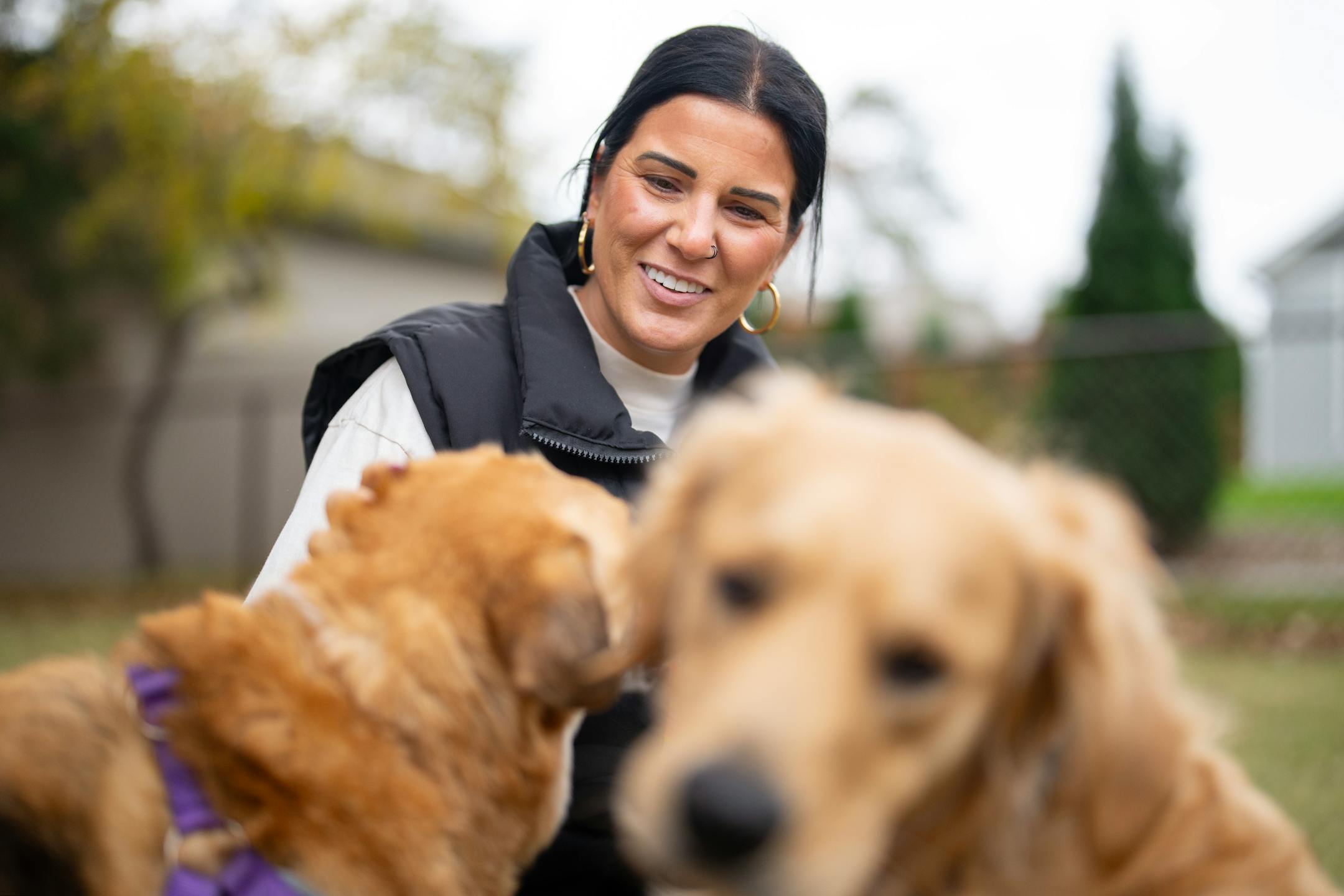
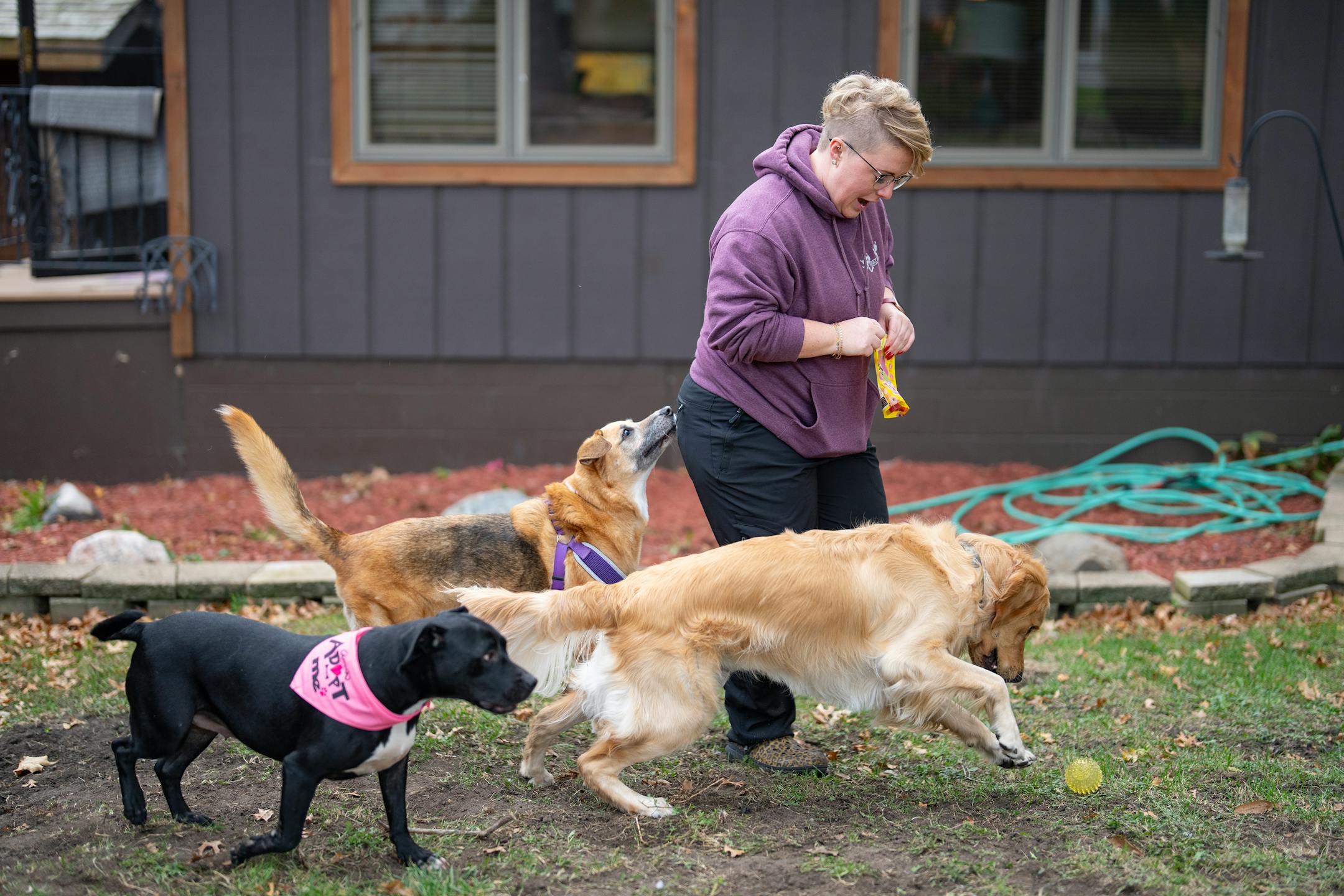
Meghan Murphy plays with Velma, a 6-year-old foster dog, and Summer, an 11-year-old former foster dog that Murphy adopted, and her other dog, Leo, at her home in Sartell on Oct. 25. Murphy has fostered 18 dogs through Grey Face Rescue and Retirement since 2018. (Alex Kormann/The Minnesota Star Tribune)

Sign up for the Minnesota Star Tribune’s St. Cloud Today daily newsletter.

ST. CLOUD – For Bethann Gondeck of Sauk Rapids, it was a mutt named Barnabee who lived on her uncle’s farm.

He was 12 when Gondeck’s uncle moved to an assisted living facility that didn’t allow pets. Her apartment at the time also prohibited dogs.

But this sweet boy — with his fluffy black and tawny fur speckled white around his muzzle — had never been in a kennel, let alone on a leash. Gondeck knew he wouldn’t show well to potential adopters if they surrendered him to a shelter.

“I was like, ‘We have to buy a house. I need to bring Barnabee home,’” she said.

After adopting Barnabee, Gondeck created a nonprofit to help others like him: senior dogs often overlooked because of mobility or health issues, or simply because they might not have many years left. Within the next week — after a decade of growth and hundreds of senior dogs rehomed — she’s trading the house she bought for Barnabee for a farm in Sauk Rapids so she can take in even more animals.

While foster-based animal rescues have been proliferating across the state and the nation for years, just a couple in Minnesota focus on aging animals like Gondeck’s nonprofit, the St. Joseph-based Grey Face Rescue and Retirement.

“Just being able to be that safe spot for them to land at the end of their life is one of the best things,” said Bambi Holloway, who has fostered for Grey Face for the last six years and now serves as the organization’s hospice coordinator.

In rural New Germany, about an hour west of the Twin Cities, Jean Stelten has a similar focus on what she calls “elder pups,” of which she’s rehomed hundreds through her Top Dog Foundation nonprofit. She also owns a boarding facility.

For Stelten, the inspiration was a matted Shetland sheepdog named Bentley who was roaming the streets of Chanhassen for months before animal control finally caught him. After no one claimed him, he was scheduled to be euthanized.

“One of my regular boarding clients said, ‘Oh, don’t do that. Call Jean. She’s the sheltie lady,’” Stelten said. “I got him all fixed up and he lived another six and a half years until about 17 and a half.”

‘The most amazing second act’

An emphasis on adopting animals from shelters or nonprofits, as well as increased spay and neuter efforts, has led to fewer homeless animals nationwide compared to previous decades.

“There were more people seeking animals from breeders or pet stores in the past, and now it’s become popular to rescue — to adopt — versus shop,” said Marit Ortega, executive director of the St. Cloud-based Tri-County Humane Society.

Bethann Gondeck founded Grey Face Rescue and Retirement a decade ago. (Alex Kormann/The Minnesota Star Tribune)

At any given time, Grey Face has about three dozen animals living with temporary fosters, and places about 100 animals each year.

“Those senior animals — instead of having to come into the shelter and be around a lot of noise and volume of people and animals and all of that — they’re able to be in a comfortable foster setting," Ortega said. “And it’s just a much more pleasant experience for them.”

Grey Face takes in dogs ages 7 and older, but most are between 10 and 14.

“A majority are owners going into assisted living or owners no longer able to care for their animals due to age or a condition that they have,” Gondeck said.

Stelten founded her business, Top Dog Country Club, in 2000 after having bad experiences with her shelties at other facilities. Two months later, she rescued Bentley, which sparked her interest in helping “the little seniors who have no prayer.”

Akin to Gondeck, Stelten is also working to increase her organization’s capacity: She recently started raising money with a goal of $5 million to build Bentley’s Place, which will give senior dogs a place to live until they pass naturally or their health issues impede their quality of life.

“Don’t think shelter. Think super-hip senior living for dogs,” she said. “We make sure these elder pups have the most amazing second act, last chapter, whatever that might be.”

Stelten said revenue from the facility’s planned medical clinic and crematory will cover the costs of housing the senior animals. By doing so, Stelten hopes to ease the burden on other shelters or nonprofits. For these often smaller rescues, senior dogs take up foster homes for longer durations because they’re less adoptable.

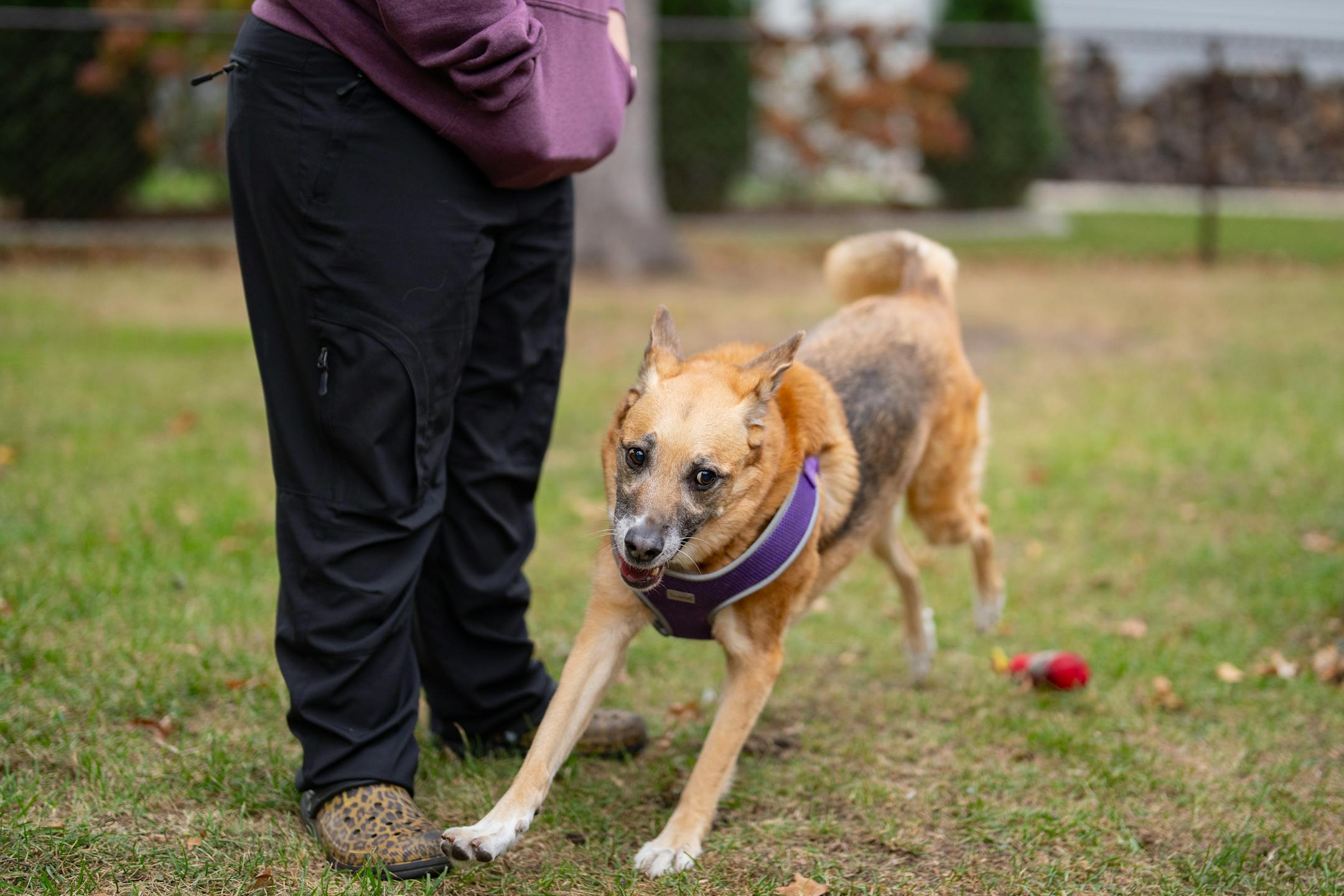
Velma, a 6-year-old foster dog, plays in Meghan Murphy’s backyard in Sartell in October. Murphy calls Velma a sweet "beefcake." (Alex Kormann/The Minnesota Star Tribune)

Though sometimes difficult to rehome, senior dogs can make great pets because they are long past the frenzied puppy stage, often well-trained and likely settled into some sort of routine.

A path to the rainbow bridge

And if a dog has a terminal illness, Grey Face provides hospice care, too, which means volunteers care for the dogs in their homes while the nonprofit foots the bill for any medical costs. These dogs won’t be adopted out, but will spend their last days with someone trying to make them as relaxed and cozy as possible.

While some shelters and rescues around the state have hospice programs, many do not.

“They are filling a gap in the community,” Ortega said. “[Dogs] can live out the rest of their life in a comfortable foster home setting instead of sitting in a shelter and waiting it out, trying to get adopted.”

Meghan Murphy plays with Summer, her 11-year-old former foster dog, at her home in Sartell. (Alex Kormann/The Minnesota Star Tribune)

Sartell resident Meghan Murphy, another long-time foster with Grey Face, has also provided hospice care. She said people often ask how she copes with losing animals, sometimes multiple in a year.

“The ending is sad,” she said, “but all the days leading up to it and the walks and the playing and the snuggles and the goofy personalities that start to show up after they get comfortable — that’s what more of the time is.”

Gondeck has also transitioned to mostly caring for hospice dogs.

“Emotionally, it takes you out,” she said of when dogs cross the “rainbow bridge.” “But then the next day, I’m like, ‘OK, let’s do it again. Let’s find another one to love on before its time to go.’”

about the writer

about the writer

Jenny Berg

St. Cloud Reporter

Jenny Berg covers St. Cloud for the Star Tribune. She can be reached on the encrypted messaging app Signal at bergjenny.01. Sign up for the daily St. Cloud Today newsletter at www.startribune.com/stcloudtoday.

See Moreicon

More from News & Politics

See More
card image
Jeff Wheeler/The Minnesota Star Tribune

Five years after a mini-replica of Sherlock Holmes’ apartment was damaged, it’s restored and returning to the U’s collection of more than 60,000 Sherlockania.

card image
card image