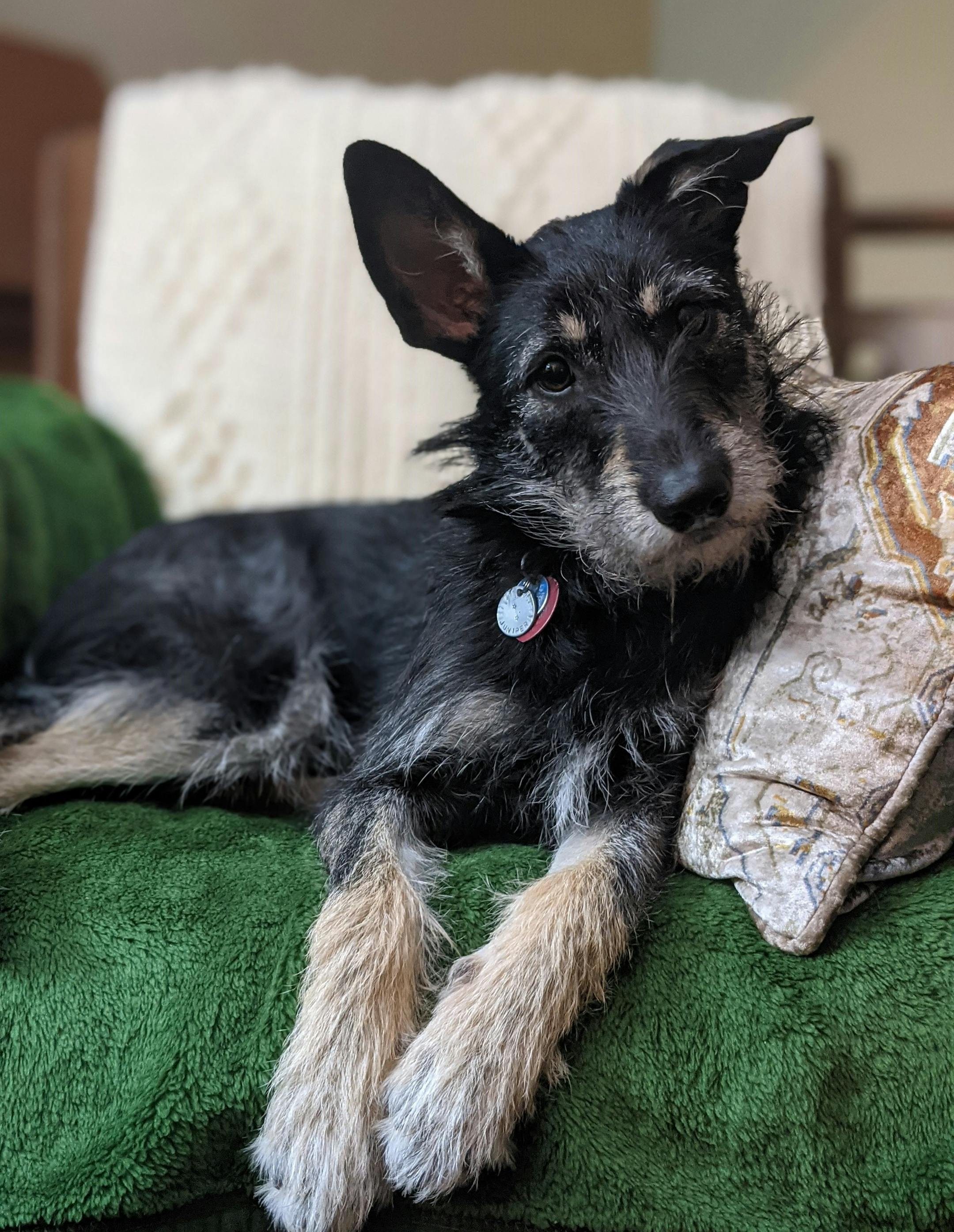
I had expected surprises when I adopted Juniper, a scruffy eight-month-old mutt who was left outside a pet store in Texas.
And surprises I got.
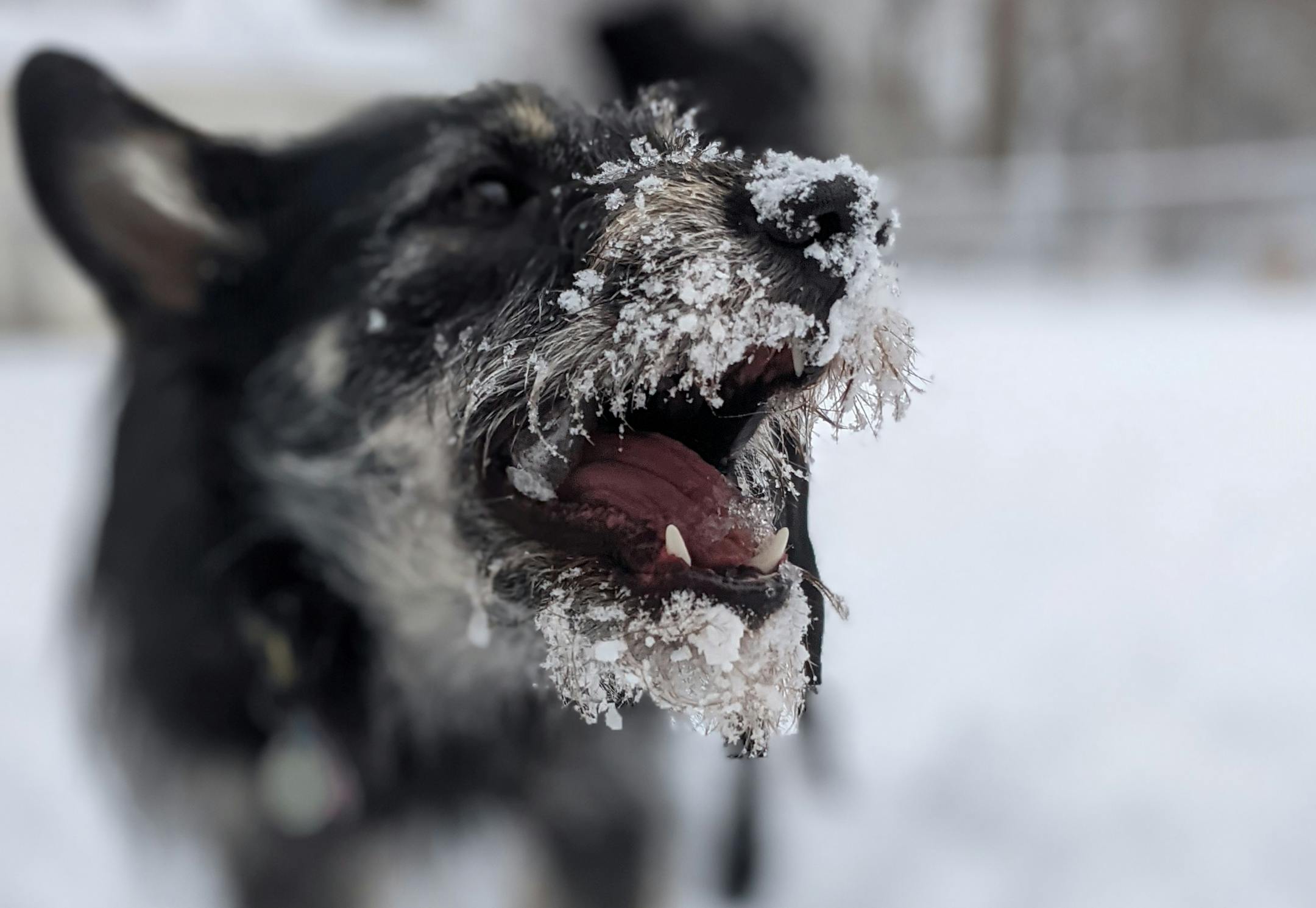
She didn't like to pee while on a leash. She had an apparent craving for electrical cords. And whenever she got a drink, more water ended up on her face than in her belly. This meant that whenever she departed the bowl, she left a trail of dribbles and small pools of water on chin-height furniture like my coffee table.
This was all new to me. But I quickly learned that surprise puddles are just part of pet ownership when your dog has a beard.
Her snoot full of unkempt, wiry fur (which I later learned meant she was "furnished") is one of the things that drew me to adopt Juniper. I got her from the Minnesota-based Ruff Start Rescue, a nonprofit that uses a foster-based system to find homes for dogs from overfilled shelters in Texas and dump sites in South Dakota.
Ruff Start Rescue identified Juniper as a schnauzer and terrier mix. And that was a pretty good guess. But I just had to know more about the unique set of genes that tangled together to create this goofy, sweet pup. So I ordered a dog DNA test. (I chose Embark, probably because I appreciated the pun in the company's name, but there are other brands available.)
For about the same cost as a couple of large bags of dog food, I was able to untangle Juniper's genetics. The process was simple: Don't let her drink water, eat or share a toy with another dog for about 30 minutes, swab her mouth with what looks like a giant Q-tip for 30 seconds and then send away the saliva to be analyzed.
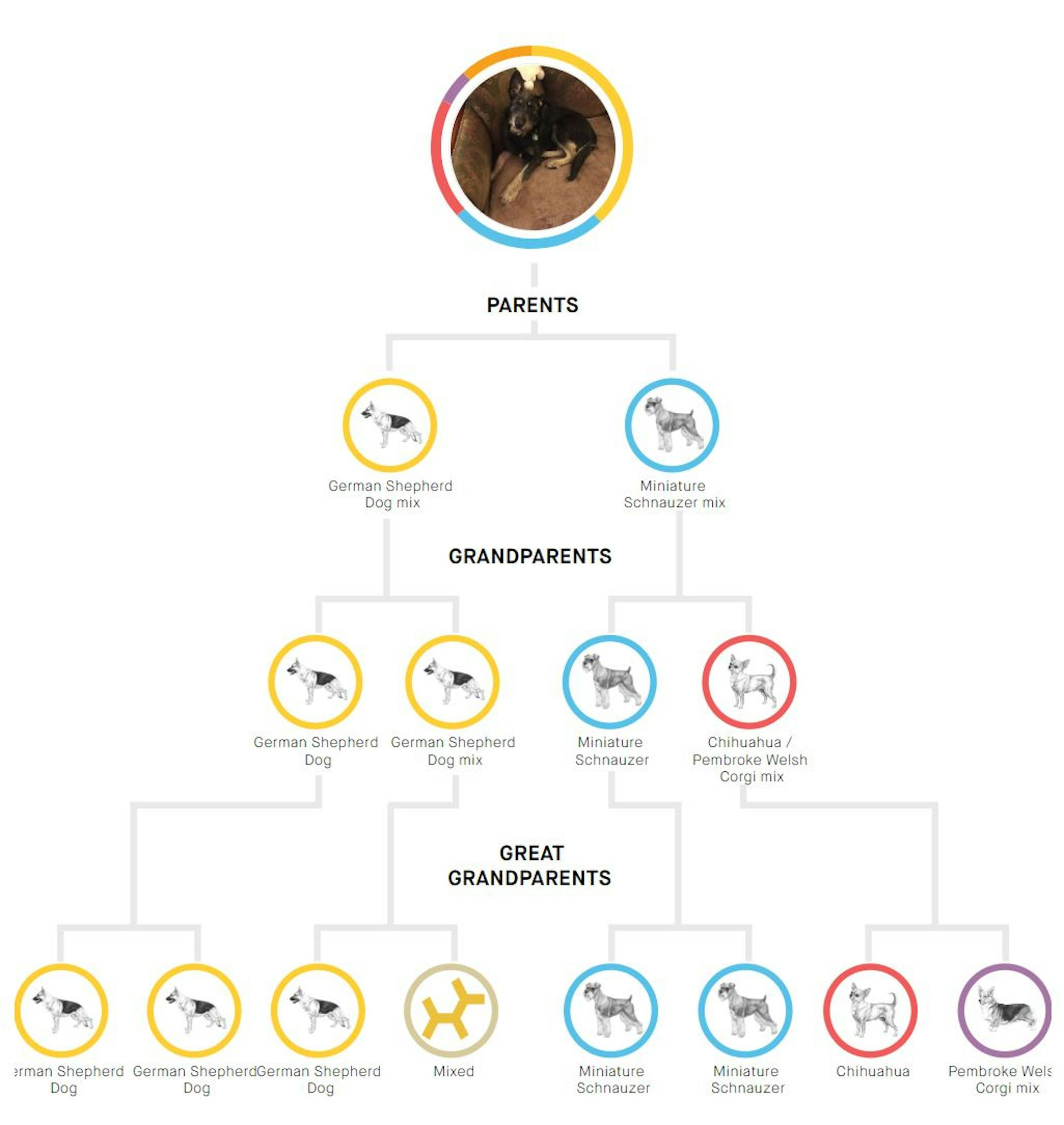
Within a few weeks, I had a trove of information about Juniper's breed makeup, ancestry and likely traits. The results showed her to be about 40% German shepherd, 25% miniature schnauzer, 20% Chihuahua and 5% Pembroke Welsh corgi. She was also about 10% "supermutt," which comes from inheriting genes from multiple generations of mixed-breed dogs.