Filings recount ‘out of control’ ICE agents at height of surge

Minnesotans reported injuries, chemical burns and fear of returning to their homes after interactions with federal immigration agents.

The Minnesota Star Tribune
February 15, 2026 at 12:00PM
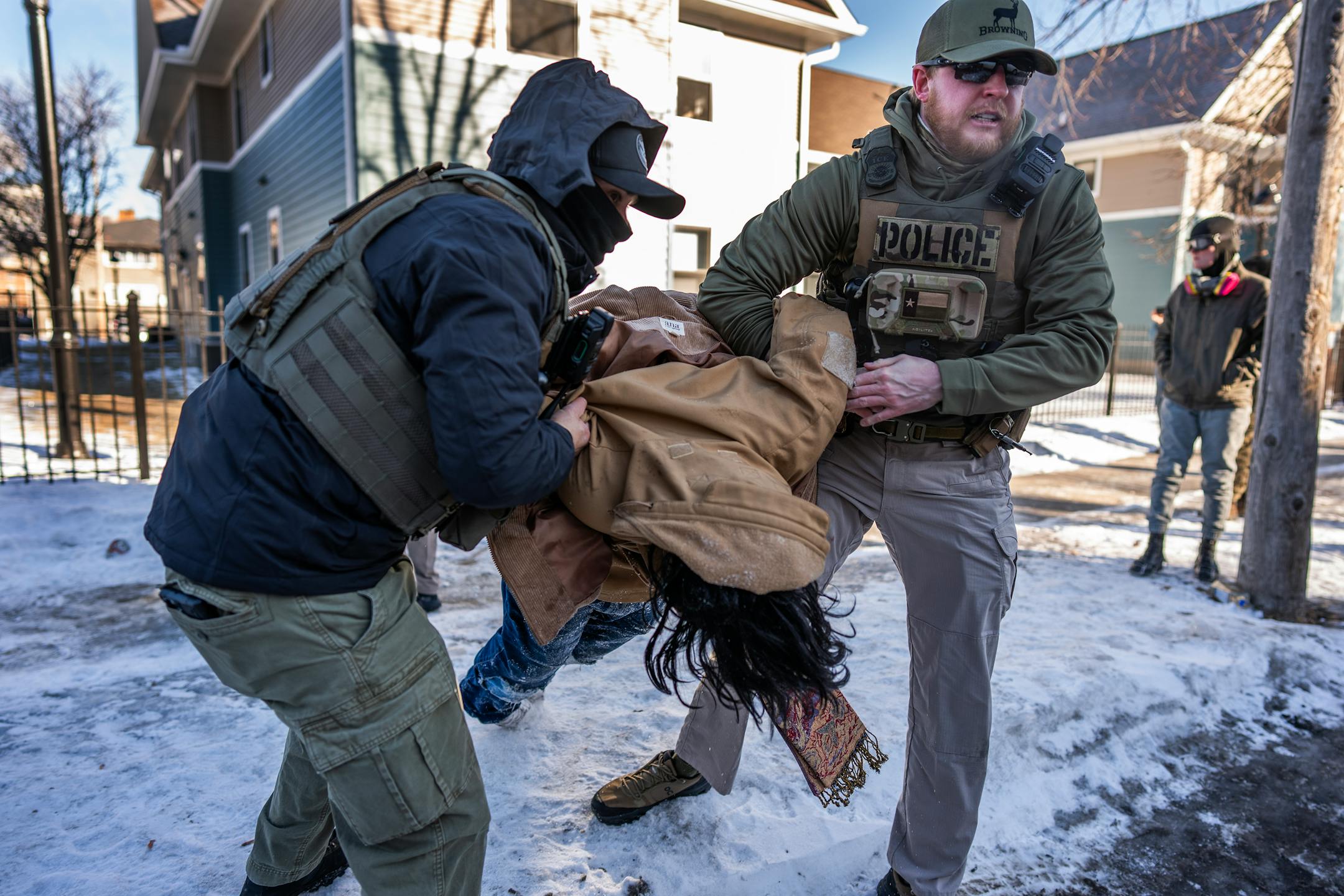
Federal agents detained several individuals near 19th Street and Portland Avenue S. in Minneapolis on Jan. 29. (Richard Tsong-Taatarii/The Minnesota Star Tribune)

A carload of federal agents lingering outside an observer’s house in an attempt to “intimidate.” An immigration officer threatening to shock a man with a Taser as he filmed a detainment. A crush of federal agents lobbing munitions at peaceful protesters, leaving a 70-year-old man severely bruised.

A trove of statements filed in court Feb. 13 offers fresh insights into the tactics federal agents used against Twin Cities residents at the height of Operation Metro Surge.

The more than 80 declarations, which the American Civil Liberties Union of Minnesota included in an ongoing class-action lawsuit against the Department of Homeland Security, offer the clearest account yet of observers’ treatment at the hands of the thousands of federal agents who flooded the state.
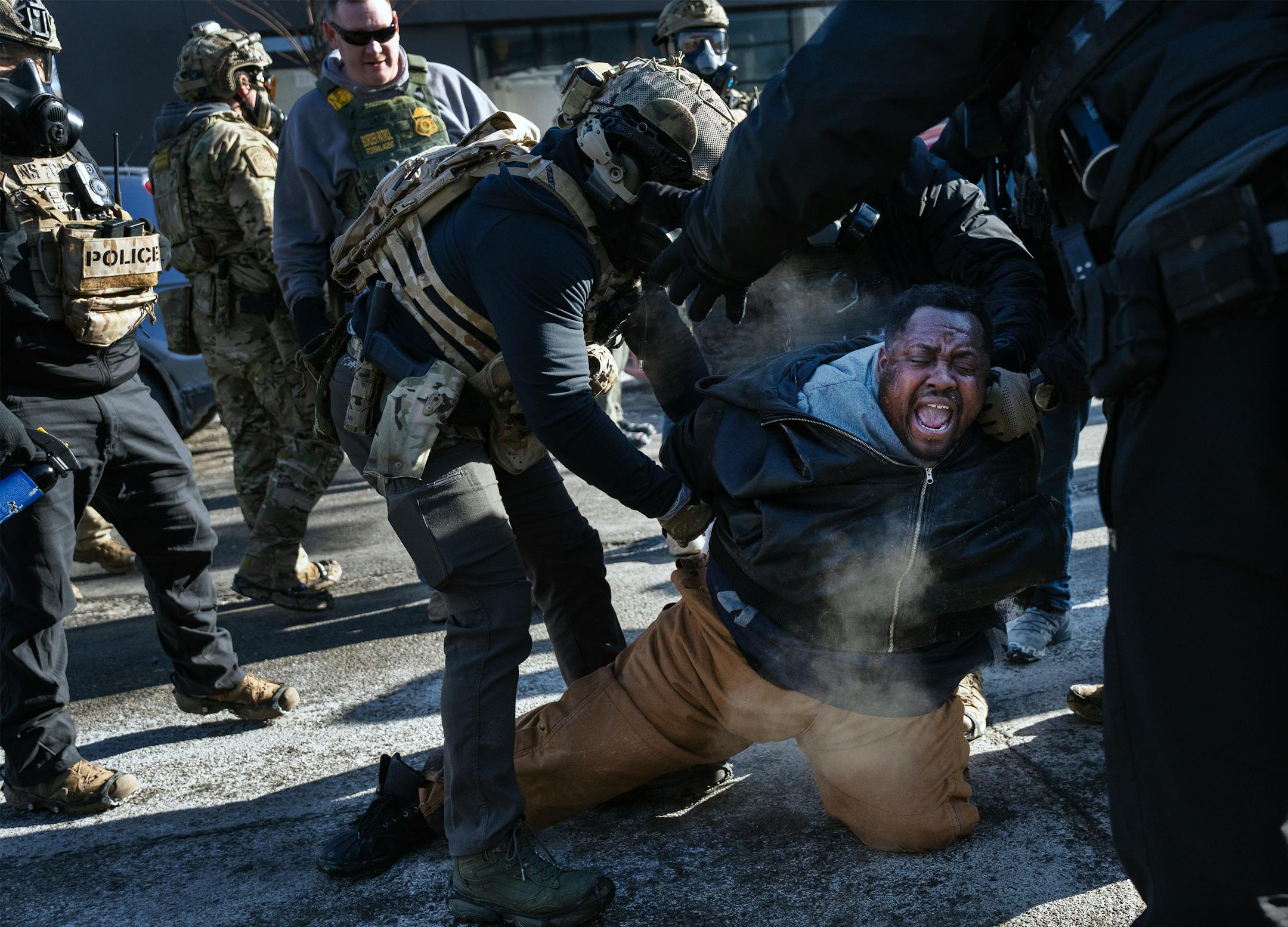
Rapper Matt "Nur-D" Allen was pepper-sprayed and aggressively detained by federal agents in Minneapolis on Jan. 24 near the scene where Alex Pretti was fatally shot. (Richard Tsong-Taatarii/The Minnesota Star Tribune)

Scores of statements from diverse residents — young and old, suburban and urban — suggest the Trump administration’s immigration surge in Minnesota will have long-lasting effects, with people accusing masked agents of inflicting serious injuries and refusing to heed requests for lawyers.

“I am angry about what happened,” one man wrote after federal agents detained him after he trailed them in his car. “I am also worried for my safety now that the government knows who I am and where I live. I have not stayed at my apartment since I was detained because I am afraid.”

Spotlight on Whipple

Most of the accounts describe incidents in January, when resistance to Immigration and Customs Enforcement activity climaxed after federal agents killed poet Renee Good and intensive care nurse Alex Pretti.

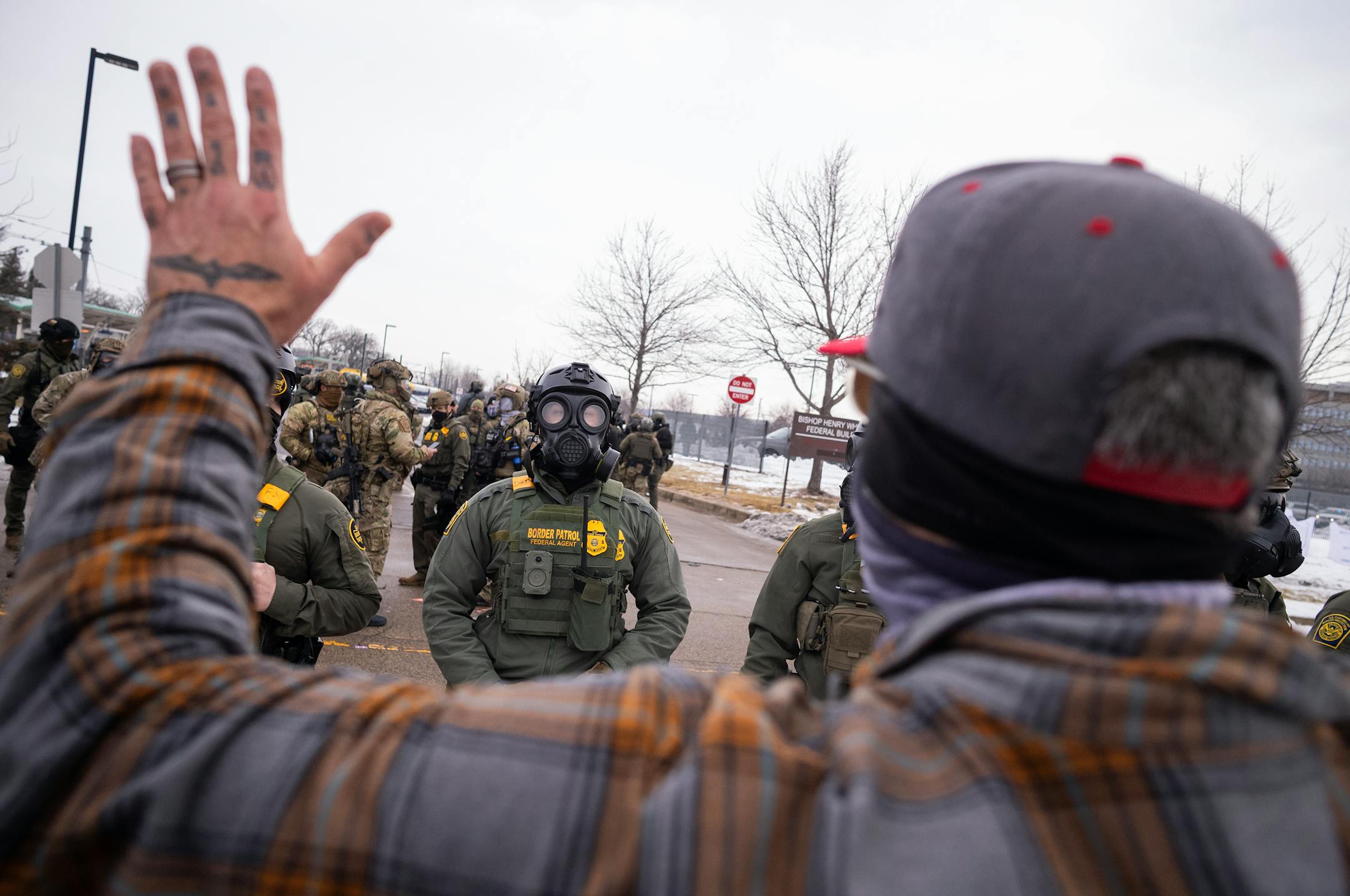
The Whipple Federal Building, which houses a detention center and an immigration court, quickly became a locus of tension. Protesters gathered daily to oppose the immigration operation. The sworn statements indicate federal agents who stood guard outside the building frequently retaliated against residents, often without provocation.
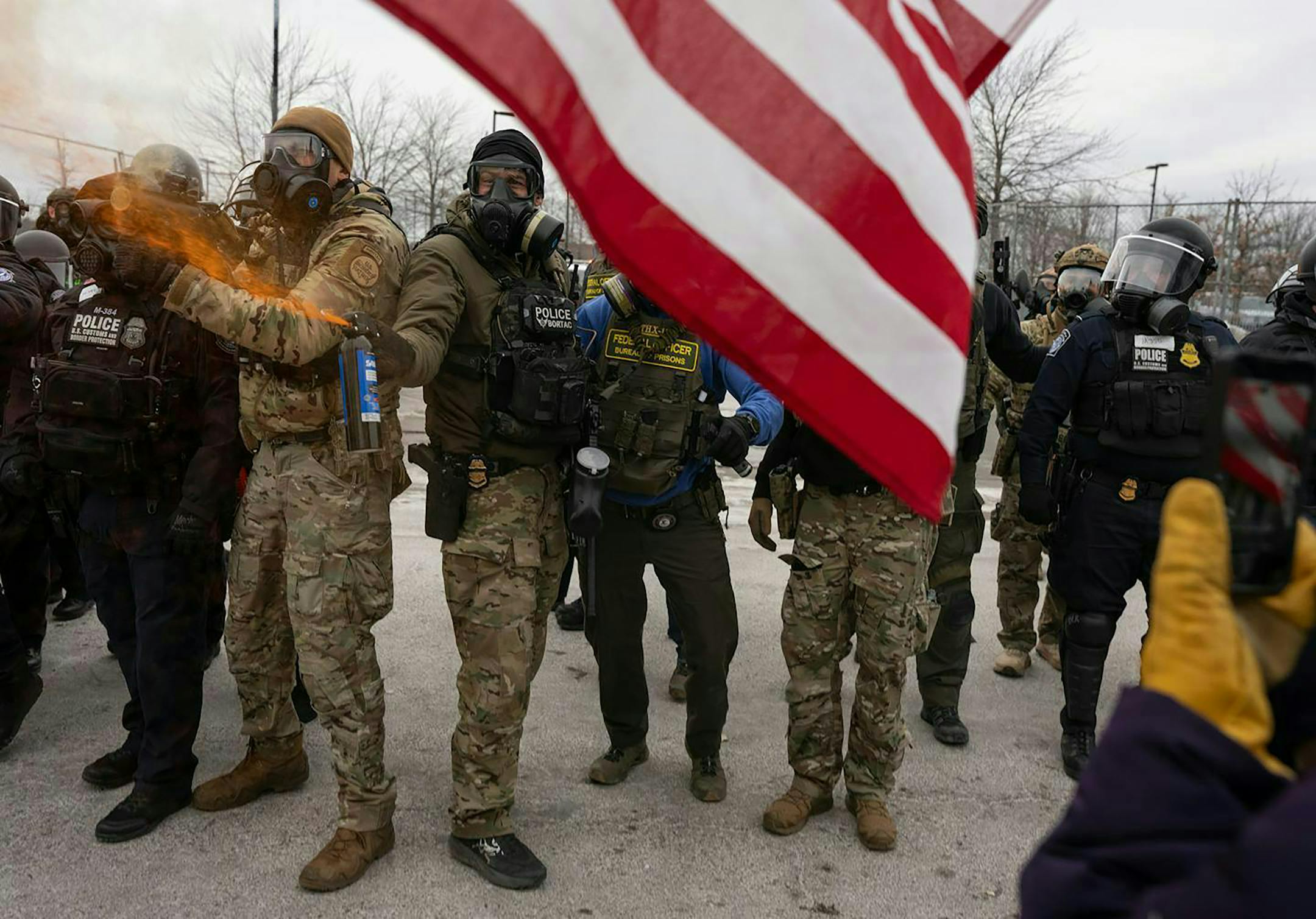
Federal agents respond to protesters near the entrance of the Whipple Federal Building at Fort Snelling by spraying a chemical irritant on Jan. 15. (Richard Tsong-Taatarii)

A 70-year-old retiree recalled joining a peaceful crowd chanting and holding signs outside Whipple one January day. Agents twice “rushed” the protesters — stopping right in front of them, then retreating — before setting off a gas canister for no apparent reason, he said.

A chaotic scene unfolded. A projectile struck the man’s hip, imprinting a bullseye-shaped hematoma. In the scramble to flee, he fell. Protesters scooped him up and poured water on his face, but the pain persisted after the protest.

“By the following day, I had developed serious pain in my shoulder from the fall,” Timothy Michael Brandon wrote, adding that a doctor diagnosed him with a first-degree separated shoulder. “I’m now in physical therapy to improve the pain and mobility in my shoulder.”

Other accounts describe hectic detainments and poor treatment inside the Whipple building. Federal officials have repeatedly defended conditions at Whipple and the conduct of officers, casting blame on those who choose to interfere with immigration operations.

“DHS does not use force against peaceful protesters or stop cars without reasonable suspicion of a crime,” a Department of Homeland Security statement said.

Protesters demonstrate against ICE agents near the the Whipple Federal Building on Jan. 8. (Richard Tsong-Taatarii/The Minnesota Star Tribune)

A 41-year-old child care worker recounted following ICE vehicles — a common practice among people trying to document enforcement operations in their neighborhoods — when agents commanded him to leave his car.

He refused because the agents didn’t offer an explanation. They smashed his windows with batons, pulled him out, pushed him to the ground, handcuffed him and ordered him inside their car.

Once they reached the back of the Whipple building, an agent covered the man’s eyes with his hands before he got “tired of that after a while” and instructed the man to look down.

“There was something very chilling about that,” Matthew Carlson recalled. “It felt ominous, like there was some kind of big secret at the Whipple Building that an observer shouldn’t be able to see or talk about.”

Inside Whipple, detainees filled a “big warehouse space,” with U.S. citizens lined up against one wall and immigrants against another. He handed over his driver’s license, he said, and over the course of three hours, at least 10 agents refused to tell him why he had been detained or heed his requests for a lawyer.

After leaving, he realized agents never returned his license.

A photographer detained

The statements also reveal new details about moments from the surge that stunned international audiences, including the detainment of photographer John Abernathy.

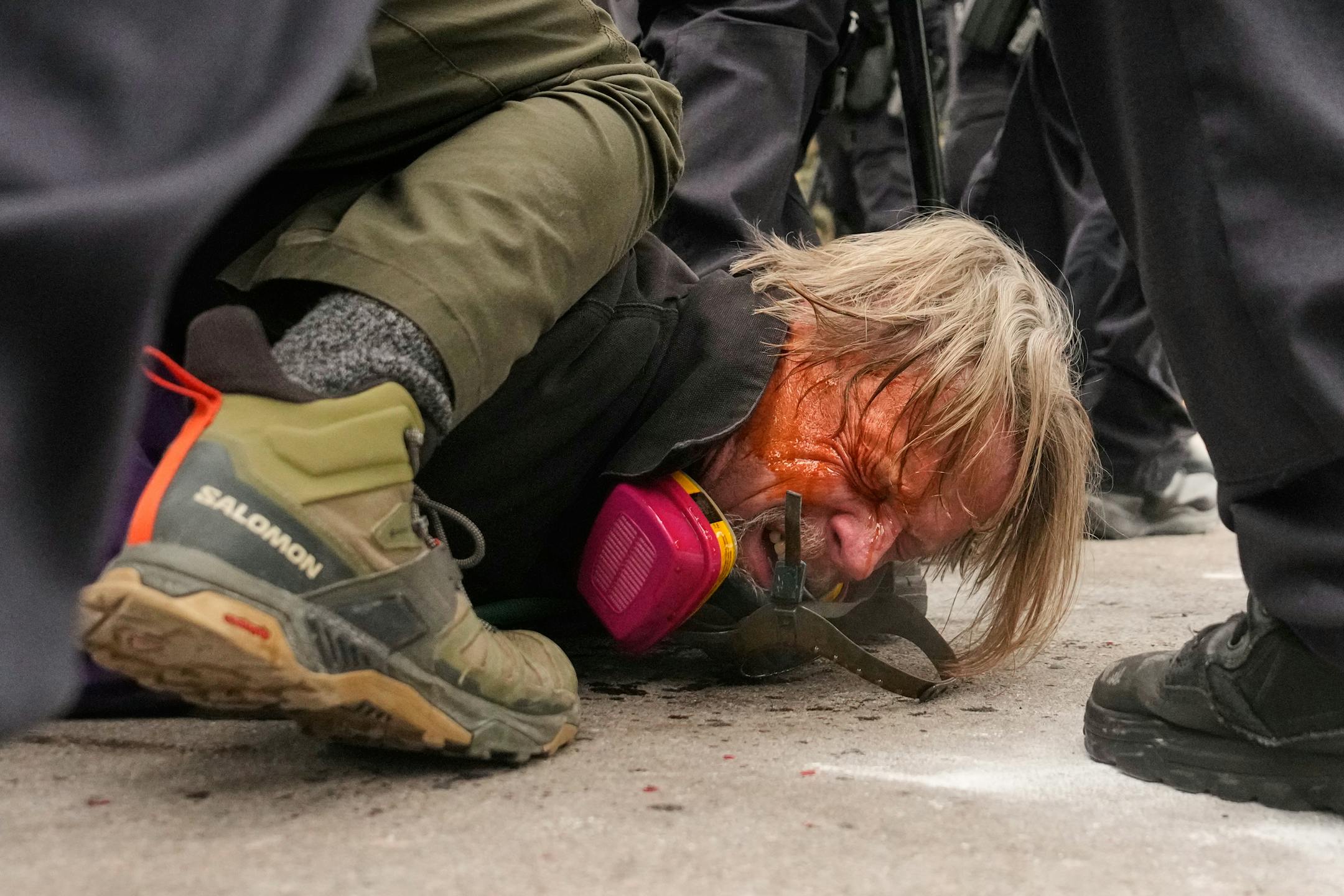
Photographer John Abernathy is pushed to the ground as federal immigration officers confront protesters outside the Bishop Henry Whipple Federal Building in Minneapolis, Jan. 15. (John Locher/The Associated Press)

Another photographer captured Abernathy, 61, pinned to the ground by federal agents as he tossed his camera to the man snapping the photo. In a statement, Abernathy, a self-described “independent photographer,” said he believed agents “targeted” him after he grabbed bear spray that a pro-ICE protester was holding at the Whipple building.

Agents deployed tear gas before discharging pepper spray directly into Abernathy’s right eye, handcuffing him and leading him into the Whipple building.

“It felt like trying to see through a layer of Vaseline,” he wrote.

Once inside, agents poured water into his eyes after initially failing to give him medical attention. One told Abernathy they tackled him because they had video of him bear-spraying “[his] own people” — an assertion the photographer denied. When he asked to see the video, the agent refused.

He left Whipple with a citation that read “Central Violations Bureau” and a warning about a forthcoming letter with a date to appear in court, lest authorities issue a warrant for his arrest. Later, at a hospital, Abernathy learned of his litany of injuries: a chemical burn to his eye, a deep bone bruise at his elbow.

“Since being detained, I have only been able to sleep about four or five hours a night — about half as long as I usually sleep,” he wrote, adding that “it seems like the agents are out of control and no one can expect what will happen as a result.”

“Despite this uncertainty, I have still gone out to document other protests of immigration agents’ activities in the area since then,” Abernathy added. “People across the country need to see what’s going on here to prepare before it comes to them. The world needs to see it too.”

about the writer

about the writer

Eva Herscowitz

Reporter

Eva Herscowitz covers Dakota and Scott counties for the Star Tribune.

See Moreicon

More from News & Politics

See More
card image
David Joles/The Minnesota Star Tribune

Undaunted by ice, the semi-aquatic furballs munch their way through winter eating roots and plants.

card image
card image