

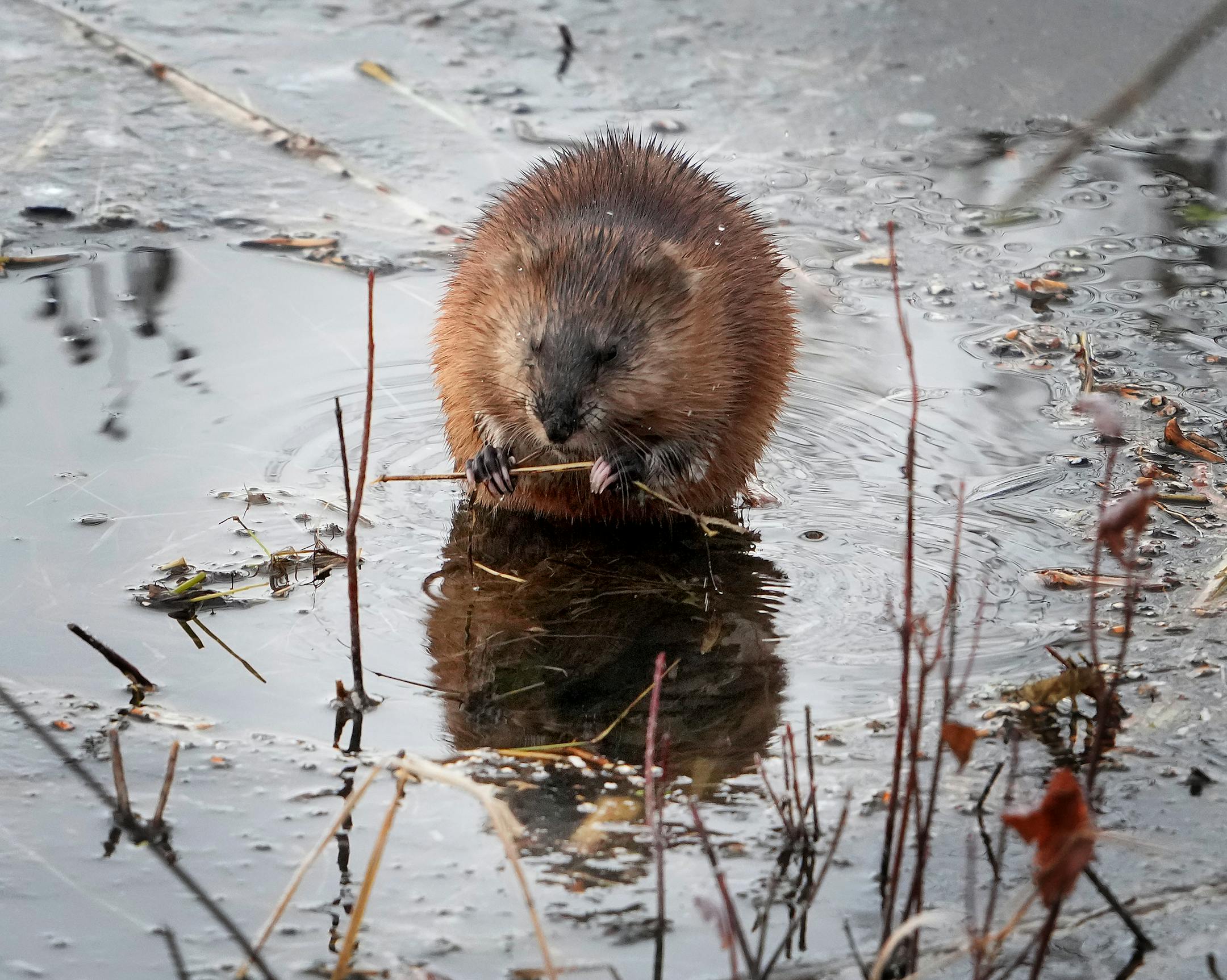
While driving past a marshy area or shoveling the surface of a pond for hockey or skating, you’ll likely see the rounded domes of muskrat homes. They dot the frozen surface like tiny islands and function like fortresses built of cattails, rushes, vegetation and mud.
There isn’t a visible entrance, making it difficult for a predator or curious hockey player to find a way in. The entry the muskrats use lies below the ice where the water doesn’t freeze. Some muskrats may burrow into earth embankments, as well, but those, too, require an underwater or under-ice entrance tunnel.
These football-sized, semi-aquatic furballs tuck together for warmth and rely on their water-repellant fur to handle daily polar plunges. They dive from their dry lodges to water below the ice to eat the roots and stems of plants such as cattails, sedges, rushes, wild rice and water lilies all winter.
Muskrats eat a third of their weight each day. Most adults weigh 2 to 5 pounds. By comparison, an average beaver can clock in at 40 to 50 pounds. (Beavers also build heftier lodges by adding twigs and branches). Tails distinguish the two animals, as well. Muskrats sport a hairless rat-like tail that can carve a line in the snow between their footprints.
Muskrats build their homes in calm water that’s 4 to 6 feet deep, which puts them close to food sources and is the right depth for building above the water and living beneath the ice.
Their biggest winter threat can be mink or otters that find a way through the ice and invade muskrat lodges. As ice melts, eagles and osprey swoop in to capture swimming muskrats. Coyotes and foxes nab those that go ashore.
Despite their small size, the muskrat plays a pivotal role in stories about the creation of Turtle Island (North America) following a massive flood. Indigenous cultures see them as a symbol of courage and resilience.
Fellow wildlife can appreciate their skills, too. Canada geese, swans and other waterfowl seeking safe nesting sites in the next month or two often settle onto muskrat lodges. Elevation and location help keep eggs and hatchlings safe from predators and spring floods.


