
Opinion | Philadelphia drew a line on federal agents. Minneapolis should, too.

Efforts by the MPD to hold federal agents accountable would deter unlawful conduct and help restore confidence that the law applies equally.

January 21, 2026 at 11:00AM
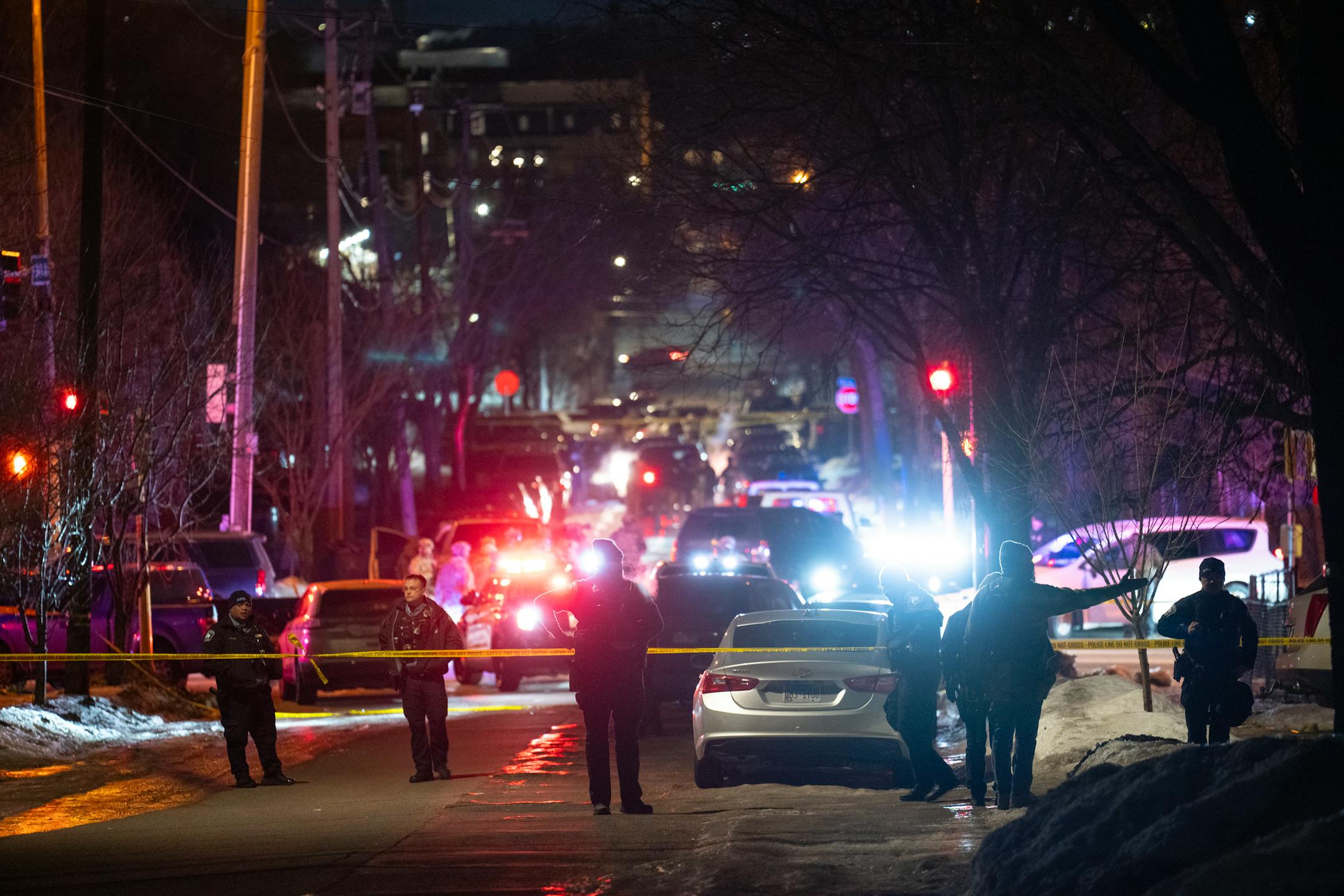
Minneapolis police officers stand guard as federal officers work nearby on Lyndale Ave. N. and 24th Ave. on Jan. 14. (Jeff Wheeler/The Minnesota Star Tribune)

Opinion editor’s note: Strib Voices publishes a mix of guest commentaries online and in print each day. To contribute, click here.

•••

Some Philadelphia leaders recently doubled down on earlier promises to arrest ICE agents who violate local law, with District Attorney Larry Krasner stating, “We will arrest you. We will put handcuffs on you. We will close those cuffs. We will put you in a cell.”

Minneapolis has taken a sharply different stance. Months ago, during a mayoral debate, Mayor Jacob Frey said he would hold the Minneapolis Police Department back from attempting to arrest ICE and other federal agents who commit crimes in the city. Frey argued that federal agents have bigger guns and that arrests would be illegal. His claim of illegality was incorrect. That position sent a clear signal to anyone listening in the Trump political orbit that federal agents could act in Minneapolis with little fear of local consequence.

Despite Renee Good’s unjustified death, ICE agents’ assault of Roosevelt High School students on public school grounds and other unnecessary tragedies unfolding at the time, Frey reiterated his position during a Jan. 9 appearance on the Bulwark podcast. While he acknowledged that from a legal perspective MPD can in fact arrest federal agents who break local laws, he maintained that he would continue to restrain MPD due to the agents’ superior firepower and larger numbers.

Meanwhile, federal agents have continued operating with apparent impunity. There have been many examples of ICE agents acting in ways that are clearly not “necessary and proper” for carrying out their mission and thus not protected by immunity under Supreme Court precedent. At the same time, President Donald Trump and right-leaning media outlets have amplified messaging portraying these actions as justified and necessary.

Frey’s inaction risks becoming a historically significant mistake. The longer MPD is held back from enforcing local laws against federal agents who commit crimes, the more those agents are emboldened to continue or escalate unlawful conduct. And without local law enforcement visibly enforcing the law, confrontations increasingly play out between protesters and federal agents. Those scenes are then framed by right-leaning media as “law enforcement versus radicals,” regardless of what the video evidence shows.

That dynamic incentivizes escalation. Each viral confrontation appears to encourage additional federal deployments. Trump himself has announced multiple ICE reinforcements following high-profile incidents, suggesting that public disorder is being used as justification for further intervention.

There is also a broader concern. Some suspect Trump may be making a test run regarding interfering with our voting process in the November election. We should use this time to establish and refine clear enforcement responses now rather than discovering weaknesses later under far higher stakes.

The current approach is also eroding trust at home. Frey has touted to media that the city has spent more than $2 million on police overtime relating to the ICE presence. Yet, the only thing we have to show for our extra tax dollars is around 40 arrests of our neighbor protesters and zero arrests of rogue federal agents. Continuing down that path undermines already fragile community trust in local law enforcement. Announcing and implementing a plan focused on arresting federal agents who commit clear crimes would help reverse that erosion.

Even imperfect enforcement would have a big impact. Efforts by the MPD to hold federal agents accountable — however difficult arrests may be — would deter unlawful conduct and help restore confidence that the law applies equally. Moreover, involving local law enforcement to enforce local law would help reframe the narrative from “law enforcement versus radicals” to “ICE criminals versus law enforcement.”

Minneapolis residents’ tax dollars pay for MPD with the expectation that the department will help keep residents safe. The public is not trained to enforce the law. Local law enforcement is. Bigger guns and larger numbers do not justify abandoning the rule of law. If federal agents intend to use force to prevent lawful arrests by our local police, the world should see it.

U.S. District Judge Katherine Menendez’s Jan. 16 ruling (“Federal judge bars ICE agents from ‘retaliating’ against protesters in Minnesota”) is helpful because it provides even clearer justification for arresting ICE criminals.

Philadelphia has begun to articulate a plan to arrest federal agents who break local laws. Minneapolis has not. As the largest city in Minnesota, Minneapolis should be setting the standard, not shrinking from it.

Clint Conner is a lawyer, Minneapolis resident, 2021 Minneapolis mayoral candidate and founder of Conner IP, a law practice focusing on intellectual property law.

about the writer

about the writer

Clint Conner

More from Commentaries

See More
card image
Jeff Wheeler/The Minnesota Star Tribune

Efforts by the MPD to hold federal agents accountable would deter unlawful conduct and help restore confidence that the law applies equally.

card image
card image