


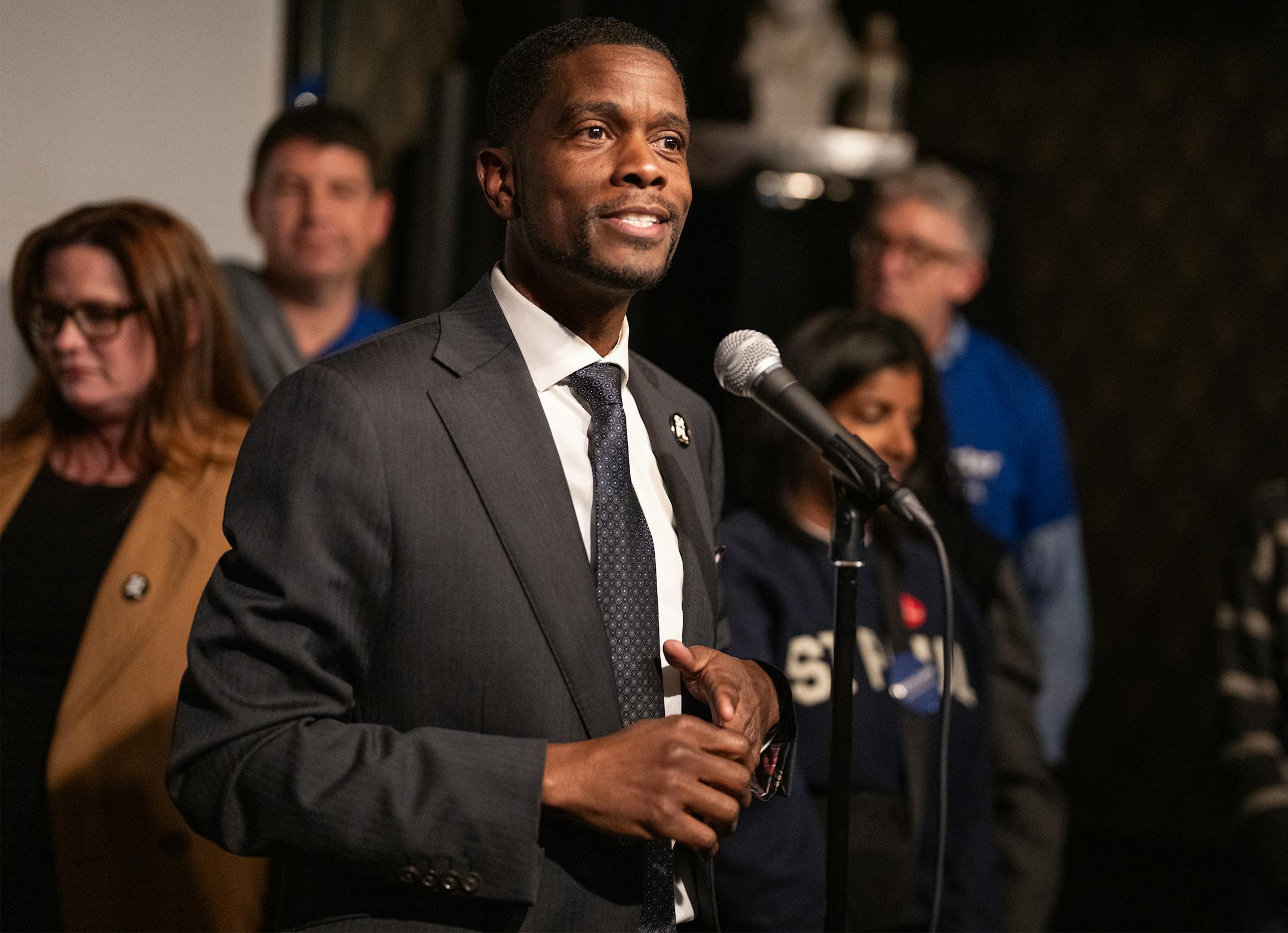
Expecting a more casual conversation, I wore a sweatsuit when I met Melvin Carter on Wednesday at Catzen Coffee on Grand Avenue in St. Paul. But the city’s mayor was in a sport coat as we talked about his recent loss to Kaohly Herin the election, his work in the city through two terms and his next steps.
“Hey,” he said. “Don’t put a jacket on for me.”
Almost 20 years ago, Carter and I met when I was a St. Paul City Hall reporter for the Minnesota Star Tribune and he was an aide to then-Mayor Chris Coleman. Back then, we talked about our long-term goals and I told him that he’d run the city one day. About a decade later, he achieved that dream when he was elected as mayor of St. Paul, his hometown.
Earlier this month, Her — his former aide and a former state representative — defeated Carter in a close race. He conceded with admirable grace on election night.
That approach to loss not only positioned the city well to prepare to tackle its challenges in Her’s first term but it also cleared the way for Carter to start fresh, too. In politics, maybe everyone can win, if you remove the selfishness, condescension and arrogance too familiar in the political space today.
I reached out to Carter because I thought he’d set an example, not just for politicians but for anyone with intentions to move a city forward. We can be human beings in all of this, if we choose to be.
“All I have to say is I’ve spent the last eight years telling this city that it’s not about me,” he said. “It’s got to be us. It’s got to be about all of us.”
The particulars of Her’s upset victory — Carter won re-election with 61% of the vote in 2021 — will be debated for years as Her, the city’s first Hmong mayor, prepares for her first term. But the stakes within the city have been obvious for years. Like any town, the heart of St. Paul is downtown, where crime, vacancy, empty storefronts, uncertainty and an economic decline after the pandemic became a centerpiece of the battle for the mayor’s office.


