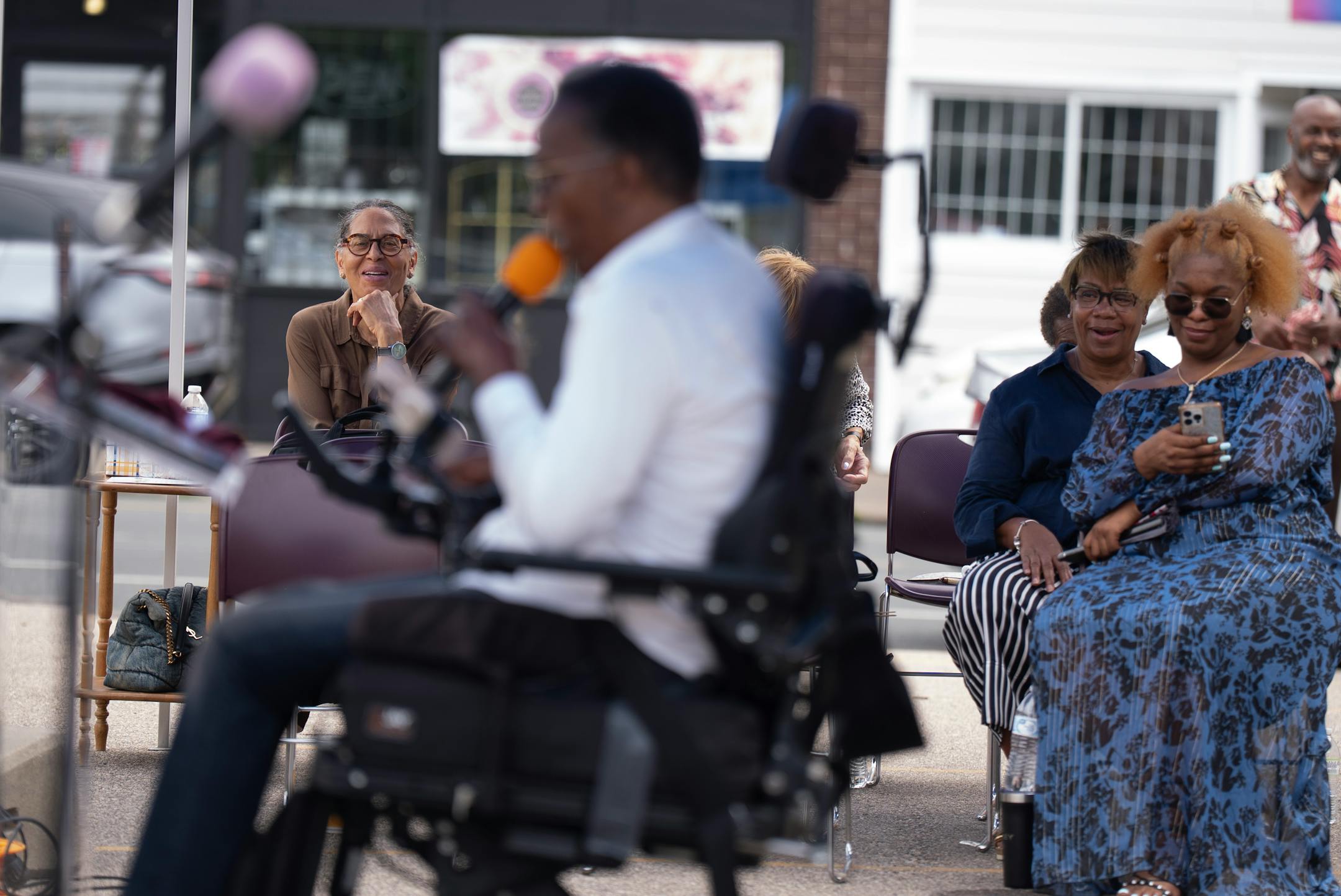
Medcalf: Pastor at George Floyd Square embodies grit

Fall that left him paralyzed was one of the “best things” to happen, he says.

Columnist Icon
The Minnesota Star Tribune
August 23, 2025 at 8:58PM
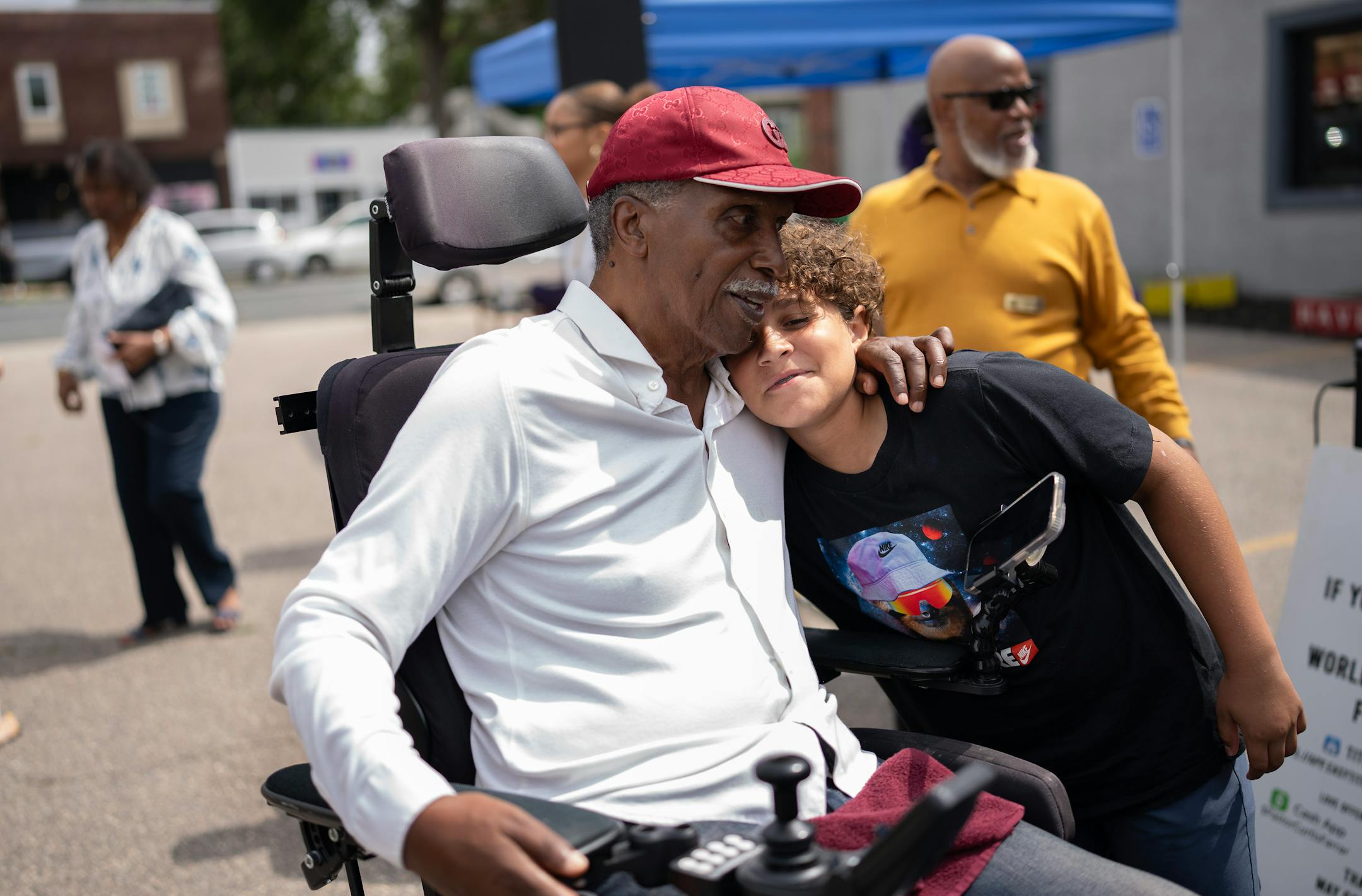
Pastor Curtis Farrar got a hug from Niko Pollard, 12, after a service Aug. 17 at Worldwide Outreach for Christ in Minneapolis. (Jerry Holt/The Minnesota Star Tribune)

On a recent afternoon, Pastor Curtis Farrar sat in his steel wheelchair at the front of his church, checking his messages on a pair of phones.

“I’ll be walking pretty soon,” the leader of Worldwide Outreach for Christ in south Minneapolis told me as he wiggled his legs. “Just a matter of time.”

Three years ago, Farrar lost consciousness while he delivered a sermon at his church a few skips from where George Floyd was murdered. The fall nearly killed the 83-year-old pastor. He was paralyzed and hospitalized with a broken neck and injured spine. That day altered his life.

But it did not rob him of his resilience. It only strengthened it.

“This is probably one of the best things that could ever happen to me because of what I’m gathering, what I’m learning,” he said. “You got patience, compassion, humility, things I could not have learned, just walking.”
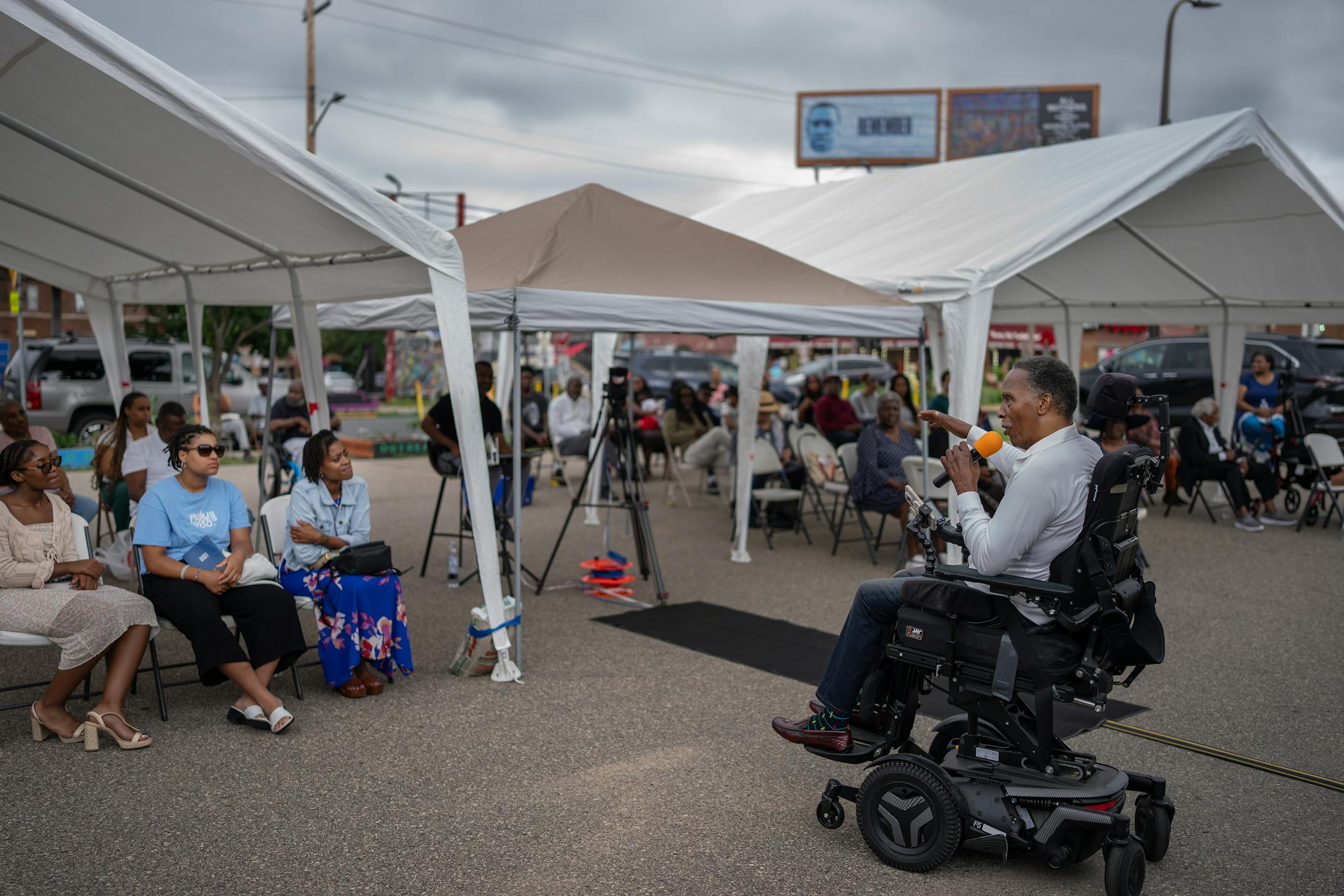
Pastor Curtis Farrah delivered a sermon to members of the Worldwide Outreach for Christ Church in Minneapolis. (Jerry Holt/The Minnesota Star Tribune)

Just outside, the sun-baked street now known worldwide after Floyd’s murder teemed with folks who snapped selfies and bought souvenirs. For some, it has become a tourist site.

For Farrar and many of his parishioners, however, it’s just home.

Over four-plus decades he’s been a pastor on this block and withstood every development and challenge in the area. He’s also bonded with community members, neighbors, politicians, police officers and the folks who make their living off the grid. He treats them all with respect, which is why they all feel welcome in his church’s pews.
Farrar also refuses to leave. His church is paid for and he doesn’t owe any debts. At his age, just 17 years shy of a century, he could take a break and enjoy retirement with his wife. But he has no interest in that path. Too much preaching and living to do, he says.

“I really love this community,” Farrar said as his eyes watered. “This is where God placed me.”

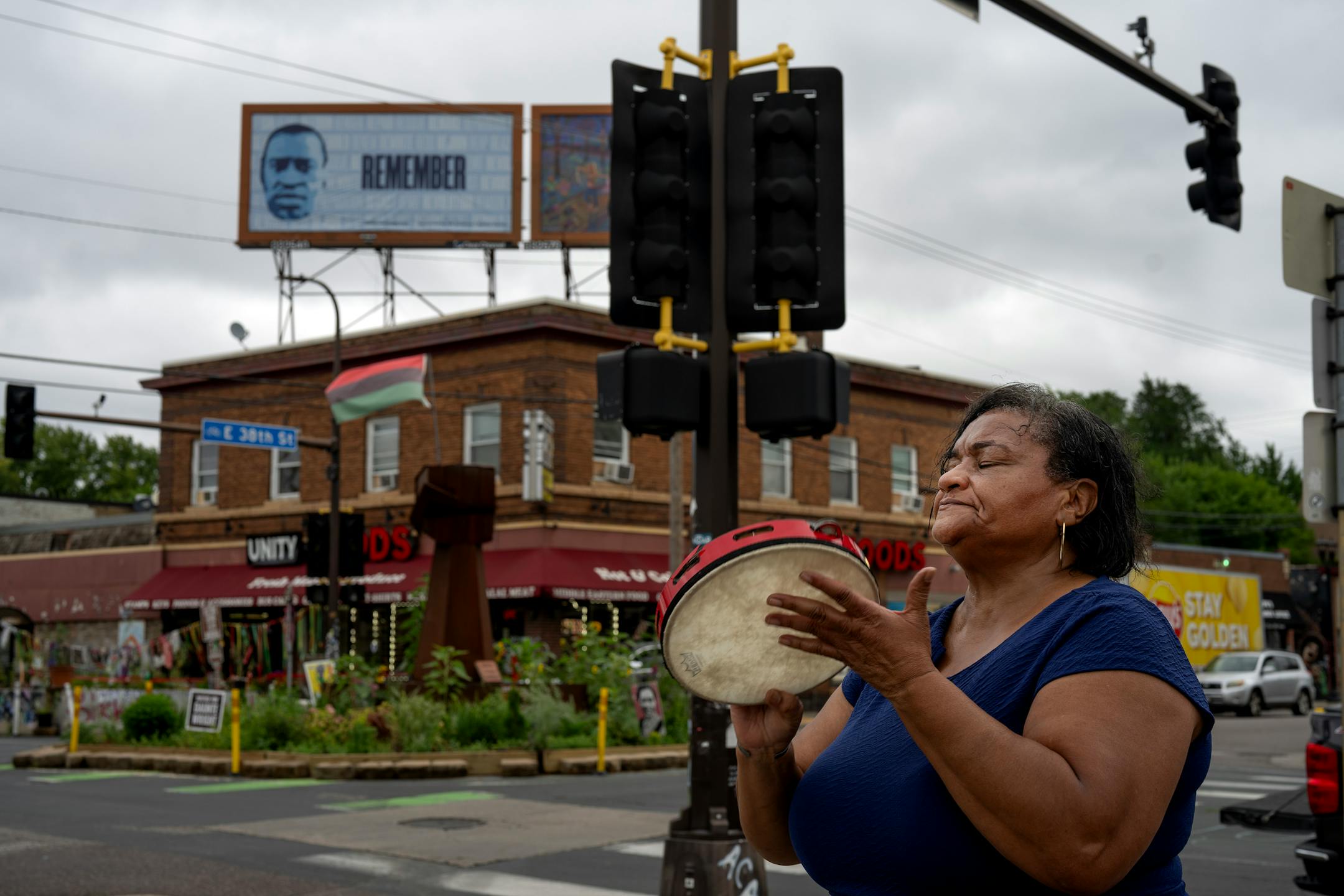
Sandra Mullins, a member of the Worldwide Outreach for Christ, plays the tambourine during outdoor church services Sunday in Minneapolis. (Jerry Holt/The Minnesota Star Tribune)

The public conversation about George Floyd Square has centered on the next steps for a zone that’s beloved for its historical significance, praised for its sense of community and also criticized for its inequities and the violence they have fueled. Lost in the dialogue is the story of what remains and, for leaders like Farrar, what has always been.

In a past life, he sold drugs at a high scale and mingled with local celebrities at extravagant parties. But that lifestyle also attracted the vices that caused him to subsequently alter his life and become a pastor.

“I gave my brother the drug that killed him,” Farrar told me. “He was 27. I was 25 at the time.”

Years before he became a pastor a few steps from where Floyd was murdered, he, too, had his own battles with police officers in Minneapolis.

As he began to retell the story of the night of his worst encounter with local law enforcement, he stopped speaking for a moment and tears slid along his cheeks. The beating was so bad, he said, he assumed he would die then. But an empathetic neighbor intervened.

“They had me handcuffed. I didn’t think people would do people like that,” he said about the violent encounter. “I really didn’t. This cop beat me. They got me when they handcuffed me. They would knock me down. But I would get up. That lady came, a white lady came out and said, ‘Leave him alone!’ I probably wouldn’t have made it.”

Pamela Farrar, left, listens as her husband Pastor Curtis Farrar delivers his sermon during a Sunday service. (Jerry Holt/The Minnesota Star Tribune)

That interaction informed his perspective on policing and people.

His faith and life experiences have compelled him to open the doors of his church to all. There are frequent community events, including food drives and outreach efforts. It’s a blueprint local leaders should follow.

Farrar also said he wants responsible police officers who are held accountable by the mayor working in his community, and not the cops who do harm.

“I see the police over there all the time, but I didn’t think they were going to kill [Floyd],” he said about the murder five years ago. “So it was a lot when that happened. This community was very, very unsettled. Again, unsure, not knowing who to trust. And we are still a little bit nervous about police officers because I’m seeing a lot of things going on. Maybe it’s because of the news media showing what they show about us, only the bad parts.”

He also wants the narrative of George Floyd Square to change. Sure, its future is uncertain and the subject of a litany of meetings and dialogues. But that place near 38th and Chicago is also an area full of folks who matter and who are worthy of more than the occasional headline these days.

“We are active,” he said. “We are feeding people. We are open like a hospital and we’re encouraging people, making sure that people feel like they belong to a family. It makes such a difference. We are here to make sure that people know that they are important, they are valuable.”

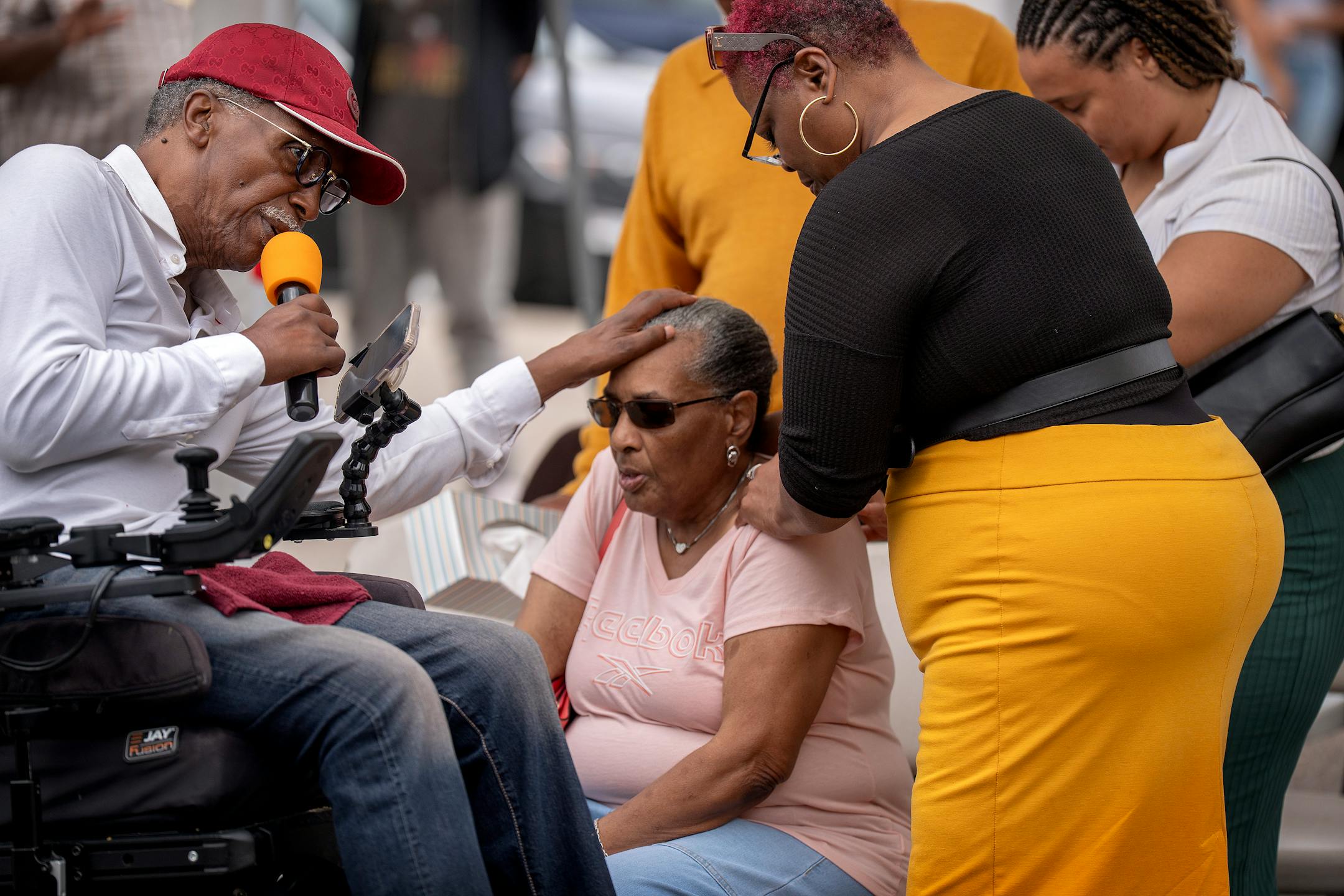
Pastor Curtis Farrar prays over Susan Tolliver, who has recurrent seizures. (Jerry Holt/The Minnesota Star Tribune)
about the writer

about the writer

Myron Medcalf

Columnist

Myron Medcalf is a local columnist for the Minnesota Star Tribune and recipient of the 2022 Society of Professional Journalists Sigma Delta Chi Award for general column writing.

See Moreicon

More from Culture

See More
card image
Marco Borggreve/Minnesota Orchestra

The Minnesota Orchestra concert also includes works by Caroline Shaw and Joseph Haydn.

card image
card image