Editor's Pick

Editor's Pick

The rise and fall of the family real estate business that dominated downtown St. Paul

November 14, 2025
The Alliance Bank Center sits empty in the heart of downtown St. Paul, with its central skyway thoroughfare blocked. The city condemned the building in April after Madison Equities suddenly stopped paying utilities and ordered tenants to leave. (Leila Navidi/The Minnesota Star Tribune)

After a decade of aggressive acquisitions, the pandemic sank Madison Equities, dragging the city down with it.

The Minnesota Star Tribune

At the height of their run as one of Ramsey County’s largest landlords, the husband-and-wife duo behind Madison Equities, Jim Crockarell and Rosemary Kortgard, owned 1.6 million square feet of downtown St. Paul office space, plus a few apartment buildings and parking ramps.

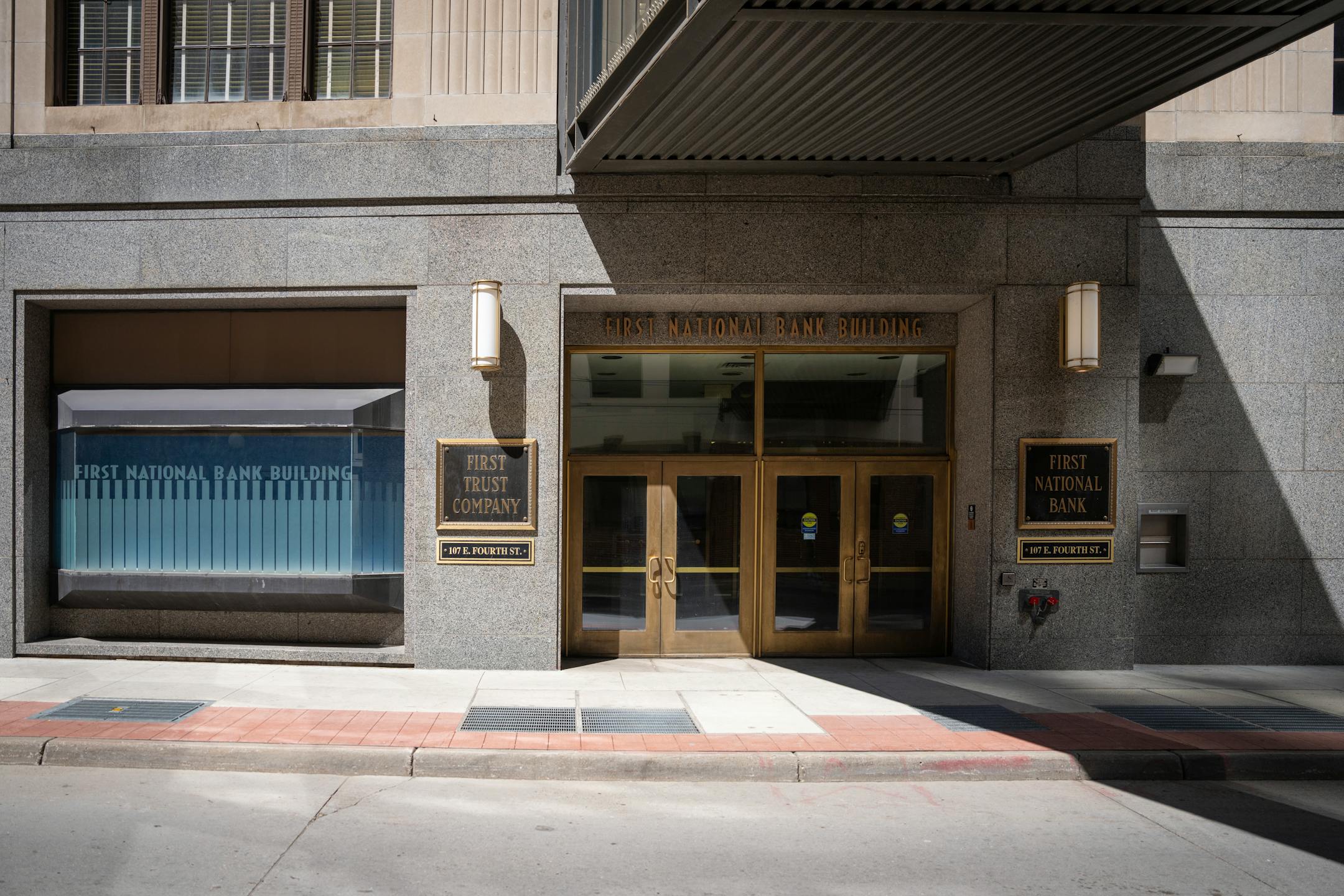
They valued their assets at more than $200 million, with holdings that included skyline-defining properties like the First National Bank Building, known far and wide by its large, neon-red “1st” sign.

Today, the couple’s real estate empire is in ruins. While COVID-19 emptied the nation’s office buildings, it sent a wrecking ball into Madison’s heavily mortgaged Jenga tower of a portfolio. Some of their properties are going through foreclosures. A few are boarded up and condemned. Others sold for far less than their remaining debt.

Because Madison Equities controlled so much of the central business district, its collapse drove St. Paul’s already struggling core into an even deeper depression. The firm blamed its demise on the pandemic’s devastation of the office market and a simultaneous surge in violent crime, drug use and homelessness in the city.

Some St. Paul officials and property owners, on the other hand, have long considered Madison Equities a source of downtown’s troubles. Mayor Melvin Carter, who lost his bid for re-election last week, is among those who have accused the landlord of disinvesting in its buildings to the point of blight.

“Another week, another abandoned Madison Equities property,” Carter said in a statement after condemning one of the business’ downtown parking ramps earlier this year. “Their chronic neglect has caused serious harm that will impact our city for years.”

City boosters are hopeful a new era under Mayor-elect Kaohly Her combined with new ownership of Madison’s buildings will bring additional investment and, eventually, more people downtown. But it’s far too early to know if, how and when that turnaround will take shape.

In the meantime, residents, workers and observers continue to question how Madison was able to become such a dominant force in downtown St. Paul and whether anyone could have stepped in sooner to preclude a breakdown of this scale.

“It was always a head-scratch moment to know that Madison Equities was buying yet another property when it seemed like they were having some maintenance, security and upkeep issues with the properties they already had in their portfolio,” said Julio Fesser, a retired vice president for St. Paul-based Securian Financial who oversaw its corporate real estate for more than 30 years.

This account of Madison’s collapse draws from extensive property tax and mortgage records, hundreds of pages of court documents and dozens of interviews.

Crockarell died last year, leaving Kortgard to run the business and negotiate with lenders. She did not respond to interview requests, and a long-time attorney for the business declined to comment for this story.

Some banks are still trying to recoup their losses by seeking judgments against Kortgard. In an email to a lender late last year included in court documents, Kelly Hadac, Madison’s attorney, said doing so would be “a waste of time and money.”

“[T]he declining values have crushed her financially,” he wrote.

A family enterprise

While Kortgard might be left to manage the end of Madison Equities’ reign, Crockarell was the public face of the business for much of its history.

Born in 1944 and raised in northern Tennessee, he obtained advanced degrees in finance and planning and eventually moved to Minnesota in the ’70s for a job at a global architecture firm.

He married his first wife in 1975 and had two children. The couple went into business together, buying, selling and managing properties. By age 35, Crockarell was working full time on his real estate ventures, according to court documents.

The pair divorced in 1983, with legal battles continuing into the early 2000s. A judge eventually ruled that to avoid paying child support, Crockarell had misrepresented his net worth and manipulated his finances to appear broke. Kortgard, whom he married in 1989, received compensation for his real estate work.

Born in 1950, Kortgard was a certified public accountant, attorney and real estate broker. She worked for a few years at a law firm and Minneapolis Public Housing before spending the bulk of her career as finance director for Anoka County’s human services division.

All the while, she worked hand-in-hand with her husband on Madison Equities. Kortgard focused on accounting and legal matters, while Crockarell took the lead on property management, leasing, financing and acquisitions.

They purchased their first downtown property, the Degree of Honor Building, in 1999. At the time, city leaders were claiming a downtown renaissance with the openings of the Xcel Energy Center, the Science Museum and two new office buildings.

Despite the successes, downtown St. Paul never fully recovered the business presence it lost to the growing suburbs or recessions in previous decades. While Minneapolis and Bloomington built shiny new skyscrapers to attract corporations, the capital city became even more dependent on government entities for leasing offices and bringing in workers, real estate brokers said.

“The absorption for office space in downtown St. Paul has always been a bit lethargic,” said Mike Salmen, a broker for Transwestern. “It’s hard to look back at the last 20 years and see any period of sustained growth in the office market.”

Graffiti is seen on the shuttered Alliance Bank Center, left, which the nonprofit St. Paul Downtown Development Corporation recently took over for an undisclosed price. Stains streak skyway walls in the neighboring U.S. Bank Center, where the building’s namesake tenant vacated nine floors of office space last year. (Leila Navidi/The Minnesota Star Tribune)

Aggressive acquisition

The couple continued acquiring buildings one by one, placing each in a separate limited-liability company, a common practice in commercial real estate to shield other assets from lawsuits or debts. Kortgard was the majority shareholder of each entity.

“Better for estate planning and better for Rosemary’s ego,” Crockarell wrote in an email to his son filed in court documents.

As their portfolio grew, Crockarell and Kortgard would often make low down payments, leveraging their existing assets to help obtain loans for new purchases or improvements. They encountered limited competition, especially from institutional-quality investors, brokers said.

The couple borrowed from a patchwork of local and regional banks. Crockarell and Kortgard would often guarantee loans personally, meaning if they defaulted and the real estate wasn’t sufficient collateral, they would be on the hook for the debt.

Both practices are not uncommon, said Andrew Babula, director of the University of St. Thomas real estate program. Banks limit the exposure they have to one client or property type. Personal guarantees are an added risk for borrowers, but they can also unlock more financing or better terms, especially for purchases that are more speculative or opportunistic.

Several of Madison Equities’ ventures fell into that higher-risk category. The company bought multiple buildings out of financial distress and others that were partly vacant.

Crockarell’s ability to repeatedly finance such deals mystified several other building owners and brokers. Representatives for lenders Colliers, Crown Bank, First Interstate Bank, Merchants Bank and Minnwest Bank did not respond to requests for comment, and Pillar Bank and Royal Credit Union declined to comment.

“It wasn’t like he was getting great deals on these at some kind of a discount,” said Clint Blaiser, president and CEO of Halverson and Blaiser Group, a Twin Cities property management and development firm. “I feel like he was paying good money for these things.”

The historic First National Bank Building, the most valuable property in Madison Equities’ portfolio, is half vacant. Crockarell said he planned to convert part of the building into apartments, but the project never happened.
The historic First National Bank Building, the most valuable property in Madison Equities’ portfolio, is half vacant. Jim Crockarell said he planned to convert part of the building into apartments, but the project never happened. (Shari L. Gross/The Minnesota Star Tribune)

In 2015, for example, Madison Equities bought the historic First National Bank Building for $37 million with a down payment of just $750,000, according to state real estate records.

The following year, Crockarell tapped into relatively new financing tools to help fund $6.5 million in energy-efficiency upgrades to the lighting, boilers and chillers. The complex project earned accolades upon completion, and Xcel Energy wrote it up as a case study.

By 2018, he was publicly declaring ambitions to convert the property’s east tower into 170 apartments. But that never happened.

So it went with Crockarell, whose promises to transform downtown St. Paul in the past decade yielded a mixed bag of results.

Some plans came to fruition. Madison Equities made substantial investments in the hospitality sector, opening restaurants like Handsome Hog and Gray Duck Tavern in its buildings. In 2021, it opened 78 new housing units in the Degree of Honor building, former offices converted with the help of historic tax credits.

Others never came to be. Crockarell moved office tenants out of the Empire Building and Park Square Court at various points, with the stated intent of converting them to boutique hotels.

He’d engage architects to help illustrate his visions. Even more than two years into the pandemic, well after its toll on the commercial real estate market became apparent, Crockarell was espousing plans to build a multistory housing development atop a parking ramp he purchased out of foreclosure.

“I don’t know how he could buy buildings and empty them out and still hang on to them,” Blaiser said. “I mean, obviously, the lenders must have thought he truly was going to be able to sell them to someone that was going to turn them into apartments or hotels.”

Government lifeblood, conflict

Madison’s business model relied on keeping expenses low. Crockarell developed a reputation for firing union cleaners to cut costs whenever he purchased a building.

Government agencies and nonprofits became ideal tenants, favoring cheap, long-term leases, often in older buildings with fewer amenities — conditions that would ultimately contribute to Madison’s downfall as the pandemic led many tenants to downsize or seek deals in nicer properties.

“Look, I liked Jim,” said former Mayor Chris Coleman, who led the city from 2006-2017. “I was appreciative of the fact that there was somebody that was willing to put their money into the city. I just don’t think he served himself well in the long run — as evidenced by the fact of the state of his buildings.”

Carter, the current mayor, took a different tone. Before the city abruptly forced renters to leave the Lowry Apartments due to unsafe and unsanitary conditions last year, he stood outside City Hall across the street and publicly deplored the landlord.

“There’s a number of us who have spent decades hoping that they would sell those properties so that we could get new ownership in those buildings,” Carter said in a September interview.

The city can do little to stop a private investor from buying property, but it is responsible for code enforcement and permitting. St. Paul’s Department of Safety and Inspections, which handles that work, has leased space in Madison Equities’ 375 Jackson building for more than a decade.

“It’s ironic,” longtime St. Paul developer John Mannillo said. “A big part of our problem with Crockarell is that the city enabled him to do all these things.”

Court records show a trail of maintenance issues through the years. Among them is a lawsuit filed in 2023 from Nexstar, a tenant in the U.S. Bank Center, claiming Madison Equities violated its lease by failing to maintain the building.

The complaint cited incidents of property damage, theft and elevator malfunctions that injured a guest and left others trapped for nearly an hour. The case ultimately settled for undisclosed terms.

State agencies have rented space, too, even as the Minnesota attorney general sued the company for allegations of wage theft. The complaint, filed in 2023, claimed Madison Equities deprived security staff of overtime pay by making them parse hours between the company’s various subsidiaries.

That case remains ongoing, awaiting a decision from the Minnesota Supreme Court on whether Madison Equities ran out the statute of limitations for one of the claims by initially refusing to comply with an investigative demand.

Madison, in turn, has blamed the government for its woes. Company officials lambasted the city last year, saying it failed to maintain public safety downtown, particularly at a light-rail stop their properties surround.

The state also started shrinking its presence downtown due to hybrid work arrangements and investments in the Capitol campus, leaving Madison’s buildings with more vacancies to fill.

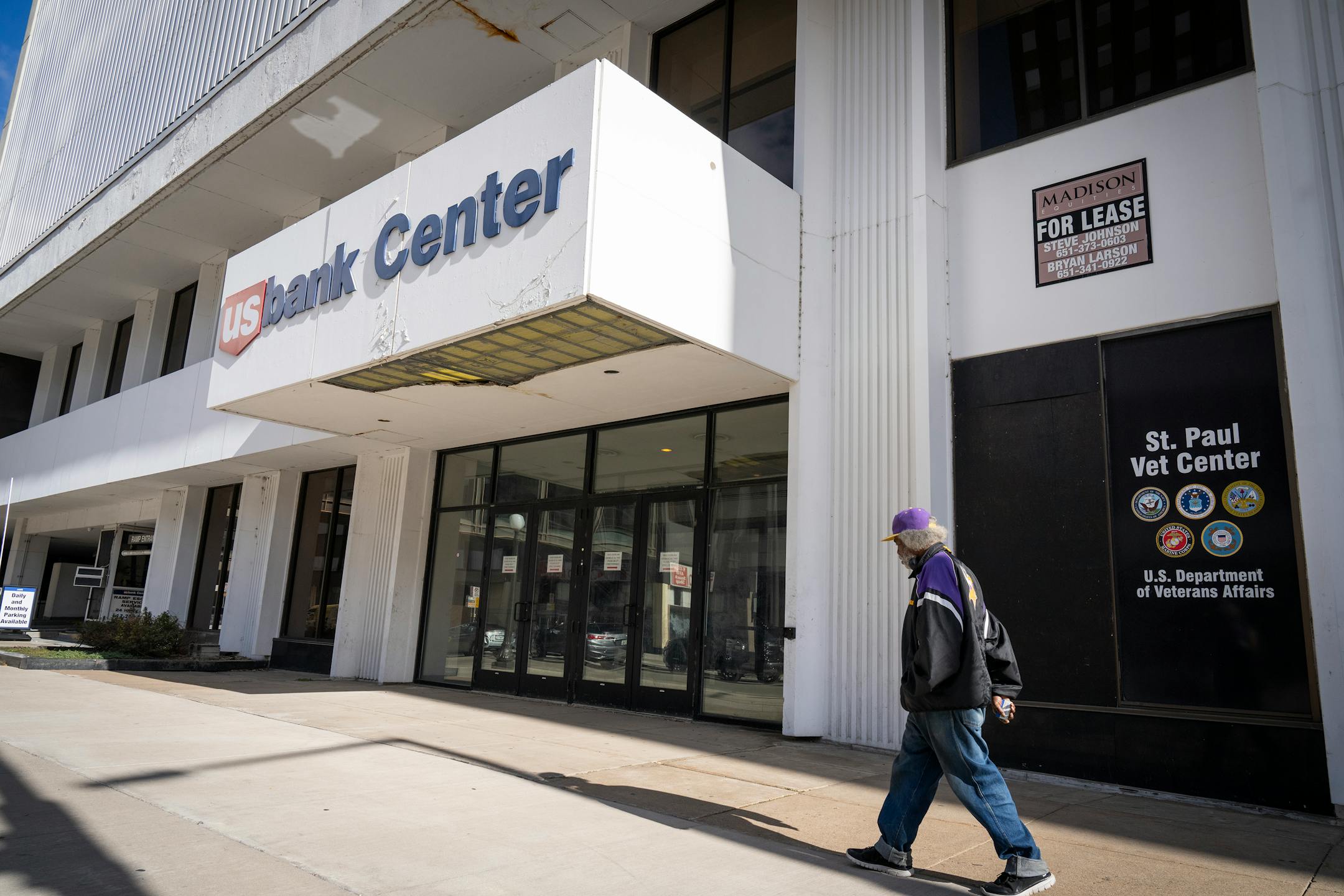
A pedestrian strolled by the U.S. Bank Center in October, a few weeks before the 25-story office tower headed to auction with a starting bid of $1 million, far less than its assessed value. Court records from the summer cited extensive maintenance needs, including elevator malfunctions and code violations in the parking structure.
A pedestrian strolls by the U.S. Bank Center in October, a few weeks before the 25-story office tower headed to auction with a starting bid of $1 million, far less than its assessed value. Court records from the summer cited extensive maintenance needs, including elevator malfunctions and code violations in the parking structure. (Leila Navidi/The Minnesota Star Tribune)

Controversial figure

Before Madison Equities’ foray into downtown St. Paul, Mannillo did some leasing work for Crockarell.

“He was doing business like a hedge fund,” Mannillo said. “I felt he was basically trying to buy things real cheap and then rent them out for very little but also do no services.”

In 2005, Crockarell approached Mannillo about partnering to buy the Park Square Court Building in Lowertown. Mannillo, who owned the building next door, agreed — on the condition he manage the property — and negotiated a deal with the out-of-state owners.

Before closing, Mannillo said Crockarell called him to say he wanted to make the purchase alone. Mannillo said that was fine, as long as Crockarell paid him a commission for brokering the sale. He ended up taking the issue to court to ultimately reach a $10,000 settlement.

The situation was a precursor of behaviors that would come to define Madison Equities’ interactions with the downtown ecosystem.

The company handled most of its business matters in-house. Those close to him said Crockarell was loyal to an inner circle of longtime employees but unafraid of butting heads with other downtown stakeholders.

Crockarell avoided working with other real estate brokers or trade groups, forgoing the collegiality and resources of industry networks. When he bought a new property, for instance, Crockarell would promptly pull it out of the Greater St. Paul Building Owners and Managers Association, former president Joe Spartz said.

“I would say, to credit Jim, he was a believer in downtown. He was a huge investor,” Spartz said. “But one of my biggest concerns was his resistance — and Madison’s — at playing nice in the sandbox."

When the St. Paul Downtown Alliance formed its downtown improvement district in 2020, the nonprofit gerrymandered its boundaries around Madison Equities’ buildings since Crockarell owned enough property to single-handedly veto the plan.

Though several public- and private-sector leaders tried to convince him the district’s special cleaning and safety services would be a worthwhile investment, Crockarell objected to added costs for work he thought tax dollars should fund.

He was no stranger to the court, engaging in dozens of legal spats with tenants, contractors, investment partners, unions and employees.

Those tactics were eventually deployed on Crockarell’s son, Rob Crockarell, whom he sued in 2014 for failing to pay back $100,000 his father and Kortgard loaned him to buy a house.

Rob Crockarell sued them back a year later, alleging his father and Kortgard cheated him out of his shares in Madison Equities entities after he stopped working for the company. He did not respond to requests for an interview.

A judge eventually denied most of Rob’s claims after a messy three-year dispute, and the parties settled on undisclosed terms before going to trial.

“It is obvious that you are upset with your mother, your sister and your father,” Crockarell wrote in an email to his son included in court documents. “But that doesn’t give you the right to try and destroy our business. I’m going to defend our business interests from anyone, including you.”

Moving on?

Crockarell’s death in early 2024 was unexpected, said Josh Anderson, who did landscaping and snowplowing for Madison Equities for two decades. Anderson said he was close with Crockarell, who had slowly brought him into his trusted circle of employees.

Crockarell privately acknowledged his properties were in trouble his last few years, Anderson said, but he pledged to keep Anderson’s services as long as he could. Then Kortgard took control. She soon put the company’s entire downtown office portfolio up for sale.

Listing documents revealed many of the buildings were far more vacant than the company had represented in an annual market survey. Kortgard stopped making mortgage, property tax and utility payments for several properties. She shut down the company’s restaurants, fired their staffs and effectively abandoned the most troubled buildings.

“The minute Jim died, she completely went to screwing everybody that she possibly could,” said Anderson, who claimed Madison Equities still owes him $187,000 for unpaid services.

Attorneys for a few banks have started to dive into Madison Equities’ finances, arguing it improperly loaned funds from one entity to another after business went south. Some might attempt to collect on judgments against Kortgard, a legal process that can become long and complicated if a debtor is uncooperative.

Others have already written off their losses and sold buildings to buyers with a new vision for them.

The new owner of the Lowry Apartments, for instance, is leasing the entire building to a fledgling recuperative care program. A subsidiary of the Downtown Alliance recently took control of the Alliance Bank Center, with plans to explore redevelopment opportunities, and purchased the troubled Capital City Parking Ramp for $3.7 million.

“As much as you would never root for a kind of real estate crisis like the one that we’ve seen unfold, I also know that it’s really hard for a place to transform when it’s just kind of limping along,” said Joe Spencer, the Downtown Alliance’s president. “This is a moment for us to reimagine this place.”

Much or all of the Madison portfolio could be in new hands by the end of the year.

“I think in some ways, it’s a lesson learned for St. Paul and other cities — not that they can necessarily control who owns properties and who doesn’t,“ Babula said.

“But in the same way that a lender wants to be careful about not having all their eggs in one basket, St. Paul and other cities also need to be careful … that you don’t have too much ownership consolidated into one entity," he added. “Because if that entity goes under, it takes down the city with you.”

about the writer

about the writer

Katie Galioto

Reporter

Katie Galioto is a business reporter for the Minnesota Star Tribune covering the Twin Cities’ downtowns.

See Moreicon

More from Real Estate

See More
card image