
Latest COVID-19 vaccines reach Minnesota amid confusion over who gets them

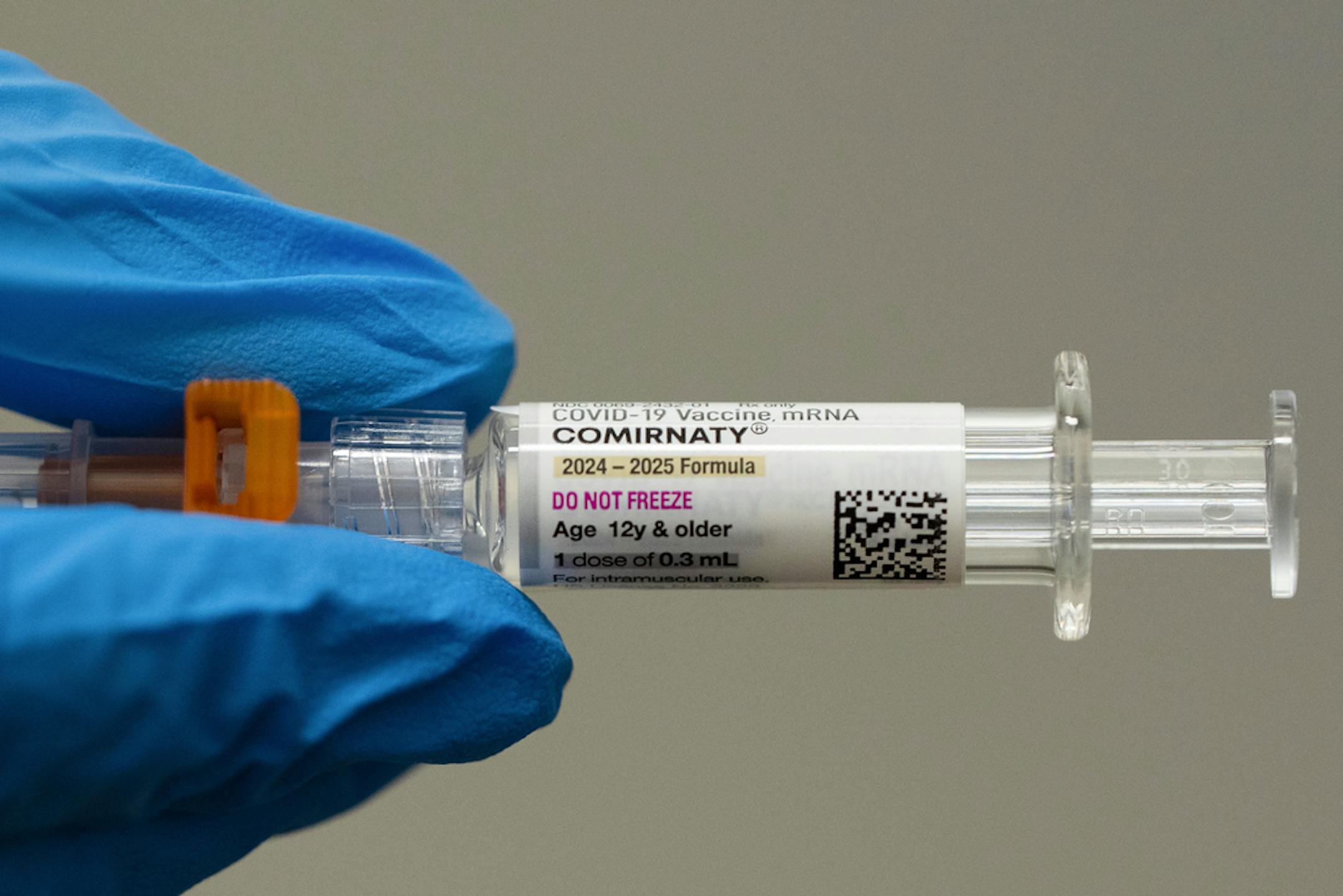
Gov. Tim Walz issued an executive order to preserve COVID-19 vaccine access if federal health advisers opt later this month to discourage some people from getting the shots.

The Minnesota Star Tribune
September 8, 2025 at 11:00AM
A pharmacist holds a Pfizer and BioNTech COVID-19 vaccine shot on April 24, 2025. (Jenny Kane/The Associated Press)

State leaders are taking steps to preserve access to COVID-19 vaccines in Minnesota if federal health authorities decide later this month to discourage or limit their use.

Minnesota already empowers pharmacists to prescribe COVID-19 vaccines without prescriptions, regardless of any guidance from the federal Advisory Committee on Immunization Practices (ACIP), which under President Donald Trump is largely composed of vaccine skeptics.

Pharmacists in the state need only comply with requirements from the Food and Drug Administration (FDA), which last month approved the latest COVID-19 vaccines for the elderly and adults and some children with underlying health conditions.

If ACIP discourages some people from receiving these vaccines, it won’t have as much impact in Minnesota as in other states, said Aaron Patterson, interim executive director of the Minnesota Board of Pharmacy. Pharmacists can help by letting eligible patients know that the vaccines should remain available.

“There’s just a lot of chaos and noise, and a lot of states doing different things,” he said. “We believe there is an opportunity for pharmacists to help clarify the message for Minnesotans.”

Gov. Tim Walz on Monday took the additional step of issuing an executive order to preserve vaccine access if any shifts in federal policy make it harder to secure appointments or insurance coverage.

Walz gave the Minnesota Department of Health two weeks to issue a standing order that clarifies how the dispensing of COVID-19 vaccines will work in Minnesota. That could include off-label uses for those people who weren’t on the FDA’s approval list.

“Minnesota will be guided by science and medical expertise,” said Walz, who also directed the Department of Commerce to consult with insurers to maintain coverage of the shots.
Medica, HealthPartners and Blue Cross and Blue Shield of Minnesota issued statements late last week affirming that they will pay for the shots, when recommended. It is unclear whether changes by ACIP or the Trump administration could alter their coverage policies.

Minnesotans reported some problems receiving the latest COVID-19 vaccines, which arrived in pharmacies last week.

Some people posted on the Minneapolis Vaccine Hunters social media page that they were denied insurance coverage of the shots at CVS, but not at Walgreens. Others had the same problem, only in reverse.

Sid Severson was scheduled for a COVID-19 vaccination at her local CVS pharmacy, but gave up as the worker at the counter struggled to verify her insurance and a line of customers behind her grew longer.

“She was just kind of typing for a really long time and then looking at my insurance card and then typing some more,” Severson said. “She finally said, ‘It looks like you don’t have coverage.’”

The 28-year-old Minneapolis woman called her health insurance company and was told that she had coverage, and that CVS was likely struggling with glitches in its scheduling system.

CVS and Walgreens have reported challenges in providing vaccine access at a time when some states require prescriptions in order to receive the shots. CVS in a statement on Friday said that it was providing COVID-19 shots without prescriptions in 38 states, including Wisconsin. But prescriptions were needed in 12 states, at least for now while they wait to see if ACIP recommends the shots.

States should adopt policies that allow them to consult “authoritative sources” other than ACIP to determine how and when their pharmacists can administer COVID-19 vaccines, said Michael Osterholm, director of the University of Minnesota’s Center for Infectious Disease Research and Policy. That could make it easier for insurers to cover the shots as well, he added.

Osterholm was so concerned about ACIP disregarding scientific data about COVID-19 vaccines that he helped create the privately funded Vaccine Integrity Project to counter its messaging.

The organization published an in-depth analysis last month, and found no evidence that recent versions of the COVID-19 vaccine have lost effectiveness or presented new safety concerns. The data reaffirmed a vaccine-related risk of myocarditis, or swelling of the heart muscle, but researchers with the Integrity Project said the cases were rare and generally mild.

COVID-19 has been associated with more than 3,300 hospitalizations and 319 deaths in Minnesota so far this year, almost entirely among people 65 and older, according to Minnesota’s latest situation update.

Testing of wastewater samples has found rising levels of the coronavirus in Minnesota over the past two months, and those levels are likely to rise this winter. But COVID-19 levels and severe illnesses are far lower than they were three to five years ago during the pandemic, especially during peaks that strained hospitals.

The diminished threat partly explains the diminished interest in vaccines. Only 22% of Minnesotans and 52% of seniors were fully vaccinated against COVID-19 in May at the end of the last respiratory virus season, according to state data.

Severson said she will make another appointment, because she has asthma and is concerned about how that could worsen a COVID-19 illness. A case of mono in college sidelined her for weeks. But she might wait until any insurance snafus are resolved.

A co-worker paid $80 for a shot because she was denied insurance coverage. Severson worries that others who could benefit from the shots won’t be as determined.

“An $80 price tag or going in and getting turned away, that is enough to deter plenty of people,” she said.

Many people appear eligible for vaccinations, based on a list by the Centers for Disease Control and Prevention of health conditions that increase the risks of severe COVID-19. Asthma, diabetes, obesity and kidney and heart diseases are listed along with depression, pregnancy, smoking and physical inactivity.

Minnesotans who made online appointments for vaccinations last week said they only had to attest to one of these conditions without providing proof.

Patterson said pharmacists can provide COVID-19 shots to Minnesotans who don’t have these conditions through collaborative agreements with doctors or if the doctors write off-label prescriptions for individual patients.

about the writer

about the writer

Jeremy Olson

Reporter

Jeremy Olson is a Pulitzer Prize-winning reporter covering health care for the Star Tribune. Trained in investigative and computer-assisted reporting, Olson has covered politics, social services, and family issues.

See Moreicon

More from Health Care

See More
card image
Elizabeth Flores/The Minnesota Star Tribune

A new Hennepin County stabilization center hopes to serve kids with complex mental health needs who otherwise end up in an ER or detention center.

card image