What food can we offer dark-eyed juncos? Think small.

Plus sparrow shout fests, more robins sticking around in winter, turkeys love acorns and how to prevent window strikes.

For the Minnesota Star Tribune
November 14, 2025 at 2:30PM
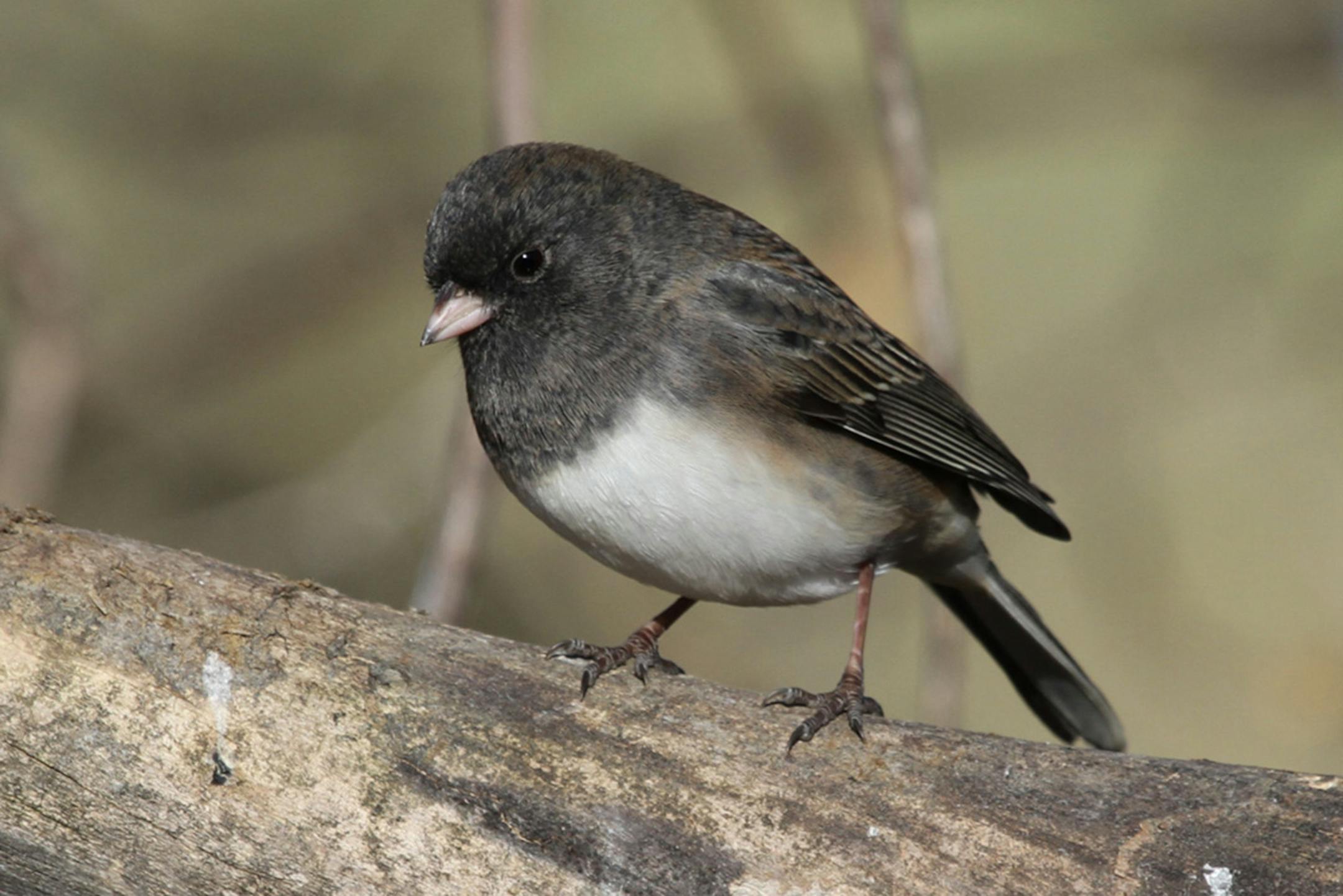
A junco perches on a large branch.
Juncos eat small seeds. (Donald Severson)

Q: I’m happy that the juncos are back, and want to put out foods they like. What do you recommend?

A: You could attract dark-eyed juncos in a couple different ways. One would be to plant native plants to provide seeds in fall and winter. For example, I have a small raingarden planted with several kinds of native grasses, and the juncos and other sparrows seem to like to land on top of a grass stalk and “ride” it to the ground to pick off its seeds. Another way to attract juncos is to provide the small seeds they relish. With their small beaks they can’t open larger shells, so they prefer small foods, including millet, cracked corn and sunflower heart pieces. They primarily feed on the ground, but if you provide these seeds in a tray, they’ll learn to visit it.

Shouting sparrows

Q: When I visit a relative at her senior center we often sit outside, near a brick wall covered in vines. Toward evening, a bunch of sparrows comes to sit inside and outside of the vine’s foliage, making a big racket. It’s quite entertaining to listen to them, but I wonder what they are doing, flying in and out and making all that noise at that time of day?

A: I’m betting that these are house sparrows, social birds that like to spend time around each other. They tend to feed in groups, then perch in a tree or shrub and loudly cheep and chirp, possibly to share information. I call these “sparrow shout fests,” and scientists speculate that they’re exchanging information about good sources of food, good places to shelter or whatever else sparrows might want to chat about. I often hear my local sparrows engaging in this activity around noon, then again later in the day, before heading to places to roost for the night. The sparrows at the senior center like the vines because these allow them to perch without being seen by predators (but their loud chatter does catch attention).
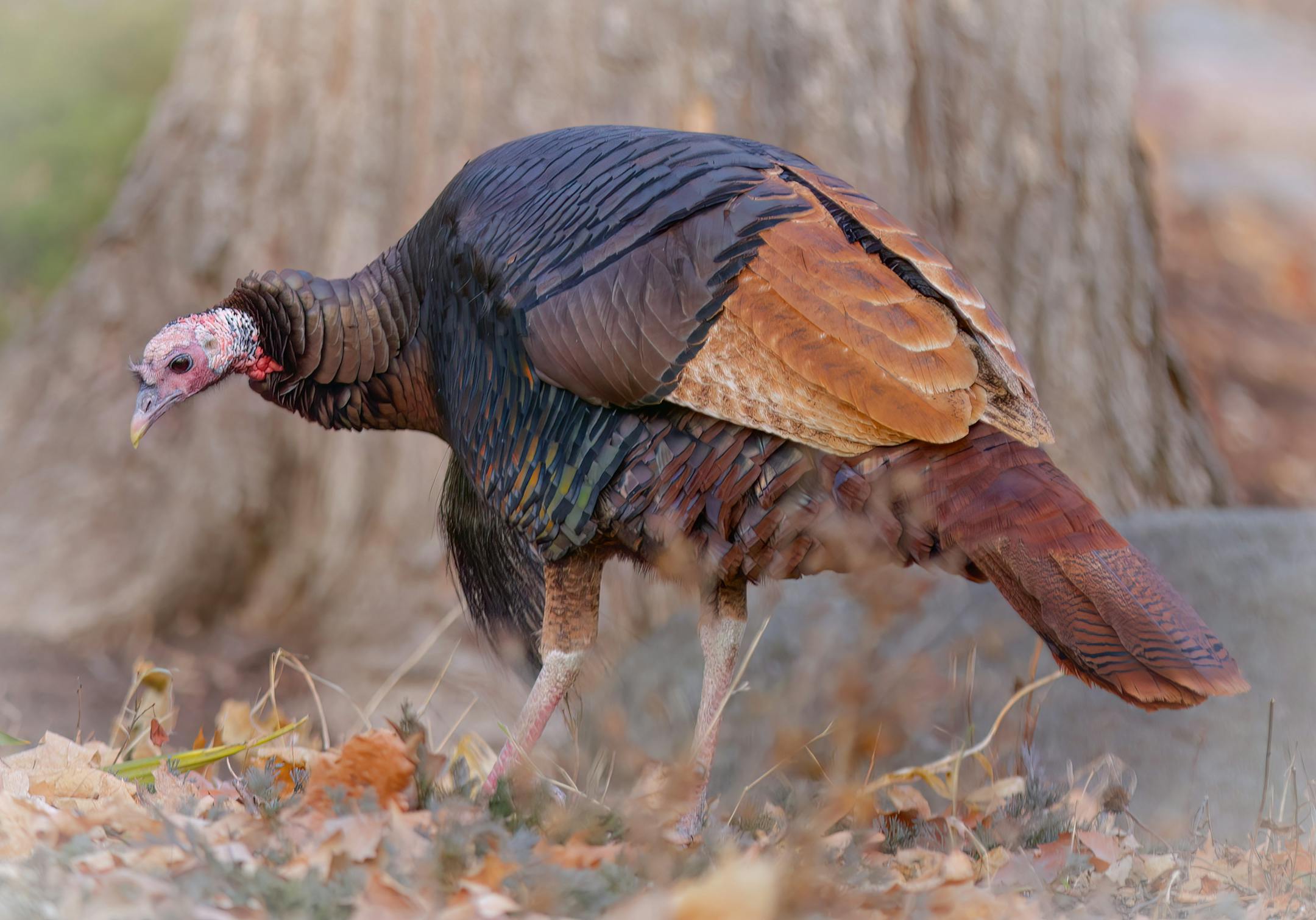
A turkey in front of a tree with its head bent looking for food.
Turkeys scratch for acorns. (Cliff Price)

Turkey trot

Q: A turkey was scratching the soil underneath an oak tree in my local park, and I’m wondering what it was searching for?

A: One of the most sought-after natural foods in autumn is the acorn, and wild turkeys are wild for these oak tree nuts. Acorns are also prized by gray and red squirrels (and flying squirrels), white-tailed deer, raccoons, mallards and wood ducks, crows and blue jays, and others.
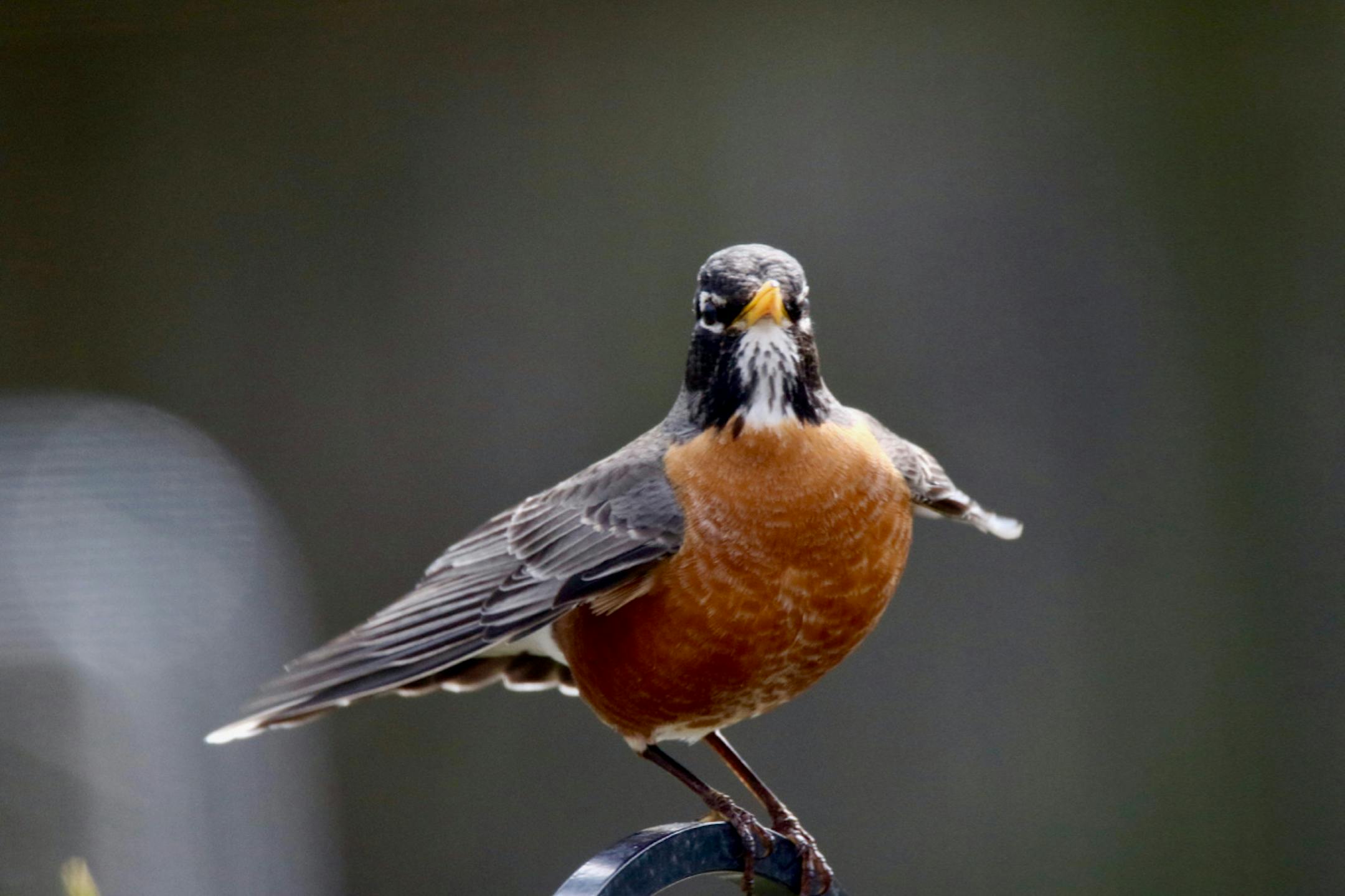
A robin perches with wings spread looking directly at the camera.
More robins are around in winter. (Craig Millard)

What’s up with robins?

Q: What’s going on with robins? It seems that their pattern is changing, some winters there are flocks of them, other winters just a few. This spring they disappeared in early summer and I haven’t seen them since. Is this because of global warming?

A: There may be two different factors affecting whether you see robins in your neighborhood. For starters, the robins that usually nest around you may not have returned this spring, or they may have raised one brood and then moved to a different site for their second nest. As for robins in winter, some — primarily males — do stick around all winter, and this has been true for decades. Because they’re not bound to a nesting territory, these winter robins are fairly nomadic, going where they can find fruit to eat and open water to drink. They don’t need to defend a territory in winter, so they join up in large flocks to make foraging easier. And sometimes thousands of robins will flock in to share a nighttime roost, often in a stand of conifers.

The Cornell Lab of Ornithology’s Project FeederWatch reports that more robins are spending the winter in the North than did so 25 years ago, and those that migrate are arriving back earlier in the spring. The Cornell Labs cites the increased availability of fruit in urban landscapes, but warmer winter temperatures and reduced snow cover may also be factors.

Killer window

Q: A bird hit my kitchen window today and perished, and I feel bad about it. But I have many windows in this house and don’t see how I can stop birds from running into them all.

A: The reason we feed birds is to draw them in close so we can observe them. But it shouldn’t cost them their lives to eat at backyard bird feeders. A staggering number of birds are killed in collisions with windows every year in this country, as many as 1 billion, and that’s just not acceptable. We need to make our home windows more apparent to birds, so they don’t crash into them and get injured or killed. Two brands work well to highlight the presence of glass, Window Alert and Feather Friendly. You can find them online and each offers decals or tape to apply to windows to make windows visible to birds, but are almost invisible to humans. You don’t need to treat all the windows in your home, just the one or two that birds tend to smash into.

Another tip: Place bird feeders either 3 feet or less from windows, or more than 30 feet away. Close-in feeders don’t allow birds to build enough momentum to harm themselves in a collision, and placing feeders farther away gives birds time to spot a window and swerve to avoid it.

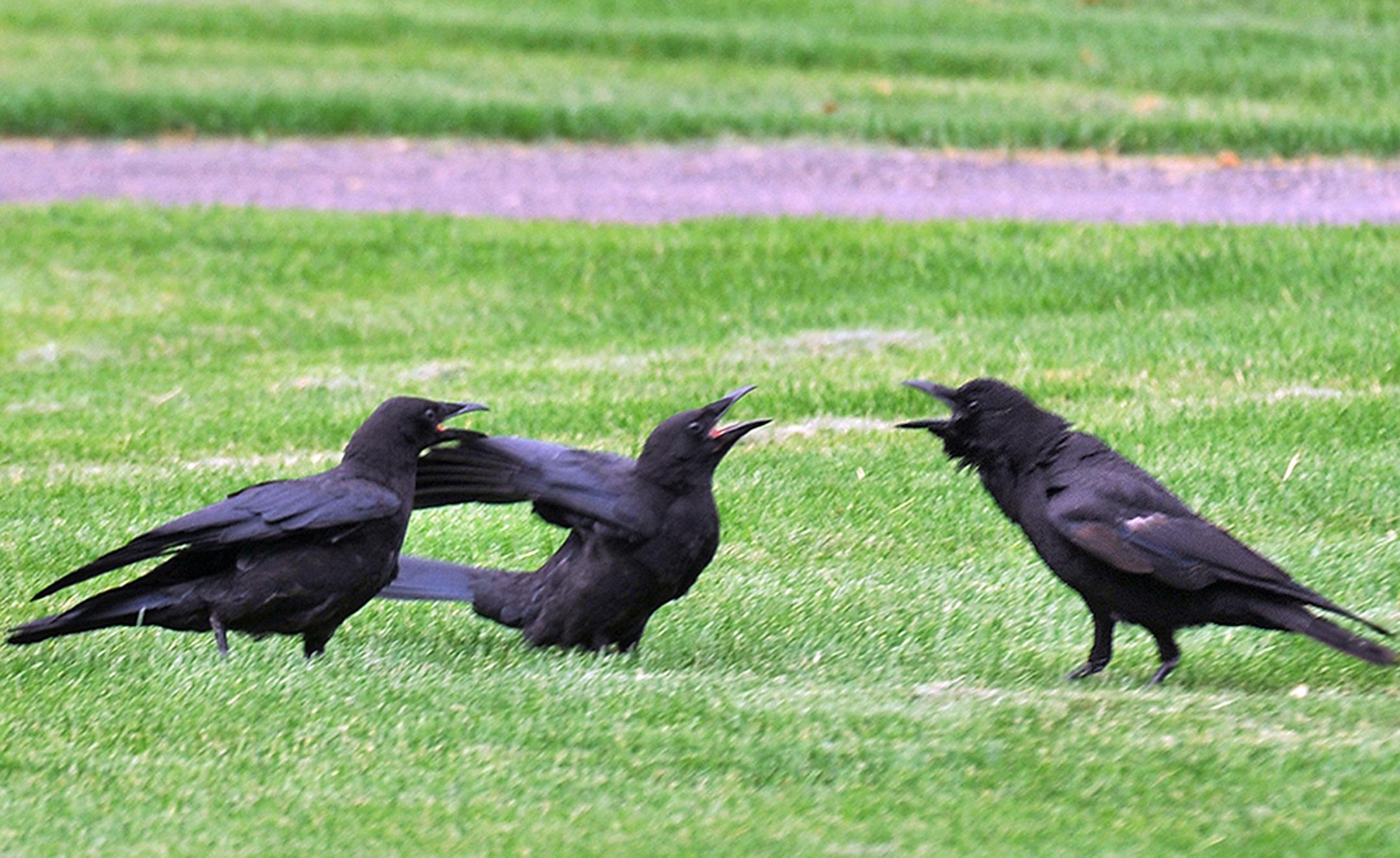
Crows hunt for food.

Crow gatherings

Q: The crows in my neighborhood are putting on quite a show this fall: There are dozens of them in the area, cawing very loudly as they walk on the boulevards and peck at something in the street. What were they up to?

A: I’ll bet they were eating acorns that dropped onto the boulevards or in the street, and were digging for worms and beetles in the grass. Just to be sure, I checked with someone who really knows crows, Kevin McGowan at the Cornell Lab of Ornithology, and he agrees. “Crows eat acorns and they search for invertebrates in the leaf litter,” he said, adding, “I’m not sure what all the calling was about, but they do like to talk.”

Wet or dry?

Q: It’s getting to be that time again, when we put the hoses away and filling the birdbath gets to be a chore. I’m tempted to skip it this winter. Any advice?

A: It’s a very good idea to offer open water for your backyard birds in winter, as having a source of open water will draw in as many birds as bird feeders do. Seed eating is a very thirsty business, and birds, especially finches, appreciate a water source for drinking. Birds need to bathe year round, except on the coldest days, to keep their feathers in top condition. If feathers become clogged with dust or debris, they don’t insulate as well, so birds appreciate ice-free water sources. It’s a bit more work keeping a birdbath filled and clean in winter, but pouring in water from a bucket does the trick.

However, bathing is dangerous to birds when temperatures reach single digits or lower. Place wooden slats or evergreen boughs across the birdbath to allow for drinking but not bathing. Some people saw off a couple tree limbs before discarding their holiday tree, using one to block birdbath bathing, and saving the other for later in the winter.

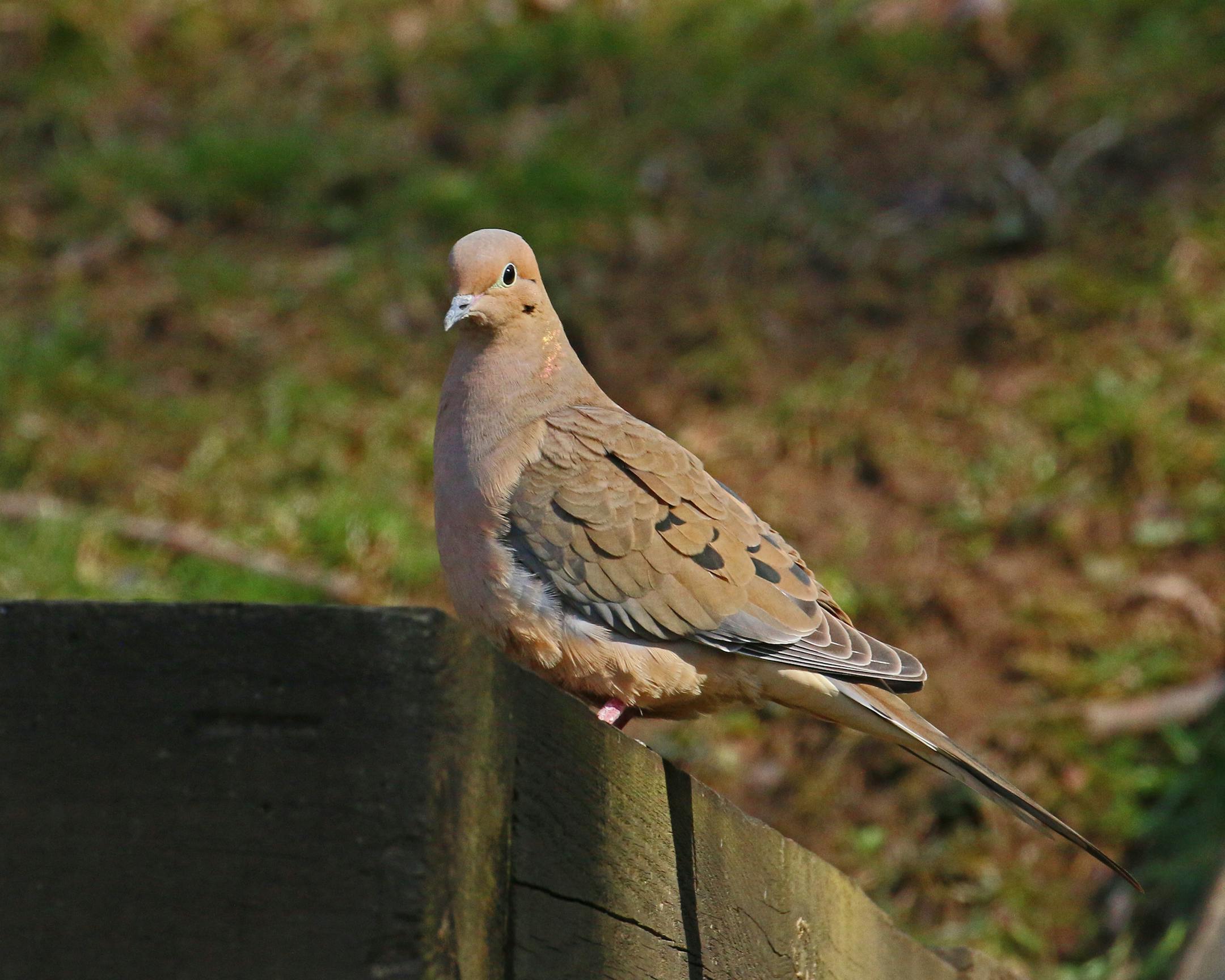
A mourning dove perches on the edge of a wooden structure.
Mourning doves send signals. (Phyllis Terchanik)

Wing sound signals

Q: I watched several mourning doves feeding on the ground in my backyard, and then they suddenly took off like a shot, with their wings making a loud sound. The strange thing was that all the other birds in the area scattered in all directions, too.

A: That’s an excellent observation. Mourning dove wings make a whistling sound as the birds take off, and researchers have studied the effects of this sound on other kinds of birds. It turns out that if the doves are calmly lifting off after feeding, nearby birds don’t react. But if a predator or other danger spooked doves into flight, their wings made a higher whistling sound with faster wing beats. Other birds have learned that this is a sign of danger, and they depart quickly, too.

St. Paul resident Val Cunningham, who volunteers with bird organizations and writes about nature for local, regional and national newspapers and magazines, can be reached at valwrites@comcast.net.

about the writer

about the writer

Val Cunningham

See Moreicon

More from Home & Garden

See More
card image
Jeff Wheeler/The Minnesota Star Tribune

The 8,200-square-foot St. Paul property has been a single residence, shared living space and event center in its nearly 150-year history.

card image
card image