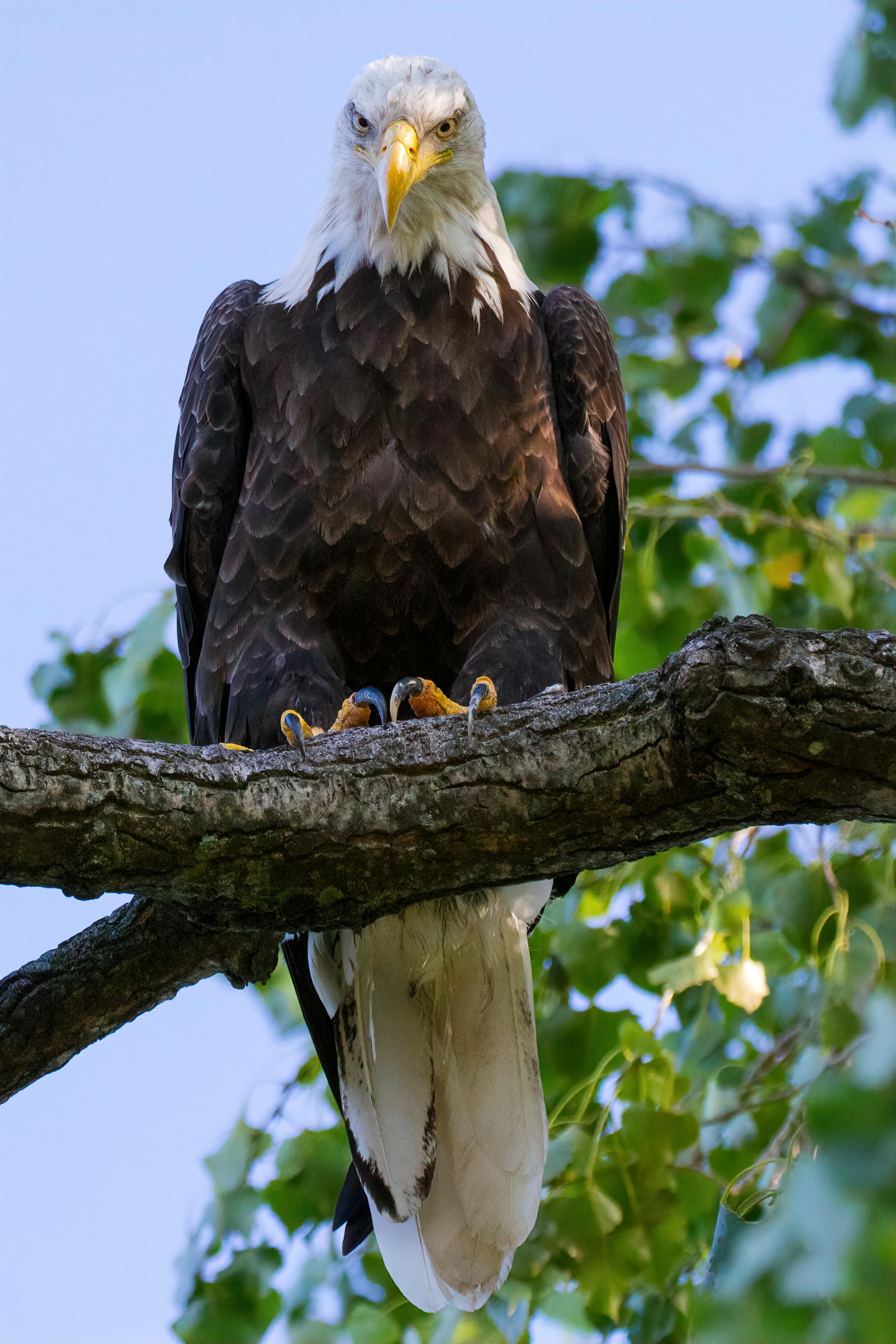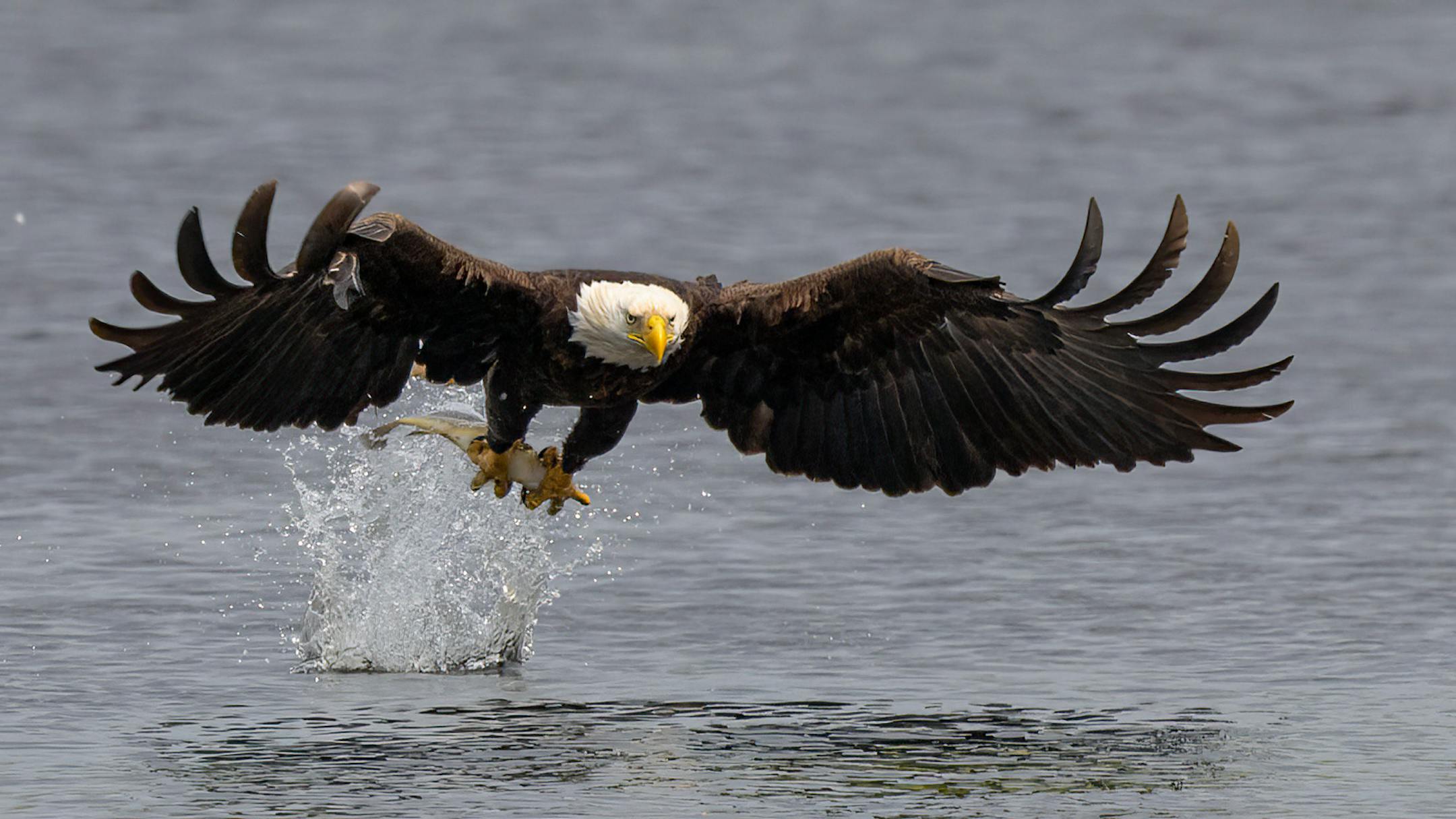
Q: Do bald eagles have good vision? When I see them, they’re usually sitting in a tree and looking around. Are they watching for prey?
A: We’ve probably all heard the expression, “eagle-eyed,” to describe someone able to spot things at a distance. Bald eagles can see farther than humans (a lot farther), their focus is much sharper and they see much more detail than we do. They have superb color vision, a broad range of focus and they can see almost 340 degrees around themselves, and they see ultraviolet light. There are many inflated claims on the internet about how far eagles can see, but generally these raptors are looking for movement, such as a rabbit, squirrel or fish in motion. Even when soaring overhead, they’re observing things on the ground. So, yes, eagles do have excellent vision that is far superior to humans’ visual skills.
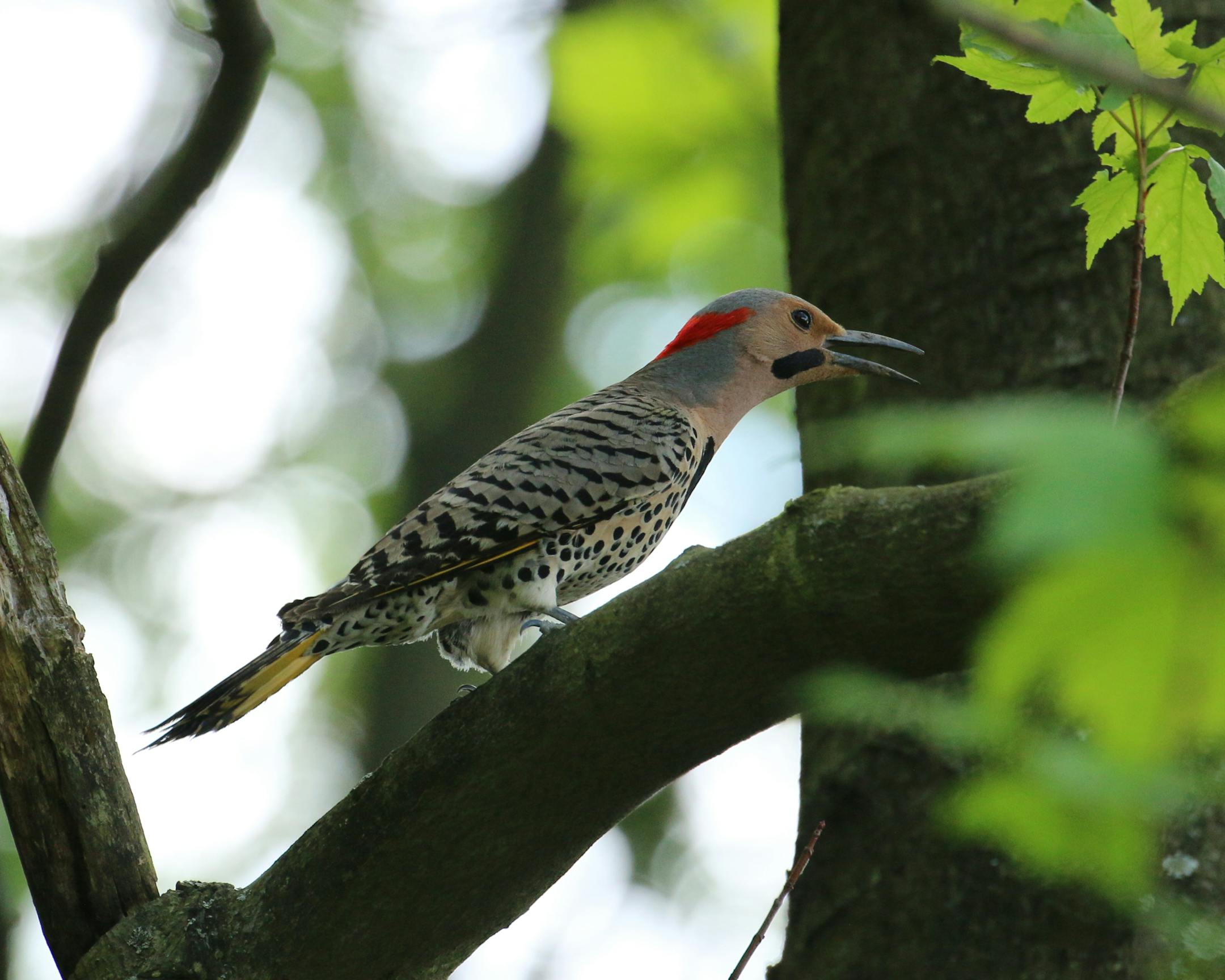
A gathering of flickers
Q: Walking through my local park in September I came across an arresting sight: There were eight flickers on the ground and a few more in the trees nearby. What brought them together?
A: The flickers you noticed were gathering for fall migration, which takes place from September through November, with a peak in late September. At this time of year, they’re often seen in groups and can be very vocal, giving their distinctive “kyeer” call, or a repeated call that sounds like “wicka-wicka.” It’s not surprising that you saw these handsome woodpeckers on the ground, since their favorite foods are ants and beetles. Hear Northern flickers here: allaboutbirds.org/guide/Northern_Flicker/sounds
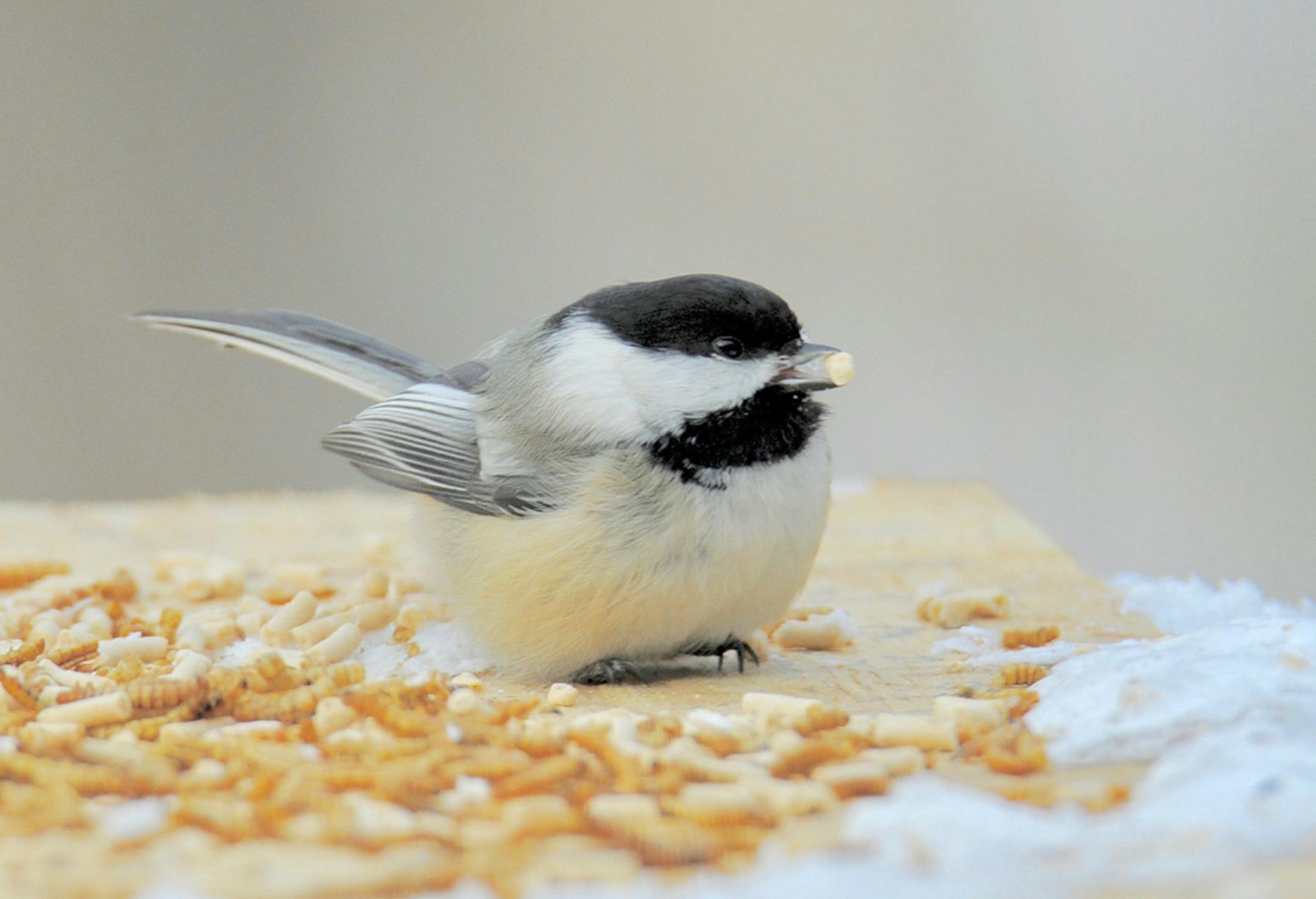
The return of the ‘dee
Q: I hardly saw any chickadees all summer long, but in the fall a couple are showing up at my feeders again. What’s the explanation for this?
A: I’ll bet most of us who feed birds noticed a similar thing — no chickadees after late May or early June, and now they’re back, zipping around feeders and adding their energy to the backyard scene. The reason we don’t see them at our feeders for much of the summer is that they’re raising their brood of youngsters on a diet of insects. Like nearly all songbirds, chickadees switch to an all-insect menu during nesting season because this high-protein diet ensures that young ‘dees grow quickly and can leave the nest after only a few weeks of care. Once the young are out and about, parent birds and youngsters will visit our feeders.
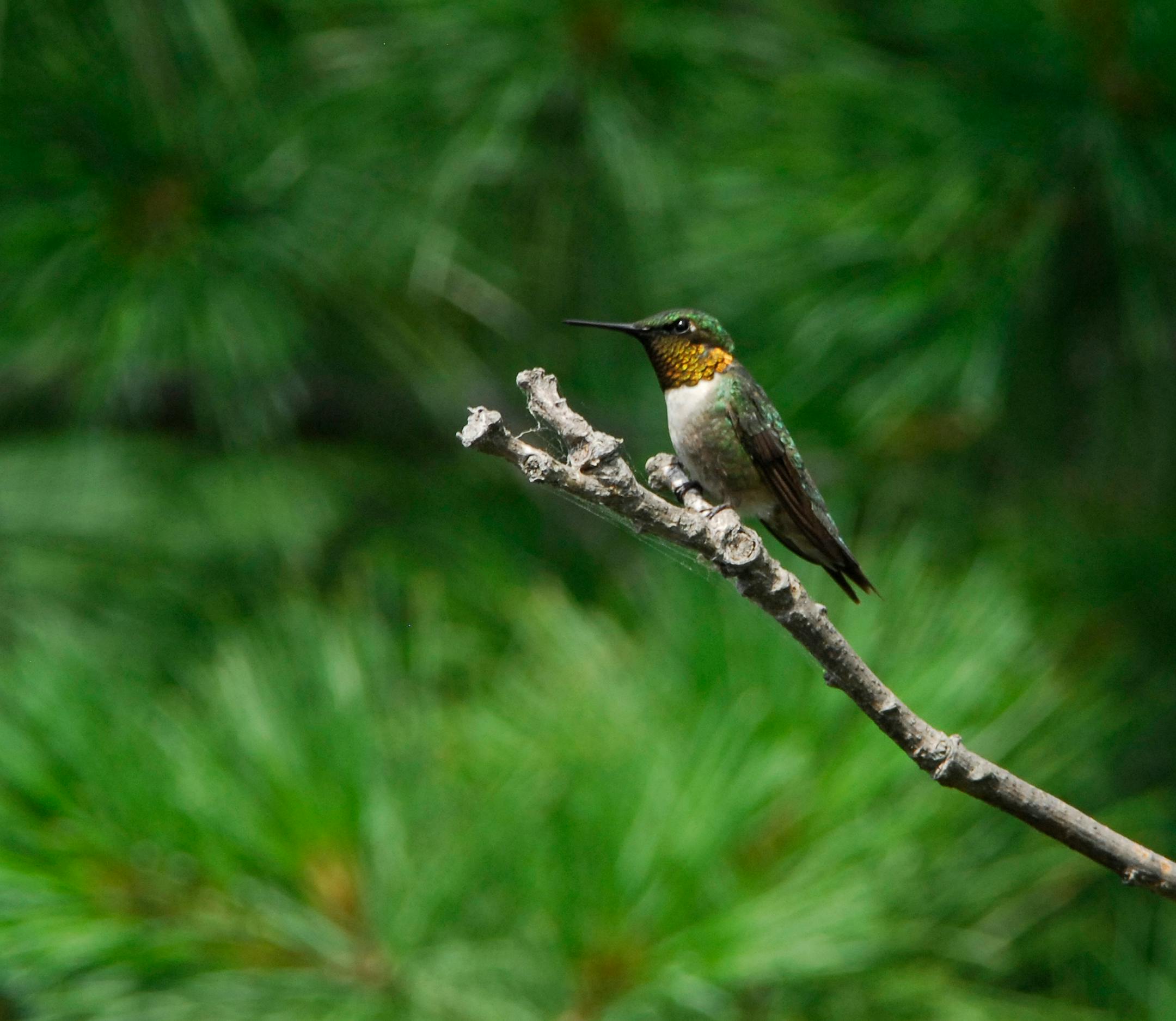
Hummingbird songs?
Q: Several weeks ago I was at our cabin and turned on the Merlin app while I sat on the deck.
In addition to picking up blue jays, nuthatches and loons, it suggested a hummingbird. What sound did it pick up? I wasn’t aware that hummingbirds sing.