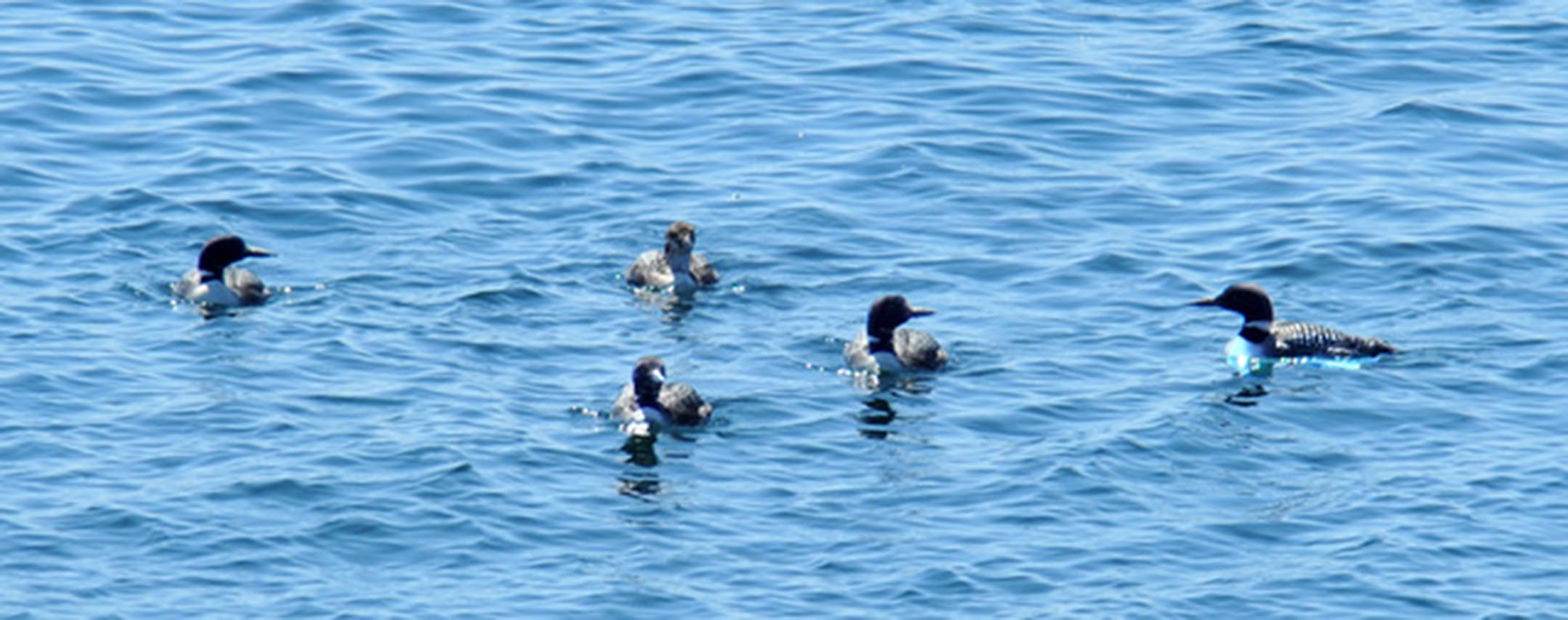
Q: A group of eight loons, all appearing to be adults, suddenly showed up in late July at our lake in north central Minnesota. They were swimming in a close-knit group, and we’ve never seen anything like this before. This lake already has three or four nesting pairs, each with chicks. Do you know what those loons were doing?
A: Excellent question with a fascinating answer, according to an organization called the Loon Project. It turns out that this is a well-studied and frequent phenomenon in the loon world, with small groups of loons dropping down on lakes long after the breeding season has gotten underway. Since I’ve never observed this myself, I turned to the Loon Project, which has been studying loons for decades.
Most of the drop-in loons you saw were probably birds not ready to breed, either too young or just getting ready to pair up. They’re said to be exploring your area, looking for a possible nesting territory for next year or later. These visiting loons are checking to see if there are young loons on the lake, a sign that it’s a high-quality territory, capable of sustaining chicks. For this reason, the resident loons try to hide their chicks during such visits, so the scouting loons might not choose it as a possible territory. This lessens the chances for battles next spring between established loons and interlopers. The resident loons on a given lake may join the visitors and leave with them, too, probably to draw them away from their chicks. Some of the visiting loons may even be parent loons from other lakes visited by scouting loons, attempting to lead the scouting loons away from their own lake. They leave their own chicks in hiding to do this, betting that the visitors will be fooled into thinking they don’t have offspring.
So, while the group of loons swirl around in the water and even engage in a kind of square dance, making it resemble a social gathering, the Loon Project feels there are some pretty strong dynamics behind their activity, with each bird having its own goals for the visit. We Minnesotans love our loons, and it’s fascinating to learn more about them. You may be interested in the Loon Project: https://loonproject.org/2020/09/27/understanding-social-gatherings-the-basics/.
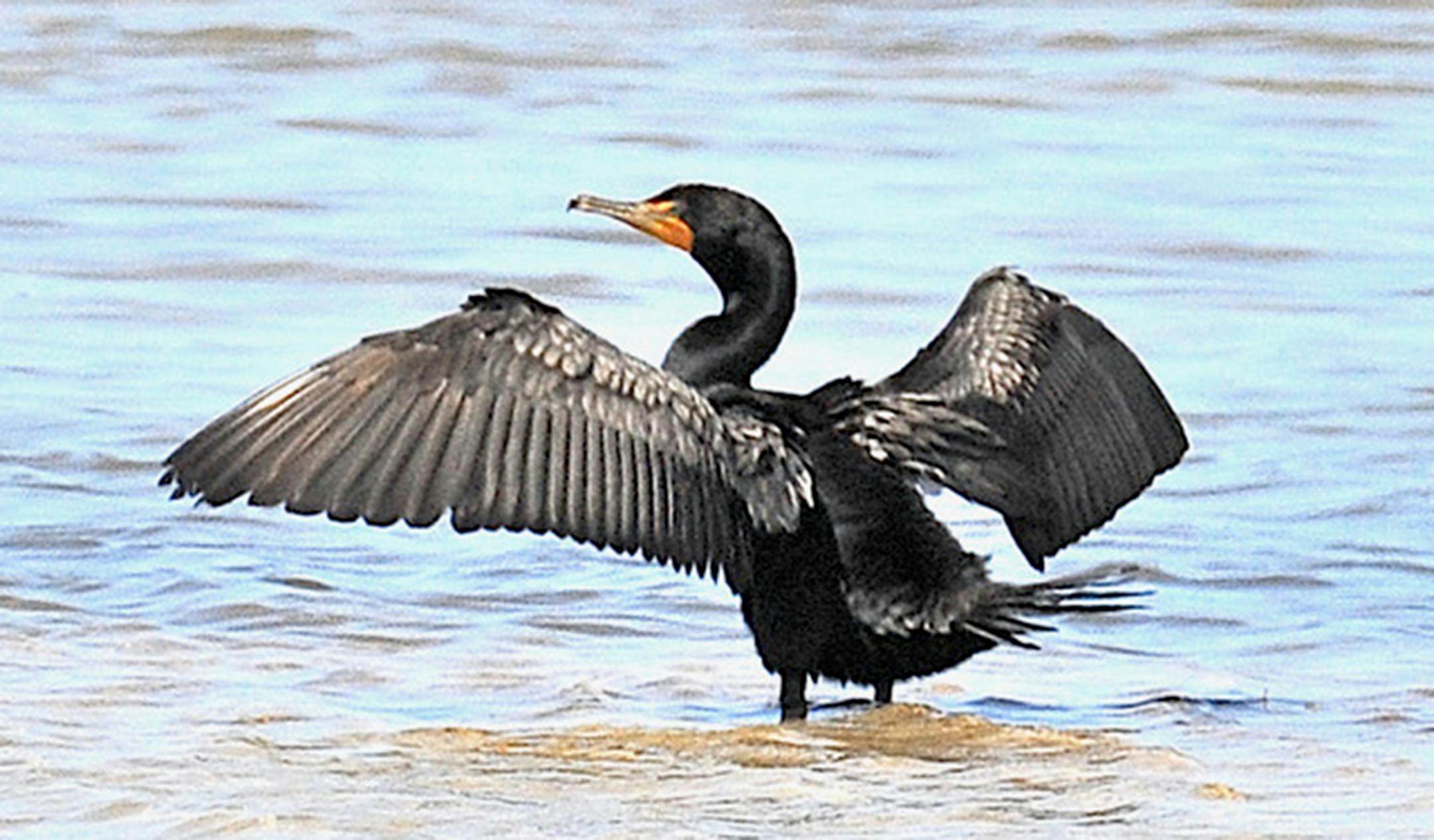
Mystery bird
Q: We were paddling on Lake Como in St. Paul in late July and saw an unusual bird. I thought at first it was a green heron, but checked the herons in a field guide and no match. It was about 23 inches tall, any ideas?
A: The photo you sent shows a double-crested cormorant standing on a tree branch over the water. These aquatic birds live on a fish diet, and are adept at swimming underwater in pursuit of their prey, using their wings to steer. Some fisherpeople dislike cormorants, feeling they reduce sport fish populations. “Cormies” are sometimes mistaken for loons on the water, but they have a much slimmer head and longer beak. You can learn more here:
New nest every time
Q: Do robins use their old nest for their second brood in a season?