

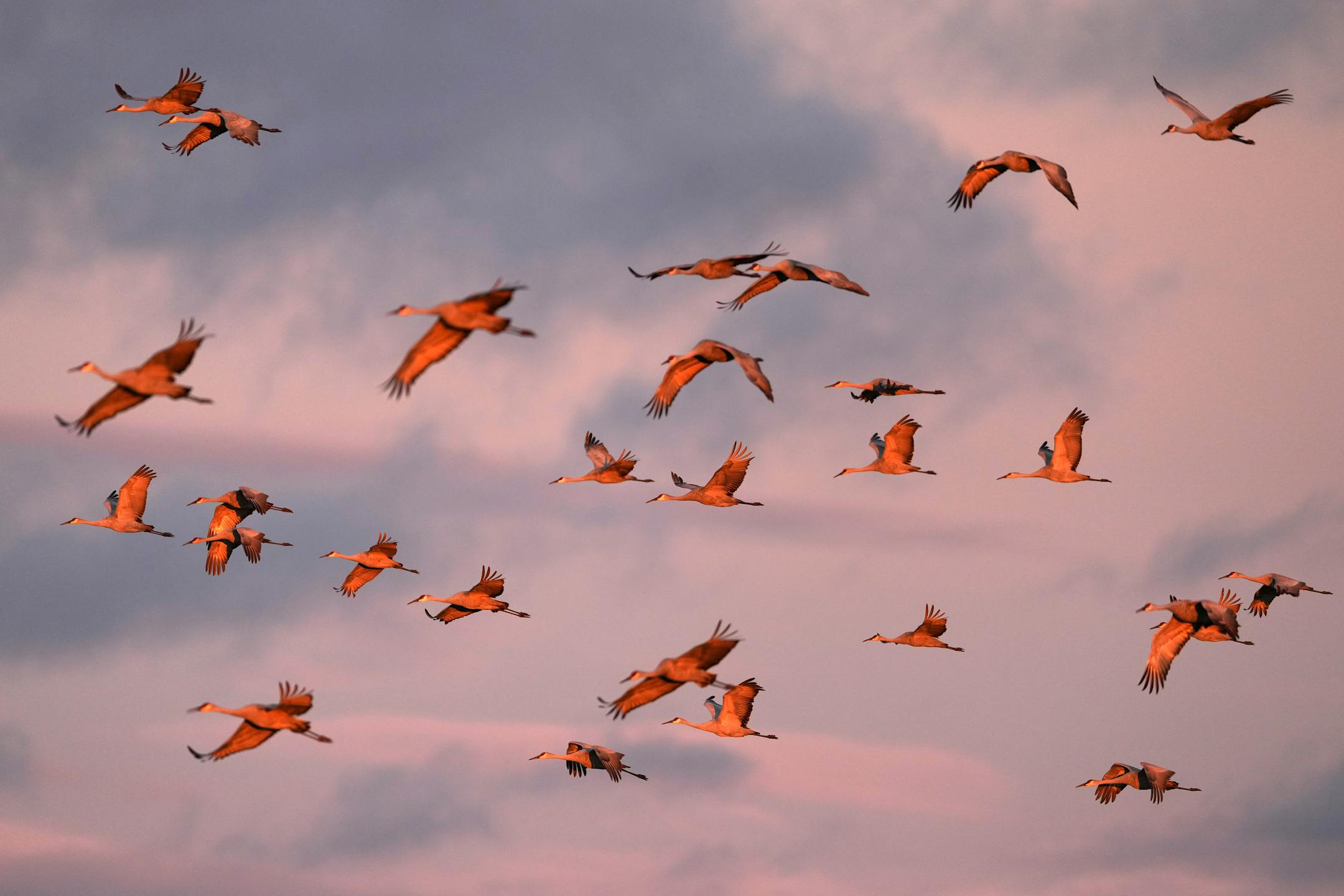
GRANTSBURG, WIS. – Sandhill cranes came in by the dozens, and then dozens more, to the grassy marsh of Crex Meadows Wildlife Area. They had spent the day feeding in nearby fields and now were arriving in large numbers at a favored roosting spot.
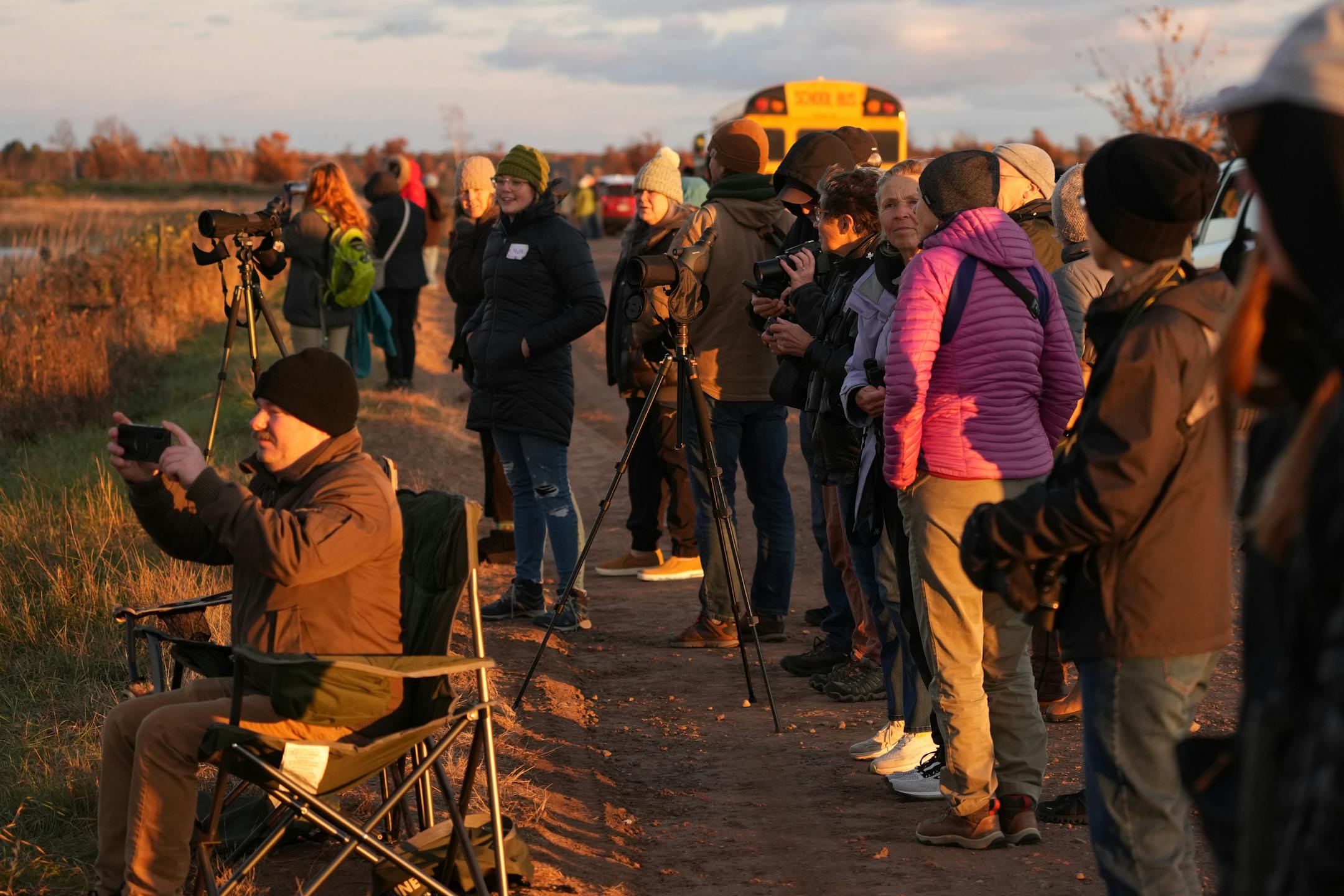
They announced themselves with nasally, bugling bursts, outnumbering about 40 people gathered on the road Wednesday evening to watch and listen.
“They are so ungainly, so funny-looking, and yet still so beautiful,” said Julie Staub, who was there to watch and photograph with her sister, both of Marine on St. Croix, Minn., and avid birders.
As if on the clock, the sandhills arrive daily and increase beginning in early October. Depending on weather, they peak in number at the end of this month or in early November. Then, they’ll continue their long journey south to winter after producing a spectacle and sensory experience that still lights up bird lovers. The cranes also are bringing newcomers under their spell.
The nightly ritual at Crex is evidence of a conservation success story that rescued sandhill cranes from near extinction.
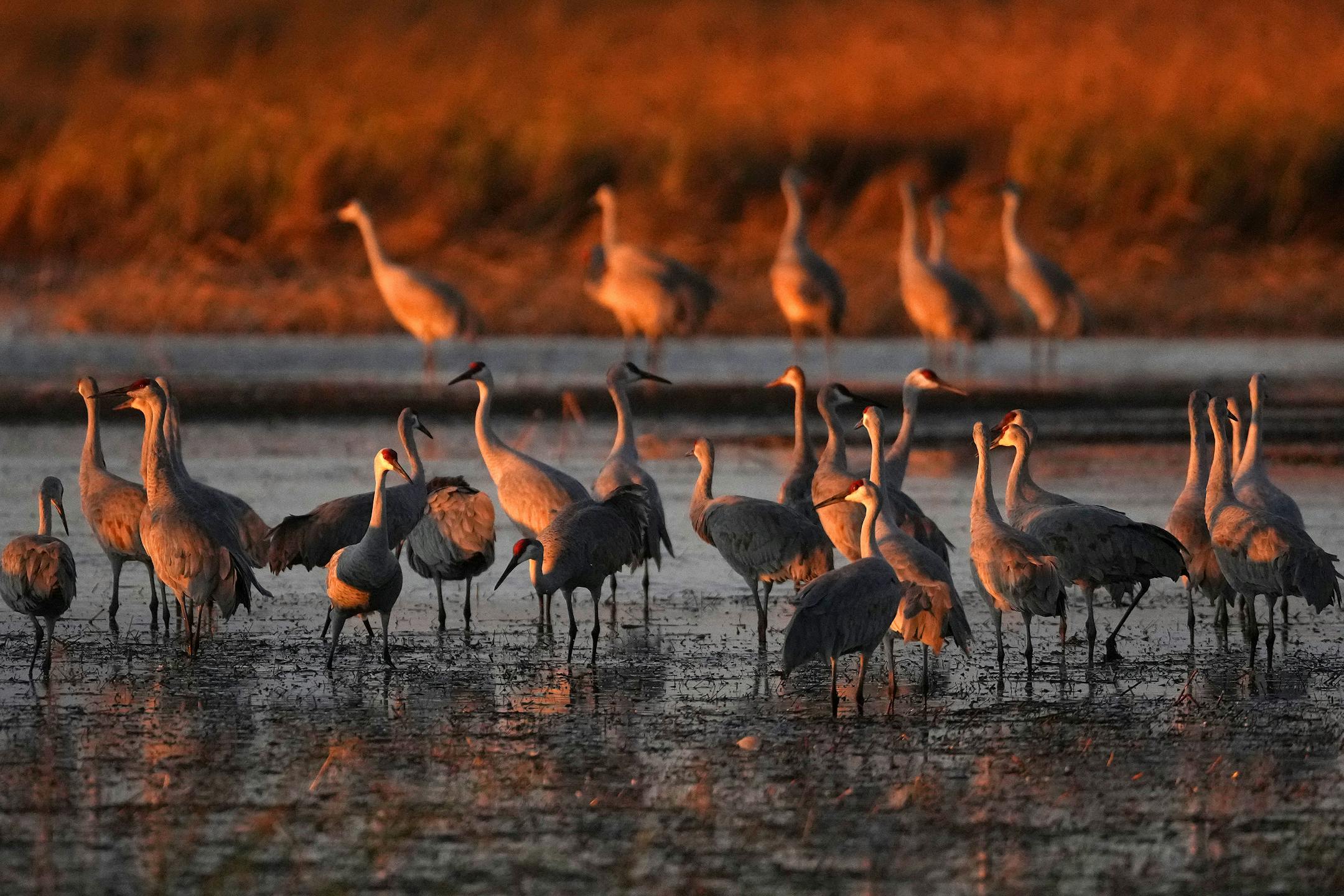
On Wednesday, the spectators stood on an interior road straddling a Crex marsh where the cranes land and sit tight for the night. Some people were with employees from the International Crane Foundation, based in Baraboo, Wis., who were in town to partner with the Crex Meadows Wildlife Area visitor center for a guided tour. It sold out.
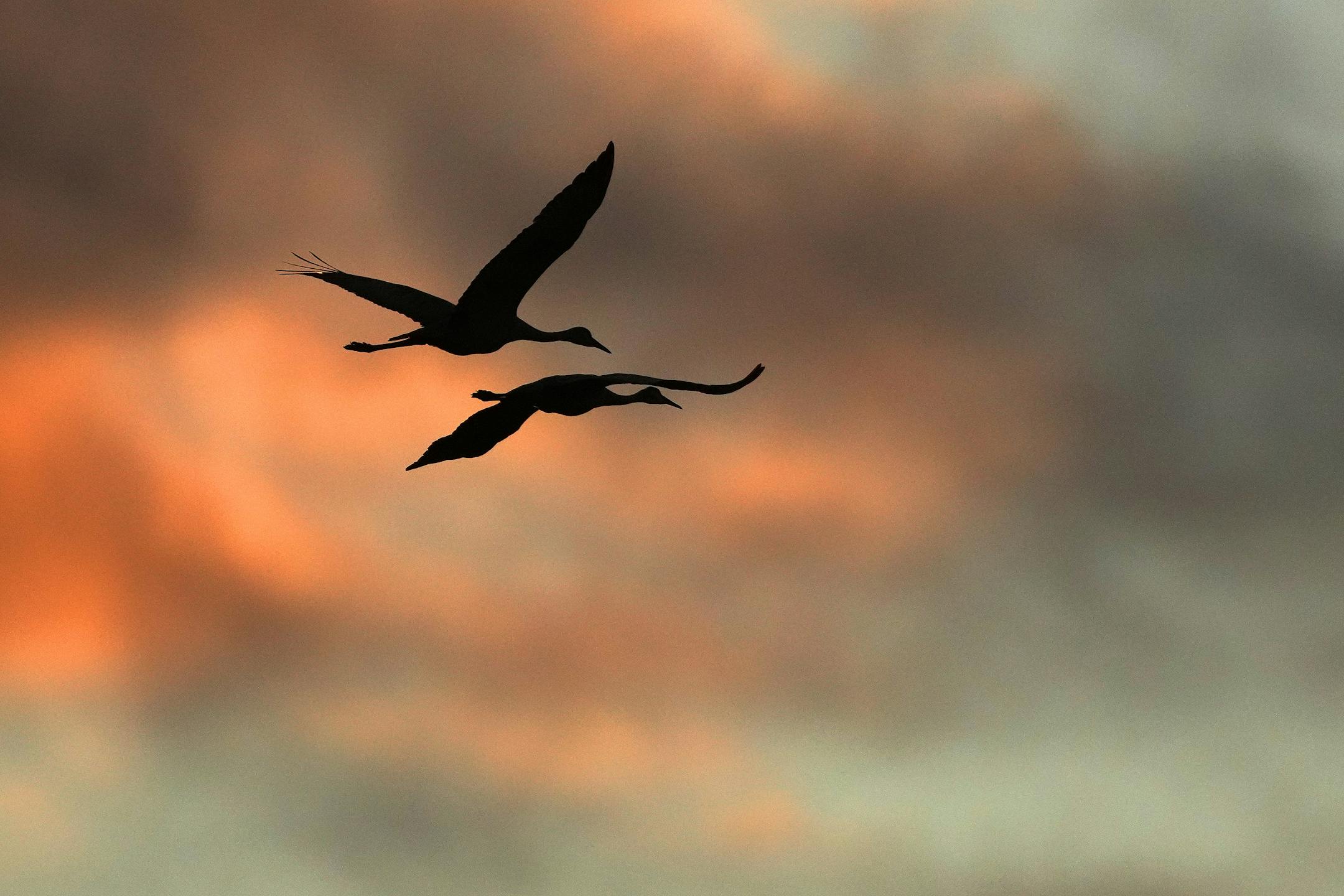
The cranes delivered for their audience. As Staub described, they were like marionettes, as if pulled by strings, as they floated in and dropped onto sandy platforms or straight into water.
Larry Hollar of Inver Grove Heights was present with his camera and tripod, part of a now-common routine in fall. He was spending the night in Siren, Wis., so he could get back to Crex before dawn to watch the birds launch.


![Attendees of Frostbike made their way through the convention Saturday at the Quality Bike Products campus in Minneapolis. ] (AARON LAVINSKY/STAR TRIBUNE) aaron.lavinsky@startribune.com Frostbike 2016 was held at the Quality Bike Products Campus on Saturday, Feb. 27, 2016 in Bloomington, Minn.](https://arc.stimg.co/startribunemedia/NH2BSHB74ND2V6GF2G2HI5X4MM.jpg?&w=252&ar=3:2&fit=crop)