Scientists warn federal funding cuts could undermine walleye recovery in Minnesota

The Trump administration froze grant money awarded to the Midwest Climate Adaptation Science Center in August and wants to cut its budget next year.

The Minnesota Star Tribune
December 14, 2025 at 12:00PM
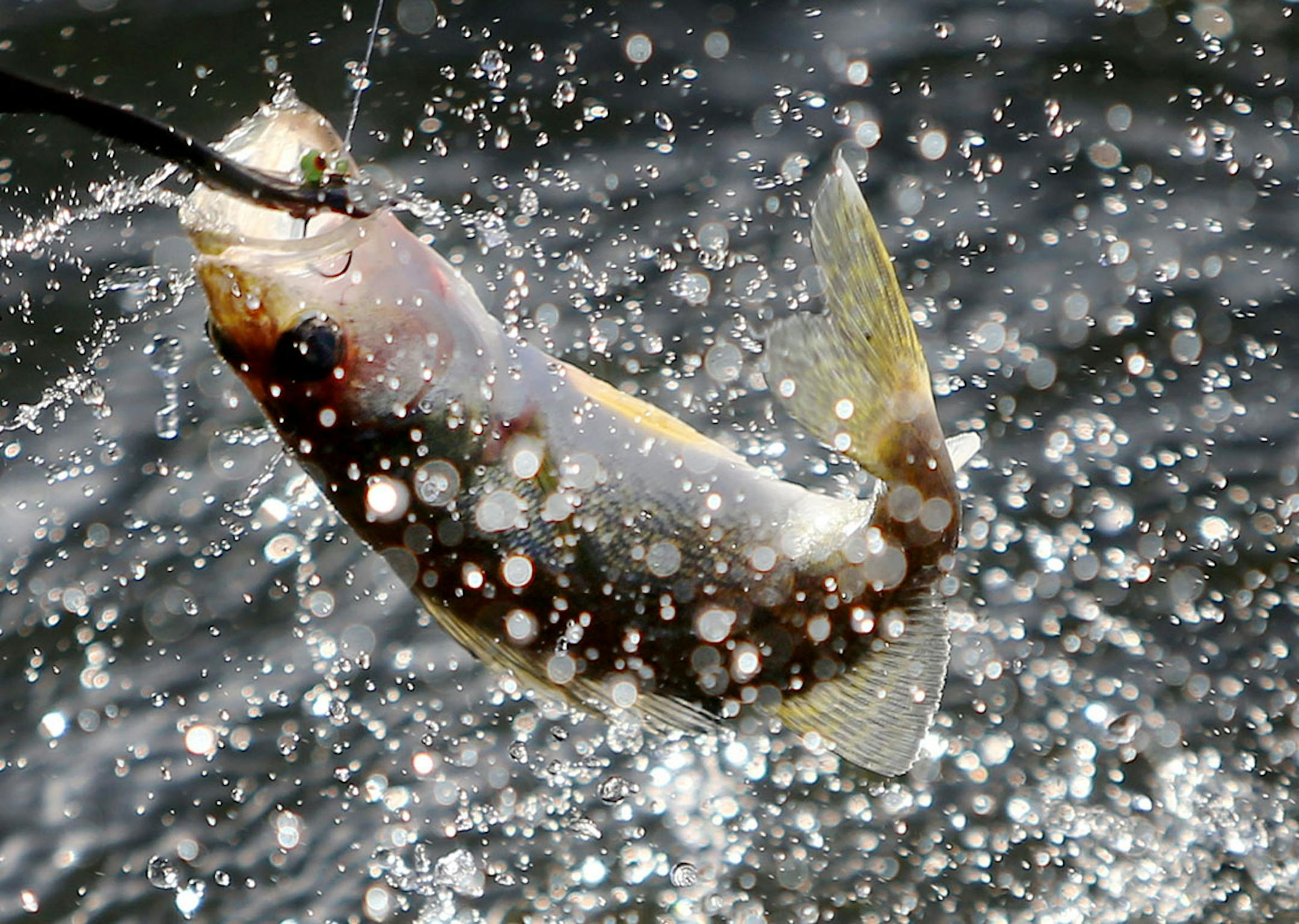
Scientists are studying how to save the walleye fishery in Minnesota. The Trump administration's efforts to cut off funding for climate research are threatening this work, researchers say. (David Joles/The Minnesota Star Tribune)

Christopher Rounds is a scientist who studies walleye in Minnesota, but he doesn’t use a boat or a net or even a laboratory.

“I probably go outside like five times a year and sit behind a computer the rest of the time,” says the University of Minnesota graduate student and researcher at the Midwest Climate Adaptation Science Center (MW CASC).

Rounds is a member of a team investigating the reasons walleye are faring better in some Minnesota lakes and rivers compared to others. The state DNR has collected so much data on walleye over the decades that it’s difficult to make sense of it without advanced computer modeling, said Rounds. It is Rounds’ job to analyze that data, testing different variables to gauge their influence on walleye survival.

The study’s findings, Rounds said, could give state officials better tools to safeguard the species, whose populations have dwindled in recent decades due to warming waters, invasive species and other challenges.

That study is now in jeopardy.

In August, the Trump administration froze the federal funding for the walleye study, including money meant to pay for graduate researchers like Rounds next year. President Donald Trump’s proposed 2026 budget would eliminate all federal funding for MW CASC and the other eight regional climate science centers, which Congress began establishing in 2008. Lawmakers had earmarked $83 million for the centers this year.
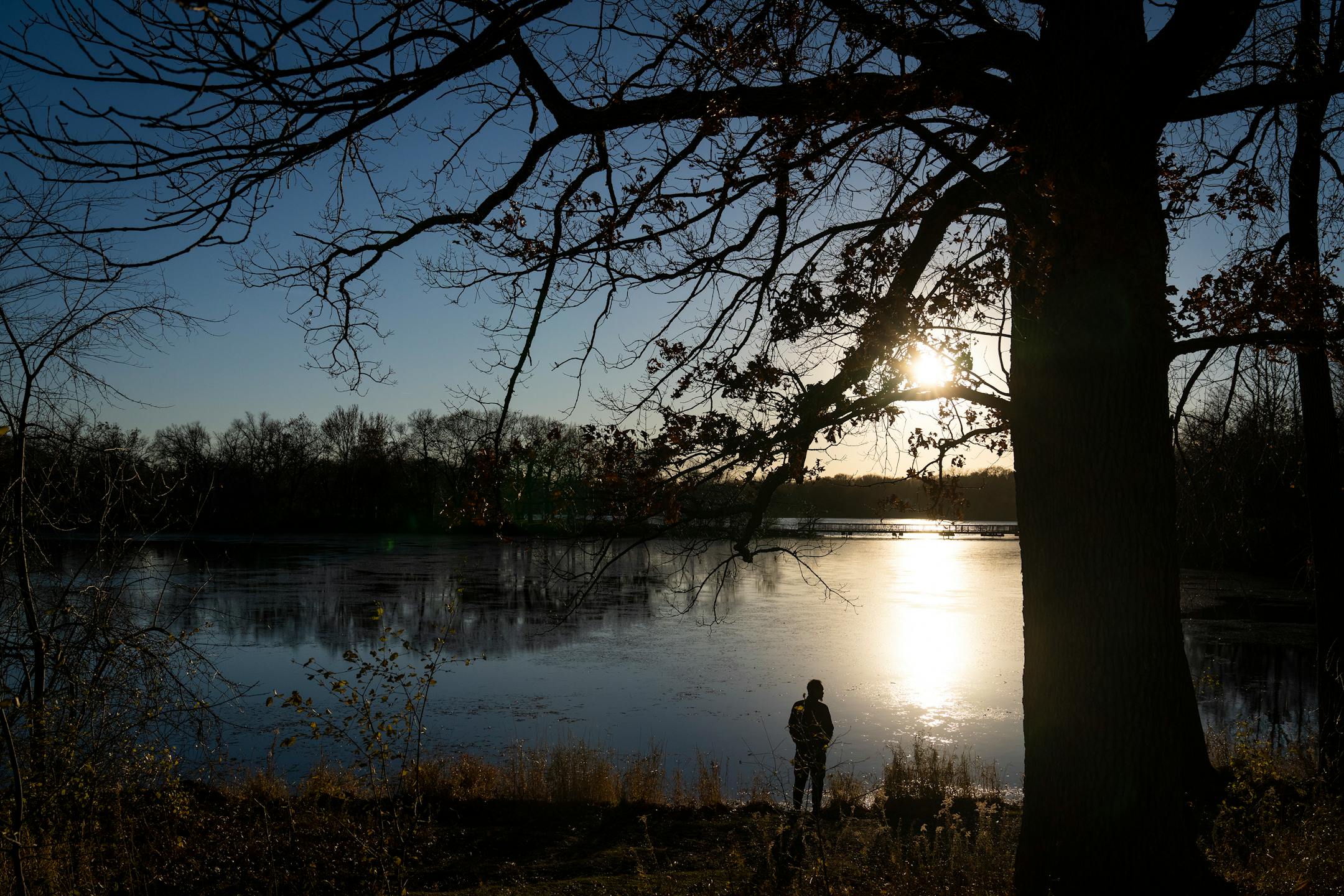
The state is studying why walleye are faring better in Silver Lake in St. Anthony, seen here in 2023, than some other metro lakes. (Leila Navidi/The Minnesota Star Tribune)

The moves are part of the Trump administration’s broader effort to pull back federal funds directed toward climate change response. This year, federal agencies and Republicans in Congress have terminated or frozen hundreds of billions of dollars intended to develop clean energy and help Americans prepare for worsening extreme weather and other consequences tied to warming global temperatures.

Gretchen Hansen, a University of Minnesota fish ecology professor who is also involved in the walleye study, said the budget cuts would be a loss not just to the scientists, but to Minnesotans who care about fishing and other outdoor recreation.

“That’s not just research for research’s sake,” Hansen said. “It’s what matters to the people who are here … answering these key questions to help us manage resources in a changing world.”

DNR fisheries biologists were out netting both male and female walleyes on Mille Lacs Lake in 2016 to capture eggs and fertilize them for future restocking back into Mille Lacs Lake. This was the first step in a research project that provides information about the number of Mille Lacs Lake walleye hatched in the wild. (Brian Peterson/The Minnesota Star Tribune)

The White House Office of Management and Budget didn’t respond to questions about the budget cuts. A spokesperson for the U.S. Geological Survey, which administers grant funding for the regional climate centers, said it would be “inappropriate” to comment on a budget bill that hasn’t yet passed.

Hansen has studied freshwater fish in the Midwest for more than a decade, and many of her studies have provided key insights into why Minnesota’s walleye population has declined. Hansen’s 2019 study found a link between water clarity and walleye health in Mille Lacs Lake, one of the state’s most popular walleye fisheries. Her 2021 study found that deep lake waters were losing oxygen as temperatures warmed, which is an issue for cool-water fish like walleye.

Most recently, Hansen led a study that compiled a massive database on several large freshwater fish species in Minnesota, identifying changes in population and the factors driving those changes. Since 2013, she said, her work has largely been supported by funding from the regional climate science centers.

Jessica Hellmann, who runs MW CASC, said she doesn’t understand why the Trump administration doesn’t want to fund climate research and noted that the regional climate science centers have enjoyed broad bipartisan support over the years.

“Whether you want to believe it’s greenhouse gases or other things, we will need to make adjustments for the changing climate,” Hellmann said. “We can do that with science at our aid … or we can go into it blind.”

Half a dozen studies receiving funding from MW CASC had their grants frozen. They include a study that examines how the changing climate is affecting wild rice cultivation and one that aims to identify where brook trout and other cold-stream fish are taking refuge from warming waters.

University of Minnesota forestry professor Marcella Windmuller-Campione could also see her research interrupted by the freeze. Her study monitors the health of trees that were planted to replace ash trees infected by emerald ash borer, identifying why some species are doing well while others aren’t.

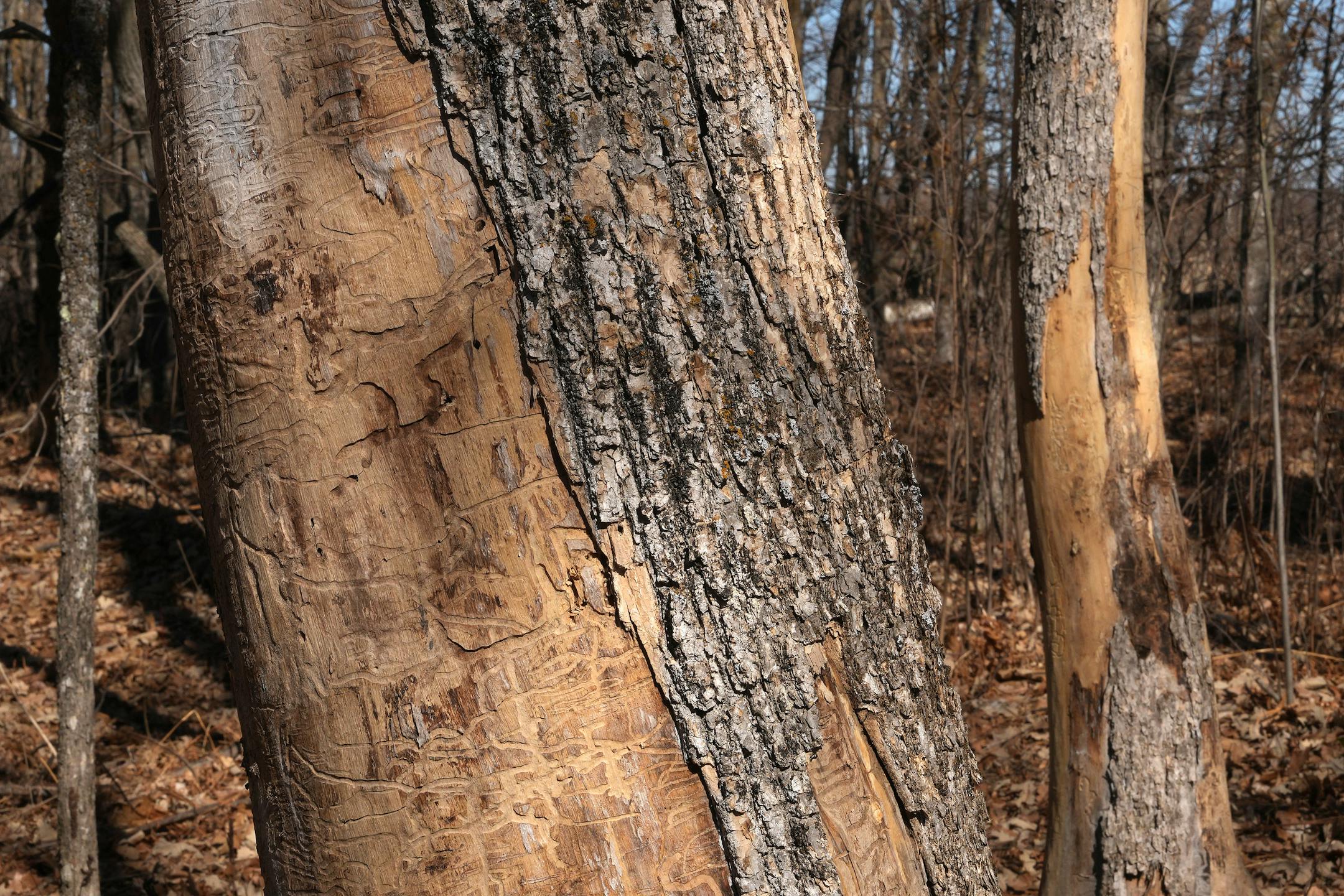
Damage done by emerald ash borers is evident on trees near Big Rice Lake in Remer, Minn., in 2024. (Anthony Souffle/The Minnesota Star Tribune)

In some of the plots of land, 100% of the newly planted trees have survived, while in other plots there is only a 7% survival rate, Windmuller-Campione said, and understanding why will help Minnesotans use effective strategies to fight the infestation.

“People have invested huge amounts of time and money to plant [new] species,” she said. “Not all our trees live. And so one of the big things is understanding if there are certain trees that we should be planting.”

As for Rounds, his study is already uncovering some important clues about walleye survival.

By comparing similar lakes where walleye are doing well in one but not in the other, his team has been able to isolate which factors have the most influence on walleye populations for individual lakes around the state.

Take Silver Lake in Ramsey County and Peltier Lake in Anoka County as an example, Rounds said.

“These lakes have similar water clarity, are near each other, are stocked with walleye at the exact same rate, and are both in a highly urban area,” he said. “However, Silver Lake has a higher walleye catch rate than Peltier, even though it is a smaller lake, a trend we expect the opposite of.”

Based on their analysis, Rounds said, the difference is that Peltier Lake has more bass, bluegills and crappie, which can compete with walleye, while Silver Lake has more yellow perch — a tasty treat for hungry walleye.

Considering how much time and money is put into managing walleye in the state, Rounds said, that kind of knowledge is invaluable to Minnesotans

“Being able to manage them well, to get the best bang for our buck, this [study] is something that makes sense for us,” he said.

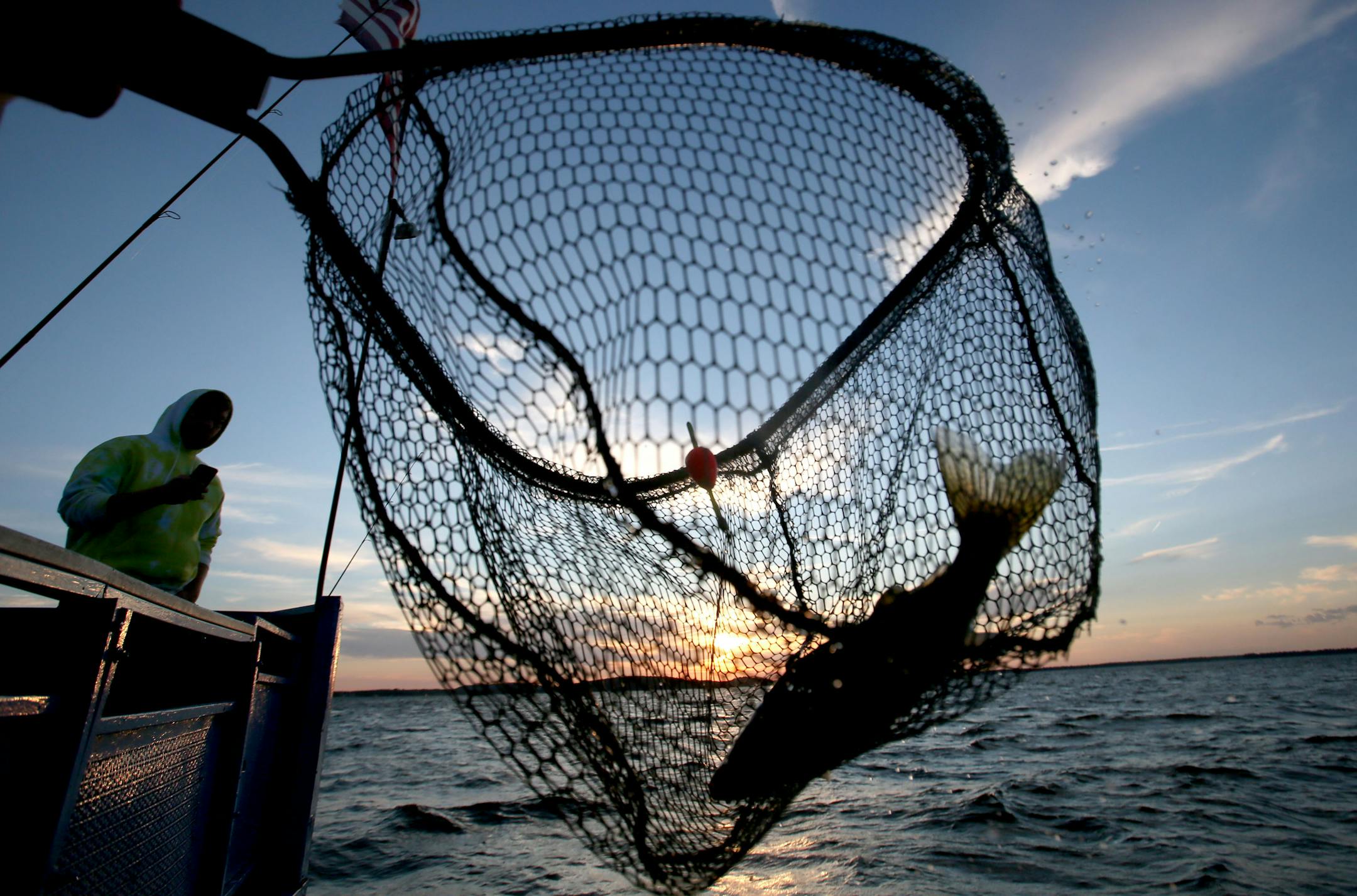
A walleye is netted after being caught on the Twin Pines Resort boat on Lake Mille Lacs in 2015. (David Joles/The Minnesota Star Tribune)
about the writer

about the writer

Kristoffer Tigue

Reporter

Kristoffer Tigue is a reporter for the Minnesota Star Tribune.

See Moreicon

More from Environment

See More
card image
David Joles/The Minnesota Star Tribune

The Trump administration froze grant money awarded to the Midwest Climate Adaptation Science Center in August and wants to cut its budget next year.

card image