Opinion editor’s note: Strib Voices publishes a mix of guest commentaries online and in print each day. To contribute, click here.
•••
“Why was he (or she) there?” That question has been a familiar refrain following the shooting deaths of Renee Good and Alex Pretti by federal agents. It’s frequently offered implicitly as a single “mic drop” comment or explicitly with clarifying words that essentially say, “If they hadn’t been there, they’d be alive today.”
To most (I would hope), that suggestion is reductive — oversimplistic and ignoring the context or complexity of the situation — and, frankly, ludicrous. One could just as well say that if ICE hadn’t been operating in Minneapolis, Good and Pretti would be alive today. Or, to use an extreme example to illustrate the point, “If the U.S. hadn’t sent soldiers to Europe during World War II, none of them would have been killed there.” Am I comparing ICE’s activity in Minneapolis to that of Nazi Germany? Of course not. Not yet.
Reasonable people can and should debate what role, if any, ICE should be playing in Minnesota. But given the role ICE is playing, reasonable people can easily understand and defend the presence of peaceful observers and protesters. The stated, specific (“official”) purpose of the ICE operation in Minnesota seems to be a moving target. However, in general, we have been told they are here to protect innocent citizens from illegal immigrants committing fraud and violent crimes. What we have witnessed includes:
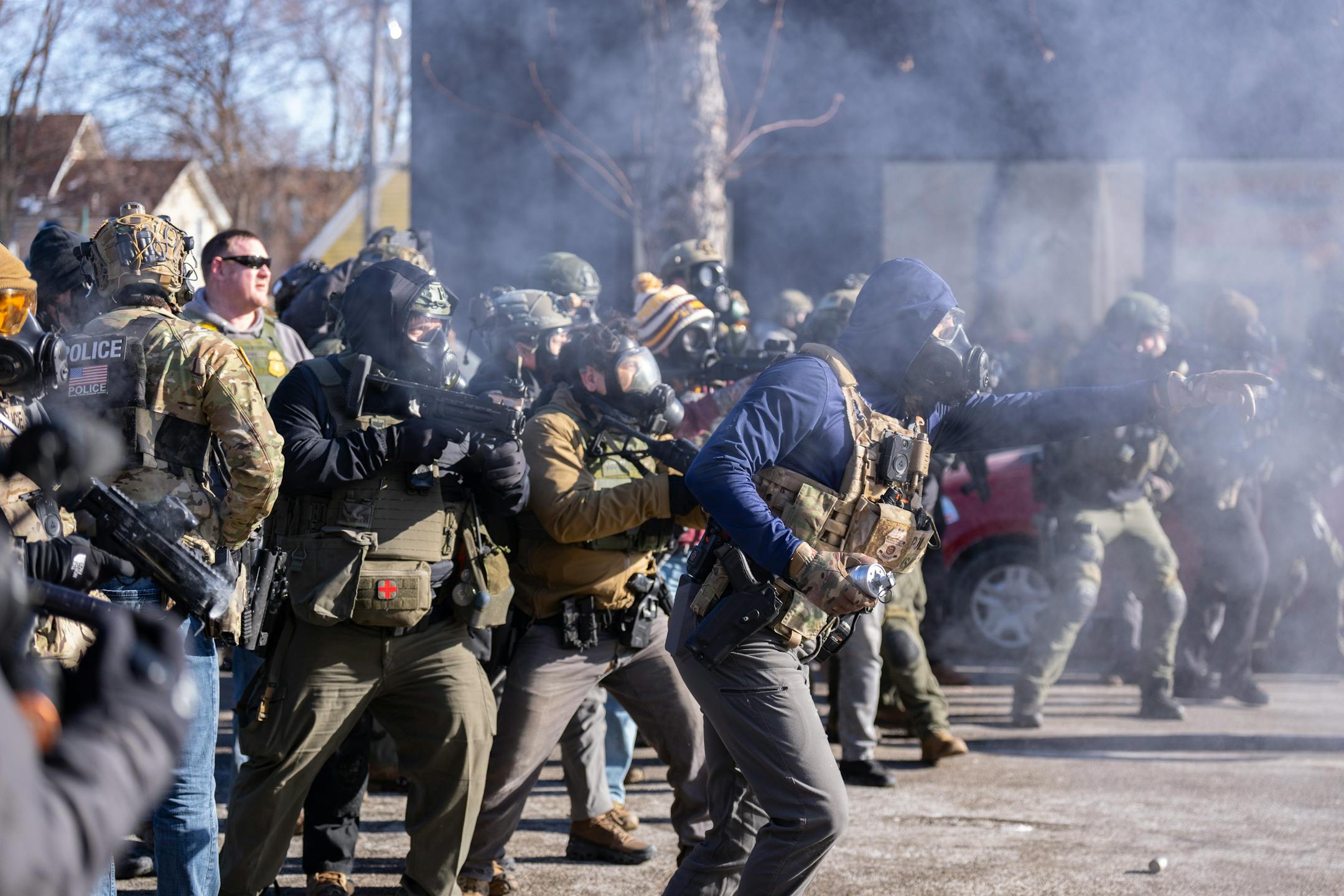
- Masked agents outfitted in full combat gear, typically without visible badge number or name tags, roaming our streets and neighborhoods …
- Conducting random racial profiling of adults and minors, often as they simply go about their daily routines …
- Refusing to identify themselves or give legal reasons for stops …
- Entering homes and private spaces without judicial warrants — in some cases, breaking into residences on the basis of obsolete addresses …
- Typically lacking transparency regarding identities, location or status of detainees …
- Exaggerating or lying about criminal histories for either targets or detainees …
- Similarly, taking credit for capturing/arresting criminals who were actually turned over to federal agents by Minnesota law enforcement — sometimes months or years earlier — while simultaneously accusing local law enforcement of not cooperating …
- Physically and verbally assaulting people they view as uncooperative …
- Declaring that the use of chemical irritants is a de-escalation tactic (Greg Bovino) …
- Hauling innocent citizens in their underwear out of their homes in front of children …
- Detaining American citizens for hours, then releasing them without charges or even winter clothing, often miles from their homes or from where they were picked up …
- And snatching parents, often without warrants, outside schools or at bus stops in front of their traumatized children.
The list could go on. But ask yourself, if you witnessed your family or neighbors being treated this way, what would you do? Be honest. Would you be “out there”?
If you’re still not sure, consider what we have seen and heard in the aftermath of the shootings of Renee Good and Alex Pretti. Immediately following each shooting — and before local officials had offered any opinions about the incidents — Department of Homeland Security Secretary Kristi Noem, the White House, Border Patrol Cmdr. Greg Bovino and other federal voices have slandered the victims, calling them domestic terrorists acting with evil intent, and offered descriptions of the circumstances that contrasted radically with video evidence that captured the incidents from a wide variety of angles.
Ultimately, after a day or two, perhaps realizing no sane person can buy these outrageous and publicly available accusations, they act as though they never made them (multiple times) and pivot to some version of blaming local leaders (Gov. Tim Walz, Minneapolis Mayor Jacob Frey) or law enforcement for inciting or letting the situation get out of hand, of blaming the victim for being someplace they shouldn’t have been as though that justifies shooting them, or sort of admitting that mistakes can happen and it’s tragic, but what can you do about it? Without any real acceptance of blame or apology.