

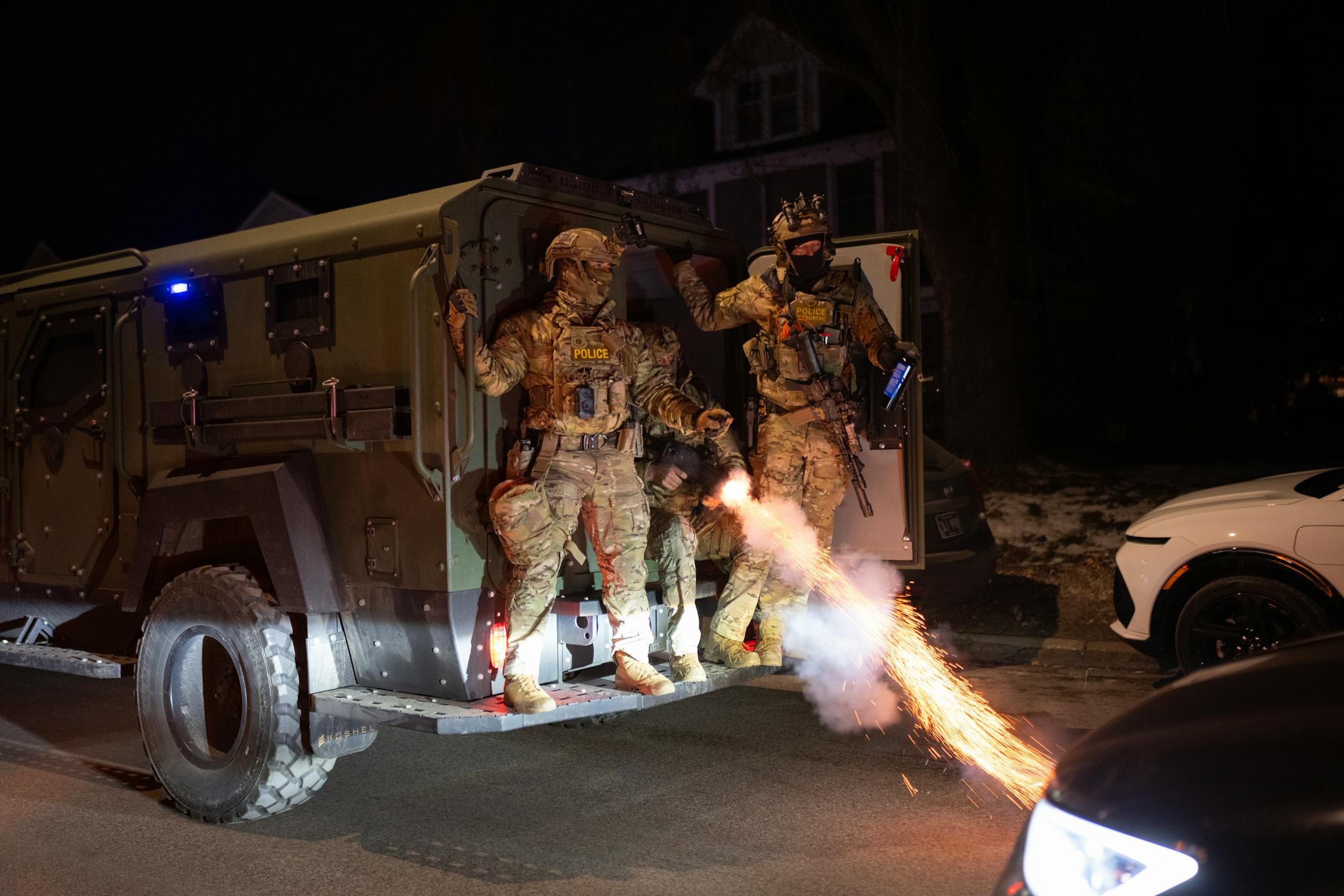
Nine days after a U.S. Immigration and Customs Enforcement agent shot and killed 37-year-old Minneapolis resident Renee Good during a federal immigration operation, the city and state remain in upheaval.
Federal actions have intensified since the Jan. 7 shooting as observers and protesters continue to record and confront agents. Meanwhile, lawsuits challenging the federal surge have been filed, the president has threatened to invoke the Insurrection Act and a group of senior federal prosecutors in Minnesota have resigned.
In the midst of all of this, a second shooting involving a federal agent on Jan. 14 resulted in heightened anxieties and calls for calm.
While the Department of Homeland Security launched Operation Metro Surge in the Twin Cities on Dec. 1, enforcement activity picked up considerably in the last two weeks.
DHS Secretary Kristi Noem said Jan. 15 there are “no plans to pull out of Minnesota,” and U.S. Customs and Border Protection Cmdr. Gregory Bovino said in a recent television interview with WCCO that the operation has no end date, even as legal challenges and political pressure mount.
Here is a recap of the key developments.
What happened the day Renee Good was killed
Good was fatally shot on the morning of Jan. 7 near E. 34th Street and Portland Avenue during what federal officials described as an immigration enforcement operation.
Video captured by bystanders shows ICE agent Jonathan Ross and other federal agents approach Good’s vehicle, which was stopped in a perpendicular position, partially blocking the road. As she attempted to drive away, Ross fired multiple shots into the SUV. Good’s vehicle continued forward before crashing into a parked car.


