
How easy is it to be car-free in the Twin Cities? A new campaign urges more people to try.

Metro Transit is expanding service and opening new routes. Some transit advocates say now is a great time to try to make more trips without a car, a move that helps the environment.

Sahan Journal
October 18, 2025 at 7:00PM
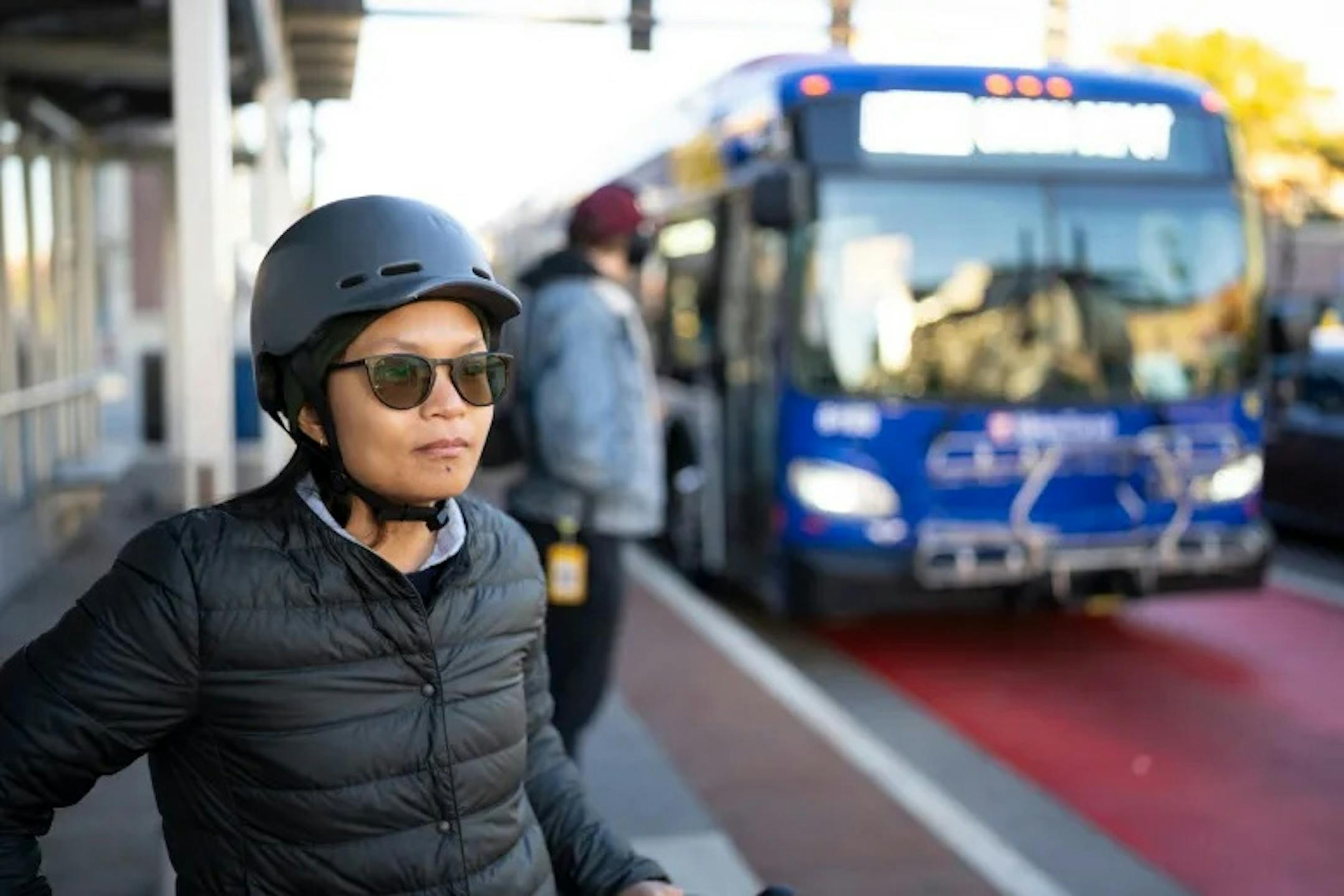
MJ Carpio waits for the B Line bus near Hennepin Avenue and Lake Street during her morning commute on Oct. 8. (Aaron Nesheim/Sahan Journal)

Michael Maceda’s mother told him three years ago that she was done hauling the high school student around town. Not one to be stuck inside, Maceda learned the bus routes that traverse his neighborhood on St. Paul’s East Side. Now, he’s a transit expert and evangelizer who enjoys a car-free lifestyle.

“Wherever the bus and trains go, I go,” Maceda, 17, told Sahan Journal.

The transportation nonprofit, Move Minnesota, wants more people to embrace Maceda’s attitude. The group’s “No Car, No Problem” campaign wants to encourage people who aren’t using transit, walking or biking for transportation to give it a try, Move Minnesota executive director MJ Carpio said.

The group is placing ads on buses, trains and transit stations, and giving away a free e-bike to one rider who submits a photo of themselves with the campaign signage by the end of October.

Getting more Minnesotans out of their cars would be good for the climate. Transportation is the leading source of greenhouse gas emissions in the state, according to a 2025 state report.

The campaign coincides with increased service from Metro Transit, which improved frequency on the most used routes in the system in August, and is on the verge of opening its third new major line this year.

“Now is the time to be promoting this,” Carpio said.

The Twin Cities remains a car-dominated metro, with 84% of all trips occurring by vehicle, according to data from the Metropolitan Council. The COVID-19 pandemic caused a rapid drop-off in transit use, upended traditional travel patterns, and brought a rise in criminal and antisocial behavior on light-rail lines.

Polling conducted by Move Minnesota and research firm Data for Progress shows that people are curious about noncar options, Carpio said. One-fifth of all Minnesotans surveyed by the group said they’d prefer not to drive for transportation, and one-third of respondents in the Twin Cities’ seven-county metro said the same.

But that stated desire doesn’t mean people will just stop hopping in their cars every morning, Carpio said. So the group is hosting events, partnering with venues and boosting its output of newsletters and social media posts in an attempt to get more people to try walking, biking or taking transit when they can.

“We want to get them from that first try to that fifth try,” Carpio said.

People think about using transit for big concerts and games at major venues, or going to downtown Minneapolis and St. Paul, Carpio said. But Twin Cities residents who responded to Move Minnesota said they are unlikely to choose public transit for running errands or going to work.

“The No. 1 thing that gets people to use anything is convenience,” Carpio said.

Many trips will take longer without a car, but people can use time on the bus or train to read, catch up on work, or simply relax without the stress that paying attention to the road can bring, Carpio said. Some trips will be shorter than car rides as some traffic routes can skip traffic, and riders can avoid the stress and cost of parking.

Maceda said he talks with fellow students at Harding High school about riding transit. The more kids are comfortable using the system, the more will be able to participate in after-school activities, he believes. There’s good route and scheduling information built into apps that most people use daily, he said.

Riders can buy tickets for the bus and light rail directly on their phones via the Metro Transit app. Go-To Cards can be purchased at major transit stations and many Twin Cities grocery stores.

Metro Transit ridership has not bounced back from the pandemic and lags behind other systems across the country, the Minnesota Star Tribune reported in August.

But Metro Transit is expanding service. The network has improved frequency on its most used routes, and launched two new lines. The Gold Line connecting downtown St. Paul to Woodbury opened in March; the B Line, which links south Minneapolis to downtown St. Paul via Lake Street and Selby Avenue, debuted in June.

Bus rapid transit has been a bright spot for the system. The buses are larger, come more frequently, have stops farther apart, allow passengers to pay before boarding and increasingly use dedicated bus lanes. A third new bus rapid transit route linking Edina’s Southdale Center and the University of Minnesota, the E Line, will open Dec. 6.

Adding three new lines in a year is an unprecedented step for the system, Metro Transit General Manager Lesley Kandaras told Sahan Journal.

Once the E Line is operational, light rail and bus rapid transit will cover 120 miles with a station within half a mile of 38% of the region’s car-free households, Kandaras said. Metro Transit’s Network Now plan seeks to expand service by 35% and increase the rate of metro area jobs accessible by a 45-minute transit ride by 25% by the end of 2027. The agency is about 30% of the way to that goal right now.

About the partnership

This story comes to you from Sahan Journal, a nonprofit newsroom dedicated to covering Minnesota’s immigrants and communities of color. Sign up for a free newsletter to receive Sahan’s stories in your inbox.

about the writer

about the writer

Andrew Hazzard

More from News & Politics

See More
card image
Carlos Gonzalez/The Minnesota Star Tribune

The Old Muskego Church is on the St. Paul campus of Luther Seminary, which is up for sale.

CORRECTS SOURCE AFSCME and SEIU members cheered Senator Sandy Pappas and Rep. Michael Nelson, co authors of the daycare unionization bill after passage of the bill 68-66, Monday, May 20, 2013.
card image