
Judge rules Whipple detainees must have access to attorneys, private calls

A federal judge appointed by President Donald Trump said the government “failed to plan for the constitutional rights of its civil detainees.”

The Minnesota Star Tribune
February 13, 2026 at 3:01AM
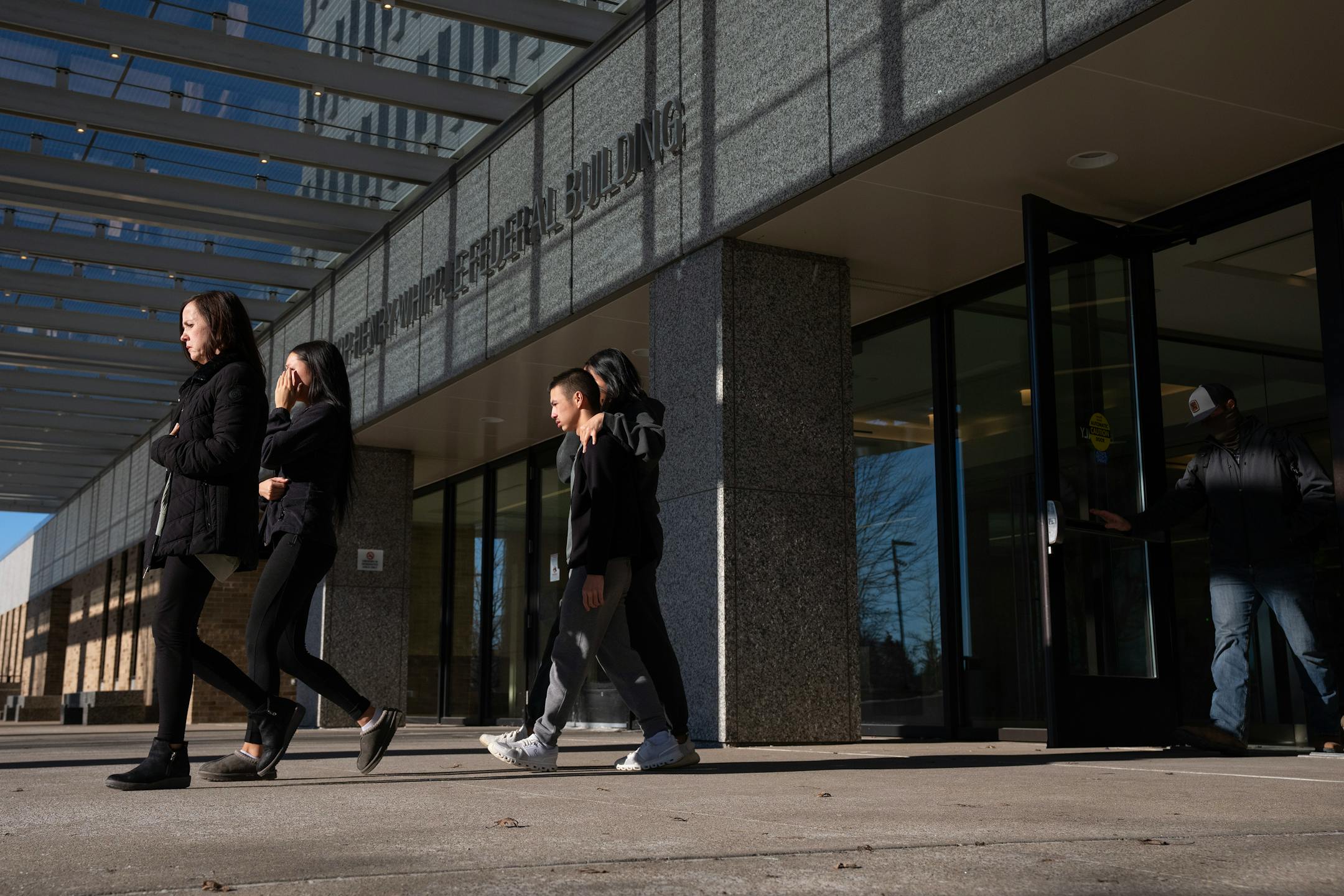
People in tears walk out the Whipple Federal Building as a federal agent exits behind them Feb. 6. (Alex Kormann/The Minnesota Star Tribune)

A federal judge on Feb. 12 ordered the U.S. Department of Homeland Security to improve access to phones and lawyers for detainees at the Whipple Federal Building, while also barring the federal government from transferring detainees out of state during the first 72 hours of detention.

Thursday’s ruling, although temporary, is a major victory for human rights advocates, attorneys and elected officials who had been raising concerns about detainees’ access to basic legal services.

U.S. District Judge Nancy Brasel, who was appointed to the federal bench by President Donald Trump in 2018, ripped the federal government for its lack of consideration for the constitutional rights of detainees brought in by immigration agents.

“It appears that in planning for Operation Metro Surge, the government failed to plan for the constitutional rights of its civil detainees,” Brasel wrote. “The government suggests — with minimal explanation and even less evidence — that doing so would result in ‘chaos.’ The Constitution does not permit the government to arrest thousands of individuals and then disregard their constitutional rights because it would be too challenging to honor those rights.”

When asked for reaction, DHS provided the same statement it had sent the Minnesota Star Tribune previously, before Brasel’s decision, about conditions at Whipple, claiming all detainees receive due process and access to legal counsel.

“No lawbreakers in the history of human civilization have been treated better than illegal aliens in the United States,” the statement said, in part.

Brasel ordered the government to provide detainees with free, private and unmonitored access to telephones, with no time limit unless under certain circumstances. She said all detainees, within one hour of arriving at Whipple, must be given a written notice outlining their access to legal services, which must be made available in five languages.

Attorneys must be given visitation access to clients seven days a week, Brasel ordered. And if defendants are to be transferred outside Minnesota, they must be informed of their destination in advance and given a phone call to tell legal counsel or family.

The class-action lawsuit in the fight over legal access was filed by the Advocates for Human Rights.

“When the government deprives people of liberty, it cannot avoid its constitutional responsibilities because it finds them inconvenient,” said Michele Garnett McKenzie, executive director of the Advocates for Human Rights. “It’s appalling that we required a court ruling to defend this fundamental right.”

Skye Perryman, the president and CEO of Democracy Forward, whose attorneys are arguing the case, said the federal government “has been detaining people in a building never meant for long-term custody, shackling them, secretly transferring them out of state, and blocking access to counsel and oversight in a deliberate effort to evade accountability. Access to a lawyer is not optional; it is a fundamental right in America, and we will continue to fight to protect it.”

The plaintiffs’ attorneys have argued in court that their access to Whipple has been restricted, and detainees were transferred out of state before attorneys had a chance to represent them.

They also argued that phones inside Whipple either could not be used to contact legal counsel or were stationed near federal officials.

Basel wrote that the plaintiffs “have presented substantial, specific evidence detailing these alleged violations of the United States Constitution. In response, defendants offer threadbare declarations generally asserting, without examples or evidence, that ICE provides telephone access to counsel for noncitizens in its custody.”

During a visit to Whipple’s holding facility, federal officials told immigration attorneys that all detainees received an informational handbook. But attorneys wrote in a court filing that no detainees were seen with the book, which they said contained limited information and was only printed in English.

Brasel required the federal government to distribute notice of her order to all personnel within 12 hours. Her orders are temporary, scheduled to remain in effect until after another court hearing Feb. 24 to assess the Department of Homeland Security’s compliance.

about the writer

about the writer

Elliot Hughes

Reporter

Elliot Hughes is a general assignment reporter for the Star Tribune.

See Moreicon

More from News & Politics

See More
card image
Leila Navidi/The Minnesota Star Tribune

Border czar Tom Homan said Thursday a drawdown of the federal immigration operation will happen over the next week.

card image
card image