
Fairview deal fallout poses a defining test for U President Rebecca Cunningham

Letters from Fairview and a major donor intensify questions about her leadership and the future of the University of Minnesota’s health system.

The Minnesota Star Tribune
November 21, 2025 at 4:28PM
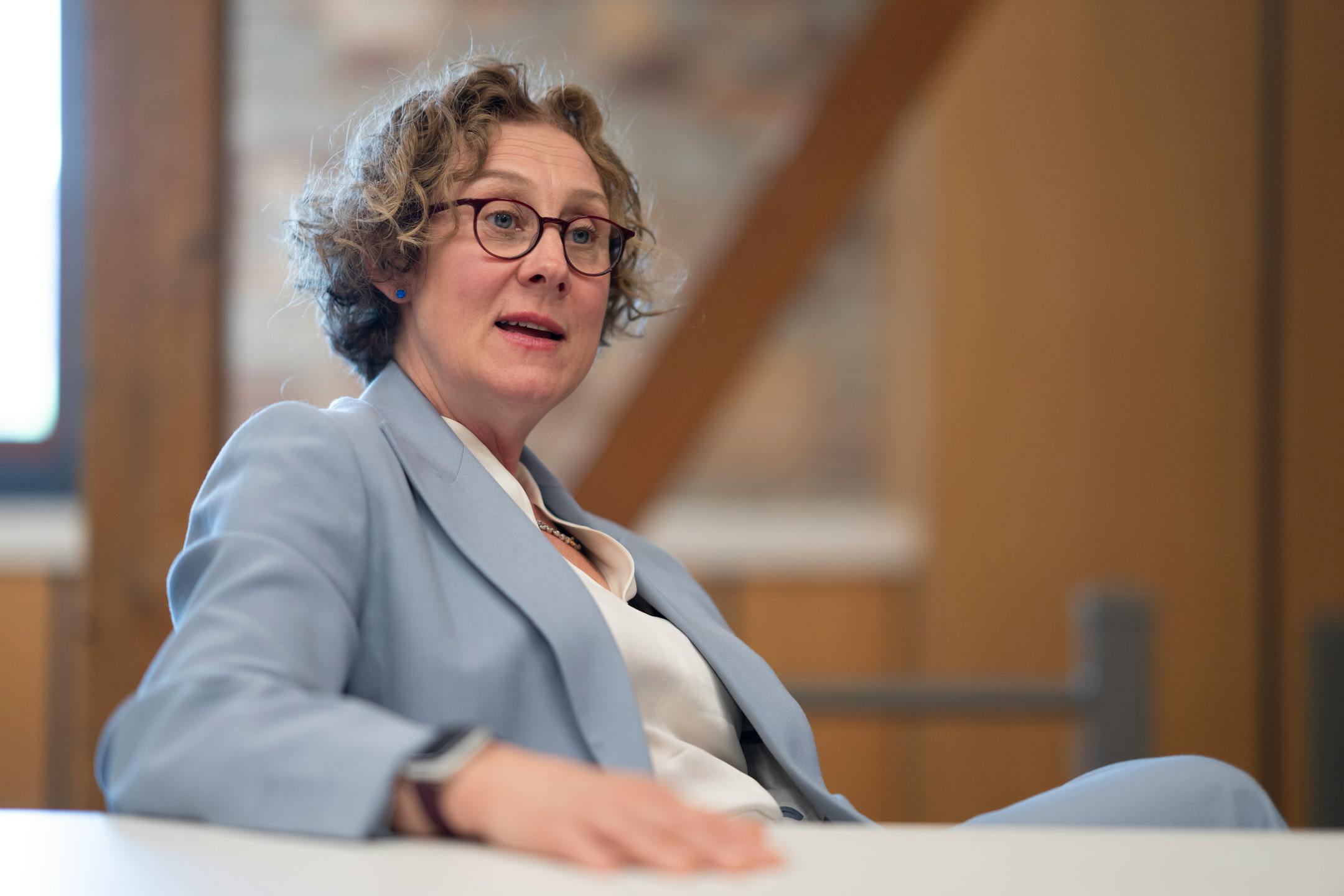
University of Minnesota President Rebecca Cunningham discusses her new job just days before she officially started the presidency July 1, 2024. (Jeff Wheeler/The Minnesota Star Tribune)

The new deal between Fairview Health Services and University of Minnesota Physicians, the doctors’ group, has erupted into public turmoil — thrusting President Dr. Rebecca Cunningham into one of the most serious trials of her year-old tenure as the university’s top leader.

U officials blasted the doctors’ agreement with Fairview as a “hostile takeover” that doesn’t serve the state.

For Cunningham, the Fairview standoff represents both a defining test and potential breaking point. The physician now faces growing concern from some doctors, donors and one of the state’s largest hospital systems over her handling of the university’s medical system.

While the U’s regents and others continue to support Cunningham’s stance, her effort to assert control over a complex, politically sensitive health partnership has also exposed fractures inside her administration about her leadership style.

On Thursday, Fairview Health Services chief executive James Hereford sent Cunningham a letter obtained by the Minnesota Star Tribune that defended his system’s partnership with the University of Minnesota Physicians (UMP) and accused U leadership of undermining the stability of academic medicine.

He called the agreement between UMP and Fairview “a good deal” for all parties, including the U, and added that nearly 200 physicians have left UMP since 2024, “far outpacing historical norms.”

Cunningham, who didn’t respond to requests for comment, wrote to faculty members Thursday in a letter obtained by the Star Tribune that the U has a “practical alternative model,” but didn’t include details. She also acknowledged growing unease about how the dispute has unfolded, saying she “advocated heavily to not have this deal be shared publicly.”

The general feeling among attendees at a Faculty Senate committee meeting Thursday was that the failure to come to a deal is partly an indictment of Cunningham’s leadership. Jerry Cohen, the vice chair of the University and Faculty Senate, said Medical School faculty members are disappointed and their greatest fear is no agreement at all.

Some U faculty members said Cunningham was propelled into a difficult situation and has handled things well.

Rep. Marion Rarick, R-Maple Lake, the co-chair of the House’s higher education finance and policy committee, said Cunningham is the first U president since 2015 who has tried to build a relationship with the Legislature and her personally.

“As far as her job performance, I’m still trying to figure out where the truth lies,” Rarick said, adding that she hasn’t heard Cunningham’s side or seen the agreement yet.

Rift between doctors and U widens

Before she was selected, the Board of Regents touted that Cunningham could help the U determine the future of its medical programs — the same programs now at the center of a bitter, high-stakes fight.

The U administration this week dismissed multiple leaders of the doctors’ group after they struck the 10-year partnership with Fairview worth as much as $100 million annually to support physician training and academic health programs. People familiar with the dismissals described them as retaliatory, reflecting widening rifts between Cunningham’s central administration and the doctors who both teach medical students and provide care at M Health Fairview hospitals and clinics.

A U statement said the leadership changes were made under a Board of Regents directive.

Fairview and UMP insist the pact is binding and essential to maintain stability for patients and medical education. Cunningham and the Board of Regents argue the deal was negotiated in “secret” and could significantly shift authority and funding away from the university.

Cunningham’s approach has divided some in the university community. She’s been described by some professors as having an “authoritarian” leadership style that has strained relationships with faculty and staff. For instance, her support for a controversial resolution limiting institutional speech earlier this year sparked faculty protests.

Dr. Demetris Yannopoulos, a longtime professor of medicine, said Cunningham appeared to be pursuing a model in which the university would centralize oversight of clinical operations under her office — a structure similar to the university-run health system she worked with at the University of Michigan.

“You’re asking to assume responsibility for managing health care systems that, collectively, operate at a scale far larger than the university and in a far more competitive marketplace,” he said. “It felt at times as though the unique realities of Minnesota’s health systems — and the insights of longtime UMP physicians who work in this landscape every day — were not fully incorporated into the planning."

But Richard Painter, a U law school professor, called Cunningham an “enormous improvement” over former U leadership, praising the institutional speech resolution and efforts to make the campus safer. She knows what’s needed for a high-quality medical school, he said.

Calls to mend the public feud

The crisis has now spread beyond campus. Gov. Tim Walz and Attorney General Keith Ellison are monitoring negotiations, and state officials have privately urged both sides to preserve patient care and the university’s public mission.

The mounting turmoil has begun to alarm some important U benefactors.

In a letter Wednesday to Board of Regents Chair Douglas Huebsch and copied to Cunningham and others, including Ellison, Minnesota Masonic Charities CEO John Schwietz expressed “deep concern” over the tone and conduct of the ongoing negotiations with Fairview and UMP.

Masonic Charities contributes about $7 million annually to the U and has invested nearly $200 million over the past seven decades. The organization urged all parties to return to the negotiation table. Schwietz said the foundation’s continued partnership “depends on our confidence in the University’s leadership,” and that confidence “has waned significantly.”

He warned that the “public feud is diminishing trust and raising questions about the stability and governance of the University’s health enterprise.”

Hereford, the Fairview CEO, said in his letter that the 10-year agreement — finalized under Ellison’s direction — “brings long-needed stability to the faculty practice and to the patients who count on us.”

The health care provider reaffirmed that all future talks must take place within the attorney general’s strategic facilitation process, from which Cunningham recently withdrew, saying “we will not participate in separate or parallel tracks.”

Hereford warned that Cunningham’s recent actions, including the dismissal of senior UMP leaders and reported ultimatums to UMP leaders about their faculty positions, had “created understandable concern about the stability of the environment in which these discussions would occur.” He wrote, “the University administration’s actions are undermining the very stability of the faculty’s practices that we and M Physicians are attempting to stabilize.”

The U’s next steps

Some faculty members say the confusion surrounding the Fairview dispute has been compounded by misinformation and mixed messages from all sides.

“It’s very complicated,” said one U faculty member who asked not to be named to speak candidly. “There’s a lot of misinterpretation of what the president is doing and what Fairview and UMP are doing.”

The faculty member said they believe Cunningham has support on campus and from the Board of Regents, but acknowledged growing frustration. “Do I say President Cunningham is secure in her position? My opinion, yes,” for as long as the regents support her, they said.

Many decisions made this year have exclusively included Cunningham and the three regents in leadership roles — Huebsch, Ruth Johnson and Penny Wheeler — with the other regents included only once decisions are nearly complete, said a source familiar with the regents’ process.

Huebsch, Johnson and Wheeler reaffirmed in a statement Thursday their support of Cunningham and said they hoped all parties would return to negotiations. In June, regents gave Cunningham a 4% raise and a glowing performance review, calling her leadership characterized by “vision and decisiveness.”

The stakes of the Fairview deal extend far beyond campus politics. If the partnership collapses, it could disrupt medical education, research funding, and patient care for more than a million Minnesotans. And for Cunningham, the doctor who once promised to lead the university with clarity and compassion, the question now is whether she can stabilize the very system she vowed to heal.

Faculty Senate members are working on drafting a resolution to urge Cunningham to come to the negotiation table to make a deal, the faculty member said.

The U has weathered many conflicts and controversies lately, said Michael Gallope, a faculty senator and professor, and the situation is “unsustainable” for a learning environment: “Our stakeholders need to cool off and lead by example.”

A special Board of Regents meeting was scheduled for noon Friday, with the lone agenda item listed as “Clinical Partnership Options and Next Steps,” but the meeting was canceled Friday morning.

about the writers

about the writers

Emmy Martin

Business Intern

Emmy Martin is a business intern at the Minnesota Star Tribune.

See Moreicon

Erin Adler

Reporter

Erin Adler is a news reporter covering higher education in Minnesota. She previously covered south metro suburban news, K-12 education and Carver County for the Minnesota Star Tribune.

See Moreicon

More from News & Politics

See More
card image
Aaron Lavinsky/The Minnesota Star Tribune

Carley Frank turned a school project into a way to honor her brother and sister, helping other students for years to come and boosting awareness about mental health.

card image
unlandscaped noise walls in Golden Valley. handout