Fairview access at risk for 33,000 patients in UnitedHealthcare Medicare Advantage

The contract dispute adds to uncertainty in a market where seniors already face disruption

The Minnesota Star Tribune
October 22, 2025 at 4:43PM
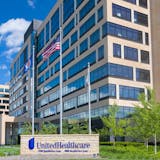
The east campus of the University of Minnesota Medical Center is currently part of the M Health Fairview medical system. Fairview is informing patients who have UnitedHealthcare Medicare Advantage insurance that they may not have access to M Health Fairview facilities and doctors next year. (Provided/M Health Fairview)

Fairview Health Services is alerting tens of thousands of patients with UnitedHealthcare Medicare Advantage insurance that they might lose in-network access to doctors and hospitals at one of Minnesota’s largest health care providers.

The dispute touches on allegations that UnitedHealthcare has high rates of insurance payment denials.

It’s the second announcement in a week’s time of a major 2026 network disruption, or the potential for one, following news that Mayo Clinic in Rochester would go out-of-network for most Medicare Advantage plans from UnitedHealthcare and Humana next year.

Fairview, which runs M Health Fairview, and UnitedHealthcare officials confirmed this week to the Minnesota Star Tribune an impasse over new contract terms that would most directly affect about 33,000 active patients at the health system. Those patients have coverage from the Eden Prairie-based insurer’s Medicare Advantage program, a private alternative to the government-run Medicare.

A new agreement could still be signed for 2026. Without one, patients with UnitedHealthcare Medicare Advantage insurance would not be able to schedule new appointments at M Health Fairview facilities on or after Jan. 1.

The disruptions in the Medicare market across Minnesota come as federal officials are making it harder for insurers to get extra payments in Advantage plans and cost pressures build across all types of health insurance. The dispute also echoes a contract impasse last year, when HealthPartners threatened to leave the Medicare Advantage network at UnitedHealthcare amid accusations of wrongful payment denials and delays. It ultimately struck a deal that preserved access for about 30,000 patients.

“We are asking UnitedHealthcare to meet us at a fair, sustainable agreement that prioritizes seniors’ access and timely care over administrative hurdles and Wall Street pressures,” Fairview said in a statement Wednesday.

UnitedHealthcare says it agreed to terms this fall that would maintain network access to M Health Fairview facilities for its Medicare Advantage members through 2026, and presented the contract to the health system Oct. 15.

Fairview declined to sign the contract, the insurer says, and instead took time to “make false claims and use their patients as a bargaining chip,” Craig Stillman, CEO of UnitedHealthcare’s Medicare division, said in a statement.

“We ask Fairview to sign the contract our organizations agreed upon, so that Minnesotans can receive the care they deserve,” Stillman said.

Minneapolis-based Fairview is a nonprofit that owns more than 80 clinics as well as nine hospitals, including the University of Minnesota Medical Center in Minneapolis. It jointly markets services with the U under the brand M Health Fairview — a partnership in question after 2026.

UnitedHealthcare is the insurance business at UnitedHealth Group, a for-profit, publicly traded company that runs that nation’s largest health insurer and a variety of other health care businesses. Company executives have said they intend to stop offering Medicare Advantage plans affecting 600,000 people nationwide.

Contract disputes periodically threaten access to specific doctors or hospitals. They are often settled before patients experience a disruption.

Last year, UnitedHealthcare settled its dispute with HealthPartners, as well as a separate impasse with Duluth-based Essentia Health, without any effect on patients. The agreements, however, did not come until the annual shopping season for Medicare health plans had started, creating uncertainty as patients considered switching plans.

Meanwhile, there were no resolutions last year for contract disputes between Kentucky-based Humana and five nonprofit health systems with Minnesota operations, which are all out of network.

The consequence of a health care provider being out of network can vary. In some cases, patients can still schedule appointments so long as they pay more out of pocket, whereas others — like the situation with Fairview and UnitedHealthcare — would prevent patients from scheduling services altogether.

Fairview would continue caring for patients in hospital emergency rooms regardless of their insurance or ability to pay. The health system says negotiations remain active, but the lack of a new contract would affect M Health Fairview patients, providers and facilities across the Twin Cities metro as well as its Ebenezer Senior Living division and operations in northern Minnesota.

Fairview says it will be in-network next year for several Medicare Advantage plans, including those from Blue Cross and Blue Shield of Minnesota, HealthPartners and Medica.

“With Medicare open enrollment under way, seniors should consider the possibility that M Health Fairview may not be in UnitedHealthcare’s network as of Jan. 1,” the health system said in a statement. “We know that represents a hassle and hardship.”

The Medicare Advantage contract disputes last year spotlighted the issue of payment delays and denials by UnitedHealthcare and Humana — accusations the insurers denied.

In response to questions, Fairview is now reprising the dispute in detail, saying UnitedHealthcare has the highest final denial rate among all major Medicare Advantage insurers in Minnesota for the health system’s claims seeking payment for hospital services.

For physician claims, the health system says the insurer has the highest initial denial rate and a middle-of-the-pack final denial rate, which means M Health Fairview must submit a higher volume of appeals to secure payments owed under contract.

The health system says that between high denial rates and low contracted reimbursement levels, UnitedHealthcare pays M Health Fairview the smallest percentage of Medicare rates among all major Minnesota insurers.

And M Health Fairview maintains that UnitedHealthcare’s Medicare Advantage plans have driven a 33% increase in prior authorization requests in 2025 compared with 2024, after adjusting for patient volume. These administrative hurdles add significant costs, Fairview says, while diverting clinicians from patient care.

Between October 2024 and September 2025, M Health Fairview employees made 9,596 calls and spent 1,566 hours on the phone with UnitedHealthcare to resolve claims issues, according to the health system. It takes twice as many internal follow-up actions to get paid on an average UnitedHealthcare denied claim, Fairview says, compared with its average across all health insurers.

UnitedHealthcare did not respond directly to these accusations, but defended its record on claim denials and prior authorization.

The insurer says it approves and pays 90% of claims shortly after they’re submitted. The remaining 10% go through an additional review process, primarily to check things like whether the claims are eligible for payment or require more documentation.

After these initial reviews are completed, UnitedHealthcare’s claims approval rate is 98%, the insurer says, for claims for eligible members, when submitted in a timely manner with complete information and after duplicate claims are removed.

UnitedHealthcare says prior authorization for services is rarely required. When subscribers seek care, more than 99% of the time they either don’t need pre-approval or it’s provided quickly, the insurer says.

The insurer in 2023 eliminated requirements for nearly 20% of its prior authorization volume and says it now has a program to exempt certain health care providers from requirements.

about the writer

about the writer

Christopher Snowbeck

Reporter

Christopher Snowbeck covers health insurers, including Minnetonka-based UnitedHealth Group, and the business of running hospitals and clinics.

See Moreicon

More from Health Care

See More
Nancy Ingham gives newborn Sophia Rash a hepatitis B shot several hours after she was born, Jan. 17, 2006.
Renée Jones Schneider/The Minnesota Star Tribune

A federal vaccine advisory committee voted on Friday to end the longstanding recommendation that all U.S. babies get the hepatitis B vaccine on the day they're born.

card image
Nancy Ingham gives newborn Sophia Rash a hepatitis B shot several hours after she was born, Jan. 17, 2006.