
Craig-Flanagan U.S. Senate race reflects larger fight over Democrats’ future

The race for the DFL nomination between Lt. Gov. Peggy Flanagan and Rep. Angie Craig has become a proxy for the bigger battle playing out between moderate and progressive wings of the party.

The Minnesota Star Tribune
September 5, 2025 at 7:02PM
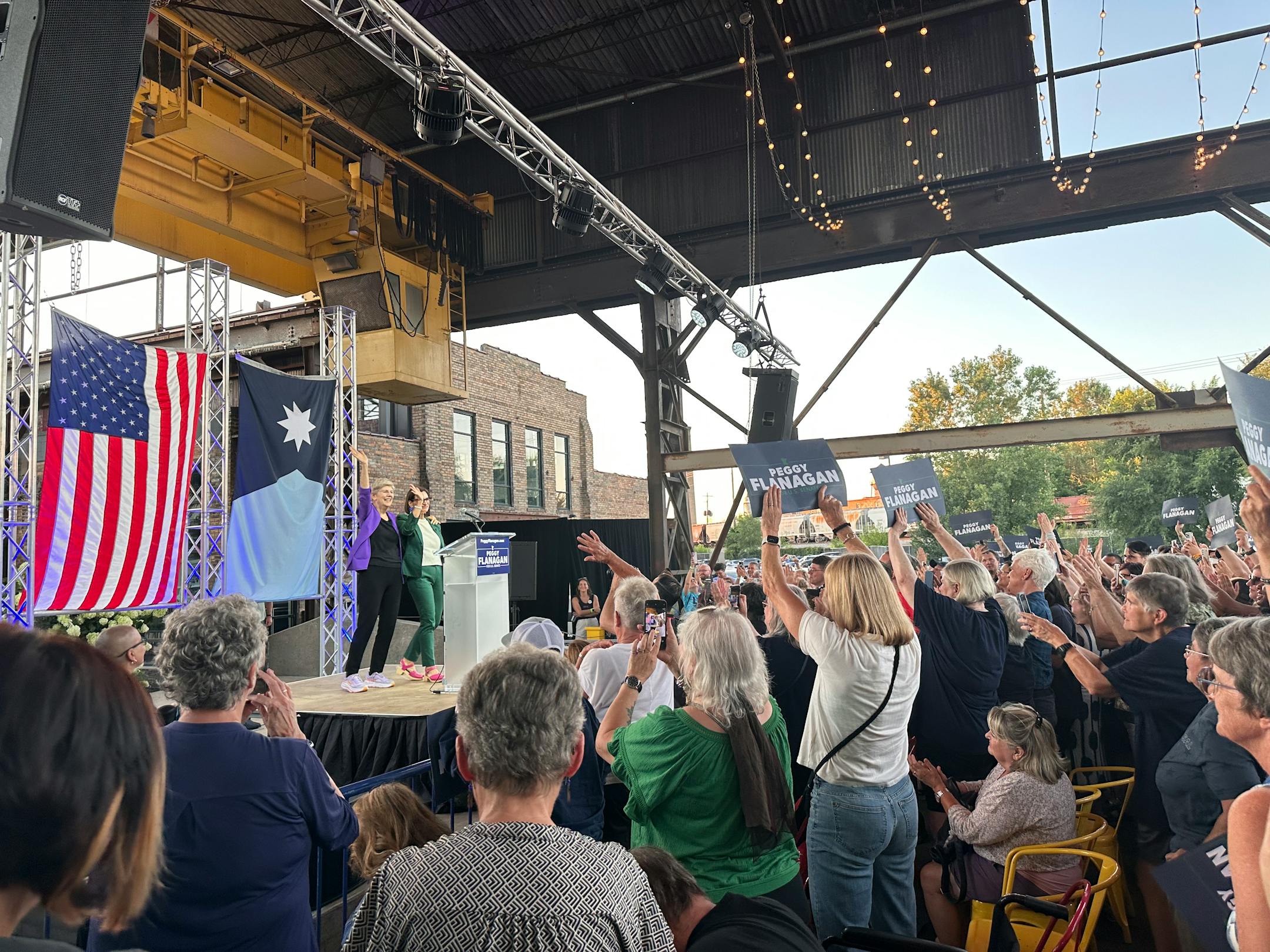
At a packed northeast Minneapolis brewery, Lt. Gov. Peggy Flanagan, right, rallied a crowd of supporters alongside prominent progressive U.S. Sen. Elizabeth Warren. (Sydney Kashiwagi/The Minnesota Star Tribune)

At a packed northeast Minneapolis brewery, Lt. Gov. Peggy Flanagan rallied a crowd of supporters alongside prominent progressive U.S. Sen. Elizabeth Warren, promising to give Warren “backup” in Washington if she’s elected to the U.S. Senate.

“We have a lot of work to do to make sure that we are sending her reinforcements to fight for working people in this country,” Flanagan said to a cheering crowd.

The next day, Rep. Angie Craig made her way through the Minnesota State Fair, stopping at union row to shake the hands of some of the 14 unions that have endorsed her in the Senate race before moving on to the Minnesota Republican Party’s booth with a “peace offering”: a bucket of freshly baked cookies.

“Tyler Kistner in here again? Tell him I said hi,” Craig joked to fairgoers in the Republican booth, referring to the GOP opponent she bested in her last two congressional races.

Flanagan and Craig have managed to lock down the field in what’s become a two-way race for the DFL nomination to replace retiring U.S. Sen. Tina Smith, whose decision will create a rare open seat in the U.S. Senate. As they line up endorsements and fine-tune their message to voters, the race has become a proxy for the bigger battle playing out among Democrats: Should the party shift in a more progressive direction, or should it try to moderate as they fight to gain back ground in Washington?

“I think because of the broader national questions that Democratic Party leaders are asking themselves, that’s how this race will be viewed because it’s one of the only ones in the country that will have such a clear distinction in résumés between the two candidates,” said former DFL House staffer and campaign operative Todd Rapp.

Republicans have not won a statewide office since 2006, and with no prominent GOP candidate in the race, it’s a seat that many see as a Democrat’s to lose. The fight for the DFL nomination could stretch into next August, with Craig saying she’s planning to move on to the DFL primary if she doesn’t get the backing of party activists.
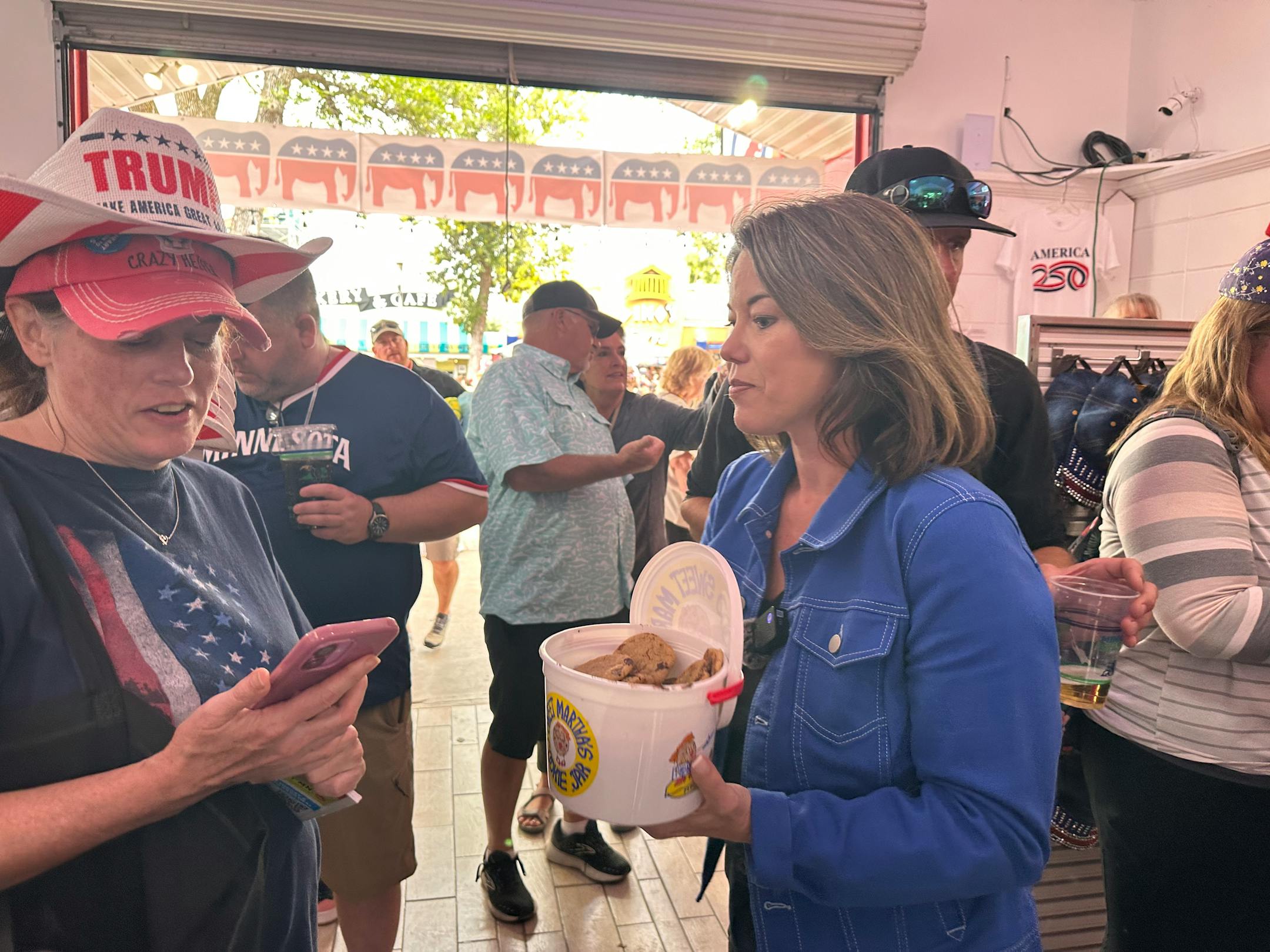
Rep. Angie Craig visited the Minnesota Republican Party’s booth at the State Fair with a “peace offering”— a bucket of fresh Sweet Martha's cookies. (Sydney Kashiwagi/The Minnesota Star Tribune)

Pushing back on labels

While both candidates push back on moderate and progressive labels in the race, they’ve spent years building their political identities while occupying some of the most high-profile offices in Minnesota.

Flanagan, a former state legislator, cut her teeth helping to train other Democrats to run for office at the progressive advocacy group Wellstone Action, the organization named after late Sen. Paul Wellstone, who held the seat she’s now running for.

Considered a progressive activist before she became lieutenant governor, Flanagan co-chaired the campaign to raise the state’s minimum wage, a policy she still touts on the campaign trail today. She also pushed for paid family and medical leave and was a supporter of the state’s trans refuge bill, a law that protects transgender people and their families seeking gender-affirming care in the state.

She won statewide twice as the running mate to Gov. Tim Walz. When she was courted to join his ticket in 2018, she was seen as someone who could help bolster the more moderate Walz’s support among the party’s activist base.

Craig represents Minnesota’s most competitive congressional district, the Second, which includes much of the Twin Cities’ southern suburbs.

In previous races, she’s been endorsed by law enforcement groups and has set herself apart as a moderate in Congress, especially on issues like immigration and public safety. She was the only Democrat in the Minnesota congressional delegation to vote for the Laken Riley Act, a bill that gives the green light to law enforcement to detain and possibly deport illegal immigrants arrested for nonviolent crimes. She also led a group of Democrats in putting pressure on the Biden administration to take executive action at the southern border.

She thinks her ability to win voters across the political spectrum will be the path to winning the Senate race, similar to the model established by Minnesota U.S. Sen. Amy Klobuchar.

“Republicans have spent tens of millions of dollars trying to take me out, and I am overperforming the top of the ticket in a way that only one other Democrat is doing in the state of Minnesota, and that’s Sen. Klobuchar,” Craig said.

Flanagan also acknowledges the importance of connecting with Republicans and independent voters in the race. She’s pitching herself as a fighter who’s not part of the Washington establishment.

“Democrats, Republicans, independents, folks who don’t identify with any political party, are really hungry for change and for leaders who are serious about taking on the status quo in Washington, D.C.,” Flanagan said. “I am not of Washington, I am of Minnesota. And I think that is what’s appealing to people in this moment.”

Flanagan has the support of Warren and other progressive officeholders, including Attorney General Keith Ellison and state Sen. Erin Maye Quade, DFL-Apple Valley. Craig has been endorsed by former House Speaker Nancy Pelosi and House Minority Leader Hakeem Jeffries, among others. Dave Wellstone, the son of the late senator, has also endorsed Craig.

In other ways, they have similar backgrounds. Flanagan and Craig were both raised by single mothers and relied on food assistance to get by. In their campaigns for the Senate, both candidates are telling voters the debate over government assistance is personal to them.

They would also both represent firsts for Minnesota and in the U.S. Senate if they win: Craig as the first LGBTQ senator from Minnesota if she is elected, and Flanagan as the first Native American woman in the U.S. Senate if she wins.

Both candidates also push back on the idea that they’re running as moderate or progressive candidates. “I’m running this race for the people of Minnesota, and that’s really what I’m focused on,” Flanagan said.

Craig said the “labels that people put on us are the old way of thinking about politics.”

“I think voters are thinking about who is fighting for us, and who are you fighting.”

Endorsement will test party’s path

The Senate race is heating up as Democrats nationally are trying to figure out the best approach to win back voters after losing the White House and control of Congress in the 2024 election.

The moment has put a spotlight on the tug-of-war between the more liberal and moderate wings of the party, including in Minnesota, where democratic socialist state Sen. Omar Fateh won the party’s endorsement in July over Mayor Jacob Frey. The state DFL rescinded Fateh’s endorsement in the race last month, citing failures in the voting process, a move that angered the left flank of the DFL.

For now, both Senate candidates are staying out of the fight but agree that the party needs to build its “big tent.” “We can’t go chasing people out of our party,” Craig said.

Former DFL Chair Mike Erlandson thinks there’s still a long time to go for the candidates to make their case to voters, so it may be too early to label their politics.

“In this campaign, you have two very different candidates who have a very long runway before any of this gets serious,” he said.

To make it to the general election, the two candidates, who have so far kept the race civil, will have to battle for the coveted DFL endorsement in the race. The backing gives a candidate a boost and access to party resources. The endorsement process has often favored more progressive candidates, though they don’t always prevail in a primary.

Craig said she will try to win the DFL’s endorsement, but if she fails, will move on to the DFL primary next August. “I believe that every Minnesota DFLer should get a say in who they put up against the Republicans,” Craig said. “The seat hasn’t been open in nearly 20 years.”

Flanagan, meanwhile, is confident she’ll win the DFL endorsement. But if she loses it, she isn’t sure yet what she’ll do next. “We’ll figure that out when the time comes.”

about the writer

about the writer

Sydney Kashiwagi

Washington Correspondent

Sydney Kashiwagi is a Washington Correspondent for the Star Tribune.

See Moreicon

More from Politics

See More
card image
Carlos Gonzalez/The Minnesota Star Tribune

Those charged Thursday reportedly scammed more than $11.6 million from housing stabilization and autism services programs.

card image