

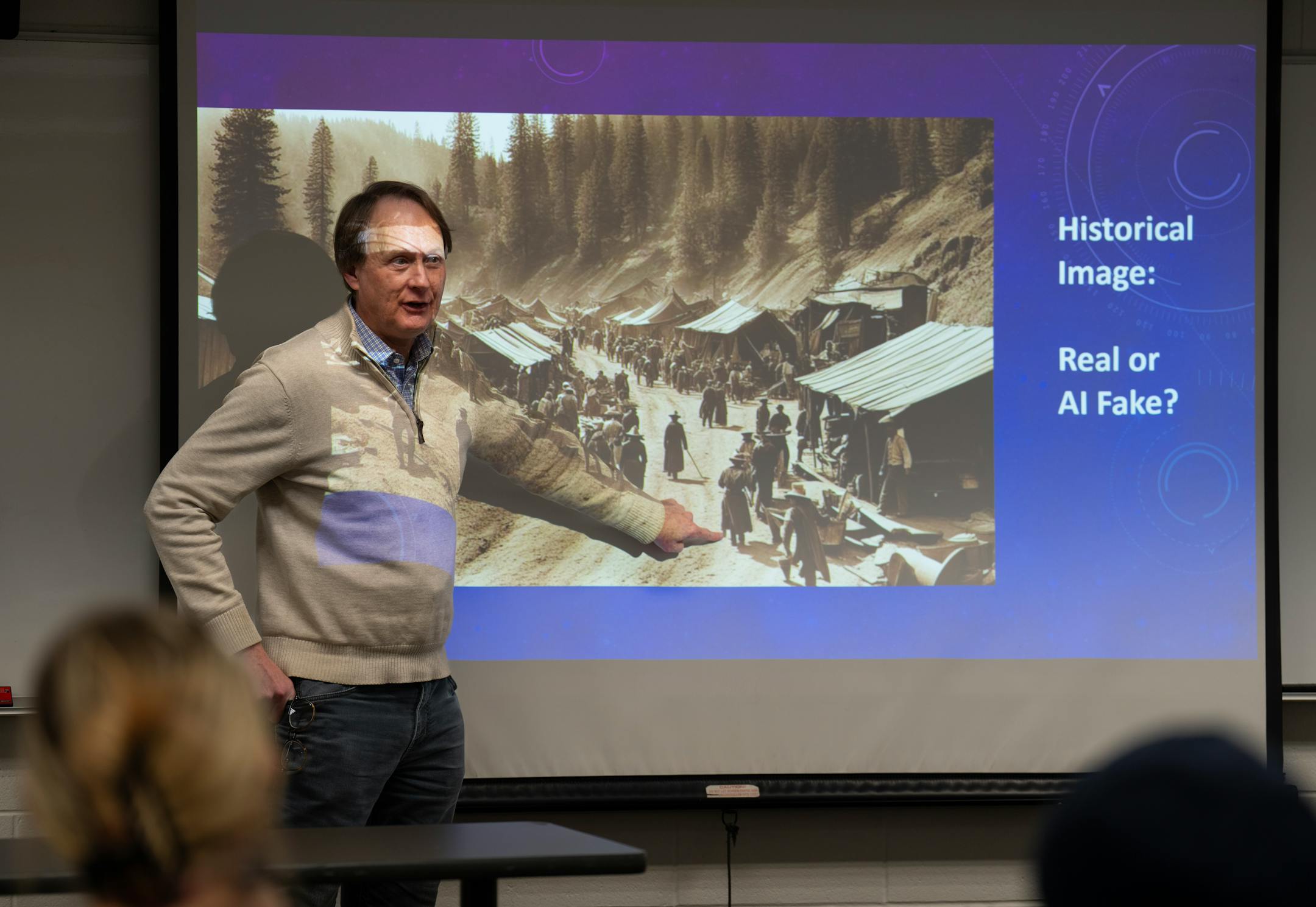
Artificial intelligence is dramatically changing higher education as professors adapt to its use, despite fears and hand-wringing that college students are using it as a cheating free-for-all.
As higher education wrestles with unprecedented challenges— including shrinking budgets due to federal cuts and fundamental doubts about its value — AI’s growth is prompting instructors to have frank classroom discussions about key skills students must master before they graduate and the ethical use of tech tools.
While professors and students at Minnesota colleges and universities have varying perspectives on AI’s usefulness, many faculty are rethinking their assignments and tests. Skeptical professors are going old-school with physical test booklets and oral exams, while early adopters are boosting students’ AI use through creative projects that were impossible four years ago.
“The AI train has really sort of left the station in academia,” said Dal Liddle, an Augsburg University English professor. “These last few months are when students are really kind of jumping into it with both feet.”
The AI discussion largely began three years ago with the debut of ChatGPT, a free, online chatbot capable of realistic conversation with users. Other AI models and systems soon followed and AI use has now gone mainstream.
Now, every professor likely is pondering when and how to use AI with students, said Galin Jones, director of the University of Minnesota’s School of Statistics and chair of the Data Science and AI Hub.
“This is a significant issue that most faculty worry about: Are the students giving up their agency?” Jones said. “Not taking responsibility for learning and ... just outsourcing it to the AI agent?”
Many professors said schools and departments have mostly left AI decisions, including policies, up to them, and some said it’s led to a “wild west” environment. But projects to address those concerns and more are underway at the U and the University of St. Thomas.


