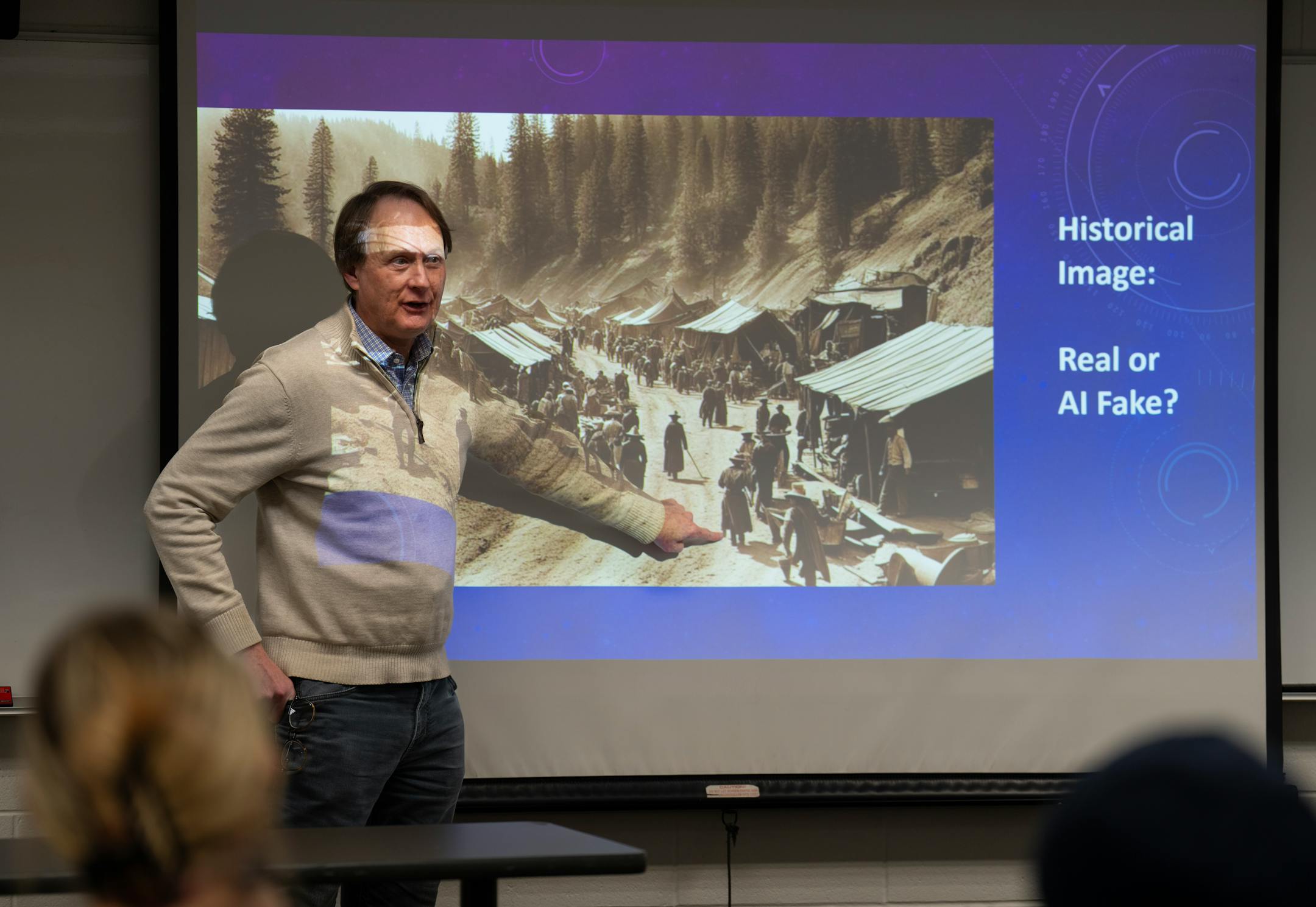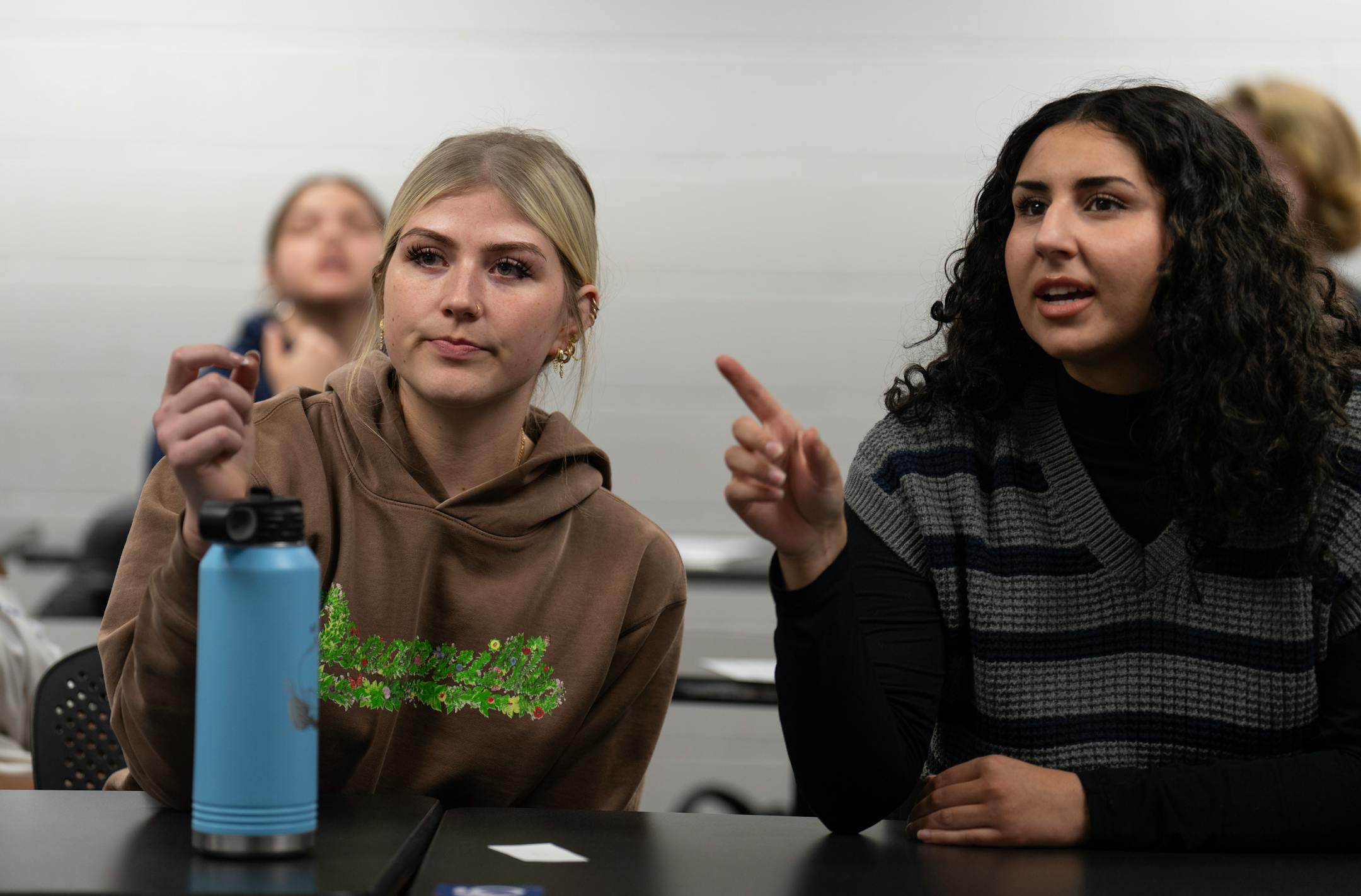
The college students gazed intently at the screen, trying to discern whether the photo was real or created by artificial intelligence.
“It’s almost like a smudged painting,” said Quincy Shepherd, a junior. “There’s just something wrong with it.”
The photo was, in fact, real. Luckily, the Augsburg University students were better at identifying videos and photos that were fake, picking up on clues like people staring at nothing or a woman’s strange gait.
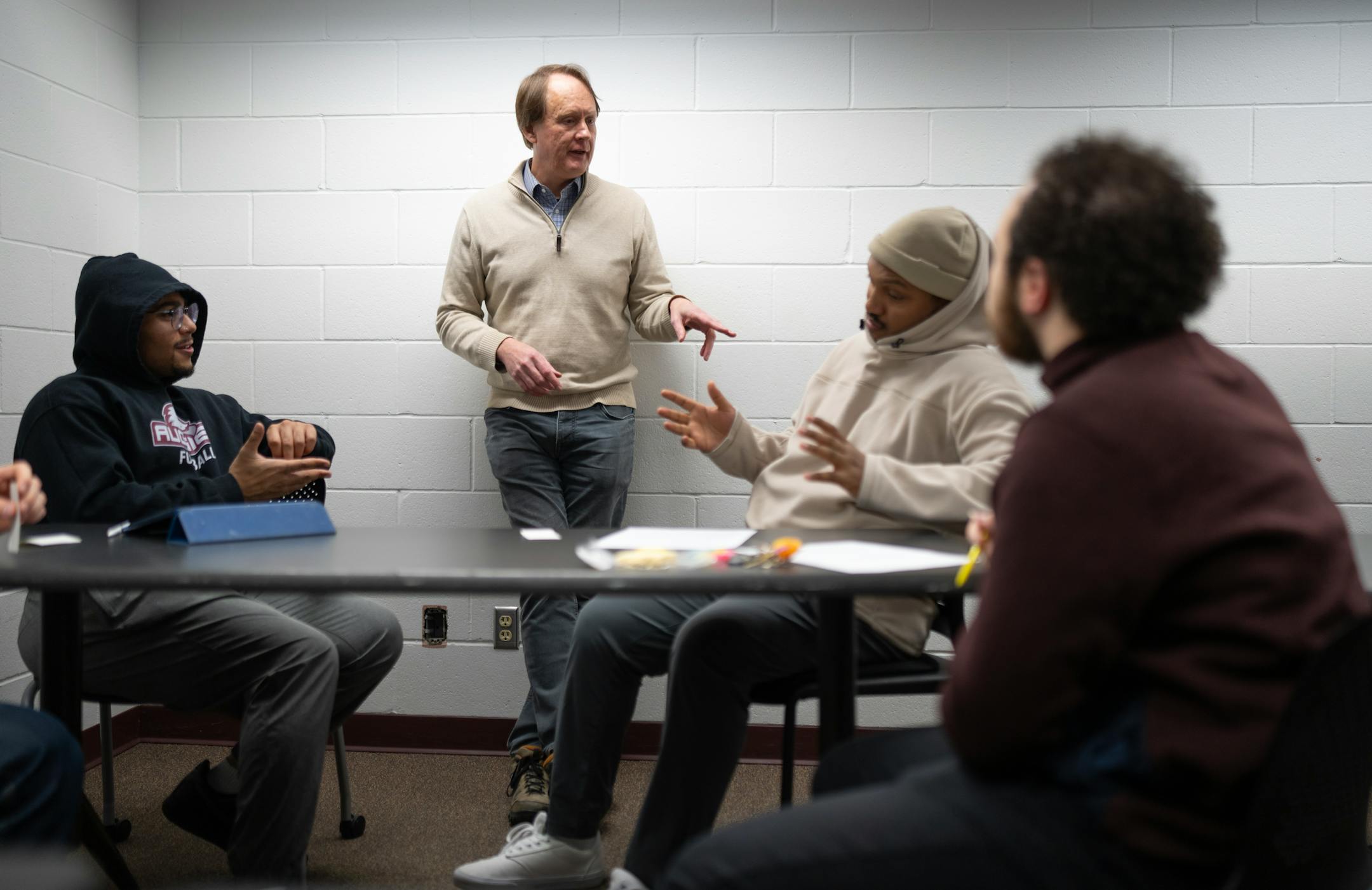
The class, called “Defense Against the Dark Arts,” is among a handful of similar offerings to pop up across Minnesota, aiming to help students recognize and protect themselves from disinformation and misinformation, which many experts say are increasingly powerful in our digital age. Some have provocative titles — the University of Minnesota is offering a “Calling Bullshit: How to Live in a Factual World” class next semester, while Carleton College students can enroll in “Bullshit: How to Spot it and Protect Yourself” this spring.
“Nowadays we are just inundated, particularly with social media, with just facts, or things that might be facts, flying at us from all directions,” said Rob Warren, a U sociology professor teaching a class on spotting disinformation next semester. “People are having a harder and harder time making sense of what’s coming at them.”
Several professors cited the rising impact of AI and the speech of some prominent politicians as reasons the classes are particularly relevant now, though some have been taught for five years or more.
A popular course at the University of Washington provides a blueprint for some instructors to build on; Warren used it as a starting point. Having an expletive in the name gets students’ attention and changes the dynamic, signaling that the class won’t be stuffy and abstract, he said.
“I want to focus on things that actually matter in their lives, that ... we all face,” said Warren. “You know, do I believe that news story, or do I believe my friend when they said, ‘You should take this herbal supplement?’”