
Advertisement

Target pays $110M to end lease in downtown Minneapolis’ City Center, which is now for sale

The retailer vacated the building in 2021, but its lease was supposed to run through 2031.

The Minnesota Star Tribune
February 26, 2026 at 12:01PM
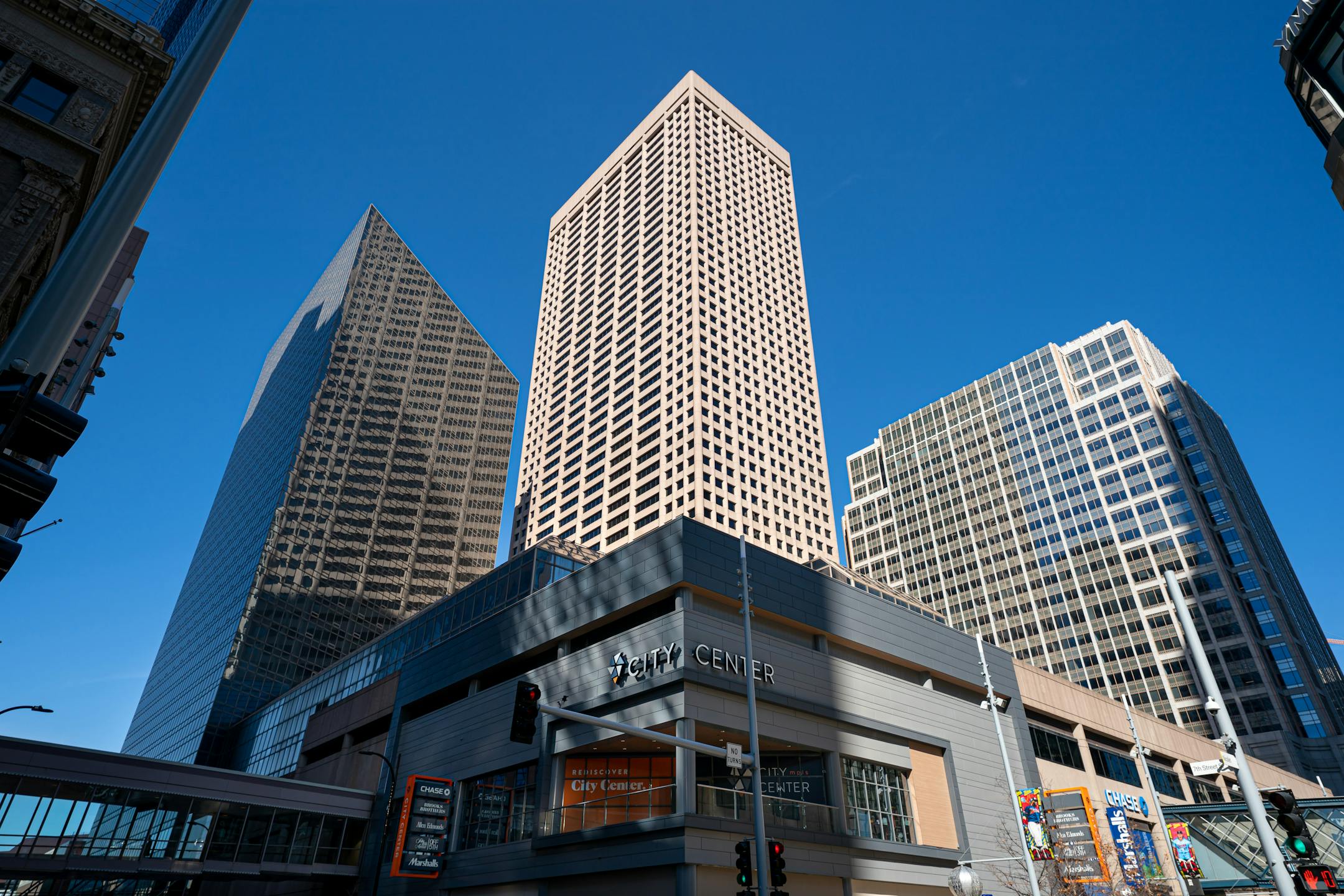
The owners of downtown Minneapolis’ City Center are looking to sell the property at 33 S. 6th St. nearly five years after Target Corp. announced it would give up almost one million square feet of office space. (Glen Stubbe/The Minnesota Star Tribune)
Advertisement

After moving out of nearly a million square feet of office space in downtown Minneapolis’ City Center building five years ago, Target paid almost $110 million last month to officially break its lease that ran through 2031.

Now the owner of the 51-story tower at 33 S. 6th St. — an entity tied to South Korean conglomerate Samsung — is preparing to list the property for sale, according to a Feb. 2 loan servicer report.

Target’s decision to downsize in 2021 was one of the first and most seismic signs of the pandemic’s impact on office work.

At the time, Target — which was one of City Center’s original tenants when it opened in 1983 — still had more than 10 years left on its lease. The company had last signed a renewal in 2015.

The Minneapolis-based retailer has continued to pay rent for the offices as they sat dark, making City Center a symbol of the challenges and uncertainties facing a downtown that relied heavily on its white-collar commuter crowds.

Target did try to sublet the space but didn’t have much luck beyond law firm Fox Rothschild moving into about 40,000 square feet of offices in 2022.

A spokesman for Target declined to comment on the lease-ending agreement but emphasized the company’s commitment to downtown Minneapolis as its second-largest employer. The retailer had been the biggest employer in the area for years until Hennepin Healthcare took the spot in 2024. Last summer, Target called its largest corporate unit back to the office three days a week and consolidated employees into other downtown properties near its Nicollet Mall headquarters.

Several other downtown office towers have sold in recent years, many at deep discounts as they grappled with high vacancies, maturing loans, rising borrowing costs and leery lenders.

Advertisement

Those same pressures rest on City Center. Samsung failed to pay off or refinance its $200 million mortgage by its January 2025 maturity date, so lenders started strategizing next steps. Samsung has continued to cover monthly payments and operating costs.

Most of the proceeds from Target’s buyout paid down almost $97 million of the loan, according to the servicer report. Samsung holds nearly $32 million in reserves to cover ongoing operations and sales costs.

The conglomerate purchased City Center in 2018 for $320 million, a record price for Minneapolis at the time, and kicked off a $3 million renovation the next year. At the time, downtown real estate had been drawing greater attention from international buyers who viewed the city as a stable place to invest.

That interest chilled after the pandemic. Samsung’s current sale options might be painful in a downtown market with nearly 10 million square feet of empty office space. There are few users of Target’s size in the metro, making the scale of City Center’s vacancies daunting.

Despite more employers instituting return-to-work mandates, office tenants in the Twin Cities collectively handed back about 300,000 square feet more than they leased last year, according to a report from brokerage firm Colliers. High-quality, smaller offices in prime locations continue to be most in demand.

Ryan Watts, executive vice president for CBRE, is part of the brokerage team preparing to market City Center. He doesn’t expect Target’s buyout to have much of an impact on the leasing market because the same space has been available to sublease for several years.

Advertisement

“I think what it does is it opens up the opportunity to explore additional uses,” Watts said. “While Target had it under control, it was only going to be office. Now that it’s not under lease by them, I think there’s more ability to explore alternative options.”

Civic leaders in Minneapolis and cities across the country have repeatedly called on developers to repurpose vacant office space for other uses, particularly housing. Such projects can improve downtown vibrancy by boosting foot traffic, but they’re also notoriously expensive and complicated.

City Center sits in a key location for downtown Minneapolis, filling almost two blocks between the thoroughfares of Hennepin Avenue and Nicollet Mall.

The concrete building is the fourth-tallest in Minneapolis, with about 1.6 million square feet of office space, a three-level retail mall and a parking ramp. It’s attached to a Marriott hotel under separate ownership.

“It could stay as is, if someone’s bullish about being able to backfill the Target space,” Watts said. “I think people will also look at the opportunity to redevelop it and explore potential additional uses for it.”

City assessors estimated the building’s value at nearly $117 million as of 2025, half of what it was five years ago. But downtown buildings such as the Ameriprise Financial Center and Wells Fargo Center have traded for far less than their assessed values in the past two years.

Advertisement
about the writer

about the writer

Katie Galioto

Reporter

Katie Galioto is a business reporter for the Minnesota Star Tribune covering the Twin Cities’ downtowns.

See Moreicon

More from Real Estate

See More
card image
After 10 years of planning, downsizing and finally a takeover by the city -- which served as its developer -- the Penfield, a building of market-rate apartments in downtown St. Paul, marked its grand opening Thursday, 2/6/14. A look at where things stand and whether the city is close to selling it to a private developer.
Advertisement