
Burcum: Take down the video of Charlie Kirk’s death

The horrific footage may inflict further grief on his family. It certainly adds to our collective trauma in a violent summer — and may fuel further violence.

Columnist Icon
The Minnesota Star Tribune
September 11, 2025 at 8:05PM
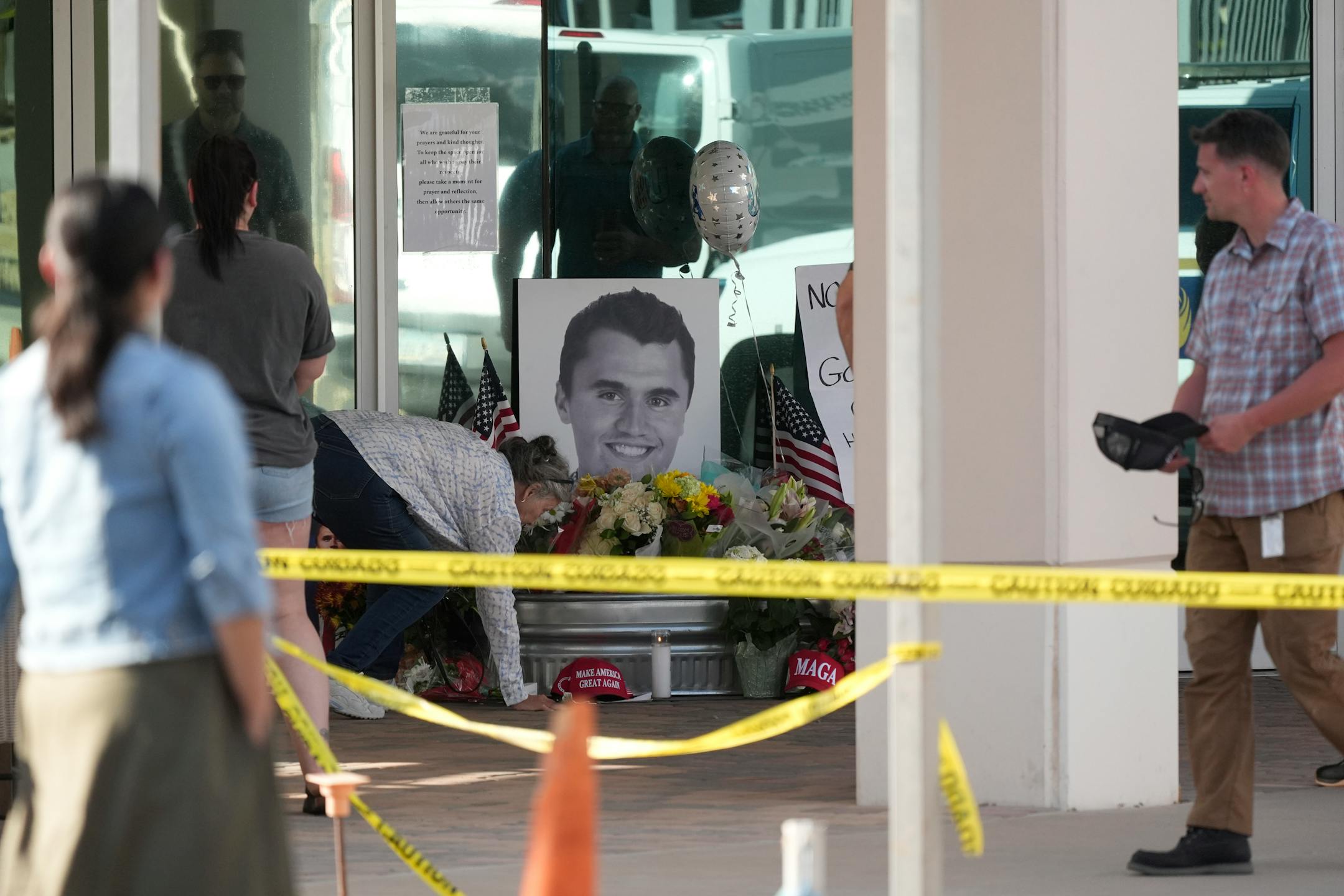
Well-wishers pay their respects at a makeshift memorial at the national headquarters of Turning Point USA after the shooting death of Charlie Kirk, CEO of the organization, during a Utah college event Wednesday. (Ross D. Franklin/The Associated Press)

Opinion editor’s note: Strib Voices publishes a mix of commentary online and in print each day. To contribute, click here.

•••

I did not want to see the last seconds of Charlie Kirk’s life. But it was tragically unavoidable, with video capturing the moment a mortal gunshot struck him posted widely online, adding to our collective trauma sustained during this summer of loss and violence.

Like many, I received a push notification on my phone about the injury sustained by Kirk, a charismatic conservative commentator, at a Utah campus appearance. I checked leading news organizations’ sites and then went to X (formerly Twitter), where information shared by millions of users makes it an essential though sometimes unreliable breaking news source.

My heart dropped just seconds after logging in. I’d no more than scrolled past two or so tweets before encountering the shocking footage of Kirk’s assassination. The video played automatically before I could turn away.

It was so horrific that it didn’t seem real at first. Surely this was a product of artificial intelligence! It looked more like a video game or something from a movie. But it wasn’t.

This was a coldblooded killing, now on replay ad infinitum with just a few clicks in our digital information age. That’s wrong and the video needs to come down wherever it’s posted. Elon Musk should make the first move as part of his X ownership responsibilities, which make him de facto publisher of one of the world’s leading news sites.

At some point, images cross a line from journalism into information that simply shouldn’t be shared for reasons of basic decency. The violent video of Kirk’s death is one of them.

He leaves behind a wife and two young children, as well as millions of devoted fans. Their grief is only compounded by the bloody footage at our fingertips. And with a deeply divided nation already on edge from the political assassinations in Minnesota in June, the Kirk video may inspire acts of retribution before the facts are in.

Violence this graphic does not need to be published and doing so carries substantial risk. To those who might argue that taking it down at this point will do little, I say it is never too late to do the right thing. Doing so would also set a valuable precedent for when the next act of violence occurs, because sadly it will.

I came of age as a journalist in the pre-internet era and I’m grateful. The editors and publishers that I worked with took seriously the ethical and moral obligations inherent in choosing which images to share with readers.

My first encounter with these wrenching decisions came when I was a young reporter at the Rochester Post Bulletin. It was 1993 and I just happened to be walking by the machine that printed off wire service photos.

One photo remains seared in my memory to this day. It was from the Battle of Mogadishu, often referred to as the Black Hawk Down incident. U.S. forces were there as part of an international response to Somalia’s civil war.

Insurgents took down two Black Hawk helicopters with U.S. crews. The American dead were dragged through the streets. The photo I saw showed one of the victims. I realized quickly it was close enough for a grieving family to identify who it was. The Post Bulletin editors wisely chose not to run it.

Later in my career, I was an editor in the Star Tribune newsroom when another decision had to be made on a heartbreaking news photo.

City employees working in a municipal sewer system had been drowned in a sudden flood and swept out into the Mississippi River. A Strib photographer had captured a haunting image: rescue crews on the river holding onto a victim’s arm as they recovered the body.

The photo conveyed the loss in ways that words could not. I was among the editors who thought we should run it. But the managing editor at the time overruled this and the photo never made it into the newspaper.

The managing editor’s decision was based on this: He would be the one who had to pick up the phone if and when the victim’s family called to say the photo added to their grief. He thought we could tell the story without inflicting that harm on grieving families.

He was right. I’ve carried that lesson forward. It’s why I believe the Kirk video should be taken down. It’ll never be gone completely, but it doesn’t need to be so easily accessible.

My argument may sound old-fashioned to some. So be it. Basic decency is never outdated. It’s a troubling cultural loss that discussions like this happen far less frequently in this free-for-all information age about whether an image should be shared. This is a disturbing but inevitable consequence when someone like Musk is not a journalist but controls X, one of the world’s most influential breaking news sources.

Some high-profile journalists clearly disagree with me. Brit Hume, Fox News’ chief political commentator, retweeted the video on his X feed.

There is one argument to be made for publishing the video, that horrific images like this can result in change. You cannot look at it without being shaken about guns’ destruction of a human body. With wider understanding, perhaps that could finally result in meaningful efforts to prevent firearms from getting into the hands of those who use them for evil.

But social media offered a compelling counterargument to that yesterday. Calls for retribution from those mourning Kirk were swift and disturbing, even bloodthirsty at times.

The facts about the perpetrator and a possible motive are still emerging. As of Friday, authorities have identified the suspect as 22-year-old Tyler Robinson of Utah. The investigation is ongoing, yet so many on social media have drawn irresponsibly premature conclusions about who’s to blame. Some rhetoric accompanying it is frightening.

Actor James Woods warned on X that “Dear leftists: we can have a conversation or a civil war. One more shot from your side and you will not get this choice again.”

A verified personal account for U.S. House Rep. Derrick Van Orden, who represents western Wisconsin, retweeted Woods’ post and added this: “Let’s remember how the last civil war the @dccc @DNC started, ended. They got yesterday what they wanted in Butler. The wind has been sowed."

Have we already forgotten that an assassin targeted two Minnesota DFL legislators and their families this summer?

The video isn’t the only factor fanning these flames, of course. But doing so could help dial back emotions. It’s not the only solution, but it is one step that could, and should be taken, at this volatile moment.

about the writer

about the writer

Jill Burcum

Editorial Columnist

See Moreicon