
Opinion | Mourning Charlie Kirk’s death isn’t partisan

This isn’t about politics. It’s about whether we can survive as a country if killing each other becomes the endpoint of our disagreements.

September 11, 2025 at 3:59PM
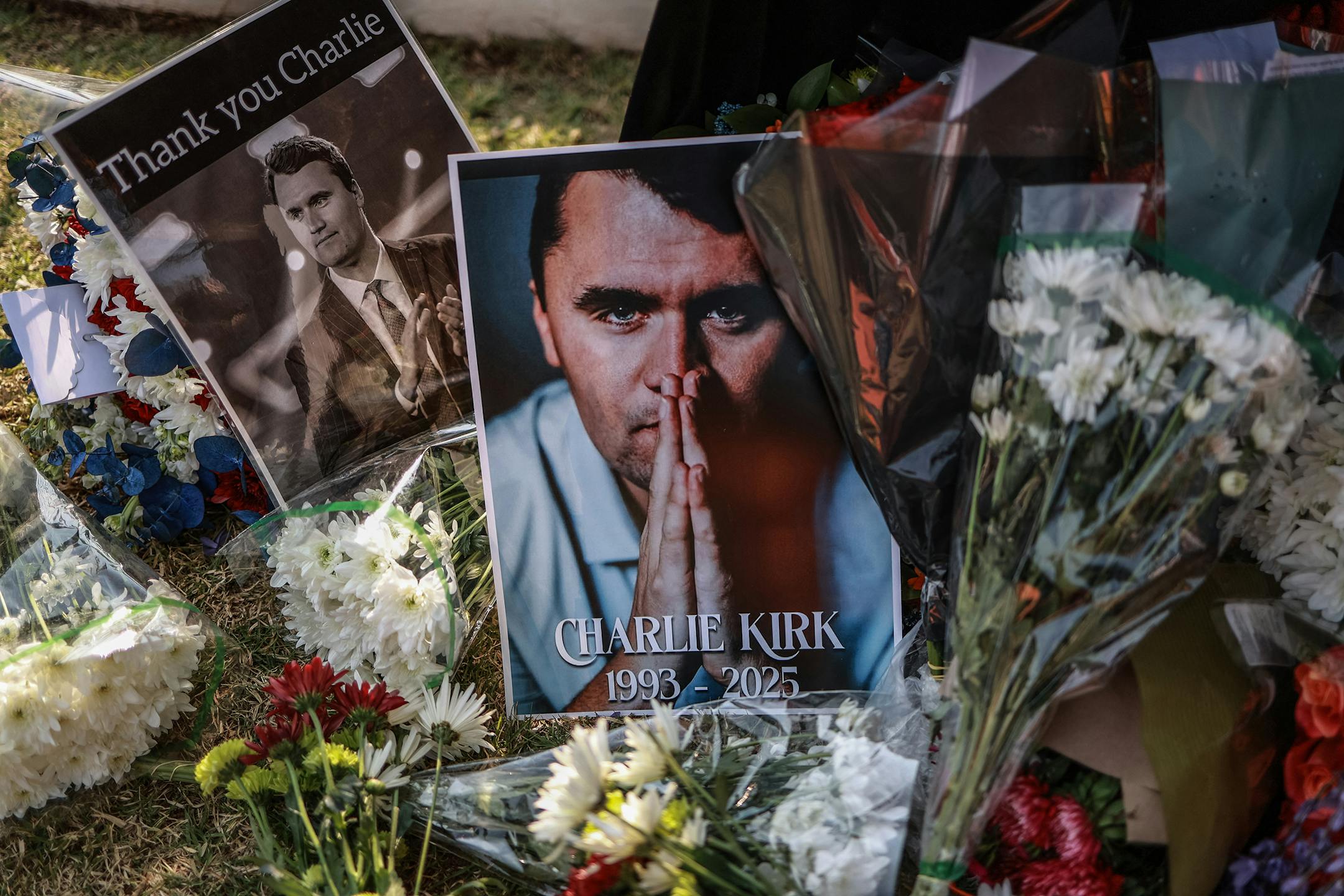
Flowers are laid by mourners outside the U.S. Embassy in Pretoria, South Africa, on Sept. 11 following the fatal shooting of activist and influencer Charlie Kirk. (Phill Magakoe/AFP/Tribune News Service)

Opinion editor’s note: Strib Voices publishes a mix of guest commentaries online and in print each day. To contribute, click here.

•••

Let that sentence sit with you. Not because you agreed with him. Not because you liked what he said or how he said it. But because he was a human being. A husband. A son. A friend. And because in this country, in our country, no one should be assassinated for what they believe.

But yet, here we are. Again.

First, it was Speaker Emerita Melissa Hortman and her husband, Mark. Then state Sen. John Hoffman and his wife, Yvette, were shot and wounded.

Now, Charlie Kirk.

This is not a string of isolated incidents. This is a pattern. A sickness. A symptom of what happens when we normalize hate, reward cruelty and let violence take root in our political culture.

If we don’t stop this now, if we don’t slam on the brakes and turn this ship around, then who’s next?

Let us be very clear: This is not about politics. This is about people. About the basic idea that we should be able to disagree without dying for it.

Kirk was a controversial figure. He pushed boundaries. He made people angry. Still, his killing is not justified. It is not explainable. It is not “understandable.” It is an abomination. If your first instinct was anything other than sorrow and outrage, then something in you has been broken by this culture war we’ve allowed to metastasize.

We often found Kirk’s words deeply at odds with our own beliefs, profoundly so. But the idea that we are now killing each other over disagreements is not just troubling; it’s a seismic moment in American life. This isn’t a political flashpoint. It may be a defining moment for the future of our democracy.

We say this as people who have worked across the aisle, fought political battles and still found common ground.

In our heyday, we helped fuel the very poison that now infects our politics. We shouted when we should have listened, chose wins over wisdom and treated opponents as enemies rather than fellow citizens. If we could turn back the clock, we would, not to relive old battles, but to fight them differently.

We failed in our obligation to be better stewards of the great American experiment, and for that, we carry both regret and responsibility.

We say this as people who believe in America, not as a fantasy, but as a fragile, unfinished promise. Right now, that promise is in jeopardy. Not from any single party or politician.

But from all of us, if we allow this to continue.

So what do we do?

We stop feeding the outrage machine.

We stop treating social media like a substitute for civic duty.

We stop dehumanizing our opponents and start humanizing ourselves.

We do something real. Tangible. Local. Kind. Brave.

We volunteer. We speak thoughtfully. We grieve with compassion. We show up.

When the Hortmans’ children spoke after their mother and father were killed, they didn’t ask for revenge. They asked us to bake a cake. Walk a dog. Help a neighbor. Choose empathy. Choose action. Choose life.

That choice still stands.

This isn’t about Kirk’s politics. This is about whether we can survive as a country if killing each other becomes the endpoint of our disagreements.

Do not let this moment pass without acknowledging its demands on you.

Go. Do something. Do anything that brings light back into this dark time.

Because if this is the new America, one where political violence is routine, and mourning is partisan, then we’ve already lost. Let’s not lose more.

Michael Brodkorb is the former deputy chair of the Republican Party of Minnesota. He is an author, communications strategist and podcaster. Erich Mische is a nonprofit leader and author.

about the writer

about the writer

Michael Brodkorb and Erich Mische

More from Commentaries

See More
card image
Leila Navidi/The Minnesota Star Tribune

In government leadership, young people need to be ready to accept the torch, but previous generations can’t slow down their leg, or delay the pass.

card image
card image