

Opinion editor’s note: Strib Voices publishes a mix of guest commentaries online and in print each day. To contribute, click here.
•••
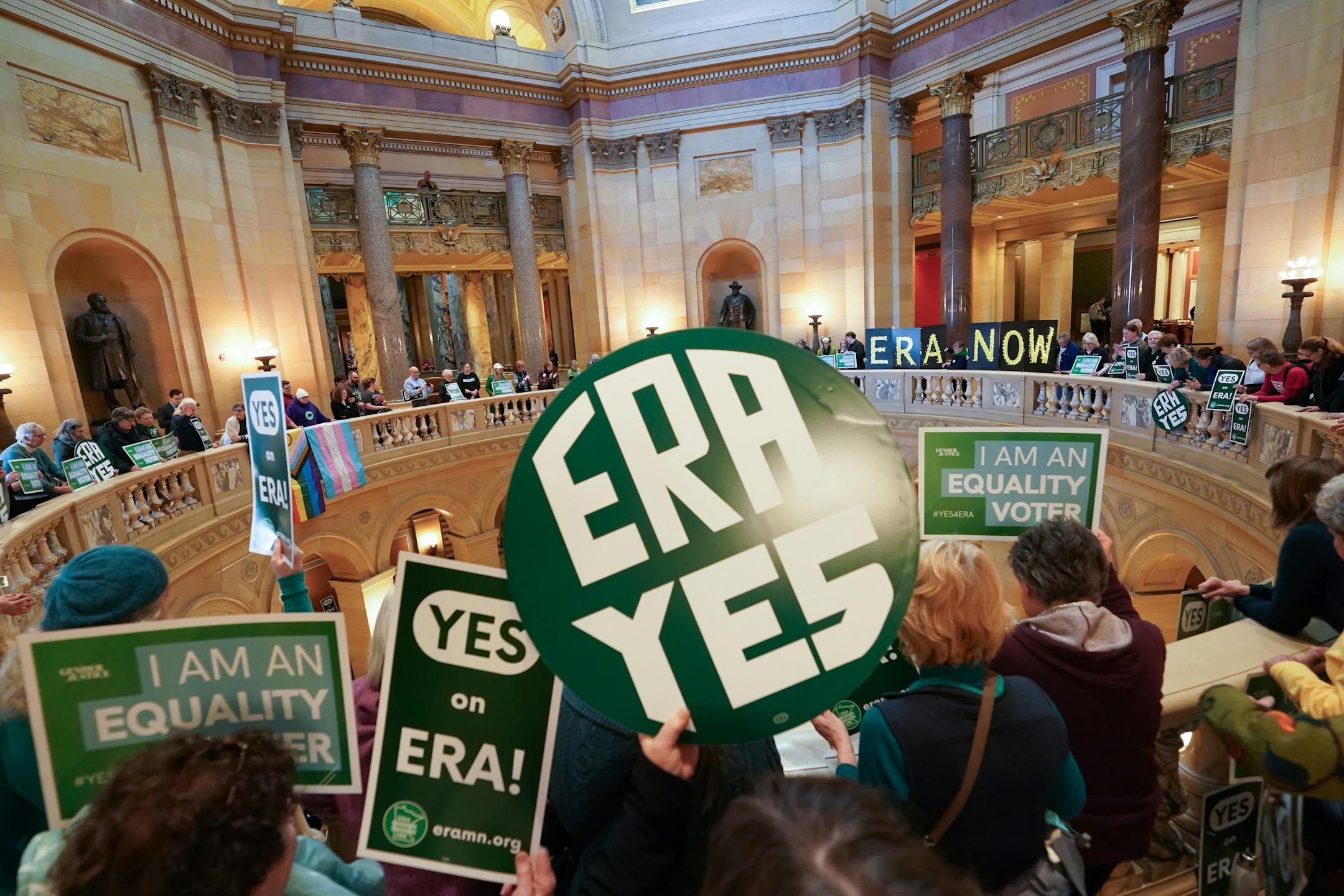
As the new legislative session unfolds, one bill is getting a hearing right out of the chute: the Minnesota Equal Rights Amendment ballot initiative. It will be heard in the Senate Judiciary Committee on Monday, Feb. 23. And a good thing, too.
Last biennium we came within a hairbreadth of passing an inclusive ERA, only falling short of reconciling the House and Senate versions on the final day. This, despite having a million dollars spent against us by an ever-shrinking but well-fueled opposition.
Increasingly, Minnesotans are becoming acutely aware of devastating consequences when human rights under law are eroded. We’ve experienced political assassinations and attempted assassinations aimed at a list that overwhelmingly targeted women; the slaughter of the innocents at Annunciation School, and mass deportations of mainly legal immigrants, not to mention the horrific murders of Renee Good and Alex Pretti. In Good’s killing the Immigration and Customs Enforcement assailant’s misogynist epithet underscored the forceful ICE tactics being applied, particularly to marginalized women.
Passage of the state ERA initiative (SF 473) is crucial now more than ever. Though aware of the current political atmosphere, we take a page from Susan B. Anthony’s book: “Failure Is Impossible.”
Embedding protections into our state Constitution will ensure remedies in our courts that cannot be easily undermined. It will also create a framework for progress — social, moral and legal. Laws can be easily changed or overturned by future legislatures or courts. A state constitutional amendment, however, provides a firm, lasting leg to stand on that ensures our rights are protected, despite future political shifts.
Our state Constitution is a dynamic document, designed to evolve and improve over time to reflect our ever-changing society. The ERA initiative acknowledges the pervasive nature of discrimination and helps dismantle structural inequities. It provides foundational remedies to overcome these challenges.


