
Advertisement

Opinion | Has the U lost its way?

The U was supposed to be a “people’s university.” But it’s gotten increasingly selective, expensive and administratively top-heavy.

February 19, 2026 at 6:00PM
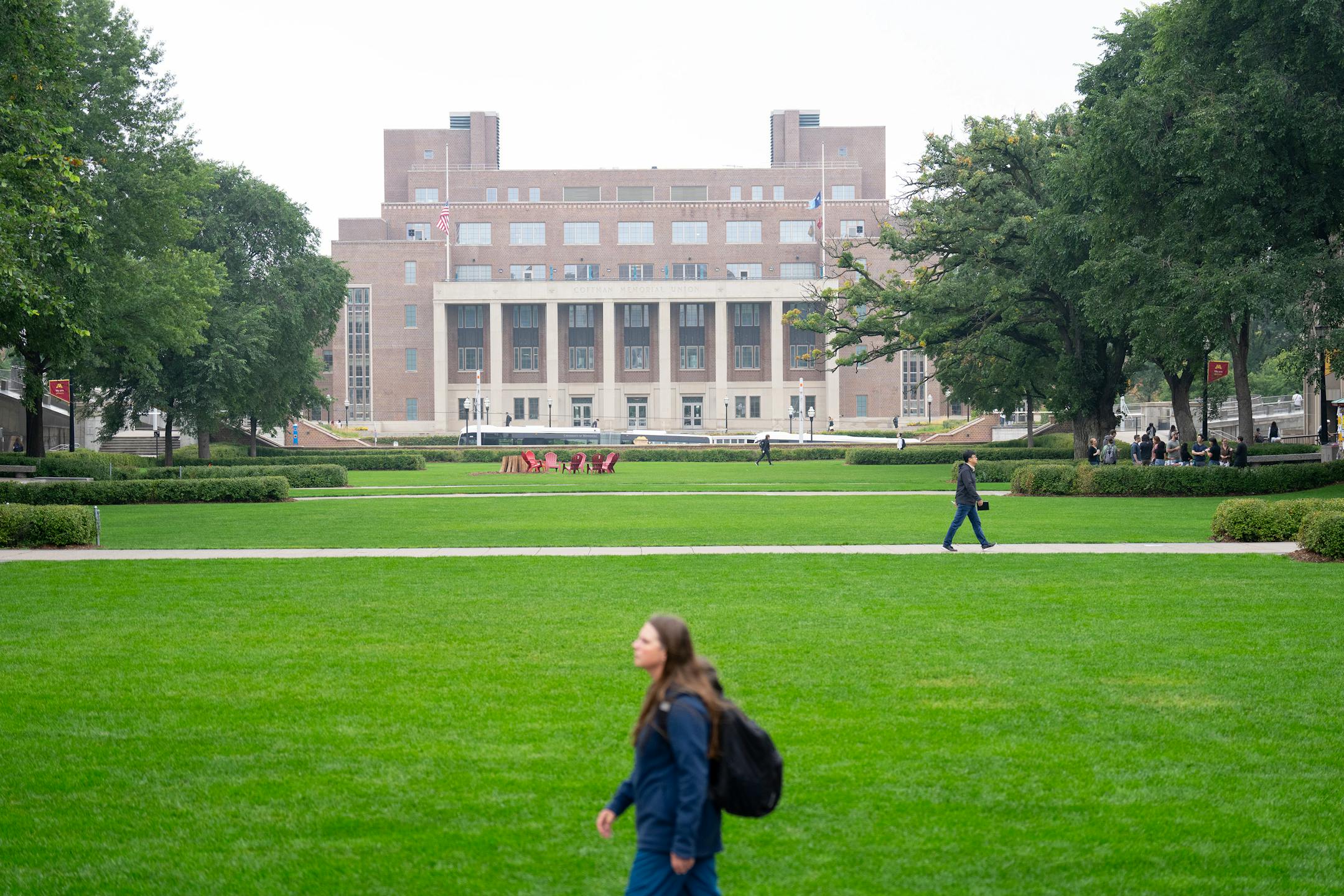
"The most recent tuition increase is about twice the rate of inflation plus a $200 per student per year fee was added for athletics (while giving the multimillion-dollar football coach a $700,000 bonus)," Michael Martin writes. Above, students walk on the University of Minnesota campus in Minneapolis on Sep. 10, 2025. (Alex Kormann/The Minnesota Star Tribune)
Advertisement

Opinion editor’s note: Strib Voices publishes a mix of guest commentaries online and in print each day. To contribute, click here.

•••

In 1862 Congress passed and President Abraham Lincoln signed the Morrill Act, which provided a grant of 30,000 acres of federal land per member of Congress to each state to create a “people’s university.” More specifically, universities designated as “land grant universities” were directed by law to “promote the liberal and practical education of the industrial classes in the several pursuits and profession in life.”

In 1867 Minnesota accepted the terms and conditions of the Morrill Act, and the University of Minnesota became the state’s designation (1862) land grant institution. Over time the missions of land grants have expanded, as has the number of institutions so designated. In 1887 an applied research mission was defined in the Hatch Act. In 1890 Congress declared 19 historically Black universities as land grants. In 1914 an extension/outreach mission became part of the land grant charge under the Smith-Lever Act. And in 1994 Congress conferred land grant status on 36 tribal colleges (there are four in Minnesota).

Twenty years ago I opined in the Chronicle of Higher Education that many 1862 land grants were drifting away from the defined mission toward becoming more elitist. This observation, in my view, applies to the U.

The U’s recently approved strategic plan, “Elevate Extraordinary 2030” acknowledges its land grant status. But the balance of the plan and actions of the administration suggest the plan’s authors and endorsers have limited understanding of what that status really means, especially with respect to undergraduate education.

First, while making a commitment to serve Native communities, the plan fails to acknowledge the other four Minnesota land grants and the responsibility of the U to strengthen and support them.

Second, the commitment that the state’s 1862 land grant will be accessible and affordable for the “industrial classes” (common folk) appears to have long since been abandoned. The U has become increasingly selective. Note the average ACT score for the state is about 21 (out of 36). At the U it’s about 29. It’s about 23 at the state universities. For many years the U had an internal more open-admissions, gateway college — the General College — to provide greater accessibility. It was closed in 2005.

Advertisement

And the U has become increasingly more expensive. The most recent tuition increase is about twice the rate of inflation plus a $200 per student per year fee was added for athletics (while giving the multimillion-dollar football coach a $700,000 bonus).

The “full cost of attendance” (tuition, fees, room, board and typical expenses) is now about $36,000 per year. At the state universities it’s about $25,000.

Along with a rather costly athletics program, the U has built a relatively top-heavy and also costly administration with 13 vice presidents. (Note two equally large and complex institutions, Ohio State and Arizona State, seem to function quite well with nine and 10 VPs, respectively). So the vast majority of Minnesota’s high school graduates don’t qualify for admission and/or can’t afford to attend their state’s “people’s” university.

What’s clear is that Minnesota’s state universities have taken up a central part of the U’s land grant missions. But this is a good thing. The state universities serve as ladders, not filters, and are affordable and conveniently located. Still, the U has a fundamental obligation to “promote” accessible and affordable higher education by collaborating with and fully supporting their sister state universities. Finally, I strongly recommend that the U Board of Regents and senior administrators take a refresher course on all that it means to be a 21st-century land grant institution and to fashion a plan that embraces its spirit. The missions are as relevant today as when Morrill and Lincoln kicked it all off 165 years ago.

Michael Martin, Woodbury, is a former dean and vice president at the University of Minnesota, senior vice president at the University of Florida, president at New Mexico State University, chancellor at Louisiana State University, chancellor in the Colorado State University System, president at Florida Gulf Coast University and interim chancellor at the University of Wisconsin-River Falls.

about the writer

about the writer

Michael Martin

More from Commentaries

See More
card image
Alex Kormann/The Minnesota Star Tribune

The U was supposed to be a “people’s university.” But it’s gotten increasingly selective, expensive and administratively top-heavy.

card image
card image
Advertisement