
Advertisement

Opinion | Even as ICE pulls back, legal pressures on families are ramping up

Here’s what I’m seeing as someone working closely with immigrant and refugee families.

February 19, 2026 at 10:59AM
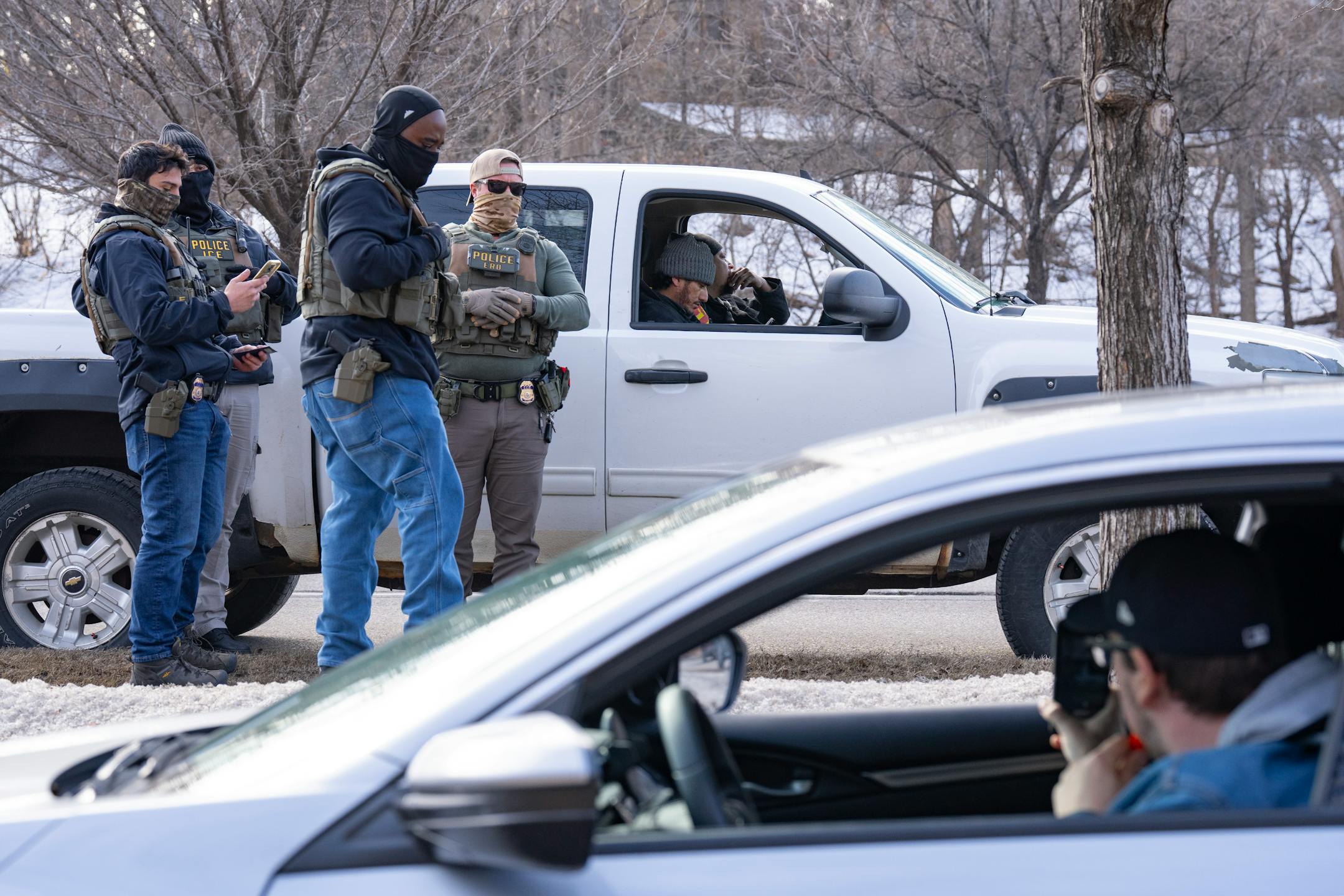
ICE agents attempt to confirm two men’s legal immigration status after pulling them over in Robbinsdale on Feb. 11. Nearby observers record the encounter and blow whistles. (Alex Kormann/The Minnesota Star Tribune)
Advertisement

Opinion editor’s note: Strib Voices publishes a mix of guest commentaries online and in print each day. To contribute, click here.

•••

When federal officials announced that Immigration and Customs Enforcement was scaling back its visible presence in Minnesota, many people assumed the pressure on immigrant families was easing. From what I am seeing every day, the opposite is happening.

As a Minneapolis community leader working closely with immigrant and refugee families, my phone has been ringing more than ever. But the calls have changed.

They no longer begin with, “ICE is in the neighborhood.”

Now they begin with panic and confusion.

“I have a court hearing and no lawyer.”

“We just received a notice. We have to appear in five days.”

Advertisement

“We didn’t know this appointment was coming. What should we do?”

Much of this process now happens through deadlines, paperwork and legal procedures — often outside public view.

Families are receiving hearing notices warning that if they fail to appear, they can be ordered removed from the U.S. and that proceedings may continue even in their absence. For people who have moved, do not speak English or cannot afford legal representation, navigating this system within days or weeks can feel overwhelming.

The protests that once filled our streets cannot help someone facing a court deadline next week. What families need now is legal access, accurate information and community support.

My concern about this moment comes from experience.

I grew up playing soccer in the streets during a civil war. We had no shoes. Our ball was made from clothes and rocks tied together. Our feet bled, but we played anyway, even when gunfire echoed nearby.

Advertisement

Then the game would suddenly stop. Mothers would run from every direction, grabbing whichever child they could reach and rushing us into the nearest building as fighting broke out. My family survived. Some families did not.

I don’t remember how the war began. But I remember what came after — the fear, the uncertainty and how danger often arrived when people believed things were calm.

Years later, I lived just blocks from where George Floyd was killed. I watched our neighborhood come together in powerful ways. But as the attention faded, the long-term impact remained. Businesses across Minneapolis and St. Paul suffered an estimated $350 million to $500 million in losses, and many areas are still recovering.

Those experiences taught me something important — that the aftermath of a crisis is often more difficult than the moment itself, especially when public attention moves on.

That is what worries me now.

When enforcement becomes less visible, many people assume the situation has improved. But for immigrant families, the fear has not disappeared. It has simply moved behind closed doors.

Advertisement

The consequences extend beyond individual cases. Minnesota’s economy depends heavily on immigrant workers, entrepreneurs and consumers. Immigrants make up roughly 1 in 9 workers in the state. When families face sudden legal uncertainty, many miss work to attend hearings, leave jobs unexpectedly or pull back from daily life. Employers lose reliable workers. Businesses face instability. Local spending declines.

The economic impact may be quiet, but it is real — and it affects communities far beyond immigrant households.

We have seen this pattern before. Public attention rises during moments of crisis. Communities mobilize. Support flows.

Then the spotlight moves on.

If my life experiences have taught me anything, it is this: The most dangerous moment is when people believe the crisis is over.

ICE may be less visible in Minnesota today. But the pressure on many families has not gone away.

Advertisement

Now is the time for legal organizations, employers, faith communities and civic leaders to step forward — not step back. Expanded immigration legal support, workplace stability and community awareness are more important than ever.

When enforcement disappears from the streets, it does not mean the crisis is over. It simply means fewer people can see it.

Osman Ahmed is a Minneapolis community leader and founder of Talo Table, a civic engagement and community partnership initiative.

about the writer

about the writer

Osman Ahmed

More from Commentaries

See More
card image
Alex Kormann/The Minnesota Star Tribune

Here’s what I’m seeing as someone working closely with immigrant and refugee families.

card image
card image
Advertisement