

Opinion editor’s note: Strib Voices publishes a mix of guest commentaries online and in print each day. To contribute, click here.
•••
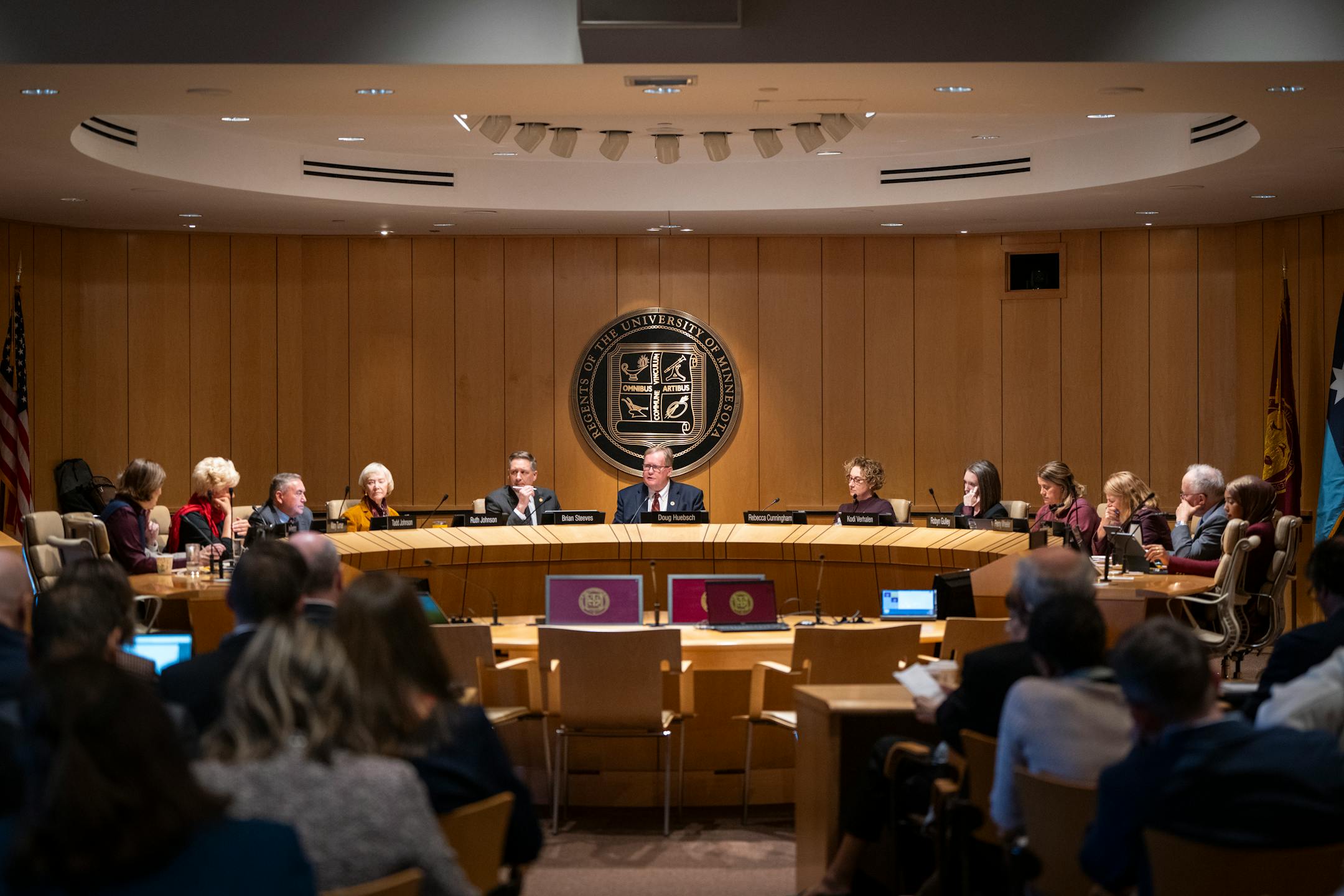
I recently observed my first University of Minnesota Board of Regents meeting in nearly 30 years. Having served at the University as a vice president and dean under President Nils Hasselmo and President Mark Yudof, I was part of university management and attended every regents’ meeting for most of the 1990s.
While imperfect, those past regents’ meetings uniformly offered a thoughtful process by which the regents as public representatives sought to guide the university to best serve Minnesota. At the recent meeting, however, I observed what seemed to be a “ham-handed” and predetermined approval of significant issues, including substantial tuition increases, a new and mandatory student fee to support intercollegiate athletics, the proposed closing and sale of the Les Bolstad Golf Course, the Fairview-Medical School arrangement, the future of the University of Minnesota Morris, an end to hosting of high school commencements and a costly expansion of the university’s administration to include 13 vice presidents.
Based on this apparent shift in leadership culture, I began contrasting how current U regents and their administrative leadership now approach managing a great land-grant university with my experience with other public boards.
As an administrative leader of a handful of public universities, I worked with boards that I felt functioned well, most recently at the University of Wisconsin-River Falls. Based on the differences between my past experience and my recent visit to McNamara Alumni Center, I offer the following observations in the interest of promoting a public dialogue, including with the Minnesota Legislature that selects the regents:
Much has changed in the approach of the University of Minnesota Board of Regents, and not for the better. I believe the current board compares poorly with regents who served Minnesota from the U’s founding through the end of the 20th century and with those boards in other states I personally served under. I do not make such a statement lightly and reaching that conclusion was surprising and disheartening.
Regents of the Hasselmo-Yudof era were by and large drawn from this state’s leading citizens. They included public service stalwarts like former U.S. Agriculture Secretary Robert Bergland, Mary Schertler, labor leader David Roe, Iron Range leader Tom Reagan, Colonel and former Chancellor Stan Sahlstrom, Gov. Wendell Anderson, former Rep. Ann Wynia and future Minnesota Supreme Court Justice Alan Page. They combined with earnest regents from the private sector, including corporate leaders Lawrence Perlman and Jean Keffeler, small-business owners Hyon Kim and Mary Page, and others to engage the administration in robust strategic discussions about how the university best serves all Minnesotans in meeting its three-part mission of teaching, research and outreach. While the regents and even the administration at times did not always agree on specifics, they made clear that their central responsibility was to set policy and provide oversight in the interest of the students and citizens served by the university.


